Microtube Homogenizer (6 Plate Unit)
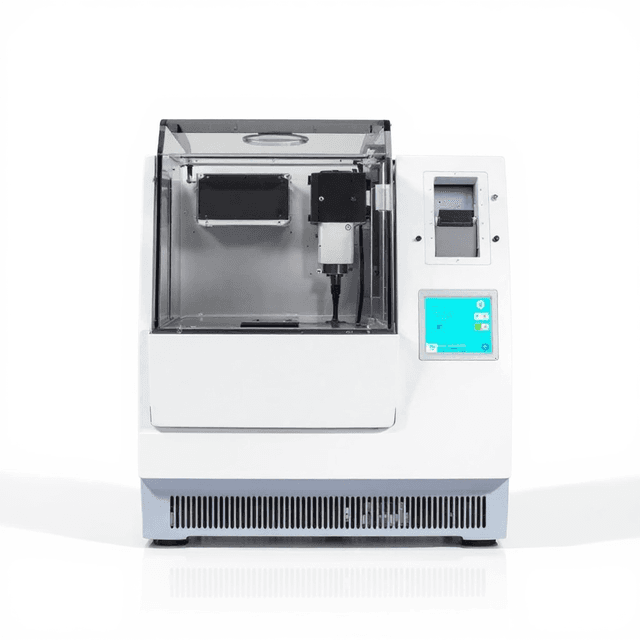
Benchtop bead mill homogenizer for mechanical disruption of up to 6 samples simultaneously using programmable three-dimensional shaking motion at speeds up to 7.00 m/s.

Louise Corscadden, PhD
Director of Science · ConductScience
Ask Louise about Microtube Homogenizer (6 Plate Unit) fit, setup, configuration, or quote prep.
Already working with us? Sign in to connect this with My Scientist.
Key Specifications
Full details →- Model fit
- 2 selectable configurations
- SKU family
- CS-958452
- Shipping box
- 13.98 x 8.66 x 8.07 cm
- Ordering
- Online checkout and quote request available
- Category
- Benchtop Instruments
- Build notes
- Confirm accessories, station layout, and support needs before purchase
This benchtop microtube homogenizer employs three-dimensional shaking motion at controlled speeds to mechanically disrupt biological samples in standard microtubes. The system processes up to 6 samples simultaneously in 2.0 mL tubes or 2 samples in 5.0 mL tubes (with optional adapter), using bead mill methodology for tissue disruption, cell lysis, and sample preparation.
The programmable interface allows researchers to set speed (4.00 to 7.00 m/s), cycle time (0-90 seconds), pause intervals, and number of cycles (1-10) for reproducible sample processing. With rapid acceleration/deceleration (≤2 seconds) and noise levels below 65 dB, the system provides consistent mechanical disruption for molecular biology applications, protein extraction, and nucleic acid isolation protocols.
How It Works
The microtube homogenizer operates through mechanical disruption using three-dimensional oscillatory motion combined with grinding beads. The sample tubes are secured in a holder that undergoes rapid multi-directional shaking at speeds up to 7.00 m/s. This motion creates high-energy collisions between grinding beads and sample material, generating sufficient mechanical force to break cell walls, disrupt tissue structure, and release intracellular components.
The programmable cycle system allows researchers to control disruption intensity through speed selection, duration timing, and rest periods. Pause intervals between cycles prevent excessive heating and sample degradation during prolonged processing. The acceleration and deceleration phases are precisely controlled (≤2 seconds) to ensure consistent energy transfer and reproducible disruption across samples.
Different bead materials and sizes can be selected based on sample characteristics - harder beads like ceramic or steel for tough plant tissues, softer materials for fragile cell cultures. The contained tube system prevents cross-contamination while allowing simultaneous processing of multiple samples under identical conditions.
Features & Benefits
Automation Level
- semi-automated
Research Domain
- Analytical Chemistry
- Biochemistry
- Cell Biology
- Food Science
- Microbiology
- Molecular Biology
Shipping weight
- 19.84 lb
Shipping box
- L: 13.98 cm
- W: 8.66 cm
- H: 8.07 cm
| Feature | This Product | Typical Alternative | Advantage |
|---|---|---|---|
| Sample Capacity | 6 x 2.0 mL tubes or 2 x 5.0 mL tubes simultaneously | Entry-level models often process 1-4 tubes at once | Higher throughput reduces processing time and ensures identical conditions across larger sample batches. |
| Speed Range | 4.00 to 7.00 m/s in 0.05 m/s increments | Basic models offer fewer speed settings with larger increments | Precise speed control allows optimization for different sample types and prevents over-processing. |
| Programming Flexibility | Programmable cycles (1-10), timing (0-90 sec), and pause intervals | Simple models may offer only basic timer functions | Advanced programming prevents sample overheating and enables protocol standardization for reproducible results. |
| Operating Temperature Range | +4° to 45°C ambient temperature | Standard models often limited to room temperature operation | Wide temperature tolerance allows use in cold rooms and variable laboratory environments. |
| Acceleration Control | ≤2 seconds acceleration/deceleration | Basic models may have longer ramp times | Rapid acceleration minimizes processing time and improves disruption efficiency. |
This homogenizer offers simultaneous 6-tube processing with precise programmable control and wide temperature tolerance. The three-dimensional shaking motion and rapid acceleration provide consistent mechanical disruption across multiple sample types while maintaining low noise operation for standard laboratory environments.
| Model | SKU | Listed price | Status | Shipping box |
|---|---|---|---|---|
| 100V | CS-958452 | $2,751.99 | Available | 13.98 x 8.66 x 8.07 cm |
| 240v | CS-958452 | $2,751.99 | Available | 13.98 x 8.66 x 8.07 cm |
Practical Tips
Pre-chill tubes and beads when processing temperature-sensitive samples like RNA or heat-labile proteins.
Why: Prevents thermal degradation during mechanical processing.
Verify speed settings periodically using a tachometer or by processing standard control samples with known disruption requirements.
Why: Ensures consistent processing parameters over time and across different sample batches.
Clean tube holders thoroughly after each use and inspect for worn or damaged components monthly.
Why: Prevents sample contamination and maintains optimal mechanical performance.
Use consistent sample volumes and bead-to-sample ratios within each experiment to ensure reproducible disruption.
Why: Standardized ratios provide uniform mechanical energy transfer across samples.
If disruption is incomplete, increase cycle number rather than extending individual cycle time to prevent overheating.
Why: Multiple short cycles with pauses maintain sample integrity while achieving thorough disruption.
Ensure tubes are properly seated and balanced across all positions before starting to prevent vibration and potential tube failure.
Why: Proper loading prevents mechanical stress that could cause tube breakage during high-speed operation.
Document optimal parameters for each sample type to create standardized protocols for routine processing.
Why: Protocol standardization improves experimental reproducibility and laboratory efficiency.
Setup Guide
What’s in the Box
- Microtube homogenizer main unit
- 6-position 2.0 mL tube holder
- Power cord
- User manual and operation guide
- Quick start reference card (typical)
- Warranty documentation (typical)
Warranty
ConductScience provides a one-year manufacturer warranty covering defects in materials and workmanship, with technical support for operation and maintenance guidance.
Compliance
References
Background reading relevant to this product:
What sample volumes can this homogenizer process, and can I process different volumes simultaneously?
This unit can process either 6 samples at 2.0mL capacity or 2 samples at 5.0mL capacity (requires a 5.0mL adapter sold separately). You cannot mix different volumes in a single run, as the configuration must be set for one capacity type.
What is the maximum speed and can I control the intensity of homogenization?
The homogenizer operates at speeds ranging from 4.00 to 7.00m/s with 0.05m/s increments, allowing fine-tuned control over homogenization intensity. You can also adjust cycle time (0-90 seconds), number of cycles (1-10), and pause intervals between cycles to optimize processing for your samples.
Is this equipment suitable for high-throughput sample preparation?
With a 6-sample capacity and programmable parameters that remain saved for repeated use, this homogenizer is well-suited for moderate-throughput applications. However, for very large batch processing, you may need to consider multiple units or contact support for alternative solutions.
What electrical requirements does this equipment have, and will it work in our facility?
The homogenizer operates on 100-240V, 50-60Hz electrical input, making it compatible with standard laboratory power supplies in most regions. Confirm your facility's specific voltage and frequency match these specifications before ordering.
What maintenance is required, and what consumables do I need to order separately?
The product information does not detail specific maintenance requirements; we recommend contacting support for maintenance protocols. Bead materials and sizes vary by sample type and must be ordered separately based on your application needs.
Is the 5.0mL adapter included, or must it be purchased separately?
The 5.0mL adapter is sold separately and is required if you need to process 5.0mL samples. The standard configuration supports 6 x 2.0mL tubes.
What is the noise level, and is this equipment suitable for shared laboratory spaces?
This homogenizer operates at less than 65dB, which is relatively quiet for benchtop equipment and suitable for most shared laboratory environments. This noise level should not significantly disturb nearby workstations.
Have a question about this product?
Have a question? Just ask.
Send it over and we'll email you a personalized answer — no call, no scheduling.
Prefer to talk it through?