Multi-Parameter Portable Water Quality Detector
Four-wavelength spectrophotometer for portable water quality analysis with 0-3.0 Abs range and IP65 environmental protection.

Louise Corscadden, PhD
Director of Science · ConductScience
Ask Louise about Multi-Parameter Portable Water Quality Detector fit, setup, configuration, or quote prep.
Already working with us? Sign in to connect this with My Scientist.
Key Specifications
Full details →- Model fit
- Configured during quote
- SKU family
- CS-LH-CLR016
- Shipping box
- 20.0 x 10.0 x 5.0 cm
- Ordering
- Online checkout and quote request available
- Category
- Portable Analyzers
- Build notes
- Confirm accessories, station layout, and support needs before purchase
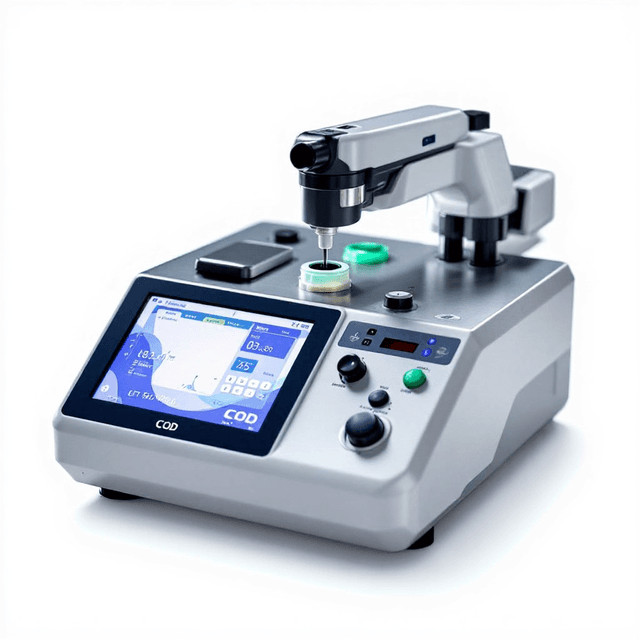
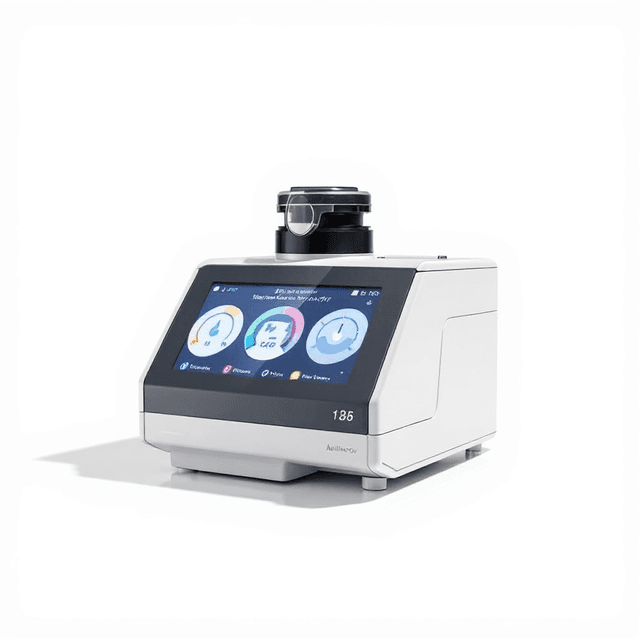
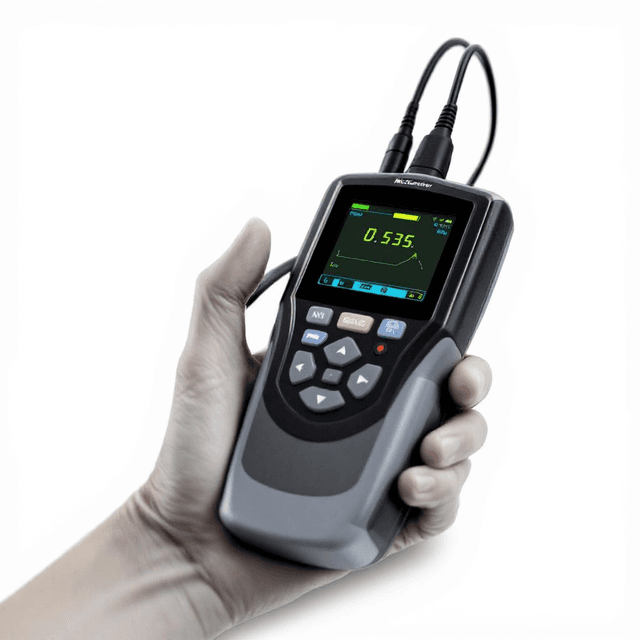
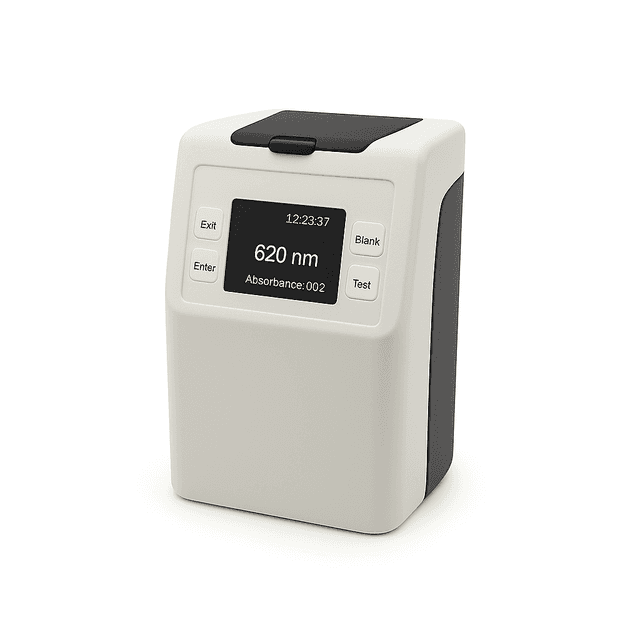
The Multi-Parameter Portable Water Quality Detector employs spectrophotometry to quantify dissolved compounds and contaminants in aqueous samples across multiple wavelengths (420nm, 470nm, 520nm, 620nm). This portable instrument measures absorbance from 0-3.0 Abs with 0.001 Abs resolution, enabling analysis of dozens of water quality parameters through colorimetric reactions. The IP65-rated housing provides protection against dust and water ingress for field applications.
The instrument utilizes LED light sources with 100,000-hour operational life and optical filters rated for 5-year service life. Stability specifications of ±0.005Abs/30min optical path drift and ±0.01Abs operating repeatability support quantitative analysis protocols requiring consistent measurements over extended testing periods.
How It Works
The instrument operates on Beer-Lambert law principles, measuring the attenuation of specific wavelengths of light as they pass through a sample. LED light sources at 420nm, 470nm, 520nm, and 620nm emit monochromatic light through the sample cell, with photodetectors measuring transmitted light intensity. The ratio of incident to transmitted light intensity yields absorbance values that correlate with analyte concentration.
Sample preparation typically involves adding specific reagents that react with target analytes to form colored complexes with maximum absorption at one of the four available wavelengths. The microprocessor calculates concentration using pre-programmed calibration curves for each parameter. Multiple wavelengths enable simultaneous or sequential analysis of different compounds without optical interference.
Features & Benefits
Absorbance measuring range
- 0-3.0 Abs
Stability of optical path
- â¤Â±0.005Abs/30min
Absorbance resolution
- 0.001Abs
IP Class
- IP65 above
LED operating life
- 100000 hours
Optical filter life
- 5 years
Rated capacity
- 0.3W
Operating repeatable
- â¤Â±0.01Abs
Automation Level
- semi-automated
Brand
- ConductScience
Research Domain
- Analytical Chemistry
- Environmental Monitoring
- Food Science
- Industrial Hygiene
- Microbiology
- Pharmaceutical QC
Shipping weight
- 0.26 lb
Shipping box
- L: 20.0 cm
- W: 10.0 cm
- H: 5.0 cm
| Feature | This Product | Typical Alternative | Advantage |
|---|---|---|---|
| Measurement Range | 0-3.0 Abs with 0.001 Abs resolution | Entry-level models often provide 0-2.0 Abs range with lower resolution | Extended range accommodates concentrated samples without dilution, while high resolution enables trace-level detection. |
| Wavelength Options | Four discrete wavelengths (420, 470, 520, 620nm) | Basic units typically offer 1-2 wavelengths | Multiple wavelengths enable analysis of diverse parameters without changing optical components. |
| Optical Stability | ±0.005Abs/30min drift specification | Portable units often have higher drift rates | Low drift maintains measurement accuracy during extended analytical runs without frequent recalibration. |
| Environmental Protection | IP65 rating for dust and water resistance | Many portable units offer lower IP ratings | Higher protection enables reliable field operation in challenging environmental conditions. |
| LED Service Life | 100,000-hour LED operational life | Standard LEDs may have shorter service intervals | Extended service life reduces maintenance costs and ensures consistent light output over years of use. |
This instrument combines multi-wavelength capability with laboratory-grade measurement specifications in a field-portable package. The 0-3.0 Abs range with 0.001 Abs resolution, coupled with ±0.005Abs/30min stability, provides quantitative analysis performance suitable for both field screening and analytical laboratory applications.
Practical Tips
Perform zero calibration with deionized water at each wavelength before sample analysis, and verify with certified standards.
Why: Baseline drift can introduce systematic errors that compromise quantitative accuracy across all measurements.
Clean sample cell holder and optical windows weekly with lint-free wipes and appropriate solvents.
Why: Optical contamination directly affects light transmission and can cause measurement bias or reduced sensitivity.
Allow 15-minute warm-up period before measurements and maintain consistent ambient temperature during analytical runs.
Why: LED output and detector response can vary with temperature changes, affecting measurement repeatability.
If measurements show high variability, check for air bubbles in sample cell and verify proper cell seating.
Why: Air bubbles scatter light and cause erratic readings, while improper cell alignment affects optical path length.
Run duplicate measurements for critical samples and document environmental conditions during field analysis.
Why: Replicate measurements identify random errors while environmental data helps interpret result variations.
Handle reagents according to safety data sheets and dispose of chemical waste following institutional protocols.
Why: Colorimetric reagents may contain hazardous chemicals requiring proper handling and disposal procedures.
Setup Guide
What’s in the Box
- Multi-parameter water quality detector main unit
- Sample cell holder and optical cells (typical)
- Power adapter (0.3W rated)
- USB cable for data transfer (typical)
- User manual and quick reference guide (typical)
- Calibration certificate (typical)
- Protective carrying case (typical)
Warranty
ConductScience provides standard one-year manufacturer warranty covering defects in materials and workmanship, with technical support for calibration and operational questions.
Compliance
What types of water quality parameters can this instrument measure?
The four-wavelength system (420, 470, 520, 620nm) supports colorimetric analysis of dissolved metals, nutrients, chemical oxygen demand, chlorine residuals, and other compounds that form colored complexes through standard reagent reactions.
How does measurement accuracy compare to laboratory-grade spectrophotometers?
With ±0.01 Abs repeatability and 0.001 Abs resolution, accuracy approaches benchtop instruments while providing portable operation. Consult product datasheet for specific accuracy specifications across the measurement range.
What sample volume is required for analysis?
The instrument requires small sample volumes as specified in the product description, though exact volume requirements should be confirmed in the technical datasheet for optimal measurement performance.
Can this instrument store calibration curves and measurement data?
Data storage and calibration capabilities depend on internal memory specifications not provided in basic product information. Consult detailed specifications for data management features.
How frequently does the instrument require recalibration?
With ±0.005Abs/30min optical stability, recalibration frequency depends on measurement accuracy requirements. Daily verification with standards is typical for quantitative work, with full recalibration weekly or monthly.
What environmental conditions affect measurement performance?
IP65 rating permits operation in dusty and wet conditions. Temperature stability and humidity specifications should be consulted in technical documentation for optimal measurement conditions.
Have a question about this product?
Have a question? Just ask.
Send it over and we'll email you a personalized answer — no call, no scheduling.
Prefer to talk it through?
Accessories
Enhance your setup with compatible accessories