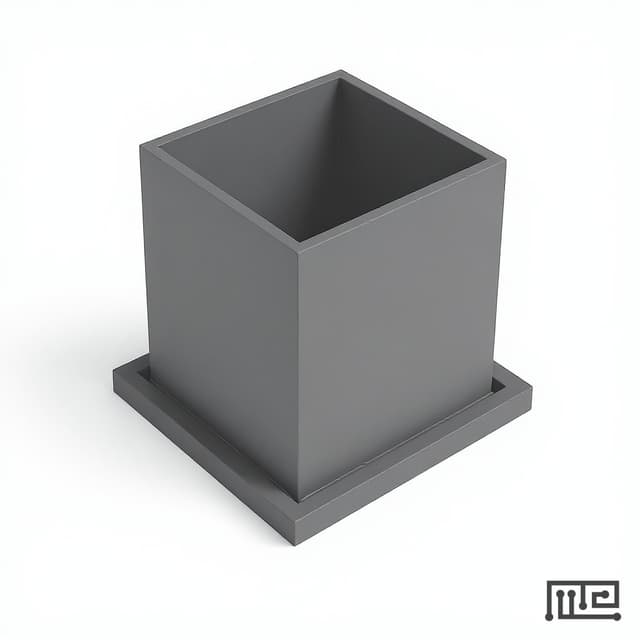
Zebrafish 3 Chamber Choice
Three-chamber behavioral testing apparatus for assessing spatial and non-spatial learning, memory, and cognitive functions in zebrafish through controlled choice paradigms.
| number_of_compartments | 3 |
| sliding_window_height | 12 cm |
| sliding_window_width | 10 cm |
| minimum_punishment_space | 2 cm from end wall |
| acclimation_period | 1 minute |
| reward_duration | 30 seconds |

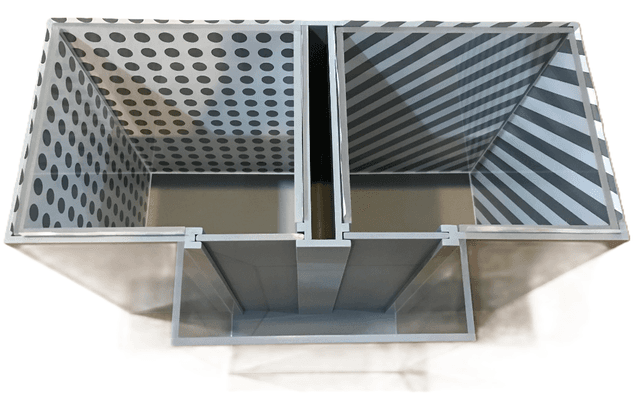
The Zebrafish 3 Chamber Choice apparatus is a specialized behavioral testing system designed for assessing spatial and non-spatial learning, memory, and cognitive functions in zebrafish (Danio rerio). The apparatus consists of a central compartment (22 cm x 18 cm) connected to two choice areas (22 cm x 13 cm each) through sliding doors (12 cm x 10 cm), constructed from durable Plexiglas with total dimensions of 44 cm x 22 cm x 30 cm.
This paradigm enables researchers to evaluate zebrafish navigation behavior, spatial discrimination learning, and reversal learning capabilities using both reward-based and aversive conditioning protocols. The design incorporates visual cues through dark panels positioned on one side of each compartment, allowing for controlled presentation of spatial or non-spatial learning tasks. The apparatus supports standardized testing protocols with defined timing parameters including 1-minute acclimation periods, 30-second reward durations, 10-second punishment periods, and 20-second choice timeouts.
How It Works
The three-chamber choice paradigm operates on principles of operant conditioning and spatial cognition assessment. Zebrafish are placed in the central compartment and must choose between two lateral chambers to receive rewards or avoid punishment. The apparatus utilizes sliding doors to control access between compartments, creating distinct choice points that test decision-making abilities.
For spatial learning tasks, subjects are trained to navigate in a specific direction upon entering the central compartment, with correct choices leading to expanded swimming areas and incorrect choices resulting in confined spaces near the end wall (minimum 2 cm from wall). Non-spatial learning protocols require fish to approach specific visual cues (dark panels) regardless of their spatial location. The standardized timing protocols ensure consistent behavioral measurements across experimental sessions.
Visual discrimination is facilitated through dark panels positioned on one side of each compartment, providing distinct environmental cues that fish can learn to associate with rewards or punishments. The water temperature is maintained at 28.5°C under a 12-hour light-dark cycle, with testing conducted during the light phase (8 a.m. to 5 p.m.) to ensure optimal behavioral responsiveness.
Features & Benefits
number_of_compartments
- 3
sliding_window_height
- 12 cm
sliding_window_width
- 10 cm
minimum_punishment_space
- 2 cm from end wall
acclimation_period
- 1 minute
reward_duration
- 30 seconds
punishment_duration
- 10 seconds
choice_timeout
- 20 seconds
testing_sessions
- 5 sessions average
water_temperature
- 28.5°C
light_cycle
- 12-hour light and dark cycle
testing_time
- 8 a.m. to 5 p.m. (light phase)
visual_cue
- dark panel on one side of each compartment
Behavioral Construct
- Spatial learning
- Non-spatial learning
- Memory formation
- Decision making
- Discrimination learning
- Reversal learning
- Cognitive flexibility
Automation Level
- manual
Material
- Plexiglas
Species
- Zebrafish
Dimensions
- 44 cm x 22 cm x 30 cm
Research Domain
- Behavioral Pharmacology
- Developmental Biology
- Learning and Memory
- Neurodegeneration
- Neuroscience
- Toxicology
Weight
- 21.0 kg
Dimensions
- L: 43.2 mm
- W: 38.0 mm
- H: 27.9 mm
Comparison Guide
| Feature | This Product | Typical Alternative | Advantage |
|---|---|---|---|
| Chamber Configuration | Three-compartment system with central decision zone and two choice areas | Traditional T-maze designs often use simple bifurcating paths | Enables more complex decision-making assessments with integrated reward-punishment conditioning |
| Door Control System | Sliding doors with 12 cm x 10 cm standardized openings | Basic maze designs may lack controlled access mechanisms | Provides precise timing control for choice presentations and movement restriction during protocols |
| Visual Cue Integration | Integrated dark panels for discrimination learning on each compartment side | Simple mazes often require external cue placement | Built-in visual discrimination capabilities reduce setup complexity and ensure consistent stimulus presentation |
| Protocol Standardization | Defined timing parameters including 30-second rewards, 10-second punishments, and 20-second choice timeouts | Many behavioral apparatuses lack standardized timing protocols | Ensures reproducible measurements and facilitates comparison across studies and laboratories |
| Chamber Dimensions | 22 cm x 13 cm choice areas with 22 cm x 18 cm central compartment | Standard dimensions vary significantly across different maze designs | Optimized spacing provides adequate swimming room while maintaining spatial constraints for decision-making |
This three-chamber apparatus provides comprehensive spatial and non-spatial learning assessment capabilities through its integrated door control system, standardized timing protocols, and built-in visual cue presentation. The design offers more complex behavioral evaluation than traditional T-maze configurations while maintaining reproducible experimental conditions.
Practical Tips
Verify sliding door opening dimensions weekly using calipers to ensure consistent 12 cm x 10 cm access points.
Why: Door dimension variations can affect fish movement patterns and compromise behavioral data consistency.
Replace chamber water completely between experimental cohorts and inspect Plexiglas surfaces for algae buildup or scratches.
Why: Clean surfaces ensure optimal behavioral observation and prevent environmental factors from influencing choice behavior.
Maintain consistent lighting conditions and minimize external vibrations during testing sessions.
Why: Environmental stability reduces stress-induced behavioral variability and improves data reliability.
Record fish position at 5-second intervals during choice periods to capture detailed movement patterns.
Why: High-frequency position tracking enables analysis of decision-making latency and exploration behavior patterns.
If fish show position bias toward one chamber, rotate the entire apparatus 180 degrees to control for environmental gradients.
Why: Apparatus rotation helps distinguish true spatial learning from environmental bias effects.
Standardize fish size within experimental groups to 3-4 cm total length for consistent swimming capability.
Why: Size standardization reduces locomotor variability and ensures comparable navigation abilities across subjects.
Monitor water temperature continuously during extended testing sessions to prevent thermal stress.
Why: Temperature fluctuations can significantly affect zebrafish behavior and compromise experimental validity.
Setup Guide
What’s in the Box
- Three-chamber Plexiglas apparatus (typical)
- Sliding door components (typical)
- Dark panel visual cues (typical)
- Assembly instructions (typical)
- Protocol timing guide (typical)
Warranty
ConductScience provides a standard 1-year manufacturer warranty covering defects in materials and workmanship, with technical support for protocol optimization and troubleshooting.
Compliance
What water depth should be maintained in the chambers for optimal fish behavior?
Consult product datasheet for specific water depth recommendations, though typically 3-5 cm depth allows natural swimming behavior while preventing jumping.
How many fish can be tested simultaneously in the apparatus?
The apparatus is designed for single-fish testing to ensure individual behavioral assessment and eliminate social influences on choice behavior.
What is the recommended inter-trial interval between testing sessions?
Standard protocols typically use 24-hour intervals between sessions to allow memory consolidation, though this can be adjusted based on experimental requirements.
Can the visual cue panels be modified for different experimental designs?
Yes, the dark panels can be repositioned or replaced with alternative visual stimuli to accommodate various discrimination learning protocols.
How should the apparatus be cleaned between subjects to prevent olfactory cues?
Thoroughly rinse with dechlorinated water and allow complete water replacement between subjects to eliminate potential chemical cues that could influence behavior.
What baseline performance criteria indicate successful training?
Consult protocol literature for specific criteria, though typically 70-80% correct choices over consecutive sessions indicates successful spatial or non-spatial learning.
How does this compare to traditional T-maze designs for zebrafish?
The three-chamber design incorporates reward-punishment conditioning with variable swimming space, providing more complex behavioral assessment than simple left-right T-maze choices.
Have a question about this product?
Accessories
Enhance your setup with compatible accessories
Frequently Bought Together