Zebrafish Associative Learning
Multi-chamber acrylic apparatus for assessing visual discrimination and associative learning in adult zebrafish through controlled cue-based behavioral protocols.
| number_of_chambers | 4 chambers per side (8 total) |
| chamber_dimensions | 15 cm x 10.5 cm x 25 cm |
| open_compartment_dimensions | 60 cm x 25 cm x 25 cm |
| connecting_tube_length | 9 cm |
| color_cue_cards | ['yellow', 'blue', 'red', 'green'] |
| transparent_doors | included for access control |

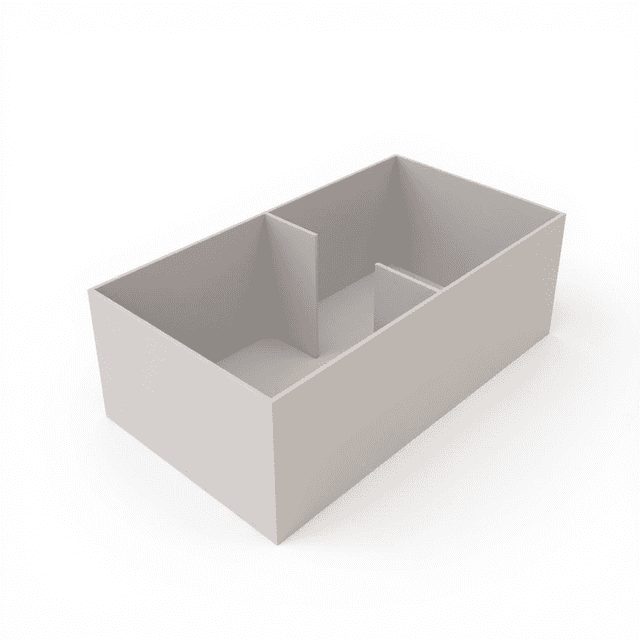
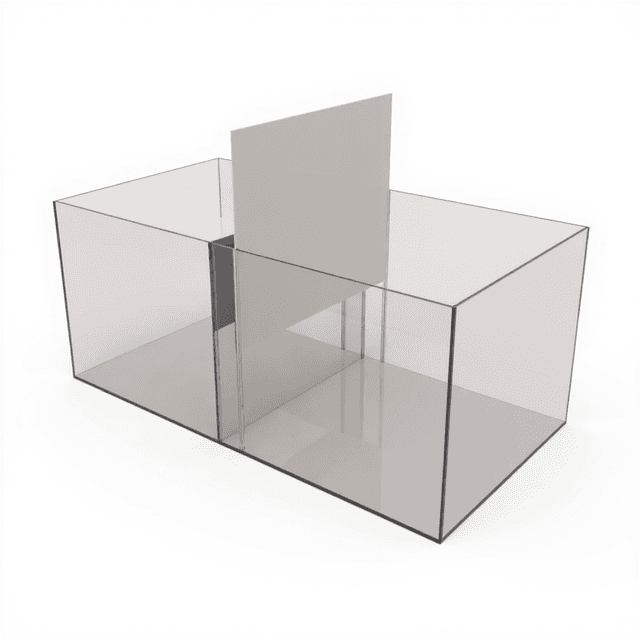
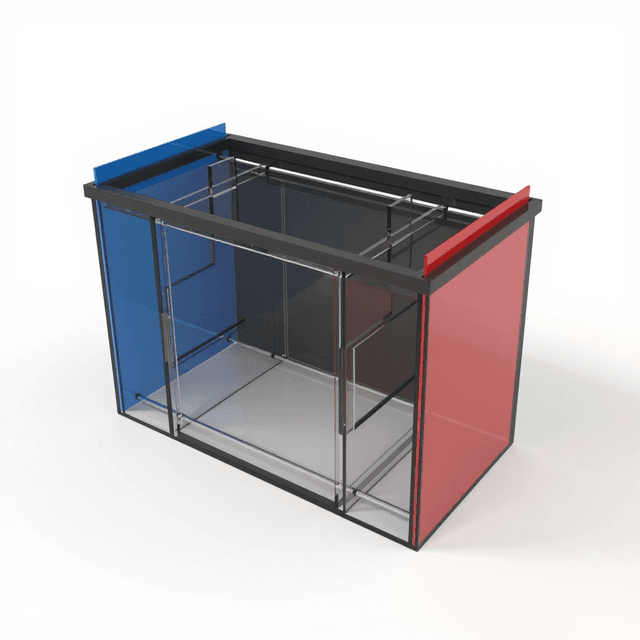
The Zebrafish Associative Learning apparatus is a multi-chamber behavioral testing system designed for evaluating visual discrimination and cognitive performance in adult zebrafish (Danio rerio). This acrylic aquarium features 4 start chambers and 4 target chambers separated by an open compartment, enabling controlled assessment of associative learning capabilities through visual cue discrimination tasks.
The system incorporates removable colored cue cards (yellow, blue, red, green) and transparent sliding doors for precise experimental control. Each chamber measures 15 cm × 10.5 cm × 25 cm, providing standardized spatial dimensions for consistent behavioral protocols. The apparatus supports investigation of vertebrate neural plasticity mechanisms and mnemonic characteristics in a well-established model organism.
How It Works
The apparatus employs a visual discrimination paradigm where zebrafish learn to associate specific colored cues with spatial locations. Fish begin in one of four start chambers and must navigate through the open compartment to reach target chambers, each marked with a distinct colored cue card (yellow, blue, red, or green). The learning process relies on the fish's ability to form associative memories between visual stimuli and spatial rewards.
Transparent sliding doors control access between compartments, allowing researchers to implement training and testing phases with precise temporal control. The open compartment design ensures that fish must actively choose between target chambers based on visual cues rather than spatial proximity alone. Performance metrics typically include choice accuracy, latency to decision, and learning acquisition curves across multiple trials.
Features & Benefits
number_of_chambers
- 4 chambers per side (8 total)
chamber_dimensions
- 15 cm x 10.5 cm x 25 cm
open_compartment_dimensions
- 60 cm x 25 cm x 25 cm
connecting_tube_length
- 9 cm
color_cue_cards
- ['yellow', 'blue', 'red', 'green']
transparent_doors
- included for access control
design_feature
- removable acrylic inserts
Behavioral Construct
- Associative Learning
- Visual Discrimination
- Spatial Memory
- Choice Behavior
Automation Level
- manual
Material
- Acrylic
Species
- Zebrafish
chamber_separation
- separated by open compartment
Dimensions
- 60 cm x 47 cm x 25 cm
Research Domain
- Behavioral Pharmacology
- Developmental Biology
- Learning and Memory
- Neurodegeneration
- Neuroscience
- Toxicology
Weight
- 21.0 kg
Dimensions
- L: 43.2 mm
- W: 38.0 mm
- H: 27.9 mm
Comparison Guide
| Feature | This Product | Typical Alternative | Advantage |
|---|---|---|---|
| Number of Choice Options | 4 target chambers with individual cue cards | Most behavioral mazes offer 2-3 choice arms | Enables more complex discrimination tasks and reduces chance performance levels from 50% to 25%. |
| Chamber Standardization | Identical 15 cm × 10.5 cm × 25 cm dimensions for all chambers | Variable arm lengths and widths in traditional maze designs | Eliminates spatial preference confounds and ensures consistent swimming space across all choice options. |
| Visual Cue Control | 4 removable colored cue cards (yellow, blue, red, green) | Fixed spatial markers or fewer color options | Allows systematic cue rotation and counterbalancing to isolate visual discrimination learning from spatial preferences. |
| Access Control | Transparent sliding doors with 9 cm openings | Open maze designs or manual barriers | Provides precise temporal control over movement phases and prevents premature decisions during setup. |
| Decision Space Design | Large central open compartment (60 cm × 25 cm) | Narrow junction points in traditional mazes | Ensures fish must actively approach and evaluate each target chamber rather than making proximity-based choices. |
This apparatus provides enhanced experimental control through standardized multi-chamber design, systematic visual cue presentation, and precise temporal control of behavioral phases. The 4-choice configuration reduces chance performance while removable cue cards enable sophisticated counterbalancing procedures.
Practical Tips
Verify cue card visibility from all start chamber positions before beginning experiments to ensure consistent visual stimulus presentation.
Why: Uneven lighting or viewing angles can create discrimination bias unrelated to learning ability.
Clean acrylic surfaces with aquarium-safe cleaners and avoid abrasive materials that could create scratches affecting optical clarity.
Why: Surface scratches or chemical residues can interfere with visual discrimination tasks.
Randomize cue card positions across trials and counterbalance color-location pairings between subjects to control for spatial preferences.
Why: Systematic randomization isolates true associative learning from confounding spatial or color biases.
If fish show reluctance to leave start chambers, reduce water flow and verify door openings are fully clear of obstructions.
Why: Physical barriers or water turbulence can prevent normal exploratory behavior necessary for choice tasks.
Record both choice accuracy and decision latency to distinguish between learning acquisition and performance motivation.
Why: Changes in response time provide additional insights into confidence and decision-making processes beyond accuracy alone.
Monitor water temperature and quality throughout extended behavioral sessions to prevent stress-induced performance changes.
Why: Environmental stress can confound cognitive performance measures and affect the validity of learning assessments.
Allow 24-48 hours between training sessions to optimize memory consolidation in zebrafish subjects.
Why: Adequate inter-session intervals prevent fatigue effects and allow proper memory formation processes to occur.
If sliding doors stick or bind, check for water mineral deposits and clean tracks with appropriate aquarium-safe solutions.
Why: Smooth door operation is essential for consistent timing control during behavioral protocols.
Setup Guide
What’s in the Box
- Main acrylic chamber assembly (60 cm × 47 cm × 25 cm)
- 4 start chamber inserts (15 cm × 10.5 cm × 25 cm each)
- 4 target chamber inserts (15 cm × 10.5 cm × 25 cm each)
- 4 removable colored cue cards (yellow, blue, red, green)
- 4 transparent sliding doors
- Assembly hardware and instructions (typical)
- User manual with protocol examples (typical)
Warranty
ConductScience provides standard 1-year manufacturer warranty covering defects in materials and workmanship, with technical support for protocol development and troubleshooting.
Compliance
References
Background reading relevant to this product:
What is the optimal water depth for behavioral testing protocols?
Consult protocol references for specific depth requirements, typically 8-15 cm to allow normal swimming behavior while maintaining visual access to cue cards.
How are learning performance metrics typically quantified?
Standard measures include choice accuracy percentage, latency to target chamber entry, number of trials to criterion, and learning curve analysis across sessions.
What cue card randomization procedures prevent spatial bias?
Systematic rotation of color-location pairings across trials and subjects prevents fish from learning spatial rather than visual associations.
How frequently should apparatus cleaning be performed?
Clean between subjects with aquarium-safe disinfectants to prevent chemical contamination and maintain optical clarity of acrylic surfaces.
What fish housing conditions optimize performance in associative learning tasks?
Maintain standard zebrafish conditions (26-28°C, 14:10 light:dark cycle) with consistent feeding schedules to minimize stress effects on cognitive performance.
Can the apparatus accommodate juvenile zebrafish testing?
Chamber dimensions are optimized for adult zebrafish; juvenile testing may require protocol modifications to account for reduced swimming capacity and visual acuity.
What statistical considerations apply to multi-trial learning data?
Use repeated-measures analyses to account for within-subject correlation across trials, with appropriate corrections for multiple comparisons between groups.
Have a question about this product?
Accessories
Enhance your setup with compatible accessories
Frequently Bought Together