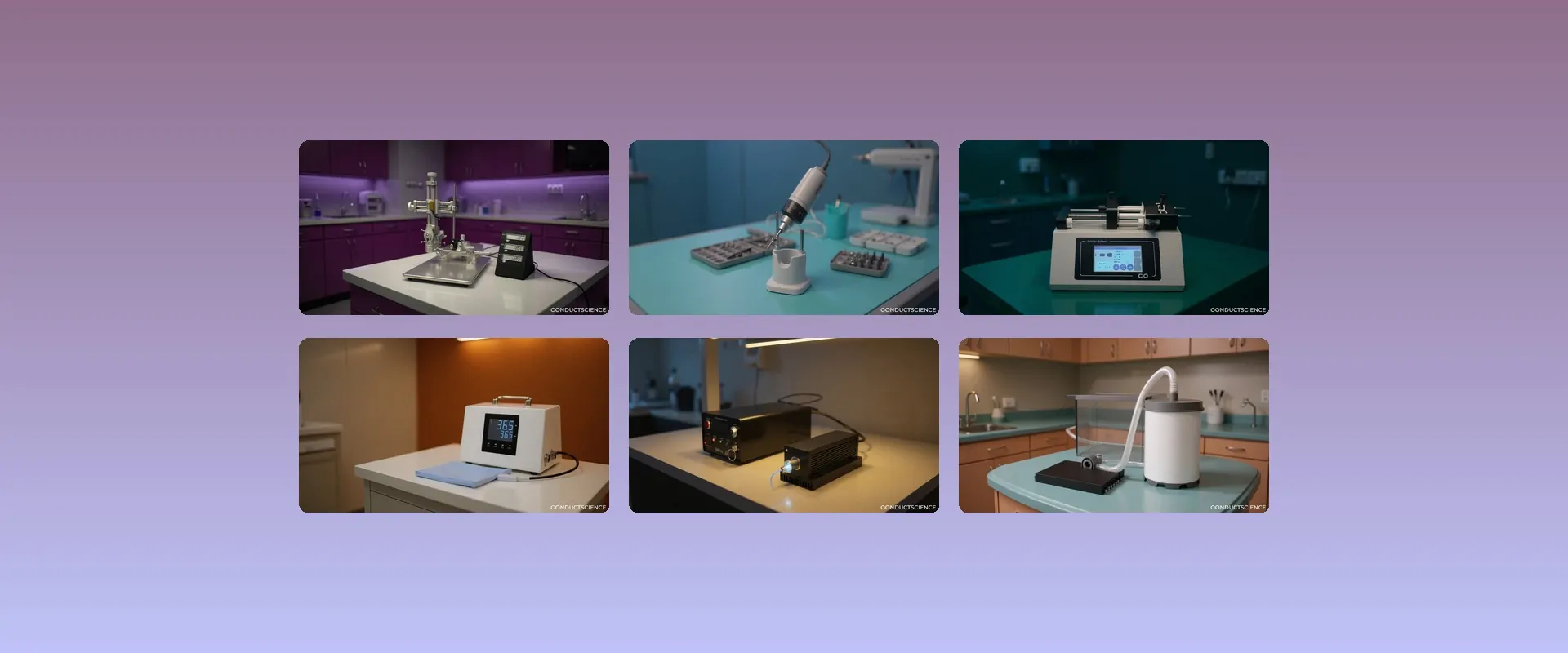
Building Your Neurosurgery Suite
From coordinates to recovery, the six instruments that make precision neurosurgery possible.
Stereotaxic System
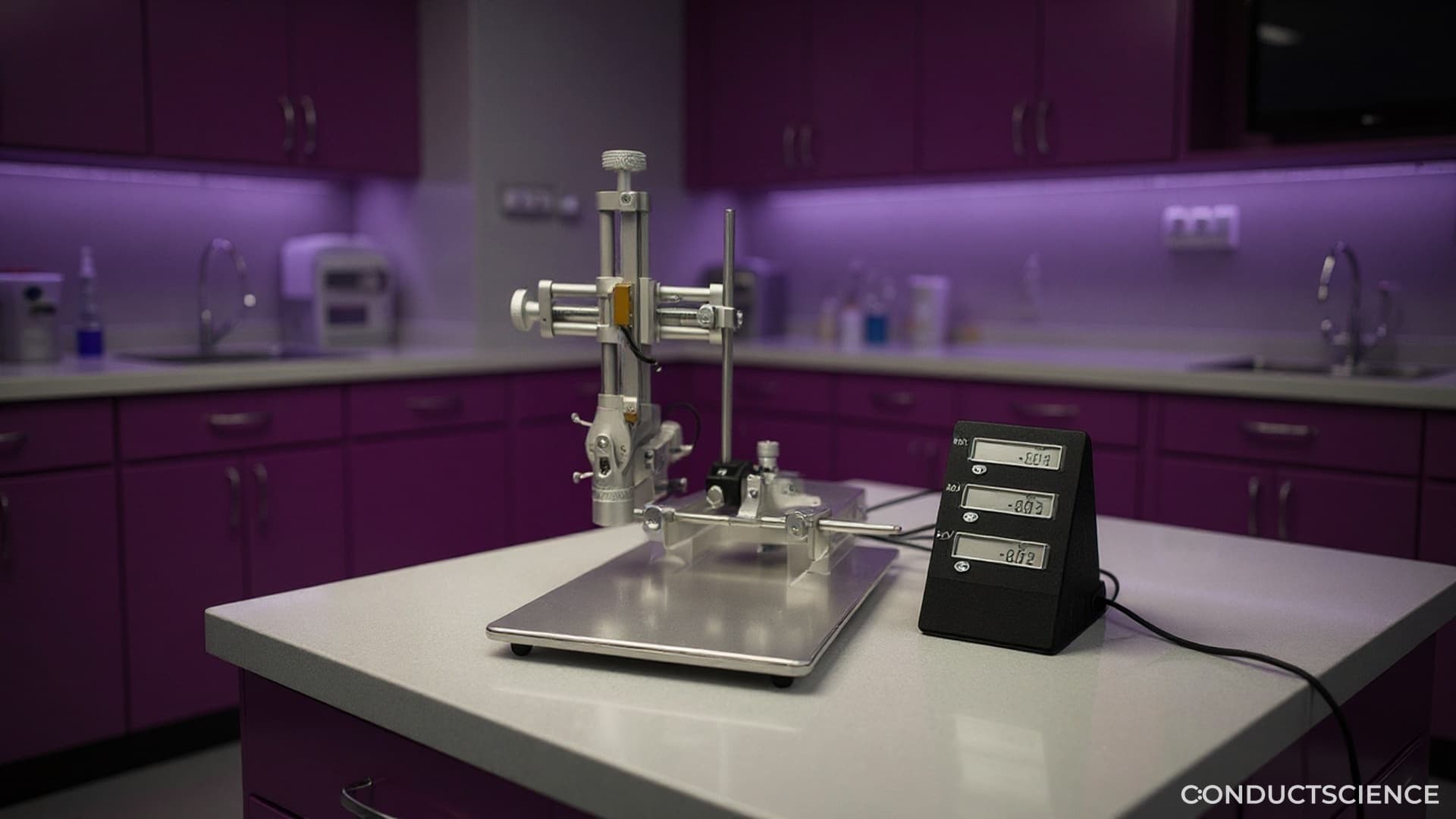
Three numbers from the atlas. AP minus 1.94 from bregma, ML 0.5 lateral, DV 4.8 below dura. You dial them into the manipulator one decimal at a time, the verniers clicking on every hundredth of a millimeter. The animal is fixed in the ear bars and the incisor clamp, the skull leveled within fifty microns. Stereotaxic surgery is a contract with the atlas: if the coordinates are right and the frame is true, the needle finds the structure. The frame guarantees it. The atlas signs for it.
Explore the Stereotaxic System →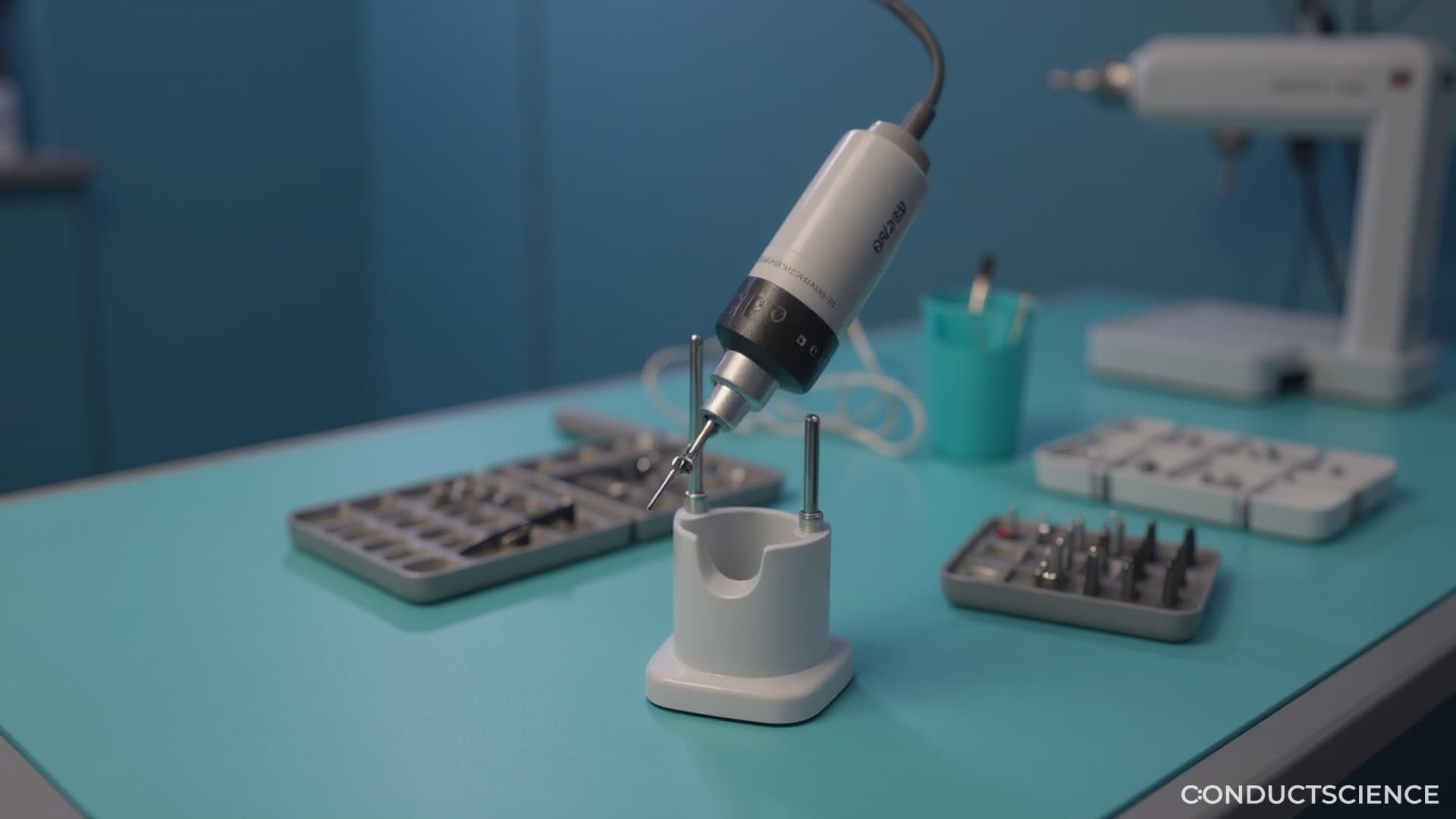
High-Speed Microdrill
A high-speed micromotor at thirty thousand rpm with a half-millimeter burr on the chuck. You touch the bit to bone above the target site and feel the resistance change three times as the burr passes through outer table, diploe, and inner table. The craniotomy opens like a small skylight, two by two millimeters of clean dura visible in the field. From here forward, every tool that descends into the brain will pass through this window. The drill made it. Nothing else gets you there.
Explore the High-Speed Microdrill →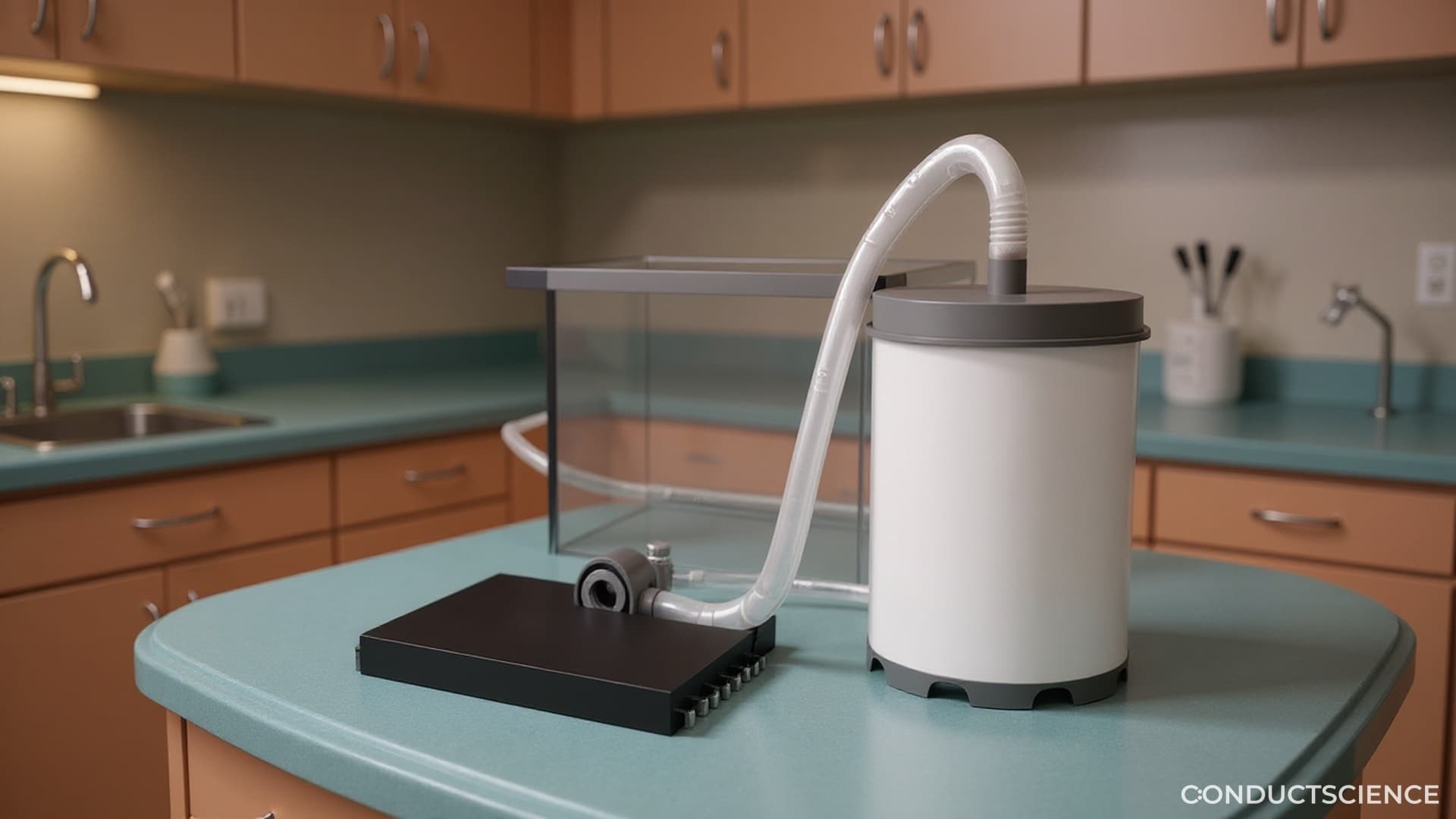
Passive Anesthesia System
Two percent isoflurane mixed with one liter per minute of medical oxygen, delivered through a nose cone with a passive scavenger. The animal breathes on its own at first, fifty respirations a minute, then forty, then thirty as the plane deepens. You confirm by toe pinch. No reflex. The passive system holds the gas mix steady for hours without an active pump or pressurized circuit, and the anesthesia stays even through long craniotomies. Survival surgery is built on this calm rhythm: a controlled atmosphere, an animal that wakes up.
Explore the Passive Anesthesia System →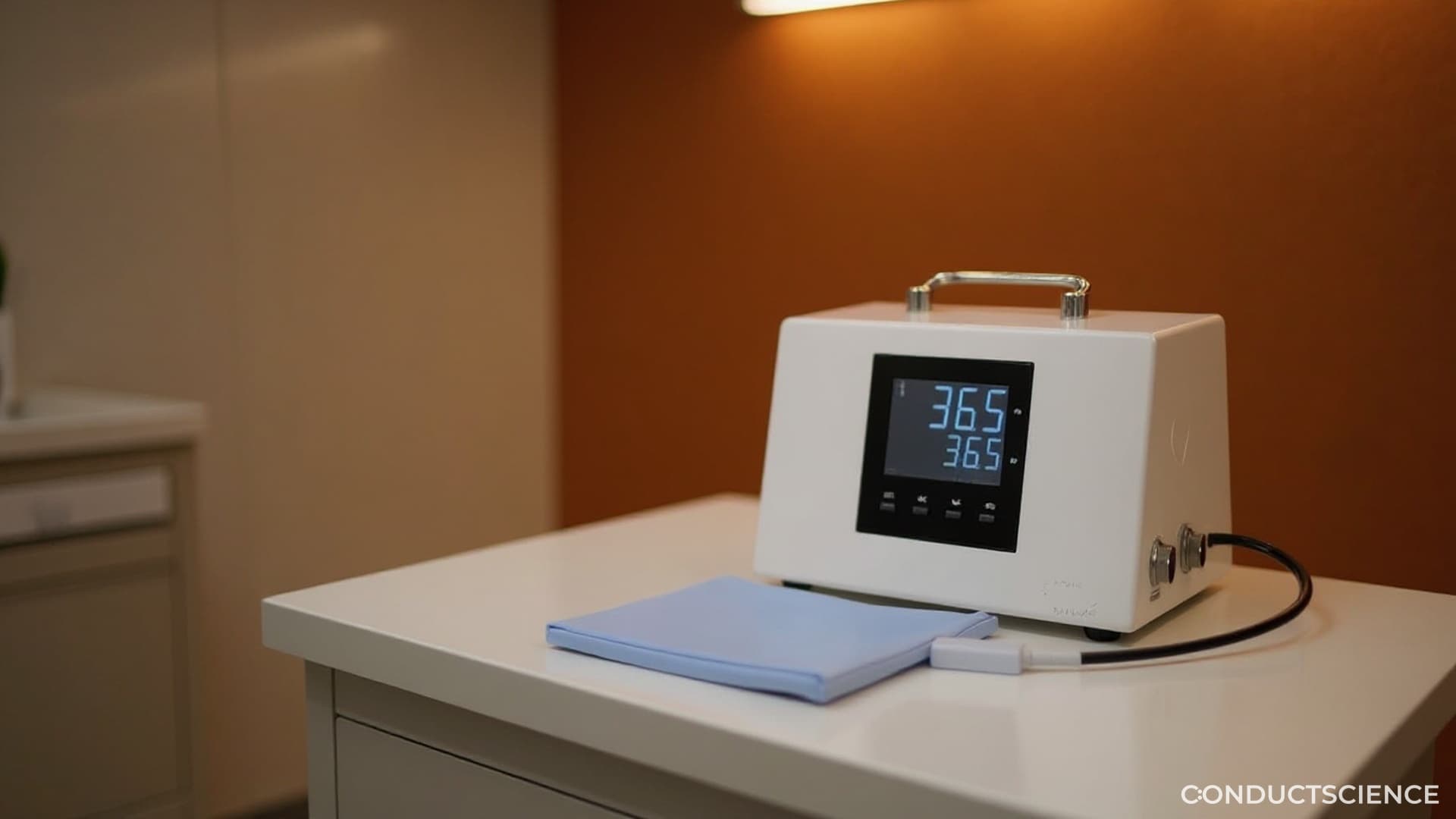
Homeothermic Monitoring System
A rectal probe reads core temperature once a second. The controller compares it to a setpoint of 37.0 Celsius and adjusts the heating pad underneath the animal, up by half a degree, down by a quarter. Anesthetized rodents lose heat fast, two to three degrees in the first twenty minutes if you let them. The closed-loop heater holds them steady through three-hour craniotomies. Body temperature is one of the silent variables in survival surgery, and the controller keeps it from becoming the loud one.
Explore the Homeothermic Monitoring System →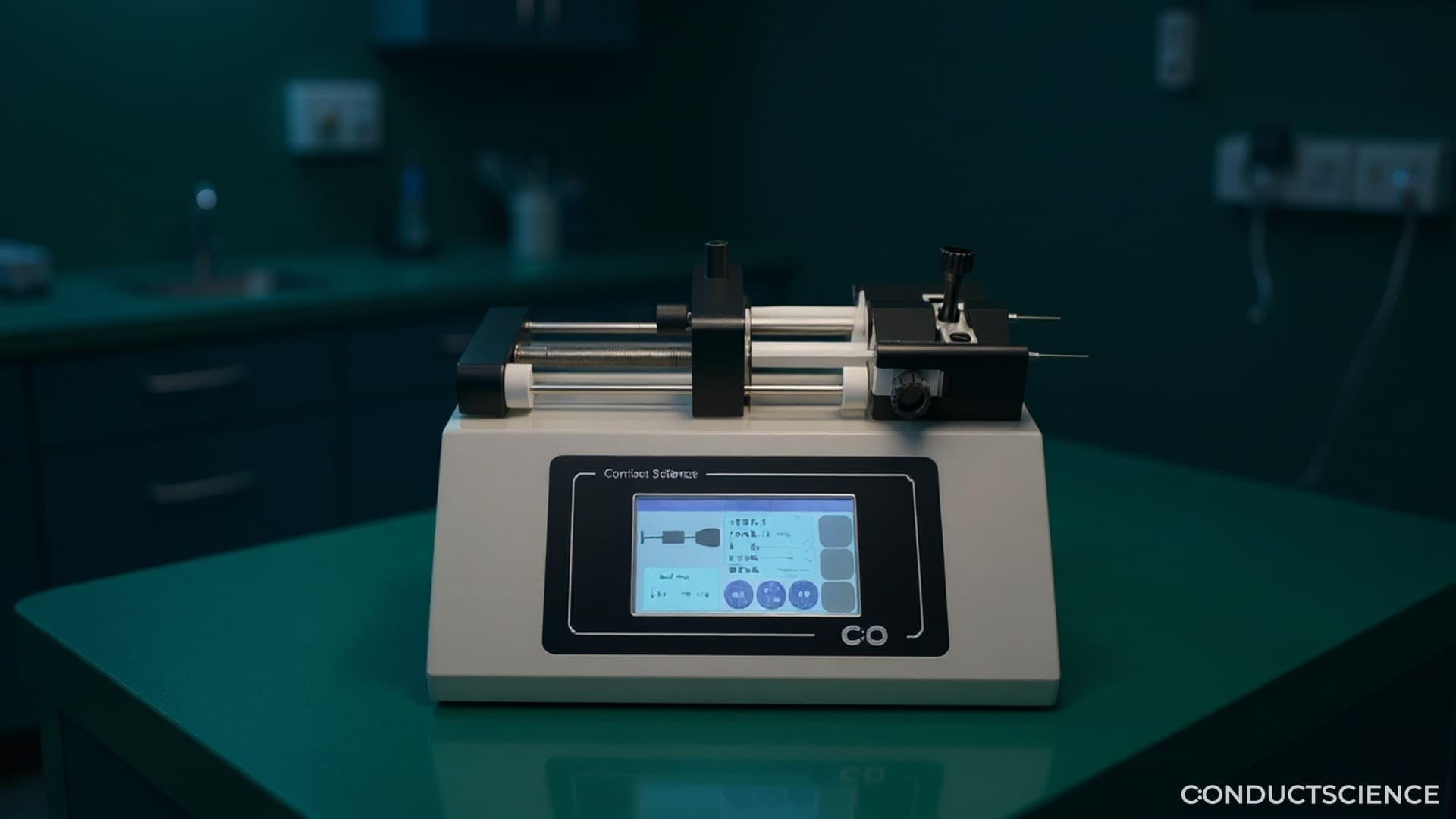
Syringe Pump
Five hundred nanoliters of AAV at one hundred nanoliters per minute. The syringe pump pushes the plunger forward in steps so small the human hand could never match them, releasing virus into the basolateral amygdala one tenth of a microliter at a time. You watch the meniscus tick down inside the glass barrel and know that the genetic instruction is now in the tissue, expressing channelrhodopsin under a CaMKII promoter. The pump made the dose deliverable. Without it, every injection would be an estimate.
Explore the Syringe Pump →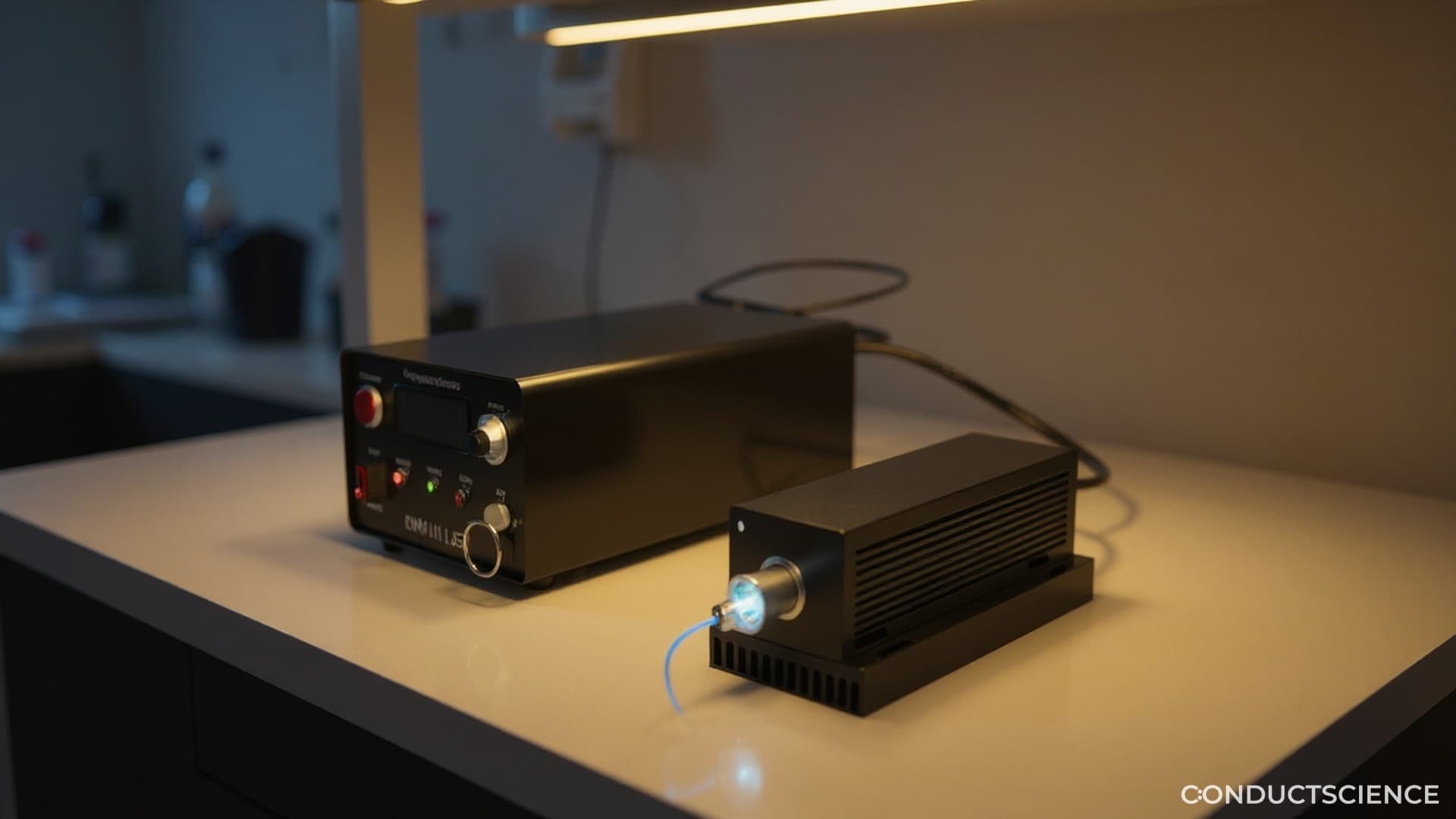
Optogenetics System
Blue light, 473 nanometers, pulsing at twenty hertz through a fiber thinner than a human hair. The mouse freezes mid-stride. Light off and she resumes, as if nothing happened. You just activated a specific population of neurons in a freely moving animal, on command, with millisecond precision. Karl Deisseroth called it the most important technology in neuroscience. Standing in your darkened behavior room, watching a mouse stop and start at the speed of light, you understand why.
Explore the Optogenetics System →Six instruments. One suite. Every clean coordinate began with a frame and a steady hand.
Start Building Yours