Manual rotary
Teaching & Low-Throughput Labs
Best for: Histology teaching labs and small research groups processing fewer than 20 blocks per day
Key features: Hand-wheel driven, disposable blade holder, 1 um increments
Compare manual, semi-automatic, and fully automated rotary microtomes for your histology lab.
A rotary microtome is the core instrument in any paraffin histology workflow. It cuts thin sections from paraffin-embedded tissue blocks for mounting and staining. Section quality depends directly on the microtome precision, blade holding system, and specimen advance mechanism.
This guide helps you choose based on throughput, automation, section quality, and budget.
Microtome choice is mostly a throughput and consistency decision. Start with the work volume and operator burden you need to support, then compare features.
Best for: Histology teaching labs and small research groups processing fewer than 20 blocks per day
Key features: Hand-wheel driven, disposable blade holder, 1 um increments
Best for: Standard research histology with moderate throughput and repeatable section quality
Key features: Motorized advance, specimen retraction, programmable thickness
Best for: High-volume core labs, demanding tissue types, and serial sectioning
Key features: Full automation, waste tray, section transfer system, digital readout
Compare the main capability differences before you narrow by supplier preference or budget. These are the specs most likely to change section quality and operator speed.
| Product | Type | Section Range (um) | Automation Level | Specimen Retraction | Blade Compatibility |
|---|---|---|---|---|---|
| Manual Microtome Series | Manual | 1-60 | Manual | Manual | Disposable low-profile |
| Fully Automated Rotary Microtome Series | Fully Automated | 0.5-100 | Full motorized cut cycle | Automatic | Disposable low-profile and reusable |
| AccuSection Rotary Microtome | Semi-Auto / Fully Automated | 0.25-100 | Motorized advance | Automatic | Disposable low-profile and reusable |
Equipment comparison is more useful when it is connected to the protocol where the instrument actually matters.
These are the core product options referenced in the comparison guide. Use them to move from buying criteria into concrete product evaluation.
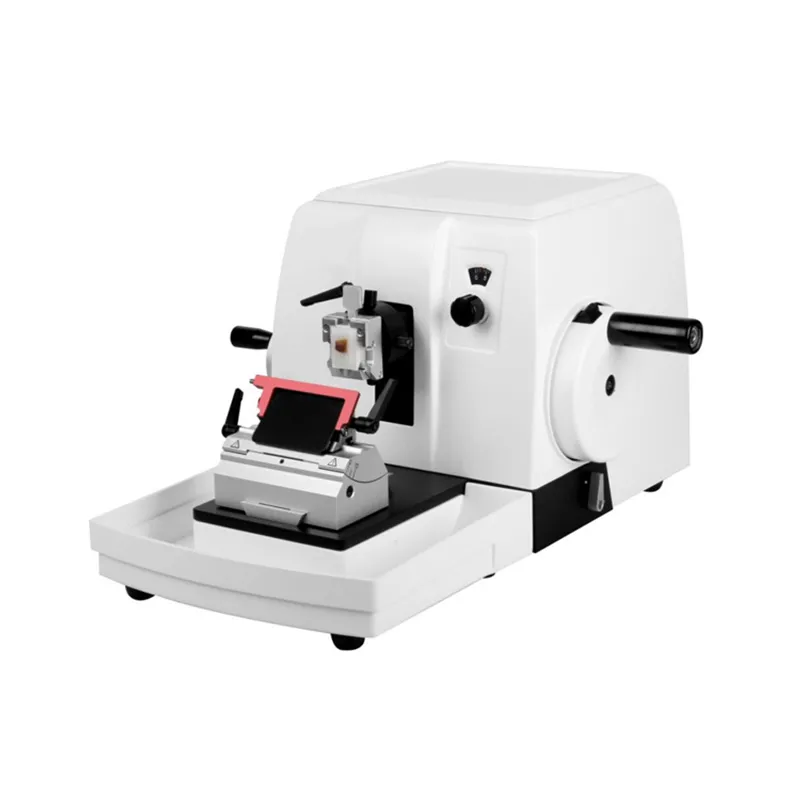
Hand-wheel driven rotary microtome for teaching and low-throughput research. Standard, Professional, and Advanced models are available.
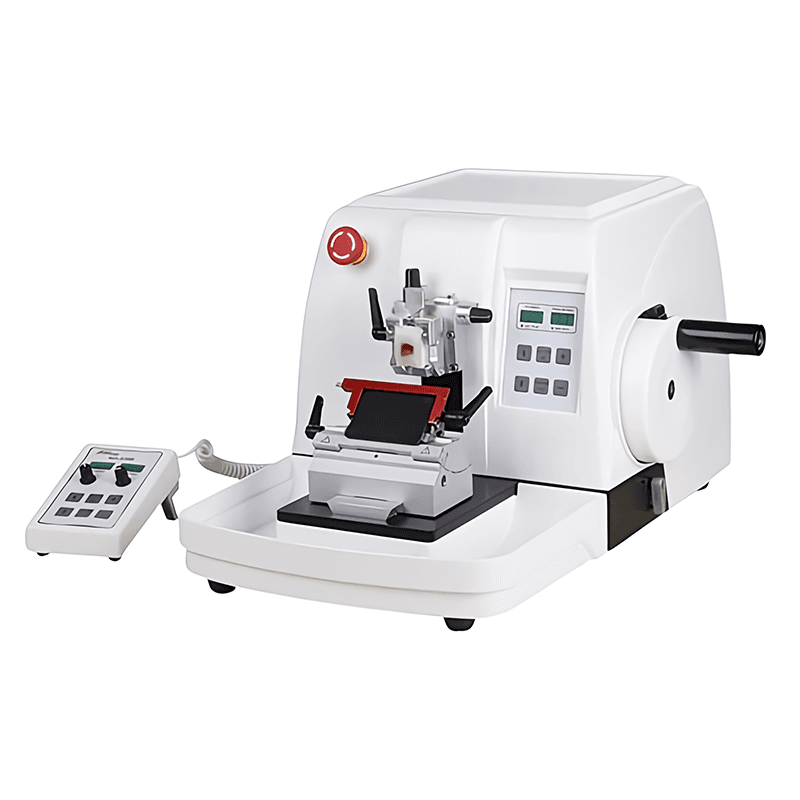
Motorized cutting cycle with programmable section thickness and specimen retraction for high-throughput core labs.
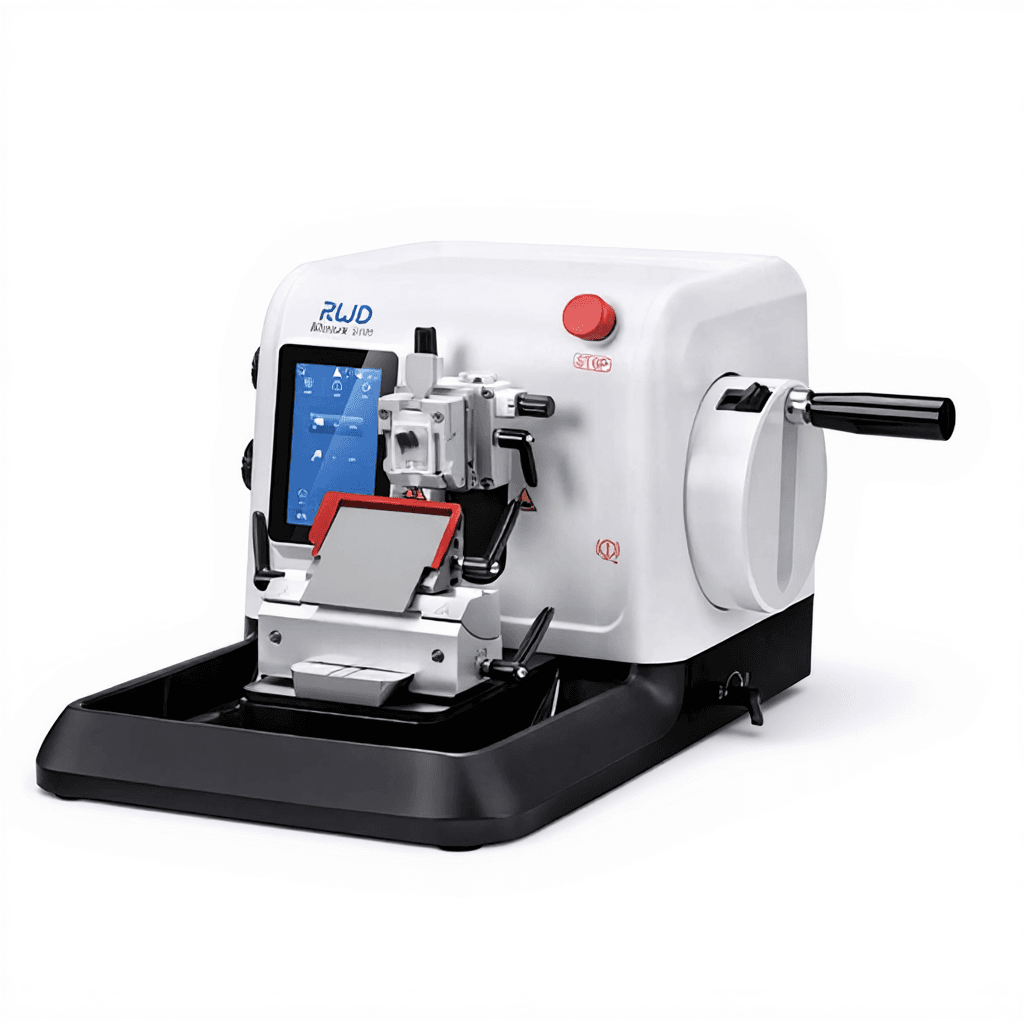
RWD AccuSection series with precision specimen orientation and digital thickness display.
Slaoui M, Fiette L. Histopathology procedures: from tissue sampling to histopathological evaluation. Methods Mol Biol. 2011;691:69-82. PMID 20972747
A manual microtome relies on the operator to drive the cut cycle. Semi-automatic systems motorize specimen advance, and fully automated models motorize the complete cut cycle. Automation improves consistency and reduces fatigue when throughput is high.
Disposable blades are commonly changed every 50-100 sections, or sooner when you hear scraping, see compression artifacts, or notice uneven section thickness. Hard tissues usually require more frequent blade changes.
No. Frozen sections require a cryostat, which is a microtome enclosed in a refrigerated chamber. Standard rotary microtomes are designed for paraffin-embedded tissue at room temperature.