Behavioral Tracking for Rat
Rattus norvegicus
Quantify locomotion, anxiety, spatial memory, operant behavior, and social interaction in Rattus norvegicus using automated behavioral tracking.

Why Rat in Behavioral Research
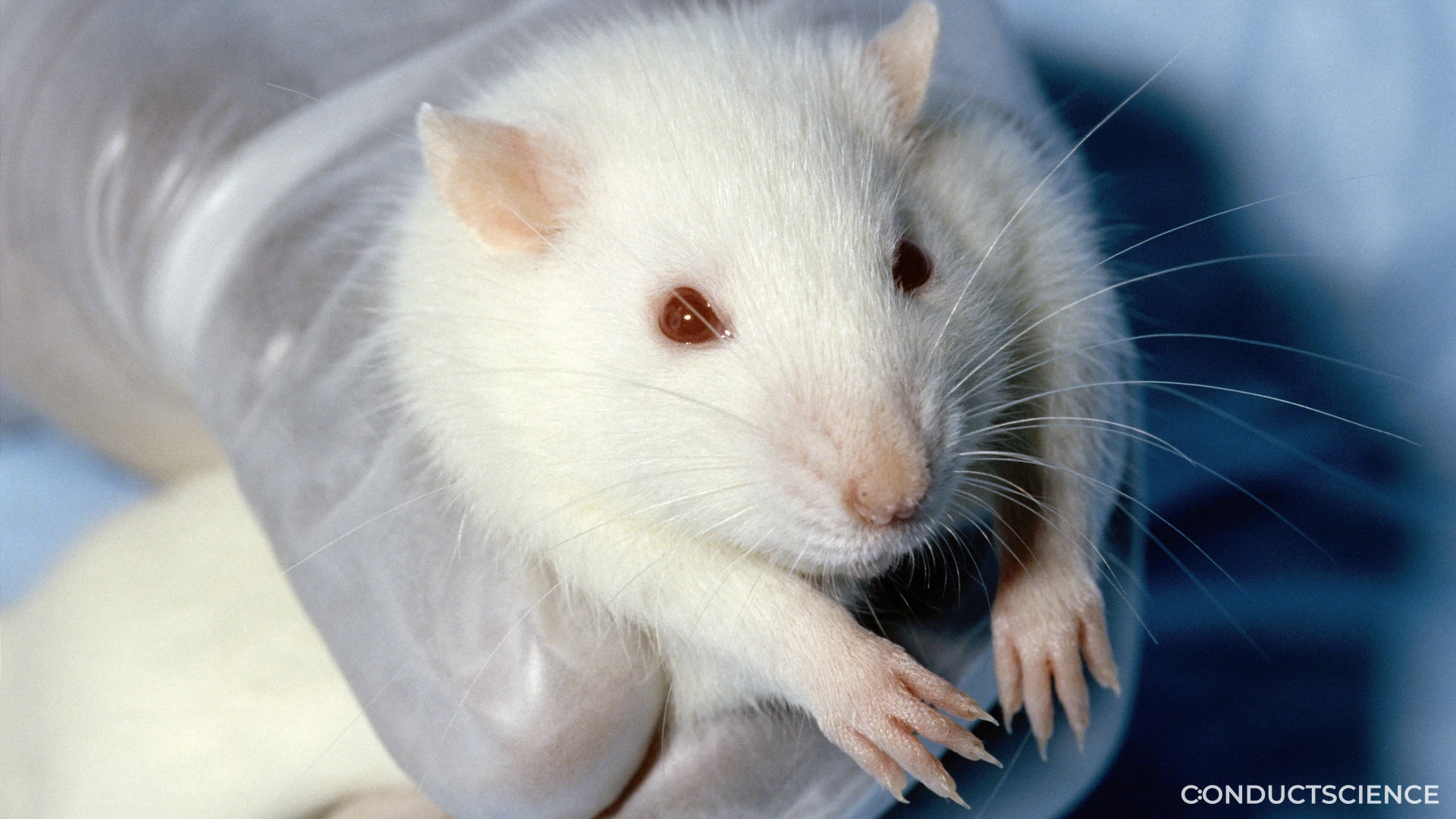
The laboratory rat is the original behavioral neuroscience model and remains the preferred species for complex cognitive tasks, operant conditioning, and pharmacological studies. Rats produce richer behavioral repertoires than mice, are stronger swimmers for water maze tasks, and show more reliable operant responding. Their larger brain size facilitates electrophysiology, microdialysis, and lesion studies that map directly onto human neuroanatomy.
Crawley JN. (2000). What's Wrong With My Mouse? Behavioral Phenotyping of Transgenic and Knockout Mice. Wiley-Liss.
Sarter M. (2004). Animal cognition: defining the issues. Neurosci Biobehav Rev, 28(7), 645-650. PMID: 15555675
Ellenbroek B, Youn J. (2016). Rodent models in neuroscience research: is it a rat race? Dis Model Mech, 9(10), 1079-1087. PMID: 27736744
What We Measure in Rat
Validated assays with quantitative parameter tracking for Rattus norvegicus.
Same principle as mouse OFT but with larger arena (typically 100×100 cm). Rats produce richer behavioral repertoires including rearing, stretching, and more varied exploration patterns.
| Parameter | Unit | Description |
|---|---|---|
| Total distance | cm | Cumulative path length |
| Center time | % | Proportion in inner zone |
| Rearing (supported/unsupported) | count | Vertical exploration, wall-supported vs freestanding |
| Defecation | count | Fecal boli (emotional reactivity) |
| Grooming | bouts/s | Self-grooming events and duration |
Walsh RN, Cummins RA. (1976). The open-field test: a critical review. Psychol Bull, 83(3), 482-504. PMID: 17582919
Prut L, Belzung C. (2003). The open field as a paradigm to measure the effects of drugs on anxiety-like behaviors. Eur J Pharmacol, 463(1-3), 3-33. PMID: 12600700
Larger version for rats (50 cm arm length). Rats show more robust open arm avoidance than mice, making this the preferred anxiolytic screening tool in the pharmaceutical industry.
| Parameter | Unit | Description |
|---|---|---|
| Open arm time | % | Time in open arms / total time |
| Open arm entries | count | Full body entries |
| Stretched attend postures | count | Risk assessment from closed to open arm |
| Head dips (protected/unprotected) | count | Looking over edge from closed vs open arm |
| Closed arm entries | count | General locomotor activity control |
Pellow S, Chopin P, File SE, Briley M. (1985). Validation of open:closed arm entries in an elevated plus-maze as a measure of anxiety in the rat. J Neurosci Methods, 14(3), 149-167. PMID: 2864480
Carobrez AP, Bertoglio LJ. (2005). Ethological and temporal analyses of anxiety-like behavior: the elevated plus-maze model 20 years on. Neurosci Biobehav Rev, 29(8), 1193-1205. PMID: 16084592
Originally developed for rats (Morris, 1984). Larger pool (150-180 cm diameter). Rats are stronger swimmers and show more robust spatial learning than mice, making this the gold standard for hippocampal memory research.
| Parameter | Unit | Description |
|---|---|---|
| Escape latency | s | Time to find hidden platform |
| Path length | cm | Distance swum to platform |
| Swim speed | cm/s | Motor control measure |
| Quadrant time (probe) | % | Target quadrant preference |
| Platform crossings | count | Spatial precision during probe |
| Heading angle | degrees | Initial swim direction relative to platform |
Morris R. (1984). Developments of a water-maze procedure for studying spatial learning in the rat. J Neurosci Methods, 11(1), 47-60. PMID: 6471907
Brandeis R, Brandys Y, Yehuda S. (1989). The use of the Morris Water Maze in the study of memory and learning. Int J Neurosci, 48(1-2), 29-69. PMID: 2684886
Eight-arm maze radiating from a central platform. Separate assessment of reference memory (which arms are baited) and working memory (which arms visited this trial). Uniquely suited for dissecting memory subtypes.
| Parameter | Unit | Description |
|---|---|---|
| Reference memory errors | count | Entries into never-baited arms |
| Working memory errors | count | Re-entries into already-visited arms |
| Latency | s | Time to collect all rewards |
| Arm visit sequence | pattern | Entry order analysis |
| Win-shift accuracy | % | Correct avoidance of visited arms |
Olton DS, Samuelson RJ. (1976). Remembrance of places passed: spatial memory in rats. J Exp Psychol Anim Behav Process, 2(2), 97-116.
Olton DS. (1987). The radial arm maze as a tool in behavioral pharmacology. Physiol Behav, 40(6), 793-797. PMID: 3328785
Lever-pressing or nose-poking for reinforcement under various schedules. Foundation of behavioral pharmacology and addiction research. Rats are preferred over mice for operant tasks due to more reliable responding.
| Parameter | Unit | Description |
|---|---|---|
| Response rate | presses/min | Lever presses per unit time |
| Breakpoint | ratio | Highest effort ratio completed (progressive ratio) |
| Post-reinforcement pause | s | Delay after reward before next press |
| Discrimination accuracy | % | Correct responding to S+ vs S- |
| Acquisition trials | count | Trials to reach criterion performance |
| Inter-response time | s | Time between consecutive responses |
Skinner BF. (1938). The Behavior of Organisms. Appleton-Century-Crofts.
Richardson NR, Roberts DC. (1996). Progressive ratio schedules in drug self-administration studies in rats. Psychopharmacology (Berl), 128(2), 139-149. PMID: 8956374
Pairs of unfamiliar rats interact in a neutral arena. Unlike the structured three-chamber test, this measures spontaneous social behavior. Widely used for anxiety, autism, and social stress models.
| Parameter | Unit | Description |
|---|---|---|
| Total interaction time | s | Combined sniffing, following, grooming |
| Anogenital sniffing | s | Investigation of ano-genital region |
| Following | s | Trailing behind conspecific |
| Contact duration | s | Physical touching time |
| Social avoidance | ratio | Active avoidance vs approach events |
File SE, Hyde JR. (1978). Can social interaction be used to measure anxiety? Br J Pharmacol, 62(1), 19-24. PMID: 563752
Kaidanovich-Beilin O, et al. (2011). Assessment of social interaction behaviors. J Vis Exp, (48), 2473. PMID: 21403628
More Behavioral Tests for Rat
Forced Swim Test (Porsolt)
Key Parameters: Immobility time, swimming time, climbing time
Porsolt RD, Anton G, Blavet N, Jalfre M. (1978). Behavioural despair in rats: a new model sensitive to antidepressant treatments. Eur J Pharmacol, 47(4), 379-391. PMID: 204499
Novel Object Recognition
Key Parameters: Discrimination index, total exploration, object preference
Ennaceur A, Delacour J. (1988). A new one-trial test for neurobiological studies of memory in rats. Behav Brain Res, 31(1), 47-59. PMID: 3228475
Attentional Set-Shifting Task
Key Parameters: Trials to criterion per stage, errors, perseveration index
Birrell JM, Brown VJ. (2000). Medial frontal cortex mediates perceptual attentional set shifting in the rat. J Neurosci, 20(11), 4320-4324. PMID: 10818167
5-Choice Serial Reaction Time Task
Key Parameters: Accuracy %, premature responses, omissions, perseverative responses, correct response latency
Robbins TW. (2002). The 5-choice serial reaction time task. Psychopharmacology (Berl), 163(3-4), 362-380. PMID: 12373437
Conditioned Place Preference
Key Parameters: Time in drug-paired compartment, preference score, extinction rate
Tzschentke TM. (2007). Measuring reward with the conditioned place preference paradigm. Behav Brain Res, 176(2), 199-214. PMID: 16930738
Ultrasonic Vocalizations (22kHz, 50kHz)
Key Parameters: Call rate, duration, frequency band, modulation type
Brudzynski SM. (2013). Ethotransmission: communication of emotional states through ultrasonic vocalization in rats. Curr Opin Neurobiol, 23(3), 310-317. PMID: 23375168
Beam Walking
Key Parameters: Foot slips, traversal time, falls
Goldstein LB, Davis JN. (1990). Beam-walking in rats: studies towards developing an animal model of functional recovery after brain injury. J Neurosci Methods, 31(2), 101-107. PMID: 2319811
Sucrose Preference Test
Key Parameters: Sucrose preference %, total consumption, anhedonia threshold
Willner P. (1997). Validity, reliability and utility of the chronic mild stress model of depression. Psychopharmacology (Berl), 134(4), 319-329. PMID: 9452163
Passive Avoidance (step-through)
Key Parameters: Step-through latency (acquisition vs retention), retention index
Jarvik ME, Kopp R. (1967). An improved one-trial passive avoidance learning situation. Psychol Rep, 21(1), 221-224. PMID: 6078354
Prepulse Inhibition (PPI)
Key Parameters: % PPI at each prepulse intensity, startle amplitude, habituation
Swerdlow NR, Geyer MA, Braff DL. (2001). Neural circuit regulation of prepulse inhibition of startle in the rat. Behav Brain Res, 123(1), 79-93. PMID: 11377731
ConductScience Hardware for Rat Research
Open Field Maze (rat size)
OFT locomotion and anxiety
Elevated Plus Maze (rat)
Anxiety screening
Morris Water Maze (150-180 cm)
Spatial learning
Radial Arm Maze (8-arm)
Reference and working memory
Operant Conditioning Chamber
Reinforcement learning, addiction
Social Interaction Arena
Social behavior
Y-Maze (rat)
Spontaneous alternation
Passive Avoidance Chamber
Aversive memory
PPI Startle Chamber
Sensorimotor gating
Citations & Further Reading
- Crawley JN. (2000). What's Wrong With My Mouse? Behavioral Phenotyping of Transgenic and Knockout Mice. Wiley-Liss.
- Sarter M. (2004). Animal cognition: defining the issues. Neurosci Biobehav Rev, 28(7), 645-650. PMID: 15555675
- Ellenbroek B, Youn J. (2016). Rodent models in neuroscience research: is it a rat race? Dis Model Mech, 9(10), 1079-1087. PMID: 27736744
- Walsh RN, Cummins RA. (1976). The open-field test: a critical review. Psychol Bull, 83(3), 482-504. PMID: 17582919
- Prut L, Belzung C. (2003). The open field as a paradigm to measure the effects of drugs on anxiety-like behaviors. Eur J Pharmacol, 463(1-3), 3-33. PMID: 12600700
- Pellow S, Chopin P, File SE, Briley M. (1985). Validation of open:closed arm entries in an elevated plus-maze as a measure of anxiety in the rat. J Neurosci Methods, 14(3), 149-167. PMID: 2864480
- Carobrez AP, Bertoglio LJ. (2005). Ethological and temporal analyses of anxiety-like behavior: the elevated plus-maze model 20 years on. Neurosci Biobehav Rev, 29(8), 1193-1205. PMID: 16084592
- Morris R. (1984). Developments of a water-maze procedure for studying spatial learning in the rat. J Neurosci Methods, 11(1), 47-60. PMID: 6471907
- Brandeis R, Brandys Y, Yehuda S. (1989). The use of the Morris Water Maze in the study of memory and learning. Int J Neurosci, 48(1-2), 29-69. PMID: 2684886
- Olton DS, Samuelson RJ. (1976). Remembrance of places passed: spatial memory in rats. J Exp Psychol Anim Behav Process, 2(2), 97-116.
- Olton DS. (1987). The radial arm maze as a tool in behavioral pharmacology. Physiol Behav, 40(6), 793-797. PMID: 3328785
- Skinner BF. (1938). The Behavior of Organisms. Appleton-Century-Crofts.
- Richardson NR, Roberts DC. (1996). Progressive ratio schedules in drug self-administration studies in rats. Psychopharmacology (Berl), 128(2), 139-149. PMID: 8956374
- File SE, Hyde JR. (1978). Can social interaction be used to measure anxiety? Br J Pharmacol, 62(1), 19-24. PMID: 563752
- Kaidanovich-Beilin O, et al. (2011). Assessment of social interaction behaviors. J Vis Exp, (48), 2473. PMID: 21403628
Discuss Your Rat Research
Tell us about your models, assays, and experimental goals — we’ll show you how ConductVision fits your workflow.
