Behavioral Tracking for Mouse
Mus musculus
Quantify locomotion, anxiety, cognition, social behavior, and motor function in Mus musculus using automated behavioral tracking.
Why Mouse in Behavioral Research
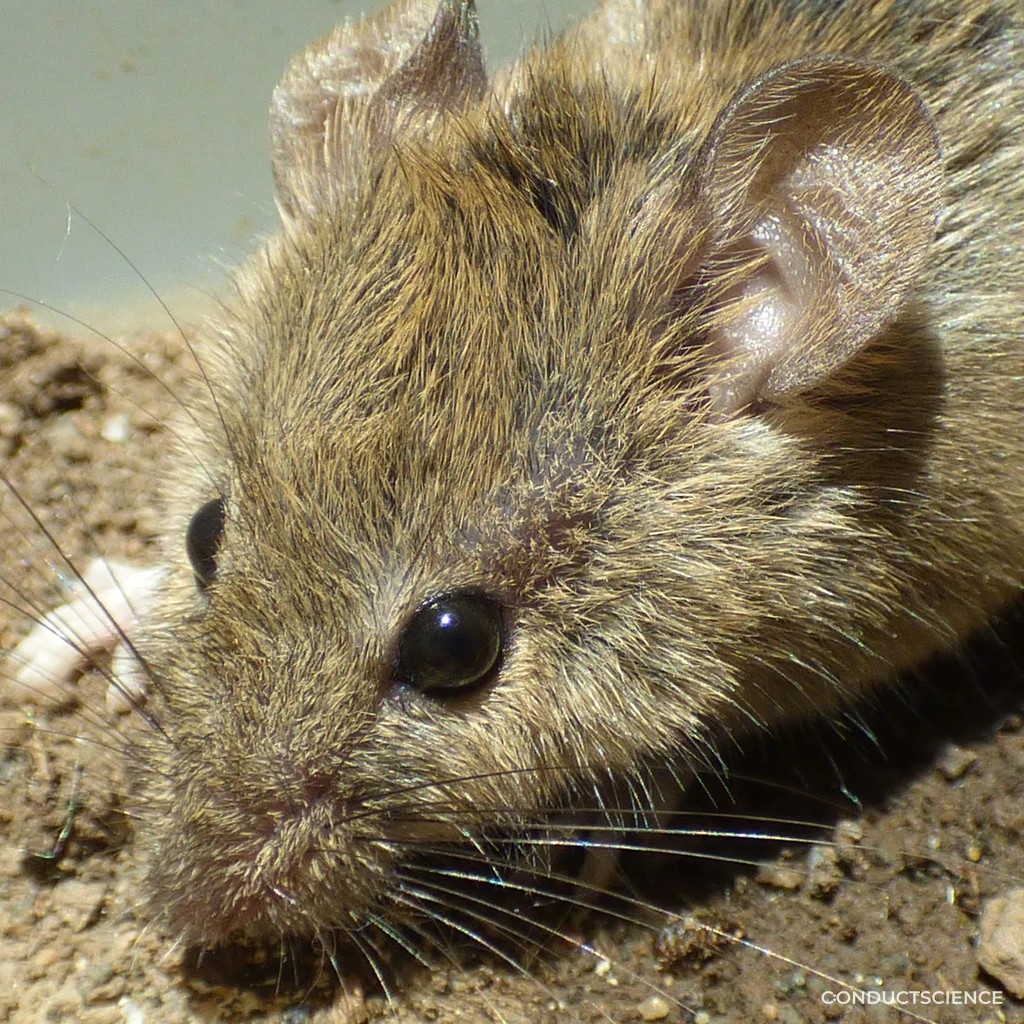
The laboratory mouse is the most extensively used mammalian model in behavioral neuroscience, owing to its well-characterized genetics, extensive transgenic and knockout resources, and strong translational relevance to human neuropsychiatric and neurological disorders. Thousands of inbred, outbred, and genetically engineered strains enable precise dissection of gene-behavior relationships across anxiety, depression, cognition, and social domains.
Crawley JN. (2007). What's Wrong With My Mouse? Behavioral Phenotyping of Transgenic and Knockout Mice. 2nd ed. Wiley-Interscience.
Crawley JN. (2008). Behavioral phenotyping strategies for mutant mice. Neuron, 57(6), 809-818. PMID: 18367082
Bailey KR, Crawley JN. (2009). Anxiety-related behaviors in mice. In: Methods of Behavior Analysis in Neuroscience. 2nd ed. CRC Press. PMID: 21204329
What We Measure in Mouse
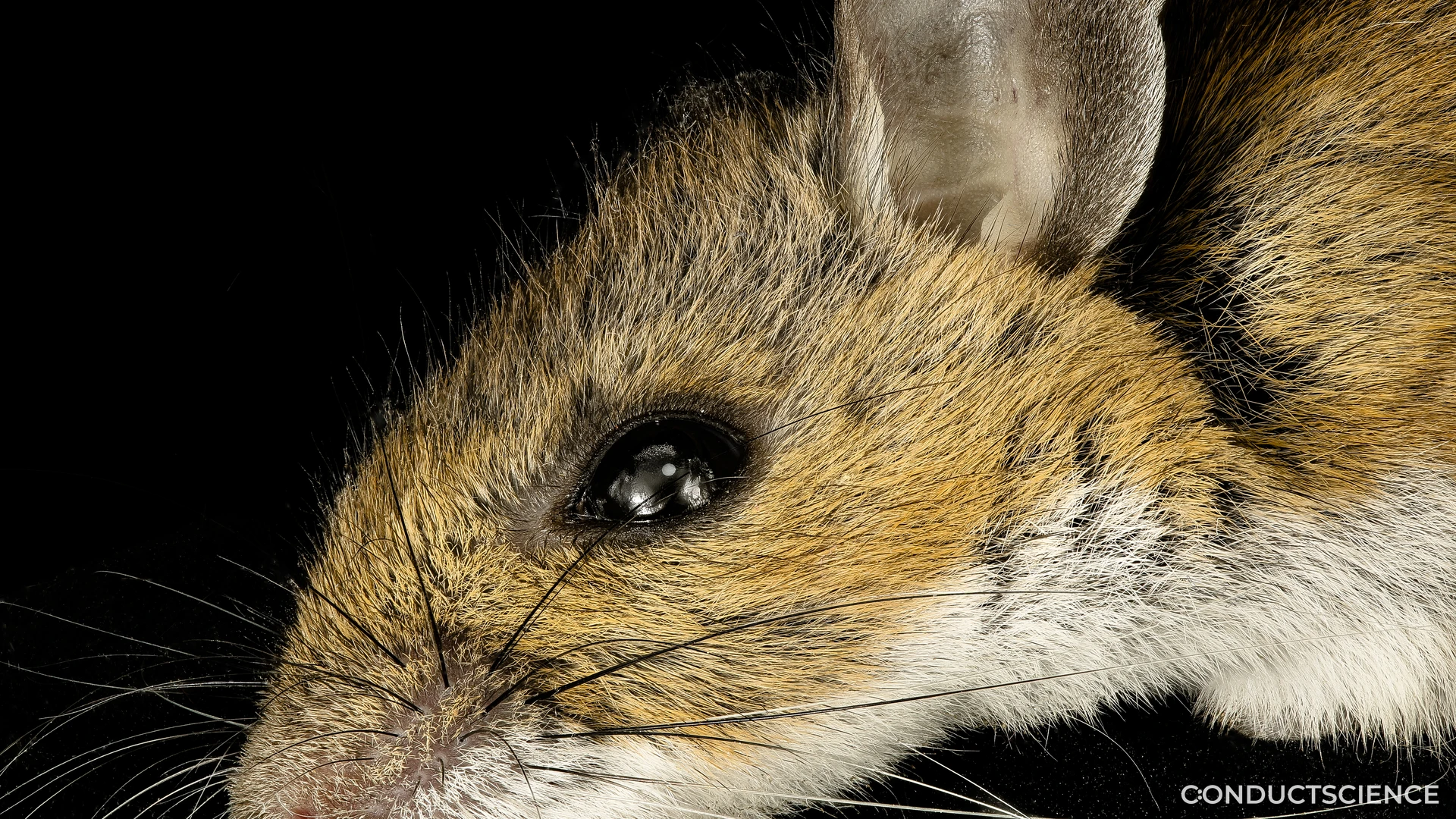
Validated assays with quantitative parameter tracking for Mus musculus.
The most widely used behavioral assay in rodent neuroscience. Mice are placed in an open arena and locomotor activity, anxiety-like behavior (center avoidance), and exploration are quantified over 5-30 minutes.
| Parameter | Unit | Description |
|---|---|---|
| Total distance | cm | Cumulative path length |
| Mean velocity | cm/s | Average locomotor speed |
| Center time | % | Proportion of time in center zone (typically inner 50% of area) |
| Center entries | count | Number of crossings into center zone |
| Rearing | count | Vertical explorations (forelimb lifts) |
| Grooming bouts | count/s | Self-grooming episodes and duration |
| Fecal boli | count | Defecation events (autonomic anxiety index) |
Seibenhener ML, Wooten MC. (2015). Use of the open field maze to measure locomotor and anxiety-like behavior in mice. J Vis Exp, (96), e52434. PMID: 25742564
Gould TD, Dao DT, Kovacsics CE. (2009). The open field test. In: Mood and Anxiety Related Phenotypes in Mice. Humana Press, pp 1-20.
Four-arm maze elevated 40-70 cm with two open and two closed (walled) arms. Time in open arms reflects reduced anxiety-like behavior. Gold standard for anxiolytic drug screening.
| Parameter | Unit | Description |
|---|---|---|
| Open arm time | % | Proportion of time in open arms |
| Open arm entries | count | Number of full entries into open arms |
| Closed arm time | s | Time in protected enclosed arms |
| Head dips | count | Looking over edge of open arms |
| Stretched attend postures | count | Risk assessment: body stretch toward open arm from closed arm |
| Total arm entries | count | Locomotor control measure |
Lister RG. (1987). The use of a plus-maze to measure anxiety in the mouse. Psychopharmacology (Berl), 92(2), 180-185. PMID: 3114783
Walf AA, Frye CA. (2007). The use of the elevated plus maze as an assay of anxiety-related behavior in rodents. Nat Protoc, 2(2), 322-328. PMID: 17406592
Komada M, Takao K, Miyakawa T. (2008). Elevated plus maze for mice. J Vis Exp, (22), 1088. PMID: 19229173
Circular pool of opaque water with hidden escape platform. Mice learn the platform location using spatial cues. The most validated assay for hippocampal-dependent spatial learning and memory.
| Parameter | Unit | Description |
|---|---|---|
| Escape latency | s | Time to find hidden platform |
| Path length | cm | Swim distance to platform |
| Swim speed | cm/s | Average velocity (motor control) |
| Quadrant time (probe) | % | Time in target quadrant after platform removal |
| Platform crossings (probe) | count | Number of passes over former platform location |
| Search strategy | categorical | Spatial, serial, or random classification |
| Thigmotaxis | % | Wall-hugging during early training |
Morris R. (1984). Developments of a water-maze procedure for studying spatial learning in the rat. J Neurosci Methods, 11(1), 47-60. PMID: 6471907
Vorhees CV, Williams MT. (2006). Morris water maze: procedures for assessing spatial and related forms of learning and memory. Nat Protoc, 1(2), 848-858. PMID: 17406317
D'Hooge R, De Deyn PP. (2001). Applications of the Morris water maze in the study of learning and memory. Brain Res Rev, 36(1), 60-90. PMID: 11516773
Mouse learns association between a neutral context/tone (CS) and foot shock (US). Freezing behavior is the primary readout. Contextual FC is hippocampal-dependent; cued FC is amygdala-dependent.
| Parameter | Unit | Description |
|---|---|---|
| Freezing % (baseline) | % | Pre-conditioning spontaneous freezing |
| Freezing % (context test) | % | Freezing in conditioned context 24h later |
| Freezing % (cue test) | % | Freezing to auditory CS in novel context |
| Latency to freeze | s | Time from CS/context onset to first freeze |
| Fear generalization | ratio | Freezing in novel vs conditioned context |
Fanselow MS. (1980). Conditioned and unconditional components of post-shock freezing. Pavlov J Biol Sci, 15(4), 177-182. PMID: 7208128
Maren S. (2001). Neurobiology of Pavlovian fear conditioning. Annu Rev Neurosci, 24, 897-931. PMID: 11520922
Curzon P, Rustay NR, Bhowmik KB. (2009). Cued and contextual fear conditioning for rodents. In: Methods of Behavior Analysis in Neuroscience. CRC Press. PMID: 21204331
Rotarod
Accelerating rod tests motor coordination and motor learning. Mouse must walk on a rotating rod; latency to fall is the primary measure. Used to assess cerebellar function, drug effects, and neurodegeneration.
| Parameter | Unit | Description |
|---|---|---|
| Latency to fall | s | Time on the rod before falling |
| RPM at fall | rpm | Rod speed when mouse falls |
| Learning rate | slope | Improvement across consecutive trials/days |
| Maximum RPM tolerated | rpm | Highest sustained speed |
Dunham NW, Miya TS. (1957). A note on a simple apparatus for detecting neurological deficit in rats and mice. J Am Pharm Assoc Am Pharm Assoc, 46(3), 208-209. PMID: 13502156
Shiotsuki H, et al. (2010). A rotarod test for evaluation of motor skill learning. J Neurosci Methods, 189(2), 180-185. PMID: 20359499
Assesses sociability and social novelty preference. Mouse chooses between a chamber containing a stranger mouse vs an empty chamber (sociability), then between a familiar vs novel stranger (social novelty).
| Parameter | Unit | Description |
|---|---|---|
| Time near stranger vs empty | s | Sociability index |
| Time near novel vs familiar | s | Social novelty preference |
| Approach frequency | count | Number of entries to interaction zones |
| Sniffing time | s | Direct investigation of stimulus mouse |
| Social preference index | ratio | (Stranger − Empty) / (Stranger + Empty) |
Moy SS, et al. (2004). Sociability and preference for social novelty in five inbred strains: an approach to assess autistic-like behavior in mice. Genes Brain Behav, 3(5), 287-302. PMID: 15344922
Crawley JN. (2004). Designing mouse behavioral tasks relevant to autistic-like behaviors. Ment Retard Dev Disabil Res Rev, 10(4), 248-258. PMID: 15666338
Kaidanovich-Beilin O, et al. (2011). Assessment of social interaction behaviors. J Vis Exp, (48), 2473. PMID: 21403628
More Behavioral Tests for Mouse
Forced Swim Test (Porsolt)
Key Parameters: Immobility time, latency to first immobility, swimming vs climbing time
Porsolt RD, Le Pichon M, Jalfre M. (1977). Depression: a new animal model sensitive to antidepressant treatments. Nature, 266(5604), 730-732. PMID: 559941
Tail Suspension Test
Key Parameters: Immobility time, latency to immobility, power of movement
Steru L, et al. (1985). The tail suspension test: a new method for screening antidepressants in mice. Psychopharmacology (Berl), 85(3), 367-370. PMID: 3923523
Novel Object Recognition (NOR)
Key Parameters: Discrimination index, exploration time per object, object preference ratio
Ennaceur A, Delacour J. (1988). A new one-trial test for neurobiological studies of memory in rats. Behav Brain Res, 31(1), 47-59. PMID: 3228475
Barnes Maze
Key Parameters: Primary latency, primary errors, search strategy (spatial/serial/random)
Barnes CA. (1979). Memory deficits associated with senescence: a neurophysiological and behavioral study in the rat. J Comp Physiol Psychol, 93(1), 74-104. PMID: 221551
Y-maze Spontaneous Alternation
Key Parameters: Alternation %, total arm entries, sequence analysis
Hughes RN. (2004). The value of spontaneous alternation behavior as a test of retention in pharmacological investigations. Neurosci Biobehav Rev, 28(5), 497-505. PMID: 15465137
Light-Dark Box
Key Parameters: Time in light zone, transitions between zones, latency to enter light
Bourin M, Hascoet M. (2003). The mouse light/dark box test. Eur J Pharmacol, 463(1-3), 55-65. PMID: 12600702
Hole Board Test
Key Parameters: Head dips count, latency to first dip, dip duration
Boissier JR, Simon P. (1962). La reaction d'exploration chez la souris. Therapie, 17, 1225-1232.
Nest Building
Key Parameters: Nest score (1-5 Likert), % nestlet shredded, nest height
Deacon RM. (2006). Assessing nest building in mice. Nat Protoc, 1(3), 1117-1119. PMID: 17406392
Marble Burying
Key Parameters: Number of marbles buried (>2/3 covered), latency to first burial
Deacon RM. (2006). Digging and marble burying in mice: simple methods for in vivo identification of biological impacts. Nat Protoc, 1(1), 122-124. PMID: 17406223
Sucrose Preference Test
Key Parameters: Sucrose preference %, total fluid intake, 1% vs 2% concentration response
Willner P, Towell A, Sampson D, Sophokleous S, Muscat R. (1987). Reduction of sucrose preference by chronic unpredictable mild stress. Psychopharmacology (Berl), 93(3), 358-364. PMID: 3124165
Hot Plate / Von Frey (pain)
Key Parameters: Paw withdrawal latency (s), withdrawal threshold (g), licking/jumping latency
Woolfe G, MacDonald AD. (1944). The evaluation of the analgesic action of pethidine hydrochloride (Demerol). J Pharmacol Exp Ther, 80(3), 300-307.
Grip Strength
Key Parameters: Peak force (g or mN), forelimb vs all-limb, fatigue across repeated trials
Cabe PA, Tilson HA, Mitchell CL, Dennis R. (1978). A simple recording grip strength device. Pharmacol Biochem Behav, 8(1), 101-102. PMID: 625648
ConductScience Hardware for Mouse Research
Open Field Maze (various sizes)
OFT locomotion and anxiety
Elevated Plus Maze
Anxiety-like behavior
Morris Water Maze
Spatial learning and memory
Fear Conditioning Chamber
Contextual and cued FC
Rotarod (accelerating)
Motor coordination
Three-Chamber Social Interaction
Sociability testing
Y-Maze
Spontaneous alternation
Barnes Maze
Spatial learning (dry, less stressful)
Light-Dark Box
Anxiety-like behavior
Forced Swim Test Cylinder
Depressive-like behavior
Tail Suspension Apparatus
Depressive-like behavior
Grip Strength Meter
Neuromuscular function
Citations & Further Reading
- Crawley JN. (2007). What's Wrong With My Mouse? Behavioral Phenotyping of Transgenic and Knockout Mice. 2nd ed. Wiley-Interscience.
- Crawley JN. (2008). Behavioral phenotyping strategies for mutant mice. Neuron, 57(6), 809-818. PMID: 18367082
- Bailey KR, Crawley JN. (2009). Anxiety-related behaviors in mice. In: Methods of Behavior Analysis in Neuroscience. 2nd ed. CRC Press. PMID: 21204329
- Seibenhener ML, Wooten MC. (2015). Use of the open field maze to measure locomotor and anxiety-like behavior in mice. J Vis Exp, (96), e52434. PMID: 25742564
- Gould TD, Dao DT, Kovacsics CE. (2009). The open field test. In: Mood and Anxiety Related Phenotypes in Mice. Humana Press, pp 1-20.
- Lister RG. (1987). The use of a plus-maze to measure anxiety in the mouse. Psychopharmacology (Berl), 92(2), 180-185. PMID: 3114783
- Walf AA, Frye CA. (2007). The use of the elevated plus maze as an assay of anxiety-related behavior in rodents. Nat Protoc, 2(2), 322-328. PMID: 17406592
- Komada M, Takao K, Miyakawa T. (2008). Elevated plus maze for mice. J Vis Exp, (22), 1088. PMID: 19229173
- Morris R. (1984). Developments of a water-maze procedure for studying spatial learning in the rat. J Neurosci Methods, 11(1), 47-60. PMID: 6471907
- Vorhees CV, Williams MT. (2006). Morris water maze: procedures for assessing spatial and related forms of learning and memory. Nat Protoc, 1(2), 848-858. PMID: 17406317
- D'Hooge R, De Deyn PP. (2001). Applications of the Morris water maze in the study of learning and memory. Brain Res Rev, 36(1), 60-90. PMID: 11516773
- Fanselow MS. (1980). Conditioned and unconditional components of post-shock freezing. Pavlov J Biol Sci, 15(4), 177-182. PMID: 7208128
- Maren S. (2001). Neurobiology of Pavlovian fear conditioning. Annu Rev Neurosci, 24, 897-931. PMID: 11520922
- Curzon P, Rustay NR, Bhowmik KB. (2009). Cued and contextual fear conditioning for rodents. In: Methods of Behavior Analysis in Neuroscience. CRC Press. PMID: 21204331
- Dunham NW, Miya TS. (1957). A note on a simple apparatus for detecting neurological deficit in rats and mice. J Am Pharm Assoc Am Pharm Assoc, 46(3), 208-209. PMID: 13502156
- Shiotsuki H, et al. (2010). A rotarod test for evaluation of motor skill learning. J Neurosci Methods, 189(2), 180-185. PMID: 20359499
- Moy SS, et al. (2004). Sociability and preference for social novelty in five inbred strains: an approach to assess autistic-like behavior in mice. Genes Brain Behav, 3(5), 287-302. PMID: 15344922
- Crawley JN. (2004). Designing mouse behavioral tasks relevant to autistic-like behaviors. Ment Retard Dev Disabil Res Rev, 10(4), 248-258. PMID: 15666338
- Kaidanovich-Beilin O, et al. (2011). Assessment of social interaction behaviors. J Vis Exp, (48), 2473. PMID: 21403628
Other Model Systems
Discuss Your Mouse Research
Tell us about your models, assays, and experimental goals — we’ll show you how ConductVision fits your workflow.