Primary Assay — Mouse
Elevated Plus Maze (EPM)
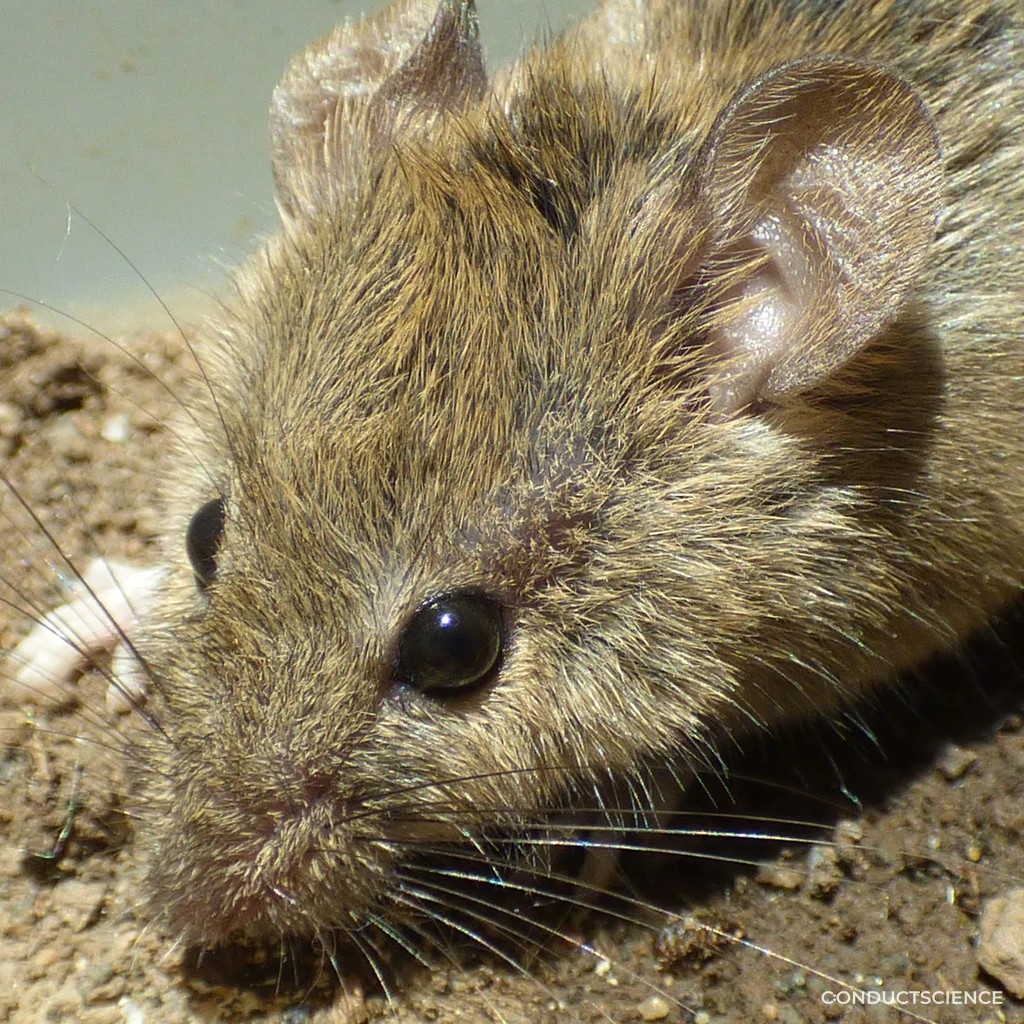
Mus musculus
Four-arm maze elevated 40-70 cm with two open and two closed (walled) arms. Time in open arms reflects reduced anxiety-like behavior. Gold standard for anxiolytic drug screening.
Quantitative Output
Measured Parameters
Every parameter is automatically tracked frame-by-frame in the ConductVision pipeline for Mus musculus.
| Parameter | Unit | Description |
|---|---|---|
| Open arm time | % | Proportion of time in open arms |
| Open arm entries | count | Number of full entries into open arms |
| Closed arm time | s | Time in protected enclosed arms |
| Head dips | count | Looking over edge of open arms |
| Stretched attend postures | count | Risk assessment: body stretch toward open arm from closed arm |
| Total arm entries | count | Locomotor control measure |
References
Citations for Elevated Plus Maze (EPM)
- Lister RG. (1987). The use of a plus-maze to measure anxiety in the mouse. Psychopharmacology (Berl), 92(2), 180-185. PMID: 3114783
- Walf AA, Frye CA. (2007). The use of the elevated plus maze as an assay of anxiety-related behavior in rodents. Nat Protoc, 2(2), 322-328. PMID: 17406592
- Komada M, Takao K, Miyakawa T. (2008). Elevated plus maze for mice. J Vis Exp, (22), 1088. PMID: 19229173
Compatible Equipment
Hardware for Mouse Research
Open Field Maze (various sizes)
OFT locomotion and anxiety
Elevated Plus Maze
Anxiety-like behavior
Morris Water Maze
Spatial learning and memory
Fear Conditioning Chamber
Contextual and cued FC
Rotarod (accelerating)
Motor coordination
Three-Chamber Social Interaction
Sociability testing
Y-Maze
Spontaneous alternation
Barnes Maze
Spatial learning (dry, less stressful)
Light-Dark Box
Anxiety-like behavior
Forced Swim Test Cylinder
Depressive-like behavior
Tail Suspension Apparatus
Depressive-like behavior
Grip Strength Meter
Neuromuscular function
Related Assays
Other Mouse Primary Assays
02
Open Field Test
Mus musculus
The most widely used behavioral assay in rodent neuroscience. Mice are placed in an open arena and locomotor activity, a…
02
Morris Water Maze
Mus musculus
Circular pool of opaque water with hidden escape platform. Mice learn the platform location using spatial cues. The most…
02
Fear Conditioning (Contextual + Cued)
Mus musculus
Mouse learns association between a neutral context/tone (CS) and foot shock (US). Freezing behavior is the primary reado…
Run Elevated Plus Maze (EPM) on ConductVision
Our team will configure the protocol, camera rig, and analysis pipeline for your mouse facility.