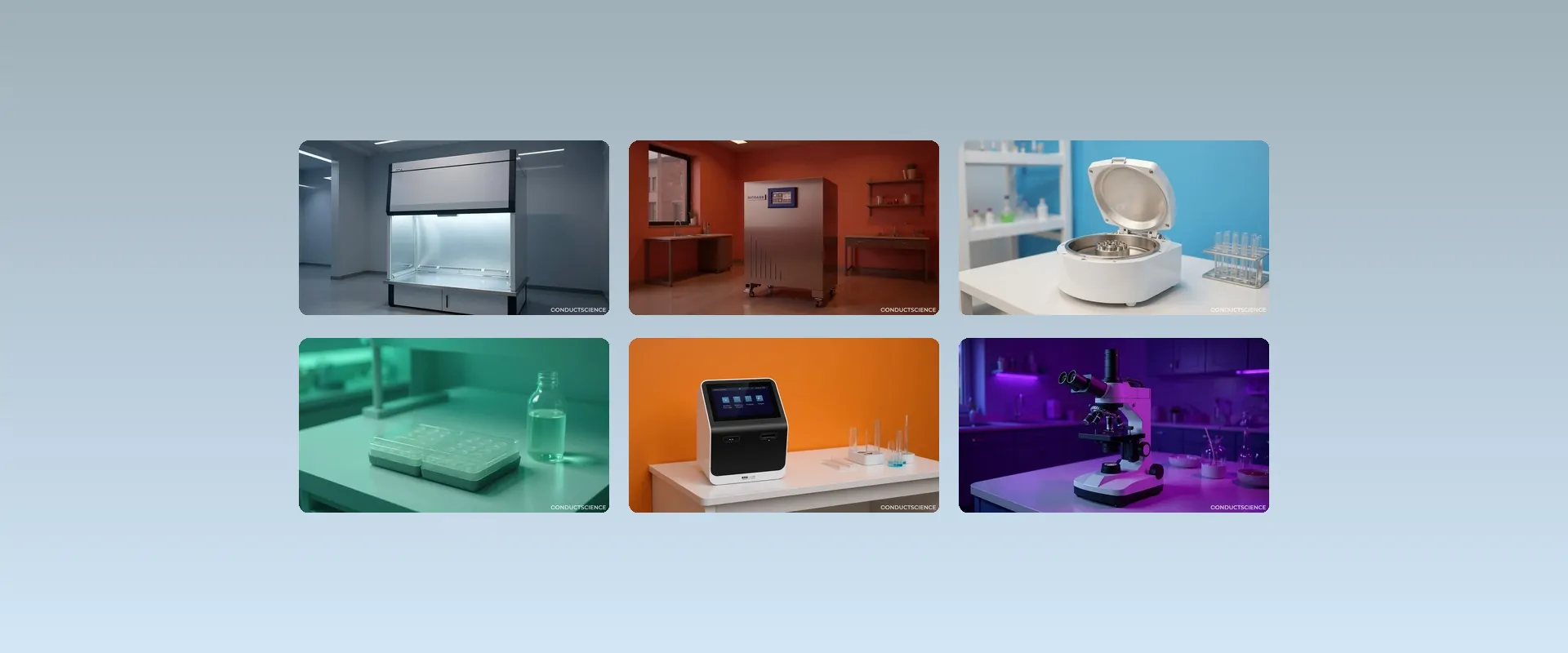
Your First Cell Culture Lab
From frozen vial to confluent flask, the six essentials that make cell culture possible.
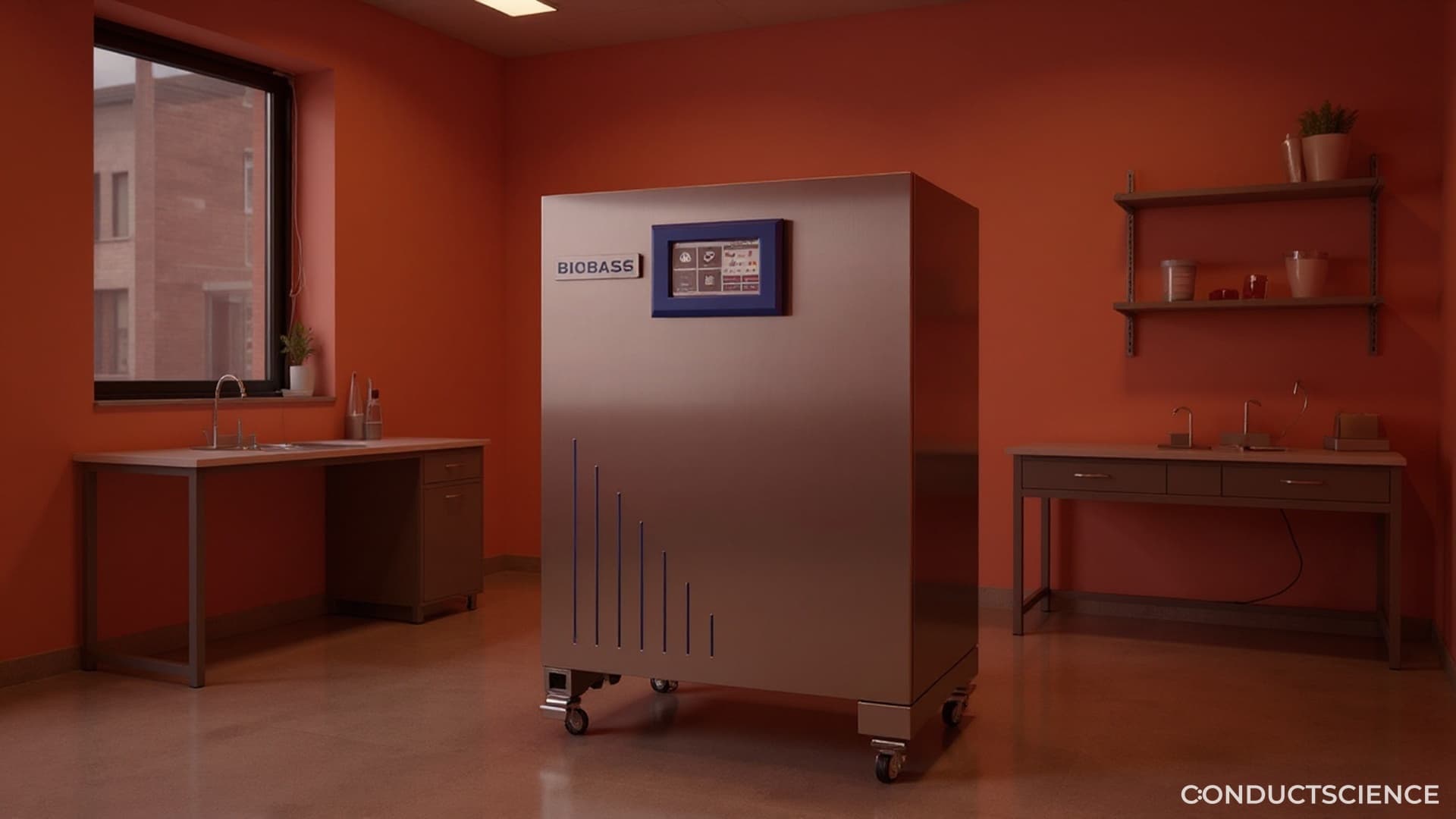
CO₂ Incubator
Thirty-seven Celsius. Five percent carbon dioxide. Ninety-five percent humidity. The incubator holds these three numbers steady for weeks at a time without drift, and inside it your cells believe they are still in a body. You crack the door once a day to lift a flask under the microscope, breathe a little dry room air into the chamber, and the IR sensor brings CO2 back to setpoint within ninety seconds. The incubator is the closest thing the lab has to an artificial mammal. Every protocol after the thaw assumes it.
Explore the CO₂ Incubator →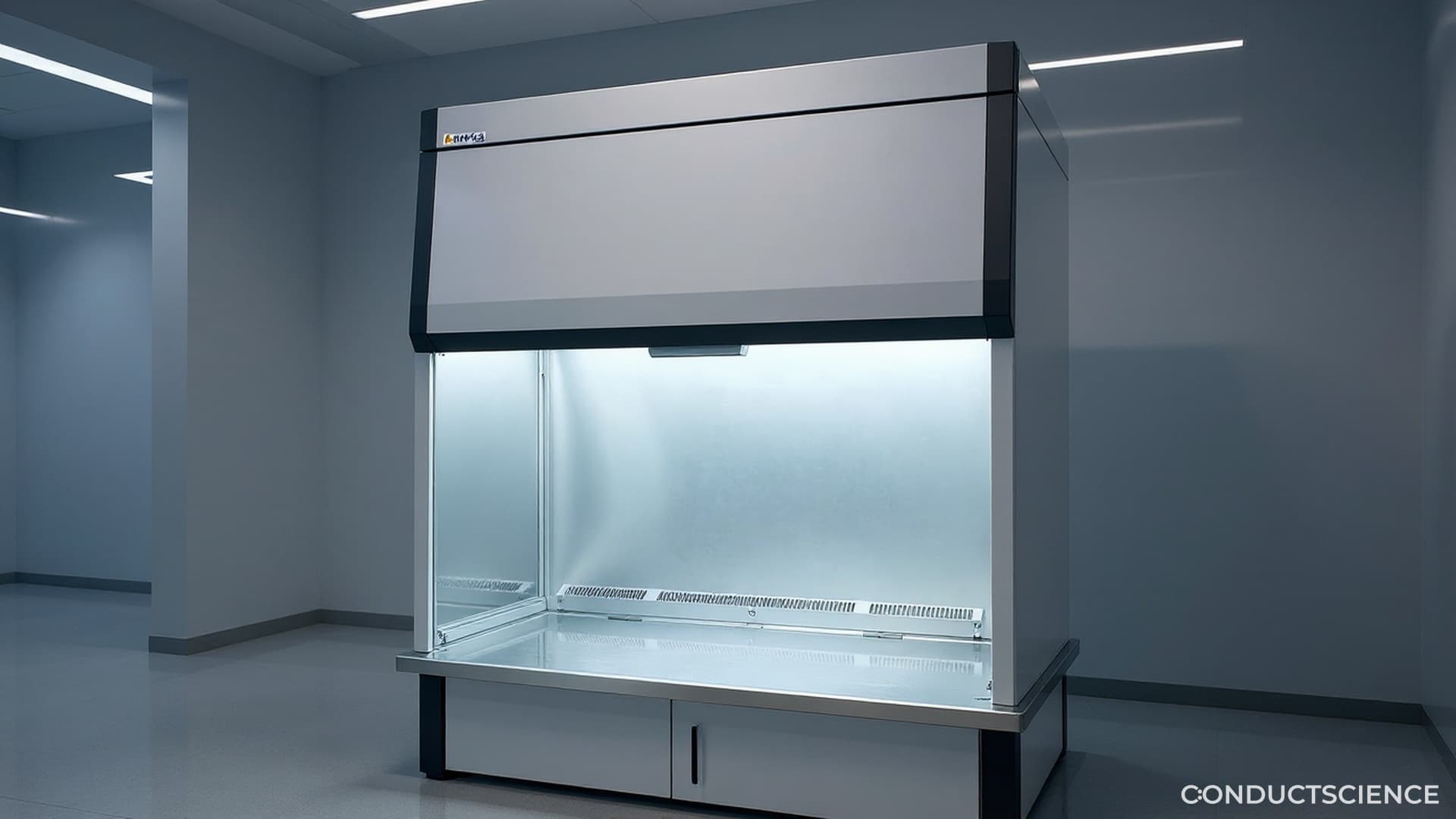
Vertical Laminar Flow Cabinet
A laminar curtain of HEPA-filtered air falls down across the work surface at eighty linear feet per minute, a moving wall between your gloves and the room. The cabinet sweeps any aerosol away from your hands and toward the grill, and the work zone stays Class 100 clean as long as the sash is at the right height. You wipe the deck with seventy percent ethanol, light the burner, and open a fresh pipette. Inside this small column of clean air, the cells you carry from one flask to another stay yours alone. Outside it, contamination is patient.
Explore the Vertical Laminar Flow Cabinet →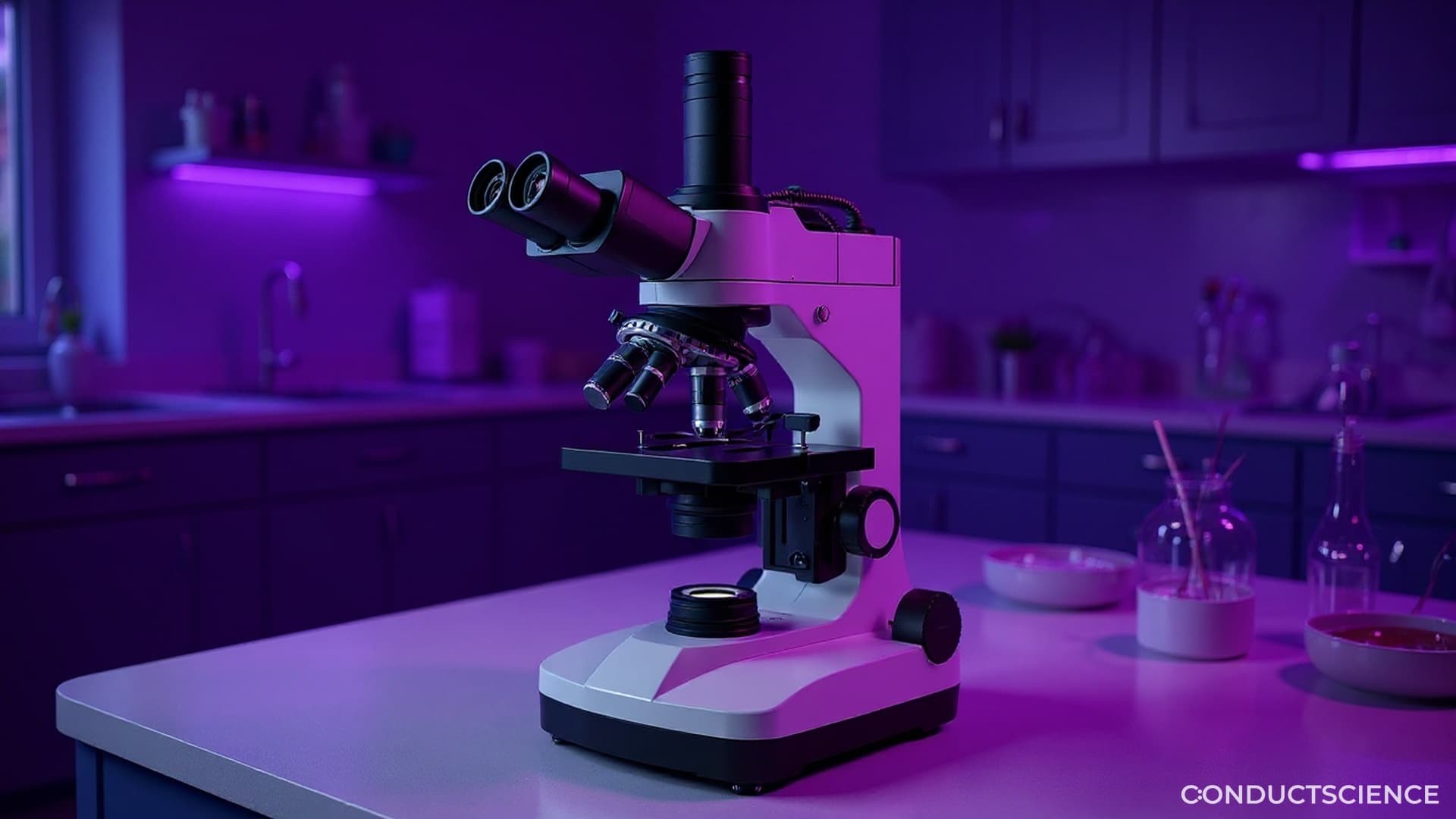
Inverted Microscope
You lift a T75 flask out of the incubator, slide it onto the stage of the inverted scope, and the cells appear from below. Phase contrast turns their thin membranes into bright outlines against a dark cytoplasm. You count, you estimate confluence at eighty percent, you check for the rounded shapes that mean something is detaching and dying. Two minutes at the eyepiece tells you whether to passage today, feed today, or harvest today. The inverted scope is how every culture decision actually gets made.
Explore the Inverted Microscope →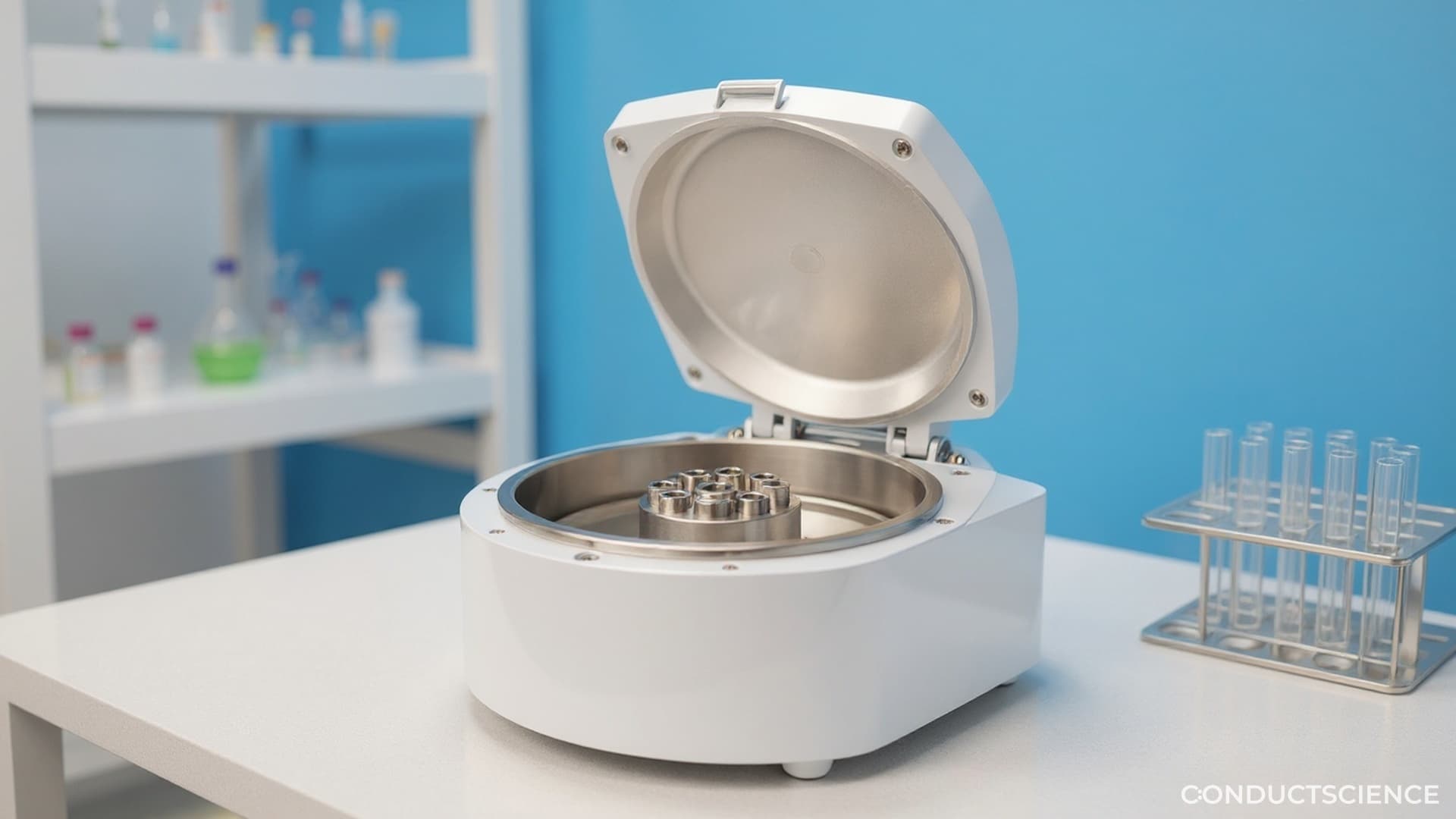
Benchtop Centrifuge
Three hundred g for five minutes at room temperature. The standard pellet protocol. You balance the rotor, close the lid, and the centrifuge winds up to twelve hundred rpm in nine seconds. The spin separates supernatant from cells without lysing them, and at the end the pellet sits at the bottom of the conical like a small white moon. You aspirate, resuspend in fresh medium, count on the hemocytometer, and dilute to the seeding density. Every passage in the lab passes through this five-minute interval.
Explore the Benchtop Centrifuge →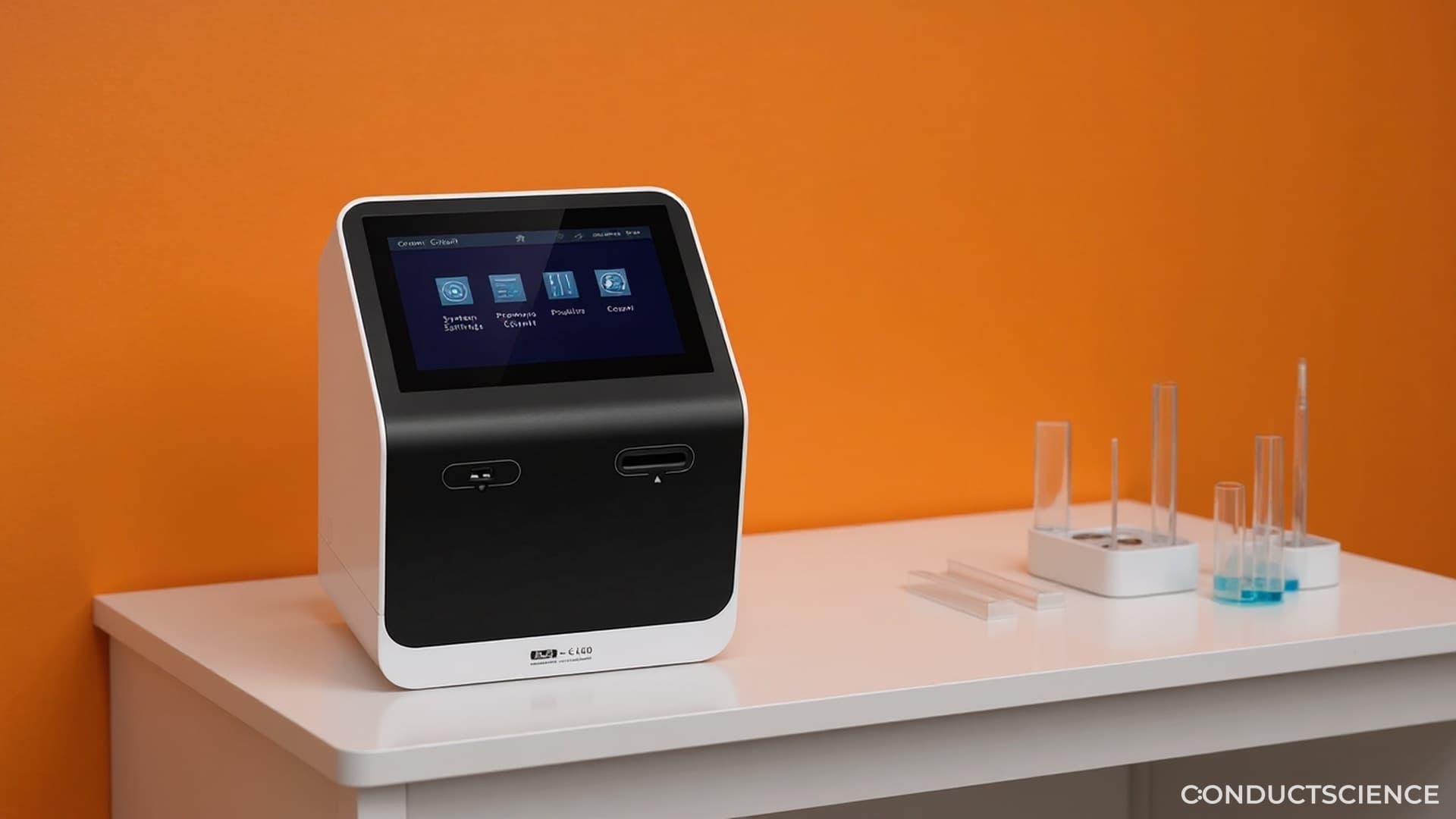
Automated Cell Counter
Ten microliters into the chamber. Trypan blue binds to the membranes of the dead cells and lights them up under the optics. The counter scans the field, draws a circle around every viable cell, and reports the number to four significant figures in eight seconds. You used to do this on a hemocytometer at the bench, squinting at the central grid and tallying with a clicker, and your numbers drifted by ten percent depending on how tired you were. The automated counter does not get tired. Seeding density becomes a known quantity again.
Explore the Automated Cell Counter →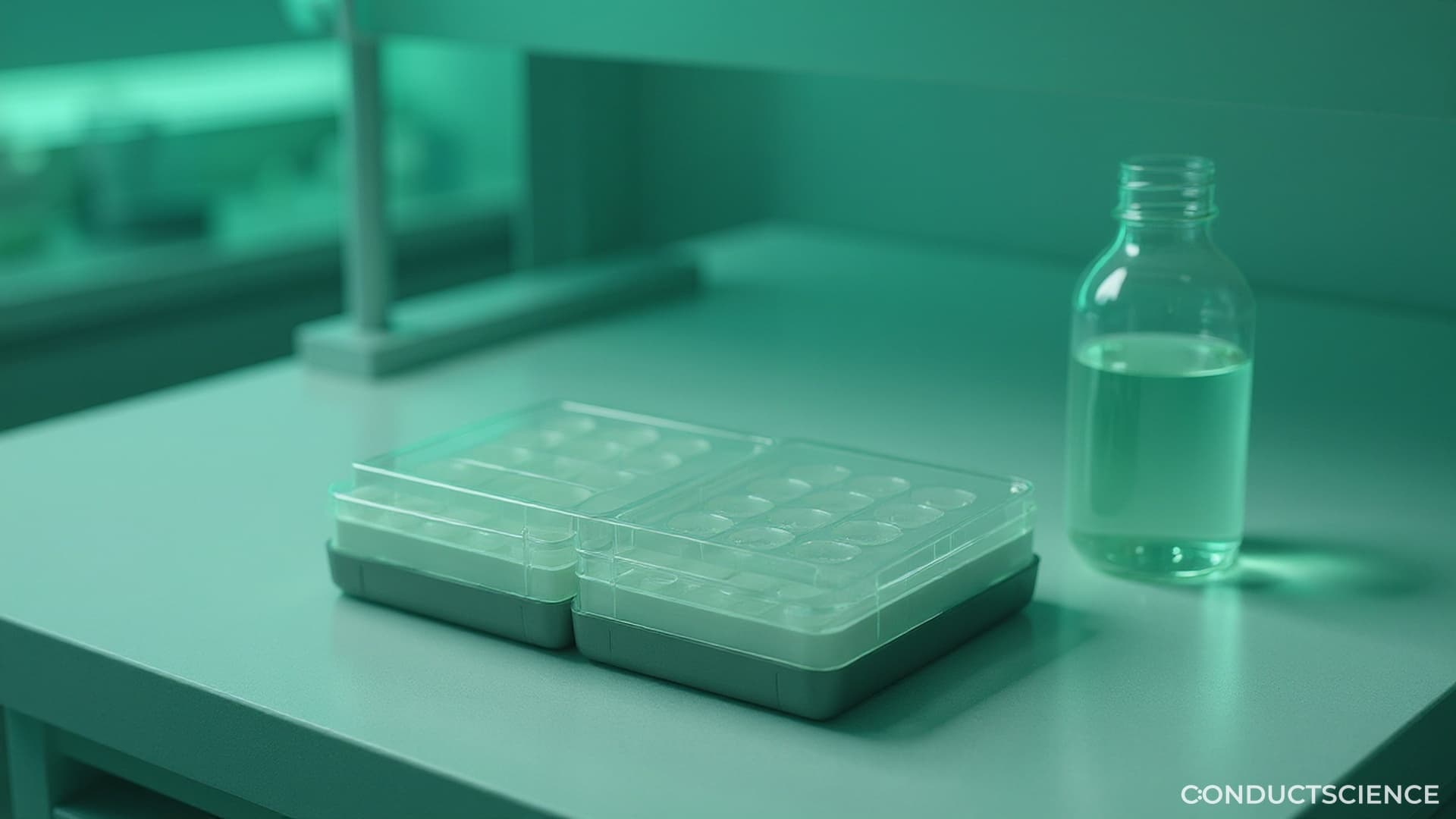
Sterile Petri Dishes
One hundred fifty millimeters of polystyrene, gamma-irradiated, individually wrapped, surface-treated to let cells anchor and spread. You peel the lid back inside the cabinet, pour ten milliliters of medium, and seed a hundred thousand cells across the disk. By morning they are flat and adherent, by tomorrow afternoon they are dividing. The dish is so common it disappears from the protocol description, but every culture you ever ran lived inside one of them. The sterile boundary is what makes the experiment.
Explore the Sterile Petri Dishes →Six essentials. One sterile field. Every line you grow runs through these six pieces.
Start Building Yours