3D Radial Arm Maze
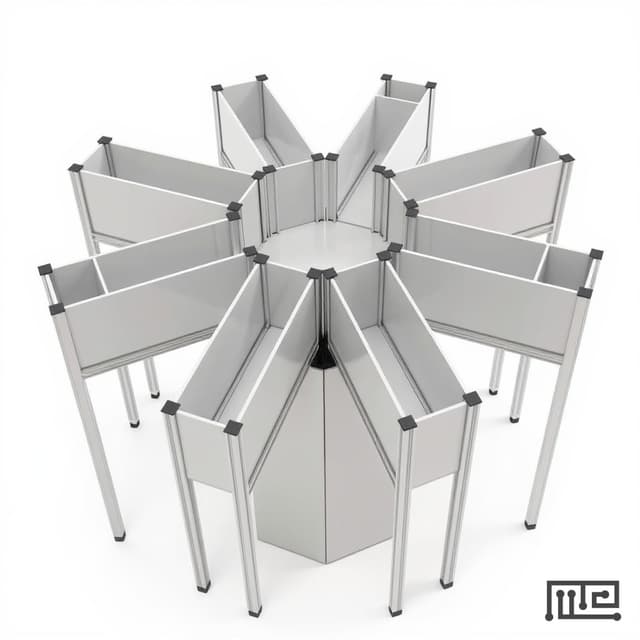
Three-dimensional radial arm maze with adjustable height elements and tilting bridge segments for advanced spatial learning and memory assessment in mice and rats.
| central_platform_diameter | 30 cm |
| arm_dimensions | 51 cm x 11.2 cm |
| platform_height | 60 cm from ground |
| platform_adjustment_range | 15 cm (up or down) |
| central_platform_shape | octagonal |
| number_of_arms | 8 (equally spaced) |

The 3D Radial Arm Maze is a specialized behavioral apparatus designed for comprehensive assessment of spatial learning and memory in laboratory rodents. This three-dimensional configuration extends the traditional radial arm maze paradigm by incorporating adjustable height elements and tilting bridge segments, enabling researchers to evaluate complex spatial navigation strategies that more closely approximate natural foraging behaviors.
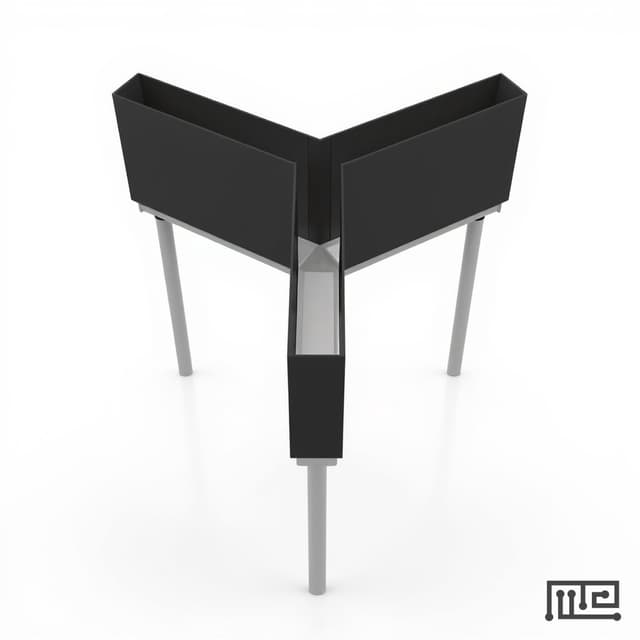
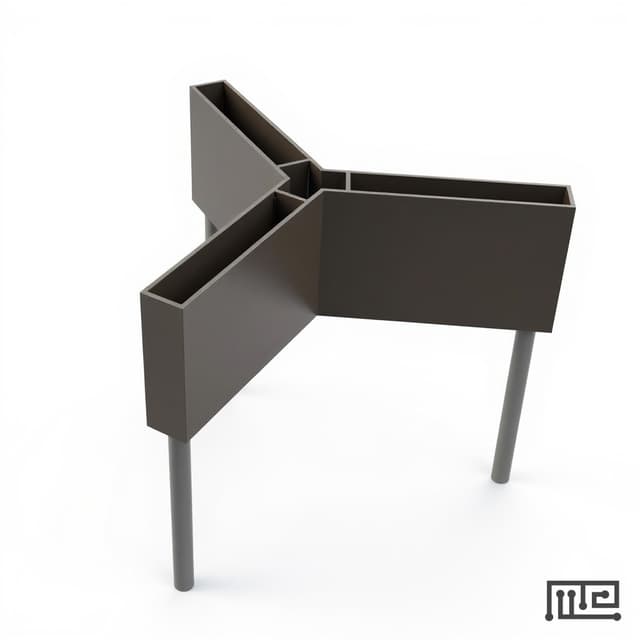
The apparatus features an octagonal central platform with eight equally-spaced arms, each divided into three distinct segments. The second segment of each arm can be tilted up to 90 degrees to create bridge configurations, while the central platform height can be adjusted within a 15 cm range. This design flexibility allows for progressive difficulty testing and investigation of three-dimensional spatial memory processes in both reference and working memory paradigms.
How It Works
The 3D Radial Arm Maze operates on the principle of spatial memory assessment through controlled navigation challenges. Animals must learn and remember the spatial locations of food rewards placed at the ends of specific arms while avoiding previously visited locations. The three-dimensional configuration adds vertical spatial processing demands, requiring subjects to integrate height-based spatial cues with traditional horizontal navigation strategies.
The maze design incorporates adjustable elements that can be configured to create varying levels of spatial complexity. The tilting bridge segments in each arm can be positioned at angles up to 90 degrees, forcing animals to navigate three-dimensional pathways. The central platform height adjustment capability allows researchers to modify the overall spatial context and create progressive training protocols that gradually increase navigation difficulty.
Behavioral performance is typically assessed through metrics including arm entry patterns, working memory errors (revisits to depleted arms), reference memory errors (entries into never-baited arms), and completion times. Integration with video tracking systems enables detailed analysis of movement patterns, path efficiency, and spatial strategy utilization throughout the testing protocol.
Features & Benefits
central_platform_diameter
- 30 cm
arm_dimensions
- 51 cm x 11.2 cm
platform_height
- 60 cm from ground
platform_adjustment_range
- 15 cm (up or down)
central_platform_shape
- octagonal
number_of_arms
- 8 (equally spaced)
compatible_tracking_software
- Noldus Ethovision XT
Behavioral Construct
- Spatial learning
- Working memory
- Reference memory
- Spatial navigation
- Cognitive flexibility
Automation Level
- semi-automated
Research Domain
- Aging Research
- Anxiety and Depression
- Behavioral Pharmacology
- Learning and Memory
- Neurodegeneration
- Neuroscience
Species
- Mouse
- Rat
Weight
- 6.06 kg
Dimensions
- L: 65.0 mm
- W: 36.0 mm
- H: 27.0 mm
Comparison Guide
| Feature | This Product | Typical Alternative | Advantage |
|---|---|---|---|
| Spatial Complexity | Three-dimensional navigation with adjustable bridge angles up to 90 degrees and 15 cm height adjustment range | Standard radial arm mazes provide only horizontal navigation challenges | Enables assessment of complex spatial strategies that more closely approximate natural foraging behaviors and three-dimensional spatial processing. |
| Configuration Flexibility | Adjustable central platform height and individual arm bridge angles for progressive difficulty protocols | Fixed configurations with limited adaptability for different experimental paradigms | Supports longitudinal studies with progressive training protocols and cognitive flexibility assessment. |
| Arm Design | Three-segment arms with dedicated tilting bridge elements for each of the eight arms | Single-piece arms with fixed horizontal orientation | Provides multiple spatial decision points per arm entry and enhanced motor-cognitive integration assessment. |
| Species Accommodation | Dedicated mouse (51 cm arms) and rat (68 cm arms) configurations with scaled central platforms | Single size or limited scaling options for different species | Optimizes spatial relationships and navigation demands for species-specific behavioral capabilities and body dimensions. |
| Software Integration | Native compatibility with Noldus EthoVision XT tracking and analysis systems | Limited software compatibility or manual scoring requirements | Enables comprehensive automated behavioral analysis with detailed movement tracking and spatial strategy quantification. |
This apparatus combines the established spatial memory assessment capabilities of traditional radial arm mazes with enhanced three-dimensional navigation challenges. The adjustable configuration elements provide experimental flexibility while maintaining standardized behavioral metrics, supporting both basic spatial learning research and complex cognitive flexibility paradigms.
Practical Tips
Verify bridge angle settings using a digital protractor before each experimental session, ensuring consistent spatial difficulty across testing days.
Why: Small variations in bridge angles can significantly impact task difficulty and introduce unintended variability in spatial memory assessment.
Clean arm segments and central platform with mild detergent after each testing session, paying particular attention to food reward residues that may create olfactory cues.
Why: Residual odors can influence spatial navigation strategies and confound memory-based performance measures.
Randomize arm baiting patterns across animals and sessions while maintaining consistent spatial relationships for reference memory assessment.
Why: Systematic randomization prevents development of non-spatial behavioral strategies while preserving the spatial memory component of the task.
Monitor tracking system performance regularly to ensure accurate detection of bridge navigation and vertical movement components.
Why: Three-dimensional movement tracking requires optimal camera positioning and lighting to capture spatial navigation metrics accurately.
If animals show reluctance to navigate tilted bridges, gradually increase bridge angles over successive sessions rather than implementing maximum angles immediately.
Why: Progressive difficulty increase prevents task avoidance behaviors and ensures animals learn to navigate three-dimensional elements effectively.
Inspect bridge pivot mechanisms and platform adjustment components weekly for wear or loosening that could create unstable surfaces.
Why: Mechanical stability is essential for animal safety and consistent spatial relationships throughout behavioral testing protocols.
Use consistent environmental cues around the maze setup to support spatial reference memory formation while controlling for non-spatial navigation strategies.
Why: Stable distal cues enable hippocampal-dependent spatial memory processes while preventing reliance on proximal sensory navigation aids.
Setup Guide
What’s in the Box
- Central octagonal platform with height adjustment mechanism
- Eight three-segment arm assemblies with tilting bridge components
- Support structure and mounting hardware
- Assembly instructions and protocol guide
- Food reward wells and placement tools (typical)
- Cleaning and maintenance supplies (typical)
Warranty
ConductScience provides a standard one-year manufacturer warranty covering defects in materials and workmanship, with comprehensive technical support for setup optimization and protocol development.
Compliance
What is the optimal training protocol duration for establishing reliable baseline performance?
Typical protocols require 5-7 days of initial training with 2-3 trials per day, followed by 3-4 days of stable performance before experimental manipulations. Training duration may vary based on strain, age, and specific memory paradigm requirements.
How does the three-dimensional configuration affect traditional radial arm maze scoring methods?
Standard working memory errors (revisits) and reference memory errors (never-baited arms) remain applicable, but additional metrics include bridge navigation efficiency, height-related spatial strategy utilization, and three-dimensional path analysis through integrated tracking systems.
Can the maze configuration be modified during an ongoing experiment?
Yes, the adjustable bridge angles and platform height can be modified between sessions to create progressive difficulty paradigms or assess cognitive flexibility, though configuration changes should be planned as part of the experimental design.
What food reward protocols work best with the three-dimensional design?
Standard food pellet rewards (20-45mg) placed in arm-end wells remain effective, though reward accessibility may be modified by bridge angles. Consider using highly palatable rewards when bridge navigation is particularly challenging.
How does the apparatus integrate with existing behavioral analysis software?
The maze is optimized for Noldus EthoVision XT with predefined zone templates, but the standardized dimensions and overhead tracking compatibility support integration with other video analysis platforms with manual zone configuration.
What maintenance is required for the adjustable mechanisms?
Monthly inspection of bridge pivot points and height adjustment mechanisms is recommended, with periodic lubrication of moving parts. The modular design allows individual component replacement without complete apparatus disassembly.
How does performance compare between two-dimensional and three-dimensional radial arm protocols?
Three-dimensional configurations typically show increased task difficulty with longer acquisition times and higher error rates, but provide more naturalistic spatial navigation assessment and enhanced sensitivity to hippocampal-dependent memory processes.
Have a question about this product?
Accessories
Enhance your setup with compatible accessories


Frequently Bought Together
Upgrade Options