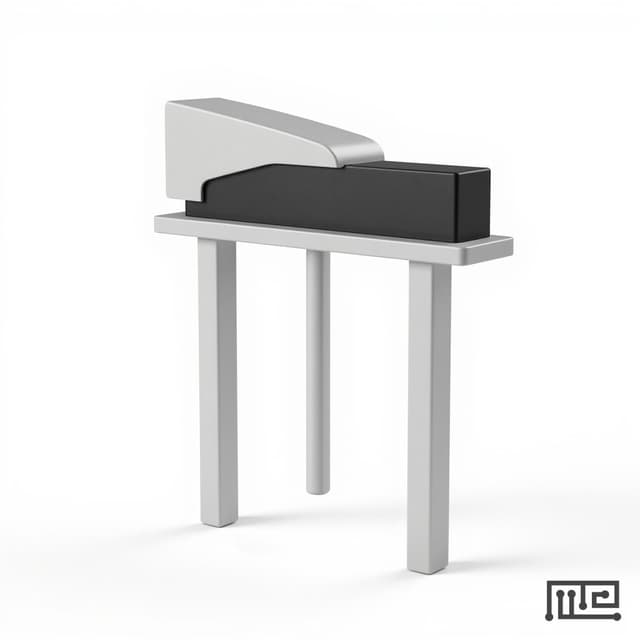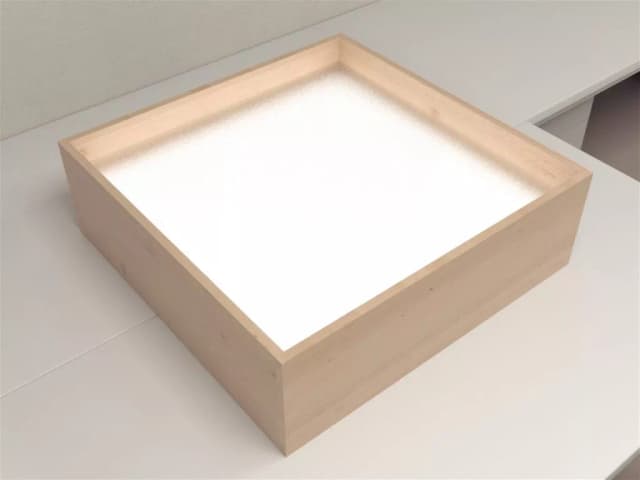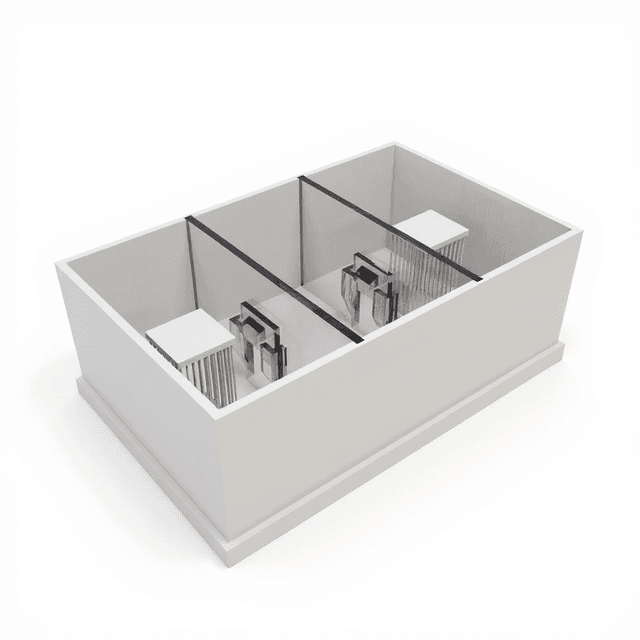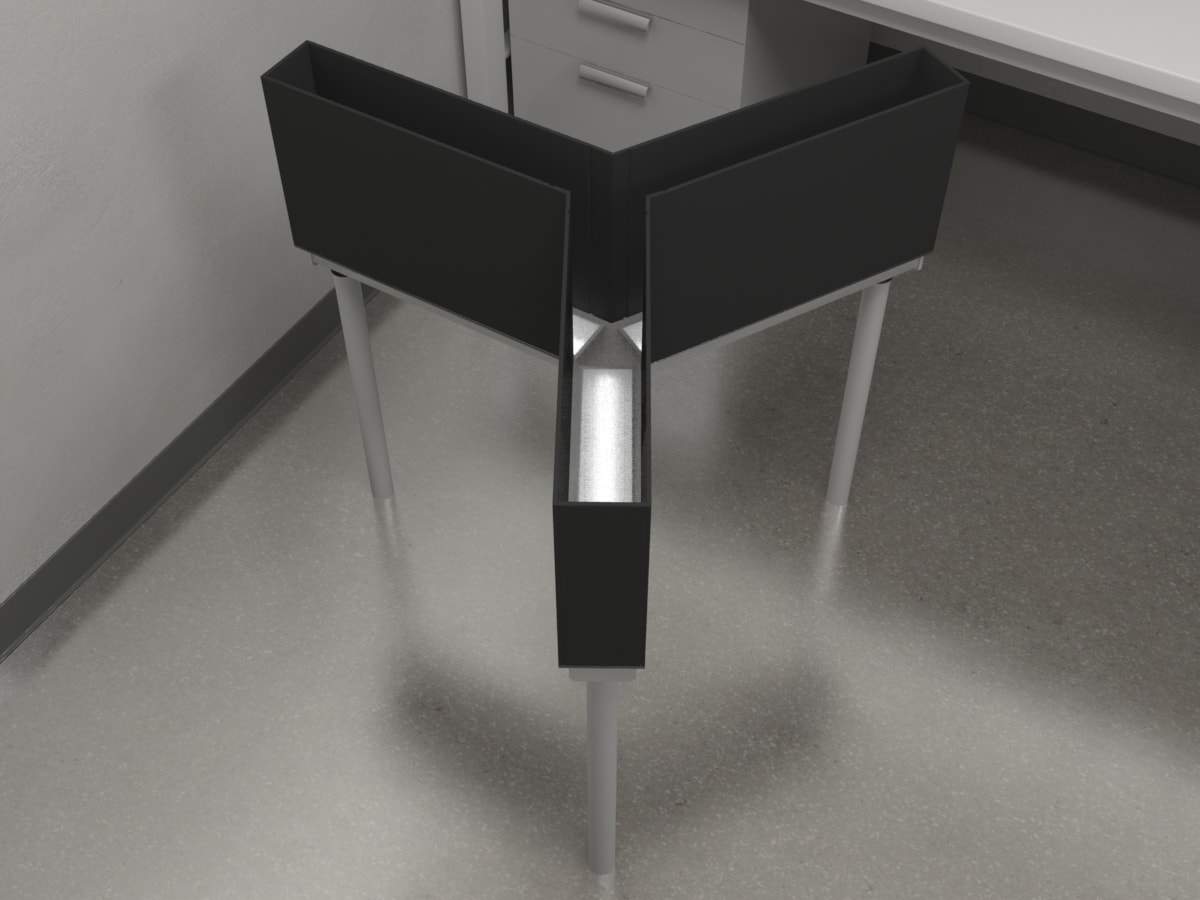
Y Maze Backlight
Multi-spectral backlight system for Y-maze behavioral studies, offering fluorescent, white, blue, red, and infrared illumination options for spatial memory and cognitive assessment protocols.

Louise Corscadden, PhD
Director of Science · ConductScience
Ask Louise about Y Maze Backlight fit, setup, configuration, or quote prep.
Already working with us? Sign in to connect this with My Scientist.
Key Specifications
Full details →- Model fit
- Mouse, Rat
- SKU family
- 3510
- Shipping box
- 60.0 x 60.0 x 30.0 cm
- Ordering
- Online checkout and quote request available
- Category
- Behavioral Mazes
- Build notes
- Confirm accessories, station layout, and support needs before purchase
The Y Maze Backlight provides controlled illumination for spatial memory and cognitive assessment studies using Y-maze configurations. This lighting system offers five distinct illumination options - fluorescent, white, blue, red, and infrared - enabling researchers to optimize visual conditions for different experimental protocols and species-specific behavioral requirements.
The multi-spectral capability supports diverse research applications from standard spatial learning paradigms under white light to specialized protocols requiring specific wavelength illumination. Infrared capability enables behavioral tracking without visible light interference, while colored illumination options allow investigation of wavelength-dependent behavioral responses and circadian rhythm studies.
How It Works
The Y Maze Backlight system provides uniform illumination across the maze floor through backlight technology, ensuring consistent visual conditions throughout the testing arena. The system incorporates LED technology to deliver stable light output across five distinct spectral ranges, from visible white and colored light to infrared wavelengths.
Different illumination modes serve specific experimental requirements. White and fluorescent modes provide standard visibility for conventional behavioral protocols. Blue and red illumination enable investigation of wavelength-dependent responses and circadian effects. Infrared illumination allows video tracking and behavioral analysis while maintaining a visually dark environment for the test subject.
The backlighting approach eliminates shadows and hot spots that could create inadvertent spatial cues, ensuring that behavioral choices reflect genuine spatial memory rather than visual artifacts. Uniform light distribution across the maze surface maintains consistent conditions across all three arms of the Y-configuration.
Features & Benefits
Device Type
- Fluorescent, Infrared
Behavioral Construct
- spatial memory
- working memory
- spontaneous alternation
- cognitive function
Automation Level
- manual
Color
- Blue
- Fluorescent
- IR
- Red
- White
Research Domain
- Aging Research
- Anxiety and Depression
- Behavioral Pharmacology
- Learning and Memory
- Neurodegeneration
- Neuroscience
Species
- Mouse
- Rat
Compatible Tracking Software
- ConductVision
Shipping weight
- 17.64 lb
Shipping box
- L: 60.0 cm
- W: 60.0 cm
- H: 30.0 cm
| Feature | This Product | Typical Alternative | Advantage |
|---|---|---|---|
| Illumination Options | Five modes: fluorescent, white, blue, red, and infrared | Basic systems often provide only white light or limited wavelength options | Supports diverse experimental protocols from standard spatial testing to specialized wavelength-dependent studies |
| Light Distribution Method | Backlight technology providing uniform surface illumination | Overhead lighting systems that can create shadows and uneven illumination | Eliminates visual artifacts that could create inadvertent spatial cues affecting behavioral outcomes |
| Infrared Capability | Integrated IR illumination for dark-field behavioral tracking | Many systems require separate IR illumination sources | Enables behavioral analysis in visually dark conditions without additional equipment |
| LED Technology | LED-based illumination across all spectral modes | Some systems use fluorescent or incandescent sources | Provides stable light output with minimal heat generation that could influence animal behavior |
The Y Maze Backlight offers comprehensive illumination flexibility with five distinct modes including infrared capability, utilizing uniform backlight distribution to eliminate visual artifacts while supporting diverse spatial memory research protocols.
| Model | SKU | Listed price | Status | Shipping box |
|---|---|---|---|---|
| Fluorescent | ME-MS3512 | $295.00 | Available | 60.0 x 60.0 x 30.0 cm |
| Infrared | ME-MS3511 | $295.00 | Available | 60.0 x 60.0 x 30.0 cm |
Practical Tips
Measure light intensity at the center and ends of each maze arm to verify uniform distribution within ±10% variation.
Why: Uneven illumination can create inadvertent visual cues that confound spatial memory assessment.
Clean the backlight surface weekly with appropriate cleaning agents to prevent dust accumulation that reduces light transmission.
Why: Dust buildup can create uneven illumination patterns and reduce overall light output.
Allow 15-minute warm-up time for LED stabilization before beginning behavioral testing sessions.
Why: LED output can fluctuate slightly during initial warm-up, potentially affecting behavioral consistency.
If observing uneven illumination, check maze floor material for transparency variations and ensure proper backlight positioning.
Why: Non-uniform floor materials or misaligned backlighting can create brightness variations affecting behavioral outcomes.
Document the specific illumination mode and intensity settings used for each experimental session in your data records.
Why: Illumination parameters can significantly influence behavioral responses and are essential for result interpretation and replication.
Verify electrical connections are secure and protected from potential contact with cleaning solutions or animal waste.
Why: Electrical safety is critical in animal research environments where moisture and cleaning agents are regularly used.
Setup Guide
What’s in the Box
- Y Maze Backlight unit (typical)
- Power adapter (typical)
- Mounting hardware kit (typical)
- Control interface cable (typical)
- User manual and setup guide (typical)
Warranty
ConductScience provides a standard one-year manufacturer warranty covering defects in materials and workmanship, with technical support for setup and operational guidance.
Compliance
References
Background reading relevant to this product:
What light intensity levels are achieved with each illumination mode?
Consult the product datasheet for specific photometric values including illuminance measurements and spectral characteristics for each of the five illumination modes.
Is the infrared illumination compatible with standard behavioral tracking cameras?
The infrared mode is designed for use with IR-sensitive cameras. Verify your tracking system's IR sensitivity range matches the backlight's IR output spectrum for optimal performance.
How uniform is the light distribution across the maze surface?
The backlight design provides uniform illumination to eliminate shadows and hot spots. Measure light intensity at multiple points across all three maze arms to verify uniformity in your setup.
Can different illumination modes be switched during a single testing session?
Consult the control interface specifications to determine switching capabilities. Most protocols maintain consistent illumination throughout individual test sessions to avoid confounding variables.
What are the power requirements and heat output characteristics?
LED technology minimizes heat generation compared to traditional lighting. Refer to the product specifications for power consumption and thermal characteristics of each illumination mode.
Is the system compatible with different Y-maze sizes and materials?
The backlight is designed for standard Y-maze configurations. Verify dimensional compatibility with your specific maze size and ensure the maze floor material allows adequate light transmission.
Have a question about this product?
Have a question? Just ask.
Send it over and we'll email you a personalized answer — no call, no scheduling.
Prefer to talk it through?
Accessories
Enhance your setup with compatible accessories
Frequently Bought Together