Conditioned Place Preference - Mouse (Custom Order)
Three-compartment behavioral testing apparatus for investigating conditioned place preference, drug reward, and spatial memory in mice with customizable environmental cues.

Louise Corscadden, PhD
Director of Science · ConductScience
Ask Louise about Conditioned Place Preference - Mouse (Custom Order) fit, setup, configuration, or quote prep.
Already working with us? Sign in to connect this with My Scientist.
Key Specifications
Full details →- Model fit
- Mouse
- SKU family
- ME-CPP-M01-C
- Shipping box
- 43.2 x 38.0 x 27.9 cm
- Ordering
- Quote-reviewed before fulfillment
- Category
- Behavioral Mazes
- Build notes
- Confirm accessories, station layout, and support needs before purchase
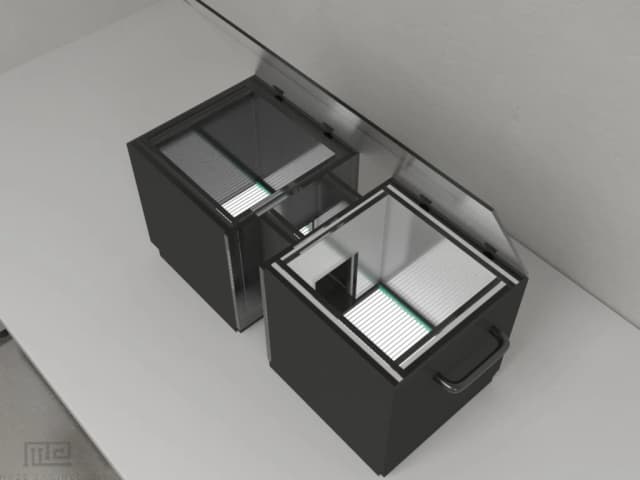
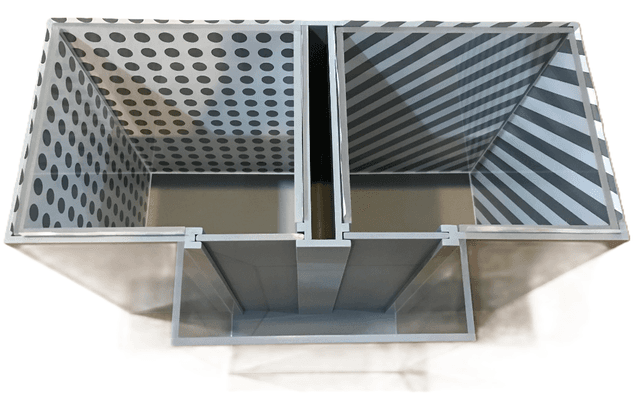
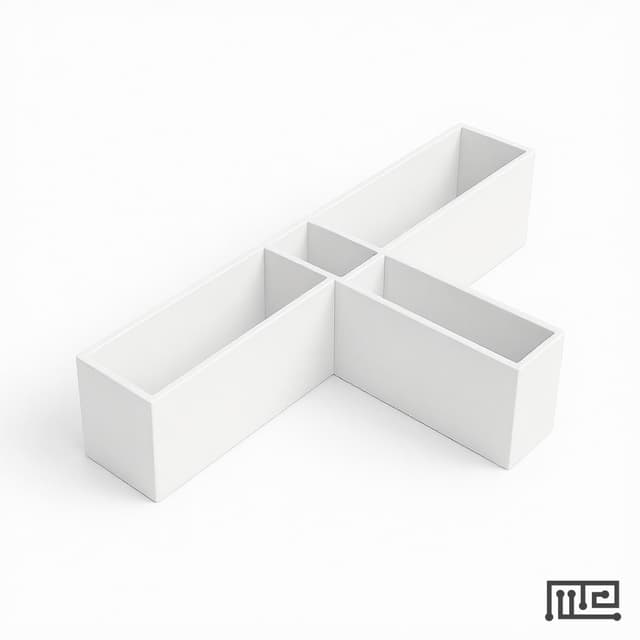
The Conditioned Place Preference apparatus for mice is a three-compartment behavioral testing system designed for investigating drug reward, aversion, and spatial memory associations. The apparatus consists of two distinct conditioning chambers (one black, one white) connected by a neutral middle compartment, allowing researchers to assess an animal's preference for environments previously paired with pharmacological or other experimental treatments.
This custom-configured system features interchangeable flooring options including mesh and grid surfaces to provide tactile cues that enhance environmental discrimination. The apparatus enables systematic evaluation of conditioned responses in addiction research, neuropharmacology studies, and behavioral conditioning protocols where spatial preference serves as a behavioral readout of underlying neurobiological processes.
How It Works
The conditioned place preference paradigm operates on principles of classical conditioning where environmental contexts become associated with pharmacological or experimental treatments. During conditioning phases, subjects receive treatments in one compartment while receiving control treatments in the opposing compartment, creating differential associations with each environment.
The apparatus design facilitates discrimination between compartments through visual cues (black versus white walls) and tactile cues provided by different flooring textures (mesh versus grid). The neutral middle compartment contains doors that can be opened or closed to control animal movement between chambers during different experimental phases.
Preference is quantified by measuring time spent in each compartment during test sessions when animals have free access to all areas. Changes in compartment preference between baseline and post-conditioning sessions indicate the rewarding or aversive properties of the treatments, with increased time in the treatment-paired chamber indicating reward and decreased time indicating aversion.
Features & Benefits
Behavioral Construct
- Place preference
- Conditioned preference
- Spatial conditioning
- Reward learning
- Aversion learning
- Associative learning
Automation Level
- manual
Research Domain
- Addiction Research
- Behavioral Pharmacology
- Learning and Memory
- Neuroscience
Species
- Mouse
Compatible Tracking Software
- ConductVision
Shipping weight
- 21.0 lb
Shipping box
- L: 43.2 cm
- W: 38.0 cm
- H: 27.9 cm
| Feature | This Product | Typical Alternative | Advantage |
|---|---|---|---|
| Compartment Dimensions | 20×18×30 cm conditioning chambers with 20×7×30 cm neutral zone | Standard models often provide smaller compartments around 15×15 cm | Larger compartments allow more natural movement patterns and reduce stress-related behaviors that could confound conditioning. |
| Flooring Options | Interchangeable mesh and grid flooring systems | Many systems use fixed smooth floors or basic textured surfaces | Multiple tactile cues enhance environmental discrimination and strengthen conditioning associations beyond visual cues alone. |
| Door Configuration | 8×10 cm door openings between compartments | Smaller openings or guillotine-style doors in basic models | Appropriately sized openings accommodate natural mouse movement without creating barriers that could induce anxiety responses. |
| Customization Options | Custom order configuration for specific experimental requirements | Limited modification options in standard commercial units | Allows optimization for specific research protocols and accommodation of unique experimental designs or housing requirements. |
This CPP apparatus provides enhanced environmental discrimination through dual flooring systems and generous compartment sizing. The custom configuration approach allows researchers to optimize the system for specific experimental requirements while maintaining the core three-compartment design proven effective for conditioning studies.
Practical Tips
Verify door alignment and smooth operation before each experimental session to prevent animals from becoming trapped or stressed.
Why: Door malfunction during conditioning or testing can compromise data integrity and animal welfare.
Inspect flooring inserts regularly for damage or wear that could create sharp edges or alter tactile cues.
Why: Damaged flooring can cause injury and change the sensory properties that define environmental contexts.
Randomize compartment-treatment assignments across subjects to control for inherent chamber preferences.
Why: Systematic assignment bias can create false positive or negative results if one chamber has inherent preferential qualities.
Record ambient lighting and sound conditions for each session as these can influence exploration behavior.
Why: Environmental variables affect baseline activity levels and may interact with treatment effects on place preference.
If animals show excessive freezing behavior, reduce handling time before sessions and ensure adequate acclimation to the testing room.
Why: Stress responses can override exploratory behavior and prevent accurate assessment of compartment preferences.
Conduct conditioning and testing sessions at the same time of day to control for circadian effects on drug sensitivity and activity levels.
Why: Circadian rhythms influence both pharmacological responses and spontaneous locomotor activity patterns.
Ensure all edges and surfaces are smooth with no sharp protrusions that could cause injury during active exploration.
Why: Injuries during conditioning can create negative associations that confound interpretation of treatment effects.
Setup Guide
What’s in the Box
- Main three-compartment chamber assembly
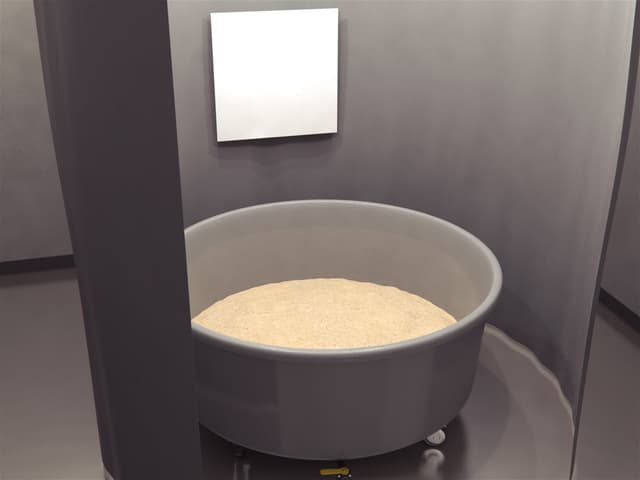
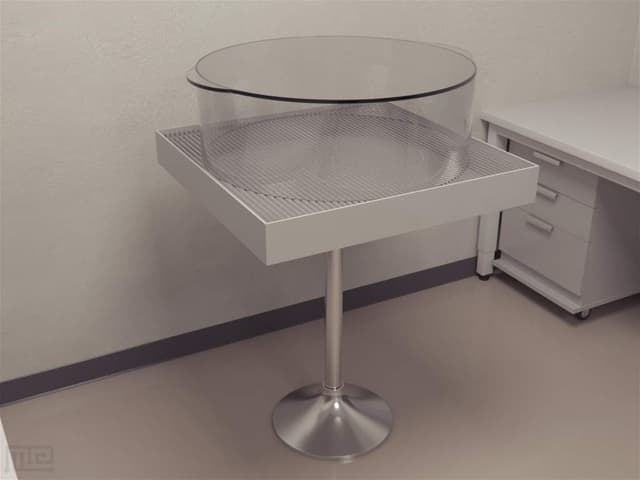
- Mesh flooring insert
- Grid flooring insert
- Removable feces collection tray
- Door system components
- Assembly hardware
- User manual with setup instructions (typical)
Warranty
ConductScience provides a standard one-year manufacturer warranty covering defects in materials and workmanship, with technical support available for setup and operational questions.
Compliance
What conditioning protocol duration is recommended for establishing reliable place preferences?
Typical protocols involve 2-4 conditioning sessions per compartment over 4-8 days, with 15-30 minute sessions depending on the treatment being evaluated. Consult established protocols for specific drug classes or experimental conditions.
How should baseline preferences be assessed before conditioning?
Conduct 15-20 minute free-access sessions with all doors open to measure initial compartment preferences. Animals showing strong baseline preferences (>65% time in one side) may need to be excluded or have compartment assignments counterbalanced.
What factors influence the magnitude of conditioned place preference?
Key factors include drug dose and timing, number of conditioning sessions, session duration, environmental distinctiveness between compartments, and individual animal variability in drug sensitivity.
How frequently should the apparatus be cleaned between subjects?
Clean with 70% ethanol between each animal to eliminate odor cues that could influence subsequent subjects. Replace feces collection tray and allow apparatus to dry completely before next use.
Can the apparatus accommodate different experimental designs beyond standard CPP?
Yes, the configurable design supports conditioned place aversion studies, environmental enrichment experiments, and modified protocols examining extinction or reinstatement of conditioned preferences.
What behavioral measures can be collected during testing sessions?
Primary measures include time spent in each compartment, number of entries between chambers, and latency to first entry into treatment-paired compartment. Video tracking systems can provide additional locomotor and spatial analysis.
How does this apparatus compare to circular or Y-maze CPP designs?
The linear three-compartment design provides clearer spatial separation and more distinct environmental contexts compared to radial designs, while the neutral middle zone prevents forced choice scenarios that can occur in two-compartment systems.
Have a question about this product?
Have a question? Just ask.
Send it over and we'll email you a personalized answer — no call, no scheduling.
Prefer to talk it through?
Accessories
Enhance your setup with compatible accessories