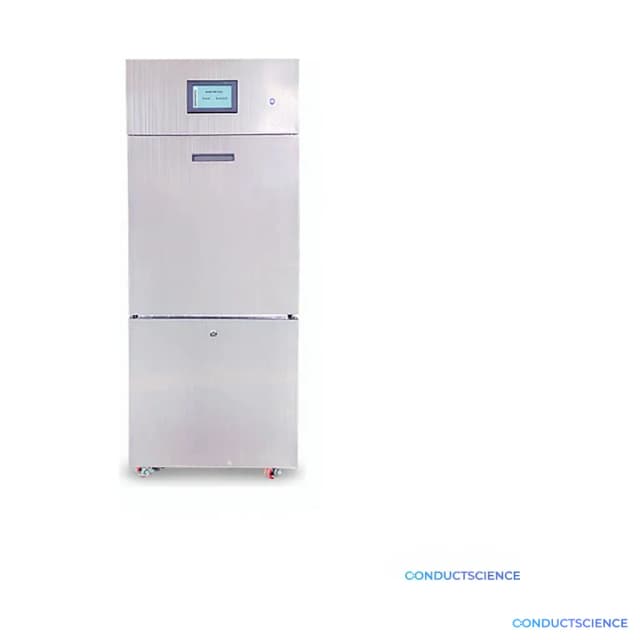
Automatic Animal Cage Washer
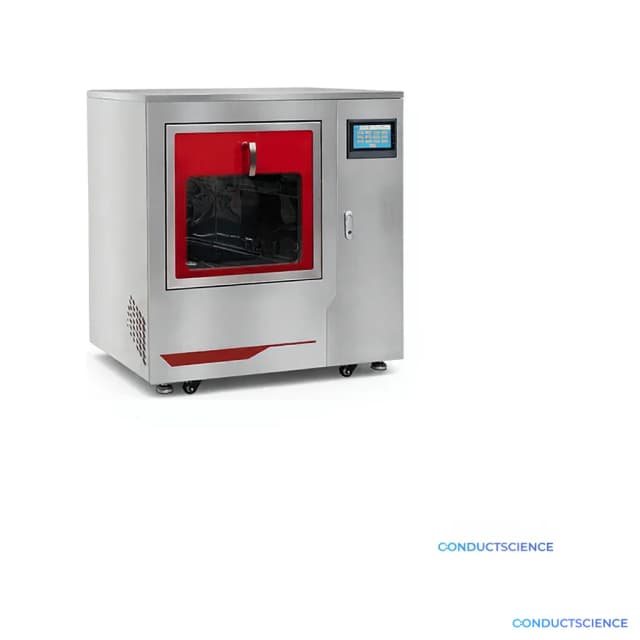
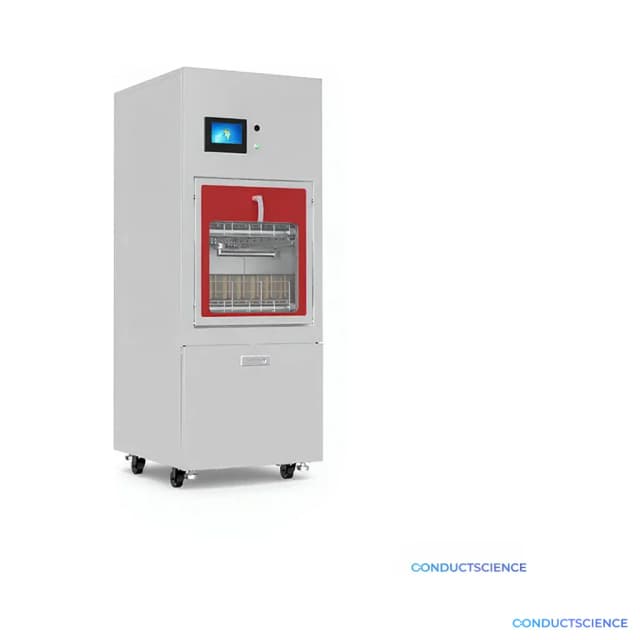
High-capacity automated cage washing system for animal research facilities, processing up to 40 mouse IVC cages per cycle with programmable temperature-controlled cleaning protocols.
| Automation Level | fully-automated |
| Cleaning Volume | Up to 40 mouse IVC cages can be cleaned |
| Opening Mode | Automatic |
| Control System | PLC/Siemens |
| Touch Screen | 7 Inch |
| Cleaning Time | Quick cleaning program can be cleaned once in 4~6 minutes |
The Automatic Animal Cage Washer BIO-0174 is a high-capacity laboratory equipment cleaning system designed for efficient processing of animal research facility equipment. This automated system processes up to 40 mouse IVC cages per cycle using a PLC/Siemens control system with 7-inch touchscreen interface, providing consistent cleaning protocols for vivarium operations.
The system operates through programmable wash, rinse, and dry cycles with adjustable temperature controls ranging from >60°C for cleaning to >82°C for rinsing, with optional drying temperatures up to 120°C. The 1500L capacity chamber accommodates high-throughput processing requirements, completing quick cleaning programs in 4-6 minutes per cycle. Electric heating elements and compressed air assist in thorough cleaning and drying processes.
How It Works
The automatic cage washer operates through a multi-stage cleaning process controlled by a Siemens PLC system. The cleaning chamber accommodates up to 40 mouse IVC cages in a single cycle, with automatic loading and unloading mechanisms. The system uses electric heating elements to maintain precise temperature control throughout the cleaning process.
The cleaning protocol begins with a pre-rinse stage, followed by heated cleaning at temperatures >60°C using softened water delivered at 0.2-0.5 MPa pressure and 25L/min flow rate. The rinsing stage operates at >82°C to ensure thermal disinfection. Compressed air at 0.5-0.7 MPa pressure and 100L/min flow rate assists in debris removal and facilitates drying.
The optional drying cycle uses heated air circulation up to 120°C to ensure complete moisture removal. The 7-inch touchscreen interface allows operators to select from pre-programmed cycles or customize parameters including temperature, duration, and pressure settings based on specific cleaning requirements.
Features & Benefits
Automation Level
- fully-automated
Cleaning Volume
- Up to 40 mouse IVC cages can be cleaned
Opening Mode
- Automatic
Control System
- PLC/Siemens
Touch Screen
- 7 Inch
Cleaning Time
- Quick cleaning program can be cleaned once in 4~6 minutes
Cleaning Temperature
- >60°C(Adjustable)
Rinsing Temperature
- >82°C(Adjustable)
Drying Temperature
- RT~120℃(Optional)
Heating Method
- Electric Heating
Steam Source
- /
Water Source
- Softened Water: Pressure: 0.2~0.5Mpa, Flow Rate: 25L/min
Compressed Air Source
- Pressure: 0.5~0.7Mpa, Flow Rate: 100L/min
Consumption
- 34KW
Brand
- ConductScience
Research Domain
- Addiction Research
- Aging Research
- Anxiety and Depression
- Behavioral Pharmacology
- Learning and Memory
- Microbiology
- Motor Function
- Neurodegeneration
- Neuroscience
- Pain Research
- Social Behavior
- Toxicology
Species
- Mouse
- Rat
Capacity
- 1500L
Weight
- 420.0 lbs
Dimensions
- L: 195.0 in
- W: 214.0 in
- H: 92.5 in
Comparison Guide
| Feature | This Product | Typical Alternative | Advantage |
|---|---|---|---|
| Cleaning Capacity | 40 mouse IVC cages per cycle | Smaller systems often handle 10-20 cages per cycle | Higher throughput reduces processing time for large vivarium operations. |
| Control System | PLC/Siemens industrial control with 7-inch touchscreen | Basic timer controls or simple digital interfaces | Industrial-grade control provides reliable operation and programmable protocols. |
| Temperature Range | Cleaning >60°C, Rinsing >82°C, Optional drying up to 120°C | Many systems limited to lower temperature ranges | Higher temperatures improve decontamination efficacy and reduce cycle dependency on detergents. |
| Cycle Time | 4-6 minutes for quick cleaning program | Standard cycles often require 15-30 minutes | Rapid processing maintains workflow efficiency in high-throughput facilities. |
| Water Pressure | 0.2-0.5 MPa at 25L/min flow rate | Lower pressure systems with reduced flow rates | High-pressure delivery ensures thorough debris removal from complex cage geometries. |
| Loading System | Automatic loading and unloading | Manual loading systems require operator handling | Automated handling reduces operator exposure and ensures consistent cage positioning. |
The BIO-0174 combines high-capacity processing (40 cages per cycle) with industrial-grade PLC control and rapid cycle times (4-6 minutes). The high-temperature operation (>82°C rinsing) and automatic loading system provide operational advantages for high-throughput vivarium applications.
Practical Tips
Verify temperature sensors monthly using calibrated thermocouples at multiple chamber locations during cleaning and rinsing cycles.
Why: Temperature uniformity ensures consistent decontamination across all cage positions.
Inspect and clean water spray nozzles weekly to prevent blockages that could reduce cleaning efficacy.
Why: Maintaining proper water distribution is critical for thorough cleaning of all cage surfaces.
Pre-sort cages by soil level and run heavily contaminated loads on extended cycles with pre-rinse.
Why: Optimizing cycle selection based on contamination level improves cleaning results and system efficiency.
Monitor compressed air moisture levels and service air dryers regularly to prevent water carryover during drying cycles.
Why: Excess moisture in compressed air can compromise drying effectiveness and leave water spots.
Establish data logging protocols to record temperature, pressure, and timing parameters for each cleaning cycle.
Why: Documentation supports validation requirements and provides troubleshooting data for process optimization.
Allow chamber cooling to below 50°C before opening after high-temperature cycles to prevent steam burns.
Why: High-temperature operations create burn hazards that require proper cooldown procedures.
Schedule cleaning cycles to align with cage change schedules to minimize equipment downtime.
Why: Coordinated scheduling maximizes system utilization while supporting vivarium operations.
Replace water filtration elements according to manufacturer specifications to maintain water quality.
Why: Poor water quality can leave mineral deposits and compromise cleaning effectiveness.
Setup Guide
What’s in the Box
- Automatic cage washer main unit
- PLC control system with 7-inch touchscreen
- Cage loading fixtures and positioning guides
- Installation hardware and mounting brackets
- Utility connection fittings
- User manual and operating procedures
- Maintenance documentation and parts list (typical)
Warranty
ConductScience provides standard manufacturer warranty coverage with technical support for installation guidance and operational troubleshooting. Extended service agreements available for preventive maintenance and calibration verification.
Compliance
What cage types and sizes are compatible with this system?
The system is designed for mouse IVC cages with capacity for 40 units per cycle. Consult product datasheet for specific dimensional compatibility with different cage manufacturers and models.
How do I validate the cleaning efficacy for regulatory compliance?
Validation protocols should include temperature monitoring, contact time verification, and biological indicator testing. The PLC system provides data logging for temperature and timing parameters.
What preventive maintenance is required?
Regular maintenance includes inspection of heating elements, pressure sensors, and water filtration systems. Compressed air systems require periodic moisture trap servicing and pressure regulator calibration.
Can the system handle heavily soiled cages from contaminated studies?
The high-temperature cleaning (>60°C) and rinsing (>82°C) cycles with high-pressure water delivery are designed for heavy soil loads. Pre-treatment may be necessary for certain contaminants.
How does the system integrate with existing vivarium workflows?
The automatic loading system and 4-6 minute quick cycles support high-throughput operations. The touchscreen interface allows program customization for different experimental protocols.
What utility requirements must be met for installation?
Installation requires 34kW electrical capacity, softened water at 0.2-0.5 MPa pressure (25L/min), and compressed air at 0.5-0.7 MPa (100L/min). Floor loading capacity must support 420 kg plus water weight.
How does this compare to manual cage washing methods?
Automated processing provides consistent temperature control, standardized contact times, and reduced operator exposure compared to manual methods. The 40-cage capacity significantly increases throughput.
Have a question about this product?
Accessories
Enhance your setup with compatible accessories
Frequently Bought Together