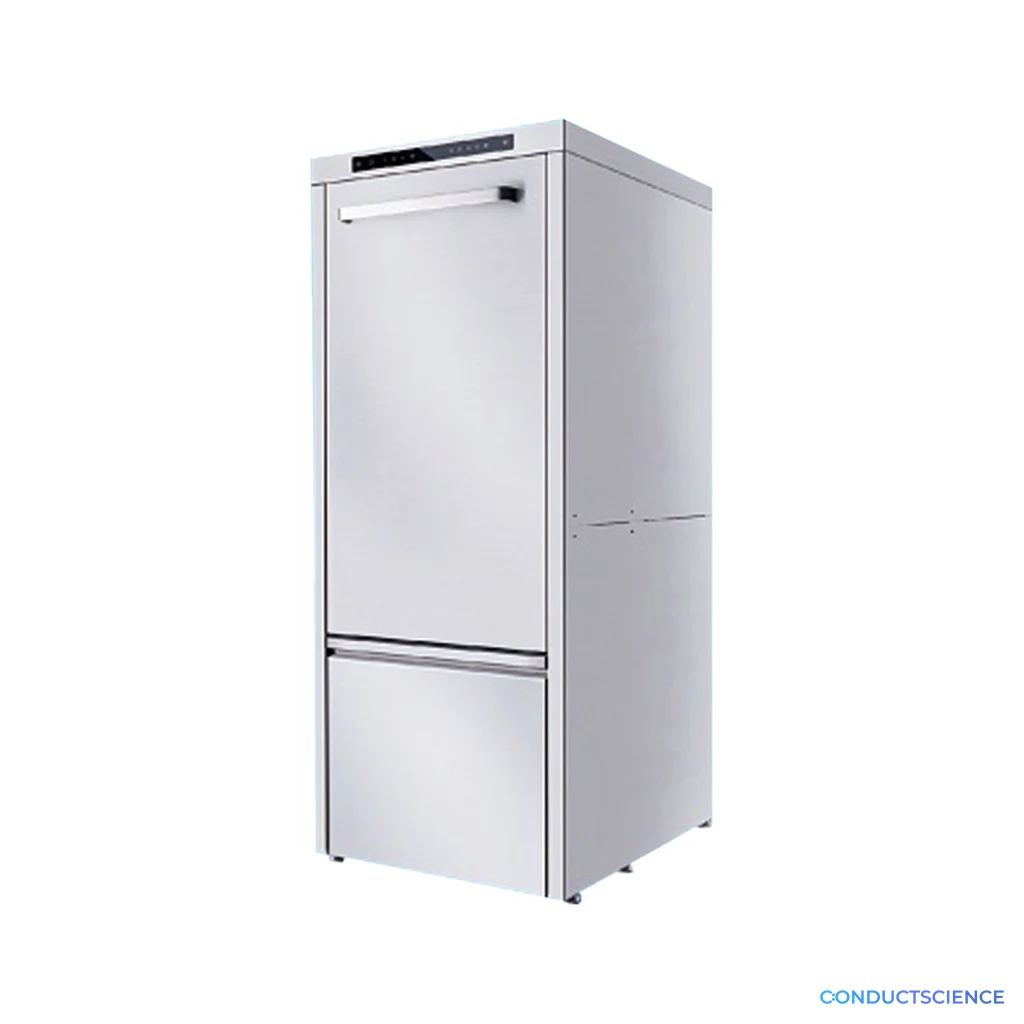
Laboratory Water Bottle Washer
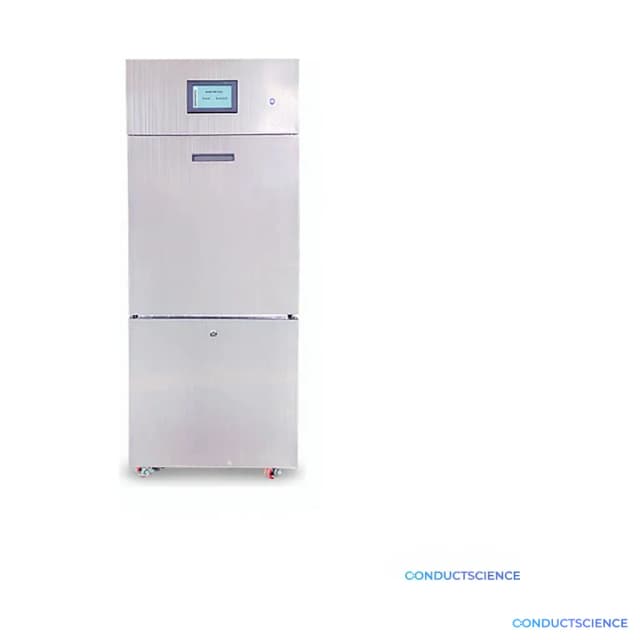
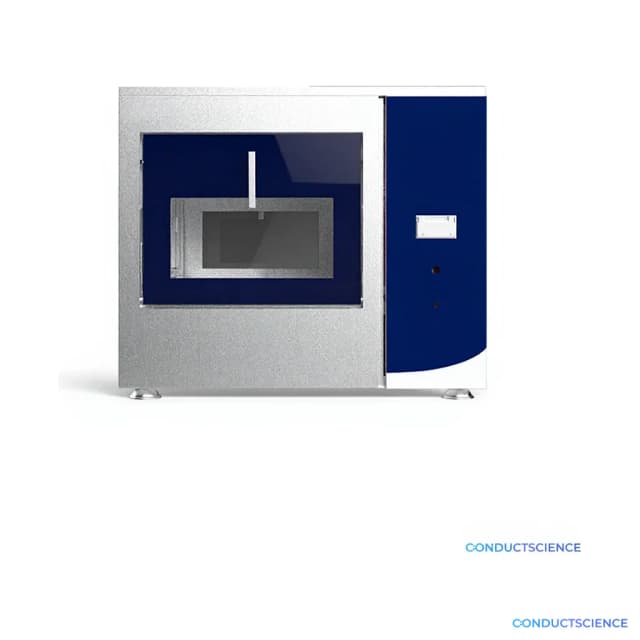
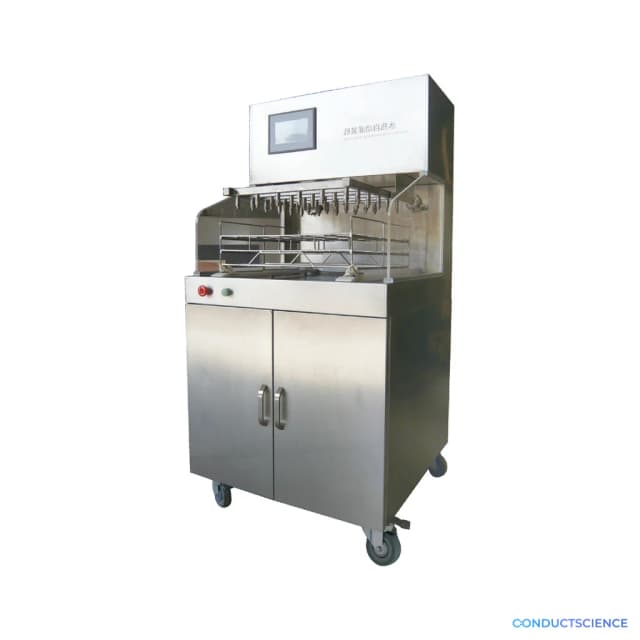
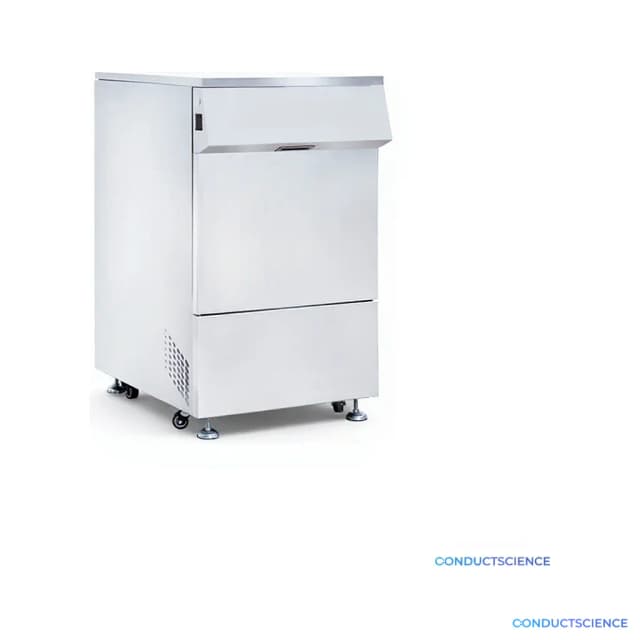
One laboratory bottle-washer family with two distinct workflows: L320 for configurable cabinet processing with 9 programs and 22 L per cycle, or HS560 for 42 × 250 mL bottles in less than 72 seconds using less than 3 L per cycle.
Both use a 320 L 316L stainless chamber, while footprint, power, temperatures, and loading method differ by model.

Louise Corscadden, PhD
Director of Science · ConductScience
Ask Louise about Laboratory Water Bottle Washer fit, setup, configuration, or quote prep.
Already working with us? Sign in to connect this with My Scientist.
Key Specifications
Full details →- Weight
- L320 · 150 kg, HS560 · 150 kg
- Chamber
- 320 L · 316L stainless steel
- External dimensions
- L320 · 680 × 780 × 1690 mm, HS560 · 642 × 750 × 1550 mm
- Electrical
- L320 · 380 V · <11 kW, HS560 · 380 V · 15 kW
- Process
- L320 · 9 kW heating · 1.6 kW wash pump, HS560 · 60 °C wash · 85 °C rinse
- Documented load
- HS560 · 42 × 250 mL bottles/cycle
Choose the washer around the bottle fleet and the complete watering workflow
Laboratory drinking-bottle washing connects animal care, water quality, sanitation, and daily logistics. The right model depends on more than nominal chamber volume. Bottle geometry, rack design, closure removal, soil, detergent, water conditions, loading labor, inspection, refill timing, and the required turnaround all shape the decision. This page keeps the L320 and HS560 on one canonical washer family so teams can compare two operating approaches without creating duplicate offers.
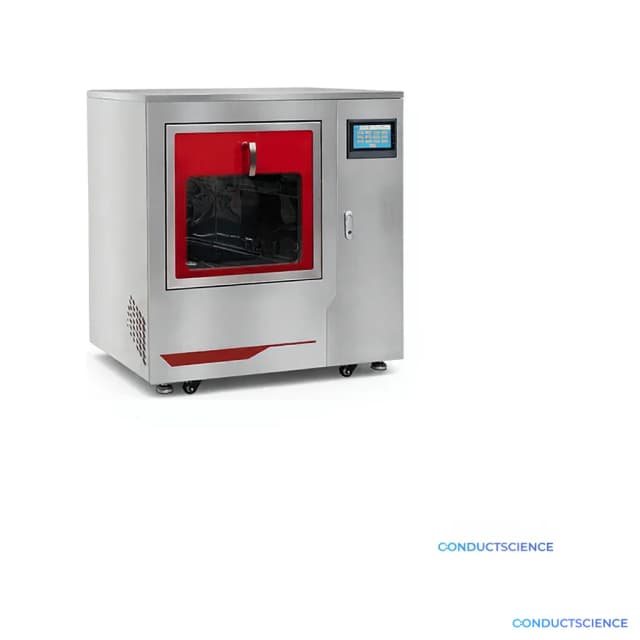
The L320 is a cabinet-style system measuring 680 × 780 × 1690 mm. It has a 320 L 316L stainless chamber, 9 customizable programs, 380 V power, total load below 11 kW, 9 kW heating, a 1.6 kW wash pump, and listed use of 22 L per cycle. This model suits teams that value configurable programs and a conventional enclosed loading workflow, subject to confirmation of the bottle rack and internal spray interface.
The HS560 measures 642 × 750 × 1550 mm and also uses a 320 L 316L stainless chamber. It provides 5 customizable programs and 15 kW total power. The catalog lists a 60 °C wash, 85 °C rinse, 42 bottles per cycle for 250 mL bottles, cycle time below 72 seconds, and water use below 3 L per cycle. Its speed makes rack handling, bottle fit, upstream cap removal, downstream filling, and inspection especially important to line balance.
Neither model's engineering table substitutes for institutional process qualification. Teams should define bottle and rack compatibility, pre-rinse needs, detergent concentration, water quality, cycle selection, temperature monitoring, cleanliness checks, rejected-load handling, and preventive maintenance. If bottles carry approved additives, the changeover and residue-control plan should be reviewed with the facility's veterinary and quality teams.
Share the bottle drawings, rack configuration, daily load, soil and additive history, target turnaround, water and drainage conditions, power, room drawing, sanitation procedure, and acceptance criteria with ConductScience. The quote will identify the selected model, racks or interfaces, utilities, controls, accessories, installation, testing, training, and commissioning. This keeps the washer tied to the real watering-room process rather than an isolated capacity number.
How It Works
The washing system operates through a multi-stage thermal decontamination process controlled by a PLC/Siemens programmable logic controller. Bottles are manually loaded into the 330L capacity chamber where they undergo sequential cleaning phases with precise temperature control at each stage.
The cleaning cycle begins with a washing phase at temperatures exceeding 60°C, followed by a rinsing phase at temperatures above 82°C. Hot water circulation and thermal contact ensure uniform temperature distribution across all bottle surfaces. An optional drying phase provides heated air circulation from room temperature up to 120°C to eliminate residual moisture.
Softened water at 0.2-0.5 MPa pressure and 15L/min flow rate provides consistent spray patterns and thermal transfer. The 31KW electric heating system maintains stable temperatures throughout the programmed cycle, with the quick cleaning program completing full decontamination in 4-6 minutes per cycle.
Features & Benefits
Weight
- L320 · 150 kg
- HS560 · 150 kg
Chamber
- 320 L · 316L stainless steel
External dimensions
- L320 · 680 × 780 × 1690 mm
- HS560 · 642 × 750 × 1550 mm
Electrical
- L320 · 380 V · <11 kW
- HS560 · 380 V · 15 kW
Process
- L320 · 9 kW heating · 1.6 kW wash pump
- HS560 · 60 °C wash · 85 °C rinse
Documented load
- HS560 · 42 × 250 mL bottles/cycle
Water use
- L320 · 22 L/cycle
- HS560 · <3 L/cycle
| Feature | This Product | Typical Alternative | Advantage |
|---|---|---|---|
| Processing Capacity | 330L chamber accommodating 180 x 200ml or 72 x 500ml bottles per cycle | Smaller units often process 50-100 bottles per cycle with limited size flexibility | Higher throughput reduces processing time and labor requirements in large animal facilities |
| Control System | PLC/Siemens programmable logic controller with 7-inch touchscreen | Basic timer controls or simple digital interfaces | Advanced programming capabilities enable custom protocols and comprehensive cycle documentation |
| Temperature Range | Multi-stage control with washing >60°C, rinsing >82°C, optional drying RT-120°C | Single temperature or limited range systems | Multiple temperature zones optimize decontamination effectiveness for different cleaning phases |
| Cycle Time | Quick cleaning program completes in 4-6 minutes | Longer cycle times often 15-30 minutes for comparable decontamination | Rapid processing maintains workflow efficiency and reduces equipment downtime |
| Heating Method | 31KW electric heating system | Steam-based systems requiring external boiler infrastructure | Self-contained electric heating simplifies installation and eliminates steam line requirements |
| Water Requirements | Softened water at 0.2-0.5 MPa pressure, 15L/min flow rate | Variable water quality and pressure requirements | Specified water parameters ensure consistent spray patterns and optimal cleaning performance |
This system combines high-capacity processing with advanced PLC control and rapid cycle times, offering significant throughput advantages over smaller batch systems while providing programmable parameters for protocol standardization. The self-contained electric heating eliminates external steam requirements common in comparable high-capacity washers.
| Model | SKU | Listed price | Status | Shipping box |
|---|---|---|---|---|
| HS560 · 5 programs · <72 s/cycle | CS-BOTTLE-WASHER-HS560 | Quote | Available | Confirmed during quote |
| L320 · 9 programs · 22 L/cycle | CS-BOTTLE-WASHER-L320 | Quote | Available | Confirmed during quote |
Practical Tips
Verify temperature sensors at all three zones (washing, rinsing, drying) monthly using calibrated reference thermometers during empty test cycles.
Why: Temperature accuracy directly impacts decontamination effectiveness and protocol repeatability.
Inspect and clean water spray nozzles weekly to prevent mineral buildup that could reduce flow distribution uniformity.
Why: Consistent water coverage ensures all bottle surfaces receive adequate thermal processing.
Pre-rinse heavily soiled bottles to remove bedding debris before loading into the automated washing system.
Why: Reducing particulate load prevents drainage system clogging and maintains optimal water circulation.
Arrange bottles with openings oriented toward spray patterns and avoid overcrowding holder configurations.
Why: Proper positioning ensures water reaches all internal surfaces for complete decontamination.
Monitor cycle completion times and water flow rates as indicators of system performance degradation.
Why: Changes in these parameters often indicate developing issues before complete system failure occurs.
Document PLC cycle parameters and temperature logs for each processing batch to support protocol validation.
Why: Consistent documentation provides evidence of decontamination effectiveness for regulatory compliance.
Allow adequate cooling time before manual unloading to prevent thermal burns from heated bottles and chamber surfaces.
Why: Surface temperatures can exceed 120°C during drying phases and require time to reach safe handling temperatures.
Replace water filtration elements according to manufacturer schedule to maintain softened water quality specifications.
Why: Proper water conditioning prevents mineral deposits that reduce heating efficiency and spray nozzle performance.
Setup Guide
What’s in the Box
- Selected laboratory bottle washer; model-specific racks, interfaces, controls, accessories, and commissioning scope confirmed in the quote
Warranty
ConductScience provides a standard one-year manufacturer warranty covering parts and labor for the control system, heating elements, and mechanical components. Technical support includes installation guidance, programming assistance, and troubleshooting consultation.
Compliance
Which model is better for a mixed bottle fleet?
Start with bottle and rack compatibility, then compare program flexibility, handling labor, throughput, water use, and utilities.
Does the fast cycle apply to every bottle?
No. The documented HS560 load is tied to the listed bottle size; other formats require compatibility and performance confirmation.
What should the site qualify?
Qualify bottle fit, loading, detergent, water, temperatures, cleanliness checks, rejected loads, and the full wash-to-fill workflow.
Have a question about this product?
Have a question? Just ask.
Send it over and we'll email you a personalized answer — no call, no scheduling.
Prefer to talk it through?
Accessories
Enhance your setup with compatible accessories
Frequently Bought Together