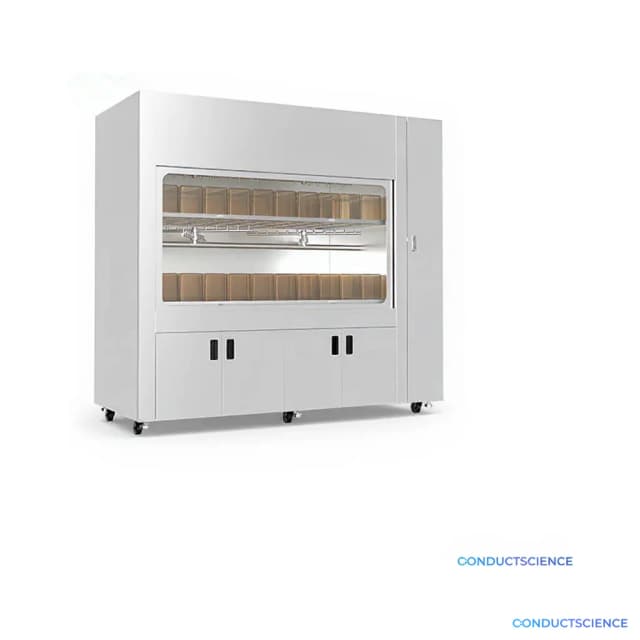
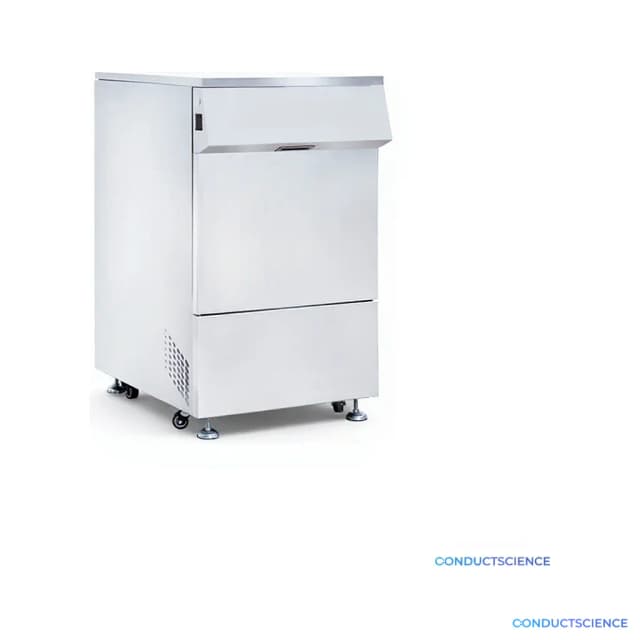
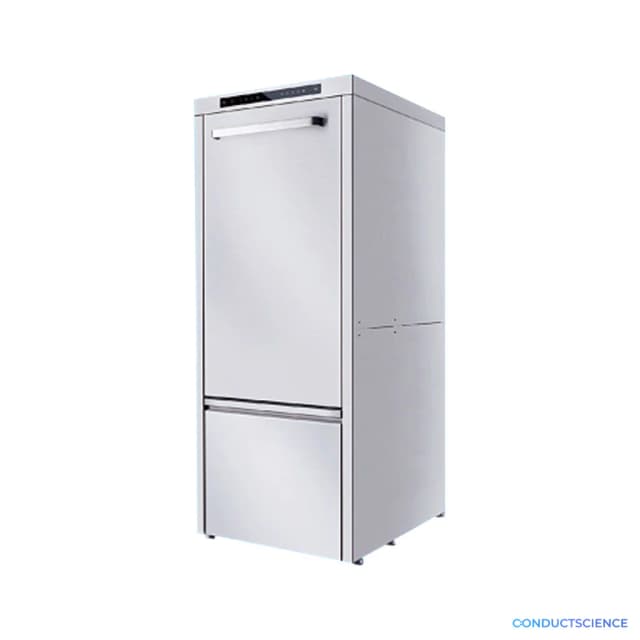
Washer Disinfector(Double Door Automatic Glassware Washer)
Double-door automatic glassware washer with 220-420L capacity, programmable cycles up to 99°C, and multi-level loading for high-volume laboratory cleaning operations.

Louise Corscadden, PhD
Director of Science · ConductScience
Ask Louise about Washer Disinfector(Double Door Automatic Glassware Washer) fit, setup, configuration, or quote prep.
Already working with us? Sign in to connect this with My Scientist.
Key Specifications
Full details →- Model fit
- Configured during quote
- SKU family
- BIO-0176
- Shipping box
- 186.5 x 96.0 x 80.5 cm
- Ordering
- Online checkout and quote request available
- Category
- Lab Washers & Disinfectors
- Build notes
- Confirm accessories, station layout, and support needs before purchase
The Washer Disinfector is a double-door automatic glassware washer designed for high-volume laboratory glassware cleaning and disinfection. Available in 220L, 320L, and 420L capacities, this unit employs automated washing cycles with heated water systems to remove contaminants from laboratory glassware, instruments, and equipment. The double-door configuration enables continuous workflow in busy laboratory environments by allowing simultaneous loading and unloading operations.
The system features programmable wash cycles with temperature control up to 99°C and integrated water heating elements ranging from 5KW to 15KW depending on capacity. Multiple load levels (2-3 depending on model) accommodate various glassware sizes and configurations. Water consumption ranges from 20-25L per washing step, with wash power systems from 0.75KW to 1.5KW providing mechanical cleaning action.
How It Works
The washer disinfector operates through automated cleaning cycles combining mechanical action, thermal disinfection, and controlled water chemistry. The wash system employs rotating spray arms and pressurized water jets to remove particulate and organic contamination from glassware surfaces. Water heating elements raise internal temperatures up to 99°C, providing thermal disinfection that denatures proteins and destroys vegetative microorganisms.
The double-door design enables pass-through operation where contaminated items enter from one side and clean items exit from the other, preventing recontamination. Programmable cycles control wash duration, temperature, and water consumption based on load type and contamination level. The multi-level loading system accommodates various glassware configurations while ensuring adequate spray coverage and drainage.
Internal temperature monitoring and control systems maintain consistent thermal conditions throughout the wash cycle. Water consumption is regulated per washing step (20-25L depending on model) to optimize cleaning efficiency while minimizing waste. The automated process reduces manual handling and provides reproducible cleaning results compared to manual washing methods.
Features & Benefits
Automation Level
- fully-automated
BK-LW320D
- BK-LW420D
320L
- 420L
Washer Load Level
- 2
3
- 2
Water Wash Power
- 0.75KW
1.5KW
- 1.5KW
Water Heater Power
- 5KW
5KW
- 15KW
MAX. Power
- 6KW
7KW
- 17KW
Water Consumption/Step
- 20L
22L
- 25L
Tank Internal Temperature
- 0~99℃
Brand
- ConductScience
Research Domain
- Analytical Chemistry
- Cell Biology
- Clinical Diagnostics
- Environmental Monitoring
- Microbiology
- Pharmaceutical QC
Capacity
- 220L
Shipping weight
- 320.0 lb
Shipping box
- L: 186.5 cm
- W: 96.0 cm
- H: 80.5 cm
| Feature | This Product | Typical Alternative | Advantage |
|---|---|---|---|
| Chamber Capacity | 220L, 320L, and 420L options available | Entry-level models often offer single capacity options with smaller volumes | Multiple capacity options allow selection based on laboratory throughput requirements and available space |
| Loading Configuration | 2-3 wash load levels depending on model | Basic models may offer single-level loading with limited flexibility | Multi-level loading maximizes chamber utilization and accommodates diverse glassware sizes in single cycles |
| Temperature Range | 0-99°C internal temperature control | Lower-end units may have limited temperature ranges or less precise control | Full temperature range enables both gentle cleaning and thermal disinfection protocols as required by application |
| Door Configuration | Double-door pass-through design | Many units offer single-door access requiring manual transfer of cleaned items | Pass-through design prevents recontamination and supports continuous workflow in busy laboratory environments |
| Water Consumption | 20-25L per washing step depending on model | Water usage varies significantly across models with some lacking consumption optimization | Controlled water consumption balances cleaning effectiveness with operating cost efficiency |
This washer disinfector series offers multiple capacity options with pass-through design and comprehensive temperature control. The multi-level loading system and programmable cycles provide flexibility for diverse laboratory glassware cleaning requirements while maintaining consistent thermal disinfection capabilities.
Practical Tips
Verify temperature accuracy using calibrated thermocouples placed in representative locations throughout the chamber during validation runs.
Why: Temperature uniformity is critical for reliable thermal disinfection and cleaning validation.
Clean spray arms weekly and inspect for blockages that can create uneven spray patterns and reduce cleaning effectiveness.
Why: Clear spray paths ensure adequate water circulation and coverage of all loaded items.
Pre-rinse heavily contaminated items and remove loose debris before loading to prevent drain blockages and optimize wash performance.
Why: Excessive soil load can overwhelm the wash system and compromise cleaning of the entire load.
Orient glassware to promote drainage and prevent air pockets that can interfere with spray coverage during wash cycles.
Why: Proper orientation ensures complete exposure to wash solutions and prevents trapped contamination.
If cleaning performance decreases, check water temperature achievement and spray arm rotation before adjusting cycle parameters.
Why: Mechanical issues often masquerade as cleaning problems and should be addressed before modifying wash programs.
Document load configurations, cycle parameters, and validation results to establish reproducible protocols for different glassware types.
Why: Consistent documentation enables optimization of cleaning protocols and supports regulatory compliance efforts.
Allow chamber temperature to decrease below 60°C before opening doors to prevent steam exposure and thermal injury during unloading.
Why: High-temperature steam can cause severe burns and proper cooling protocols protect operators during routine use.
Setup Guide
What’s in the Box
- Washer disinfector main unit
- Multi-level loading racks (typical)
- Spray arm assemblies (typical)
- Water connection hardware (typical)
- Drain fitting assembly (typical)
- User manual and installation guide (typical)
- Electrical connection specifications (typical)
Warranty
ConductScience provides standard 1-year manufacturer warranty covering defects in materials and workmanship. Technical support includes installation guidance, operational training, and maintenance protocols.
Compliance
What types of laboratory glassware can be processed in this system?
The multi-level loading system accommodates standard laboratory glassware including volumetric flasks, beakers, pipettes, culture vessels, and analytical equipment. Rack configuration should be optimized for specific glassware types to ensure adequate spray coverage.
How does the double-door design prevent cross-contamination?
The pass-through configuration creates separate dirty and clean zones. Contaminated items enter through one door, undergo complete wash/disinfection cycles, then exit through the opposite door as clean items, preventing mixing of contaminated and processed materials.
What water quality requirements are needed for operation?
Consult product datasheet for specific water quality specifications. Most laboratory washers require treated water to prevent mineral deposits and ensure consistent cleaning performance, particularly for analytical applications.
How do I validate cleaning effectiveness for specific contaminants?
Establish validation protocols using appropriate test soils and analytical methods relevant to your applications. Document temperature profiles, exposure times, and post-wash contamination levels to demonstrate adequate cleaning for your specific use cases.
What maintenance is required for consistent operation?
Regular maintenance includes cleaning spray arms, inspecting door seals, descaling heating elements, and verifying temperature accuracy. Filter replacement and water system maintenance frequency depends on water quality and usage volume.
Can wash cycles be customized for different contamination types?
Yes, programmable controls allow customization of temperature, cycle duration, and number of rinse steps based on contamination level and glassware type. Establish specific programs for routine cleaning versus heavy contamination scenarios.
How does this compare to manual washing methods?
Automated systems provide consistent temperature control, standardized exposure times, and reproducible results that are difficult to achieve with manual methods. Thermal disinfection capability and reduced manual handling are key advantages for laboratory applications.
Have a question about this product?
Have a question? Just ask.
Send it over and we'll email you a personalized answer — no call, no scheduling.
Prefer to talk it through?
Accessories
Enhance your setup with compatible accessories
Frequently Bought Together