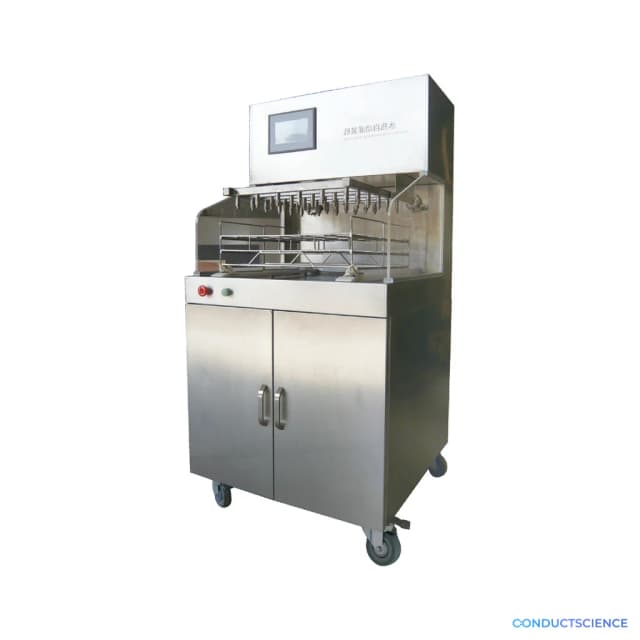
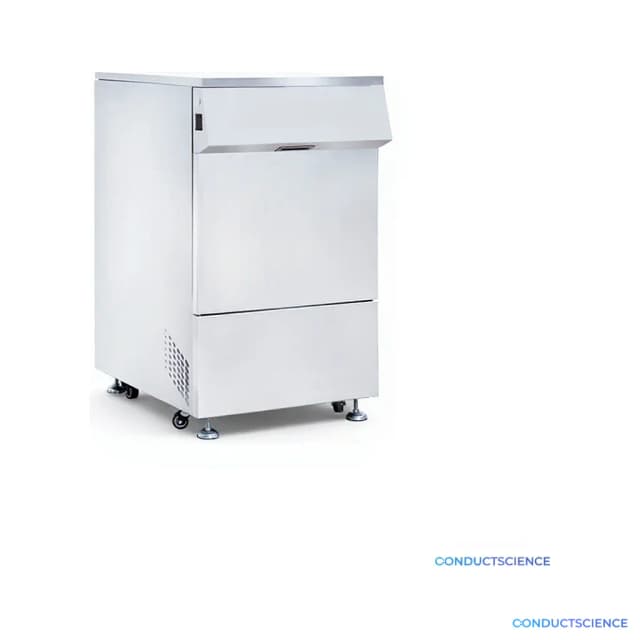
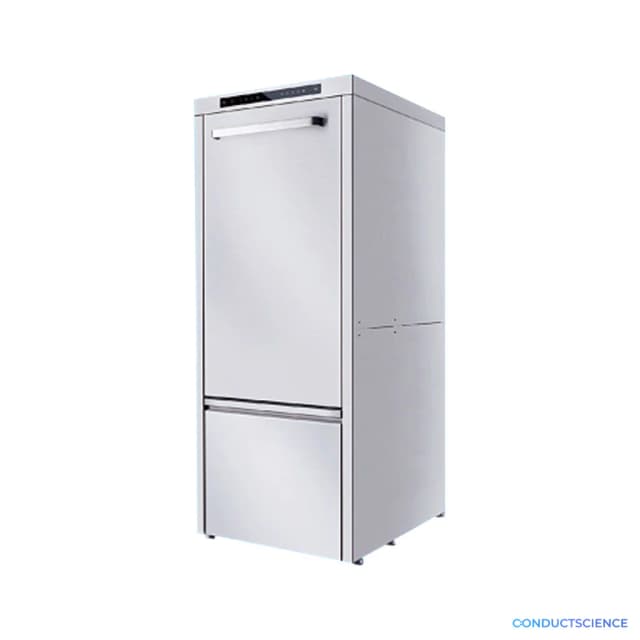
Washer Disinfector (Lab Automatic Glassware Washer)
Automated laboratory glassware washer with 120L-220L capacity, programmable multi-stage cleaning cycles, and high-pressure spray systems for consistent decontamination of glass laboratory instruments.

Louise Corscadden, PhD
Director of Science · ConductScience
Ask Louise about Washer Disinfector (Lab Automatic Glassware Washer) fit, setup, configuration, or quote prep.
Already working with us? Sign in to connect this with My Scientist.
Key Specifications
Full details →- Model fit
- Configured during quote
- SKU family
- BIO-0171
- Shipping box
- 87.0 x 98.0 x 74.0 cm
- Ordering
- Online checkout and quote request available
- Category
- Lab Washers & Disinfectors
- Build notes
- Confirm accessories, station layout, and support needs before purchase
The Lab Automatic Glassware Washer delivers automated cleaning and disinfection of laboratory glassware through multi-stage wash cycles with precise temperature and detergent control. This unit processes up to 120L or 220L capacity loads depending on model configuration, utilizing high-pressure spray arms and heated wash water to remove residues from beakers, flasks, pipettes, and other glass instruments. The system operates through programmable cycles that include pre-rinse, detergent wash, rinse, and drying phases.
Built for high-throughput laboratories requiring consistent glassware preparation, the washer features dual power ratings (0.75KW or 1.5KW water wash power, 5KW or 7KW water heater power) to accommodate different facility requirements. Water consumption is controlled at 15-20L per wash step, providing efficient resource utilization while maintaining cleaning efficacy. The compact footprint (87cm x 98cm x 74cm) allows integration into existing lab layouts while handling substantial glassware volumes.
How It Works
The automated washer operates through sequential cleaning phases controlled by programmable cycles. High-pressure spray arms distribute heated water (up to 90°C) and detergent solutions throughout the chamber, creating turbulent flow patterns that dislodge residues from glassware surfaces. The heating system maintains precise water temperatures during wash and rinse phases to optimize cleaning chemistry and accelerate residue removal.
Multiple wash levels accommodate different glassware geometries, with adjustable rack systems positioning items for optimal spray coverage. The system monitors water temperature, pressure, and cycle timing to ensure consistent results across batches. Final rinse cycles use deionized or distilled water to eliminate detergent residues, while the drying phase employs heated air circulation to prepare glassware for immediate use.
Water consumption control at 15-20L per step ensures efficient resource utilization while maintaining cleaning efficacy. The dual power configuration allows facilities to select appropriate heating capacity (5KW or 7KW) based on throughput requirements and utility constraints.
Features & Benefits
Automation Level
- fully-automated
BKX-CQZ-120
- BKX-CQS-220
Cleaning
- Capacity
120L
- 120L
220L
- 320L
Washer Load Level
- 1
1
- 2
Water Wash Power
- 0.75KW
0.75KW
- 1.5KW
Water Heater Power
- 5KW
5KW
- 7KW
MAX. Power
- 6KW
6KW
- 9KW
Water Consumption/Step (L)
- 15
15
- 20
Brand
- ConductScience
Research Domain
- Analytical Chemistry
- Cell Biology
- Clinical Diagnostics
- Environmental Monitoring
- Microbiology
- Pharmaceutical QC
Shipping weight
- 190.0 lb
Shipping box
- L: 87.0 cm
- W: 98.0 cm
- H: 74.0 cm
| Feature | This Product | Typical Alternative | Advantage |
|---|---|---|---|
| Chamber Capacity | 120L or 220L depending on model selection | Entry-level units often provide 80-150L capacity | Higher capacity reduces cycle frequency and increases laboratory throughput efficiency. |
| Power Configuration | Dual options: 0.75KW/1.5KW wash power with 5KW/7KW heating | Fixed power ratings limit facility adaptation | Configurable power allows matching to existing electrical infrastructure and throughput requirements. |
| Water Consumption Control | 15-20L per wash step with precise monitoring | Higher consumption rates without step-wise control | Controlled consumption reduces operating costs while maintaining cleaning efficacy. |
| Wash Level Configuration | Multi-level system with adjustable rack positioning | Fixed rack systems limit glassware accommodation | Flexible configuration maximizes chamber utilization for diverse glassware types. |
| Compact Design | 87cm x 98cm x 74cm footprint for substantial capacity | Larger footprint requirements for equivalent capacity | Space-efficient design enables installation in constrained laboratory environments. |
| Maximum Power Draw | 6KW or 9KW depending on model configuration | Higher power requirements increase facility electrical demands | Optimized power consumption reduces infrastructure requirements and operating costs. |
This washer offers dual capacity and power configurations with controlled water consumption in a compact design. The multi-level wash system and programmable controls provide flexibility for diverse laboratory requirements while maintaining efficient resource utilization.
Practical Tips
Verify water temperature accuracy monthly using calibrated thermometers at multiple chamber positions.
Why: Temperature uniformity ensures consistent cleaning chemistry across all loaded glassware.
Inspect and clean spray arm nozzles weekly to prevent clogging from mineral deposits or debris.
Why: Clear nozzles maintain spray pressure and coverage patterns essential for effective cleaning.
Pre-sort glassware by contamination type and select appropriate cycle parameters for each batch.
Why: Matched cleaning parameters optimize residue removal while preventing cross-contamination between different sample types.
Check water pressure and flow rates if cleaning performance degrades unexpectedly.
Why: Adequate water pressure ensures proper spray arm function and mechanical cleaning action.
Document cycle parameters and cleaning results for each batch to establish baseline performance.
Why: Systematic documentation enables performance trending and supports cleaning validation protocols.
Allow glassware to cool before handling and use appropriate PPE when loading hot items.
Why: High-temperature cycles create burn hazards that require proper safety precautions during operation.
Position glassware to maximize spray coverage while preventing nesting that blocks water circulation.
Why: Proper loading ensures all surfaces receive adequate cleaning action and prevents incomplete decontamination.
Replace chamber filters according to manufacturer schedule or when pressure differential indicators show restriction.
Why: Clean filters maintain proper water circulation and prevent debris recirculation during wash cycles.
Setup Guide
What’s in the Box
- Main washer unit
- Multi-level wash racks (typical)
- Spray arm assemblies (typical)
- Drainage connections (typical)
- User manual and installation guide (typical)
- Warranty documentation (typical)
Warranty
ConductScience provides a standard one-year manufacturer warranty covering parts and labor for manufacturing defects. Technical support includes installation guidance, troubleshooting assistance, and maintenance scheduling to ensure optimal performance throughout the warranty period.
Compliance
What types of detergents are compatible with this washing system?
The system accommodates alkaline, enzymatic, and acidic cleaning formulations. Consult product datasheet for specific detergent compatibility and concentration recommendations based on your contamination types.
Can the washer handle organic solvent residues commonly found in analytical glassware?
High-temperature cycles with appropriate detergent selection effectively remove most organic residues. For persistent solvents, pre-treatment or specialized cleaning agents may be required.
How does water quality affect cleaning performance and what are the input requirements?
Water hardness and dissolved solids impact detergent efficacy and spotting. Consult product datasheet for acceptable water quality parameters and consider pre-treatment systems if necessary.
What maintenance intervals are recommended for optimal performance?
Daily inspection of spray arms and weekly cleaning of filters are typical. Monthly calibration verification and quarterly deep cleaning of internal components maintain peak performance.
How do I validate cleaning cycles for critical applications like pharmaceutical testing?
Establish cleaning validation protocols using worst-case challenge contamination, analytical testing of residues, and documentation of cycle parameters. Consider engaging validation consultants for regulated environments.
Can the system process plastic labware alongside glassware?
Temperature-resistant plastics may be processed with appropriate cycle selection. Verify plastic compatibility with operating temperatures and detergent chemistry before processing valuable items.
What electrical requirements are needed for installation?
Power requirements range from 6KW to 9KW maximum depending on model selection. Facility electrical capacity should accommodate peak power draw during heating phases.
How does this compare to manual washing for cleaning validation?
Automated systems provide better reproducibility and documentation capabilities compared to manual methods. Cycle parameters are controlled and recorded, supporting validation requirements.
Have a question about this product?
Have a question? Just ask.
Send it over and we'll email you a personalized answer — no call, no scheduling.
Prefer to talk it through?
Accessories
Enhance your setup with compatible accessories
Frequently Bought Together