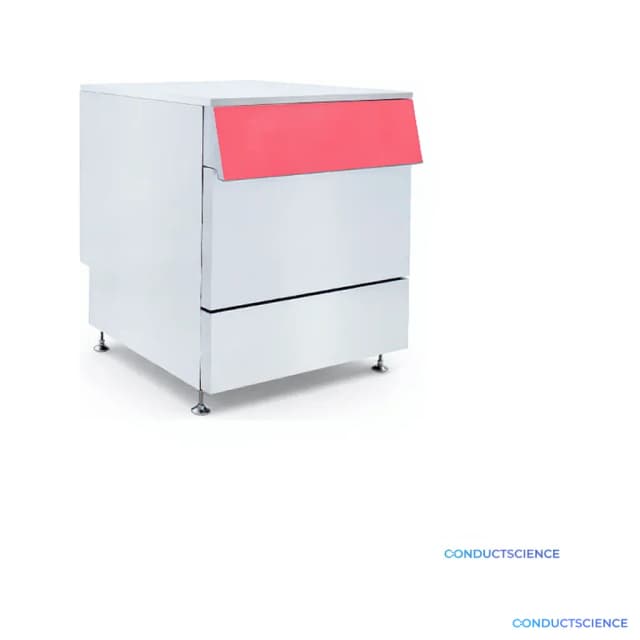
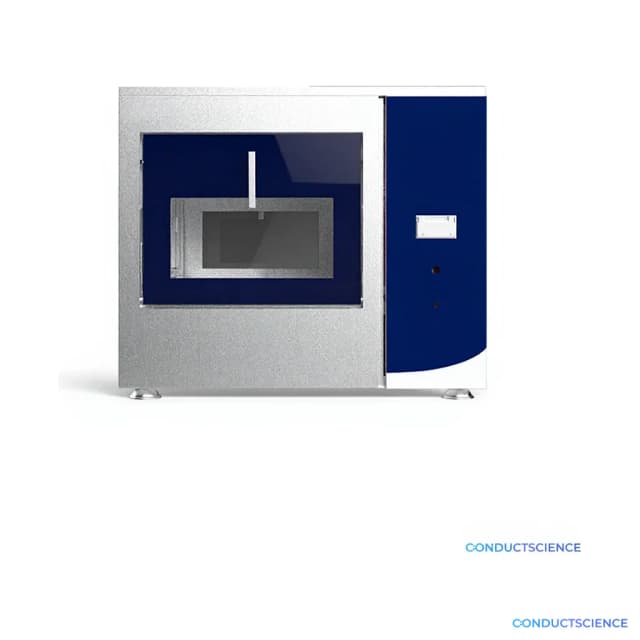
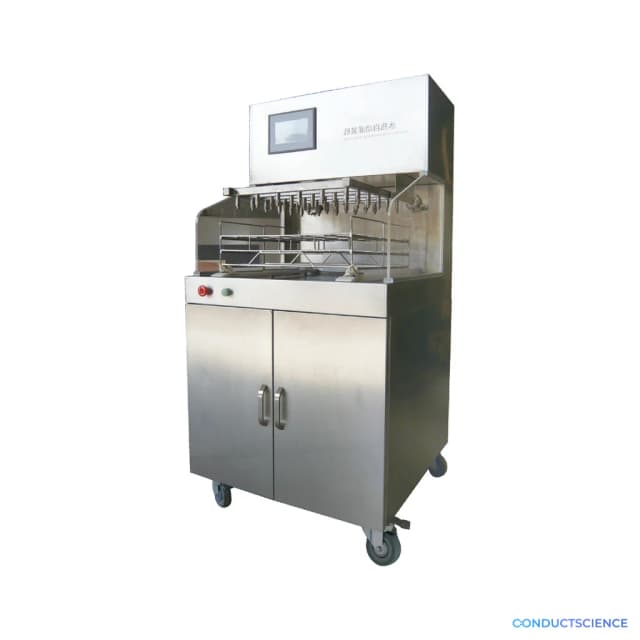
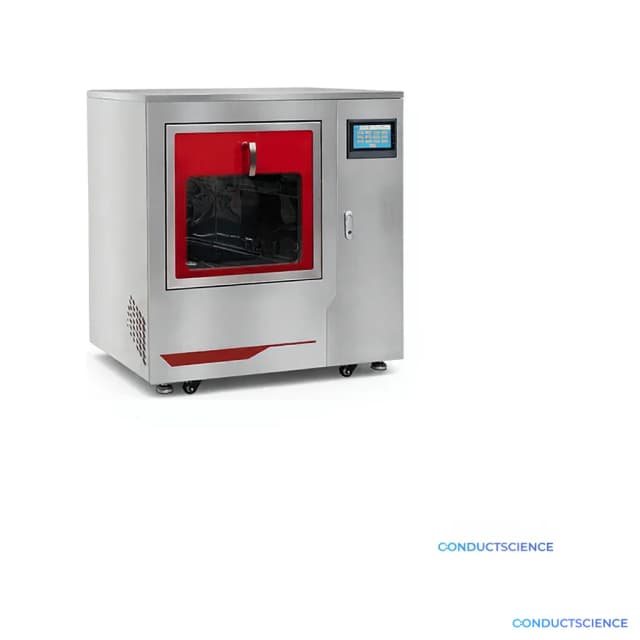
Full-automatic Glassware Washer
High-capacity 200L automated glassware washing system with dual-level loading, independent detergent pumps, and integrated drying function for laboratory cleaning workflows.

Louise Corscadden, PhD
Director of Science · ConductScience
Ask Louise about Full-automatic Glassware Washer fit, setup, configuration, or quote prep.
Already working with us? Sign in to connect this with My Scientist.
Key Specifications
Full details →- Model fit
- Configured during quote
- SKU family
- BIO-0172
- Shipping box
- 104.0 x 60.0 x 86.0 cm
- Ordering
- Online checkout and quote request available
- Category
- Lab Washers & Disinfectors
- Build notes
- Confirm accessories, station layout, and support needs before purchase
The Full-automatic Glassware Washer is a high-capacity laboratory cleaning system designed for automated processing of glassware, laboratory utensils, and reusable equipment. With a 200L chamber capacity and dual-level loading configuration, this washer accommodates substantial quantities of laboratory items while maintaining consistent cleaning performance through programmable wash cycles.
The system incorporates dual peristaltic pumps for independent control of detergent and neutralizing agents, complemented by a high-flow washing pump (430L/min) that ensures thorough cleaning action. Temperature control ranges from 0-99°C, enabling heat-assisted cleaning protocols for challenging contaminants. The integrated drying function completes the processing cycle, delivering clean, dry glassware ready for immediate use or storage.
How It Works
The automated washing system operates through a series of programmable cycles that combine mechanical action, chemical cleaning, and thermal treatment. The high-capacity washing pump (430L/min) creates turbulent flow patterns within the 200L chamber, ensuring cleaning solution reaches all surfaces of loaded glassware. Water consumption is controlled at 15L per step, optimizing cleaning efficiency while minimizing waste.
Dual peristaltic pumps independently dispense detergent and neutralizing agents according to programmed protocols. The heating system provides temperatures up to 99°C for enhanced cleaning of organic residues and thermal deactivation of biological contaminants. Cleaning agent level sensors monitor chemical consumption and alert operators when refilling is required. The drying function uses heated air circulation to remove residual moisture, completing the cleaning cycle with dry, ready-to-use glassware.
Features & Benefits
Automation Level
- fully-automated
Washer Load Level
- 2
Water Wash Power
- 0.75KW
Water Heater Power
- 3KW
MAX. Power
- 4KW
Water Consumption/Step
- 15L
Tank Internal Temperature
- 0~99℃
Water Supply Pressure
- 0.3~1.0Mpa
Peristaltic Pump for Cleaning Agent
- 2 independent pumps control detergent agent and neutralizing agent
Cleaning Agent Level Sensor
- YES
Washing Pump
- Sweden 430L/min
Standard Cleaning Racks
- BKIR36A*2
Drying
- Drying Function
Steam Condenser
- NO
Brand
- ConductScience
Research Domain
- Analytical Chemistry
- Cell Biology
- Environmental Monitoring
- Food Science
- Microbiology
- Pharmaceutical QC
Capacity
- 200L
Shipping weight
- 125.0 lb
Shipping box
- L: 104.0 cm
- W: 60.0 cm
- H: 86.0 cm
| Feature | This Product | Typical Alternative | Advantage |
|---|---|---|---|
| Chamber Capacity | 200L with dual-level loading | Entry-level models often offer 50-100L single-level capacity | Accommodates larger batches in single cycles, reducing processing time for high-throughput laboratories. |
| Chemical Delivery System | Dual independent peristaltic pumps for detergent and neutralizing agent | Single pump systems or manual chemical addition | Enables precise multi-stage cleaning protocols with automated neutralization steps. |
| Washing Flow Rate | 430L/min high-flow pump system | Lower flow rates typically 200-300L/min | Enhanced mechanical cleaning action reaches complex glassware geometries more effectively. |
| Temperature Range | 0-99°C variable temperature control | Limited temperature ranges or ambient-only operation | Supports heat-assisted cleaning protocols for challenging organic and biological residues. |
| Drying Integration | Built-in drying function | Separate drying equipment or air-dry only | Completes entire cleaning process in single unit, delivering ready-to-use dry glassware. |
| Chemical Monitoring | Cleaning agent level sensors with automated alerts | Manual monitoring or no level detection | Prevents cycle interruption and ensures consistent cleaning performance throughout operation. |
This system combines high-capacity processing with advanced automation features including dual chemical pumps, integrated drying, and sensor monitoring. The 430L/min flow rate and variable temperature control support demanding cleaning applications across diverse laboratory environments.
Practical Tips
Verify temperature accuracy monthly using calibrated thermometers at multiple setpoints across the operating range.
Why: Ensures heat-assisted cleaning protocols maintain effectiveness and reproducibility.
Flush chemical delivery lines weekly with deionized water to prevent crystallization and maintain pump performance.
Why: Prevents chemical buildup that can affect dosing accuracy and cause pump blockages.
Pre-rinse heavily contaminated glassware to remove gross debris before automated washing cycles.
Why: Reduces cleaning chemical consumption and prevents debris accumulation in pump systems.
Monitor water supply pressure regularly as fluctuations below 0.3 MPa can affect washing performance.
Why: Insufficient pressure reduces spray effectiveness and extends cycle times.
Document cycle parameters and chemical concentrations for each glassware type to establish cleaning validation records.
Why: Provides traceable evidence of cleaning effectiveness for regulatory compliance and quality assurance.
Ensure adequate ventilation around the unit during high-temperature cycles to manage humidity and chemical vapors.
Why: Maintains safe working conditions and prevents condensation in laboratory environment.
Load glassware with openings facing downward or angled to promote drainage and prevent water pooling.
Why: Improves cleaning solution contact and enhances drying efficiency.
Replace cleaning agent level sensors annually or when response becomes inconsistent.
Why: Maintains reliable chemical monitoring to prevent cleaning failures due to agent depletion.
Setup Guide
What’s in the Box
- Full-automatic Glassware Washer main unit
- Two BKIR36A standard cleaning racks
- Water supply connection kit (typical)
- Electrical power cable (typical)
- User manual and operating procedures (typical)
- Installation and maintenance guide (typical)
Warranty
ConductScience provides a standard one-year manufacturer warranty covering parts and labor, with technical support for installation, operation, and routine maintenance procedures.
Compliance
What types of detergents are compatible with the dual pump system?
The independent peristaltic pumps accommodate standard laboratory-grade alkaline and acidic detergents, as well as specialized cleaning agents for organic residues. Consult product datasheet for specific chemical compatibility and concentration recommendations.
How does the temperature control affect different cleaning protocols?
Variable temperature control (0-99°C) enables optimization for specific contaminants: ambient temperatures for routine cleaning, elevated temperatures (60-80°C) for protein denaturation and lipid removal, and maximum temperatures for thermal deactivation of biological materials.
What is the typical cycle time for a complete wash and dry process?
Cycle times vary with protocol selection and contamination level. Consult product datasheet for specific timing parameters, as cycles can be programmed for different wash steps, temperature holds, and drying duration.
Can the cleaning racks accommodate non-standard glassware sizes?
The standard BKIR36A racks are designed for common laboratory glassware. Custom rack configurations may be available for specialized items - consult technical specifications for dimensional constraints and custom options.
How is cleaning validation performed on processed glassware?
Cleaning validation typically involves residue testing using appropriate analytical methods for specific contaminants. The consistent temperature and chemical delivery ensures reproducible cleaning conditions suitable for validation protocols.
What maintenance is required for the washing pump and chemical delivery system?
Regular maintenance includes pump seal inspection, cleaning agent line flushing, and calibration verification of chemical delivery rates. Specific maintenance intervals depend on usage frequency and chemical types used.
How does this system compare to manual washing procedures?
Automated washing provides consistent mechanical action, precise chemical dosing, and reproducible temperature control that eliminates variability inherent in manual procedures, while significantly reducing labor time and improving throughput.
Have a question about this product?
Have a question? Just ask.
Send it over and we'll email you a personalized answer — no call, no scheduling.
Prefer to talk it through?
Accessories
Enhance your setup with compatible accessories
Frequently Bought Together