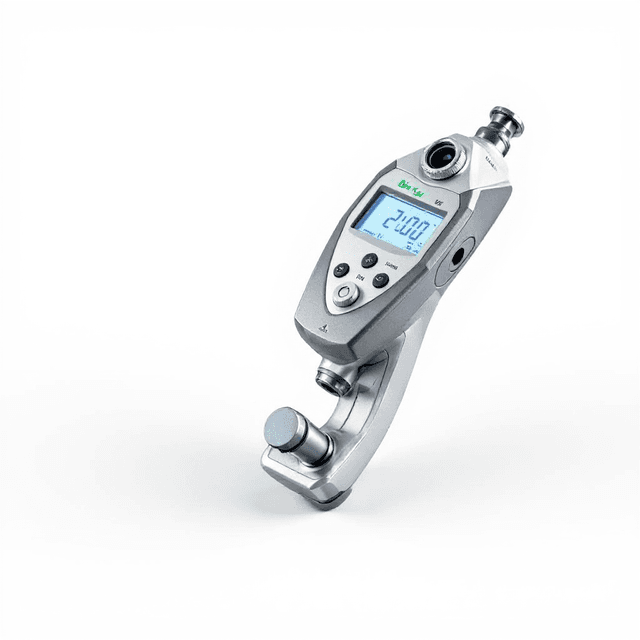
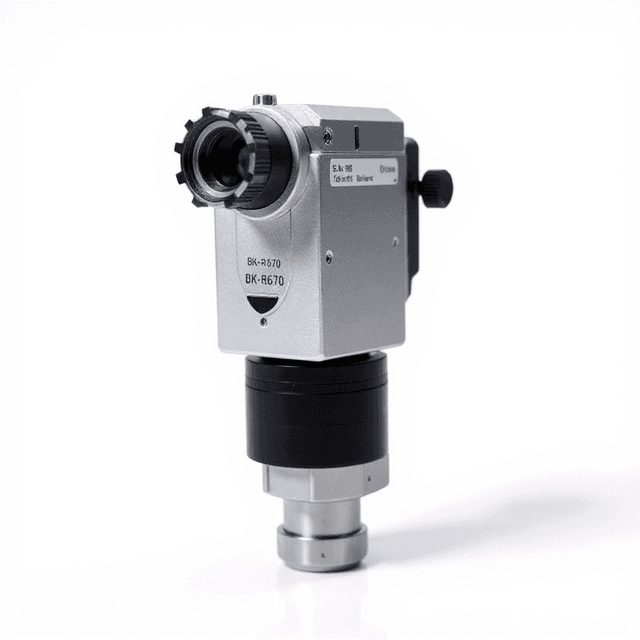
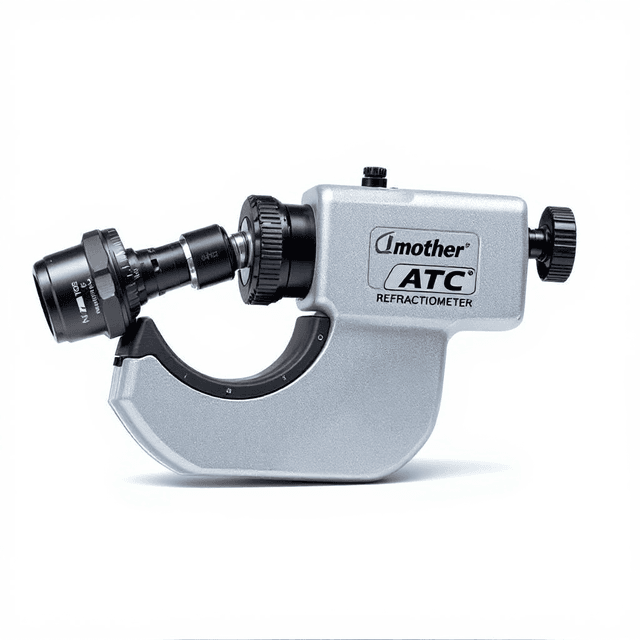
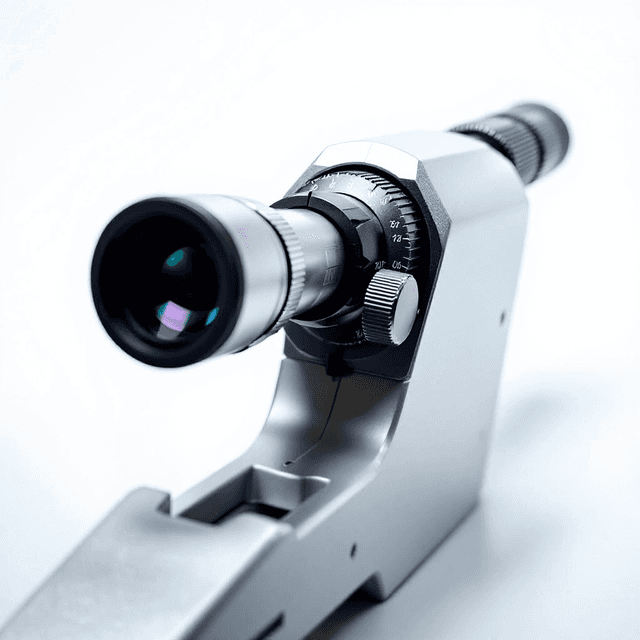
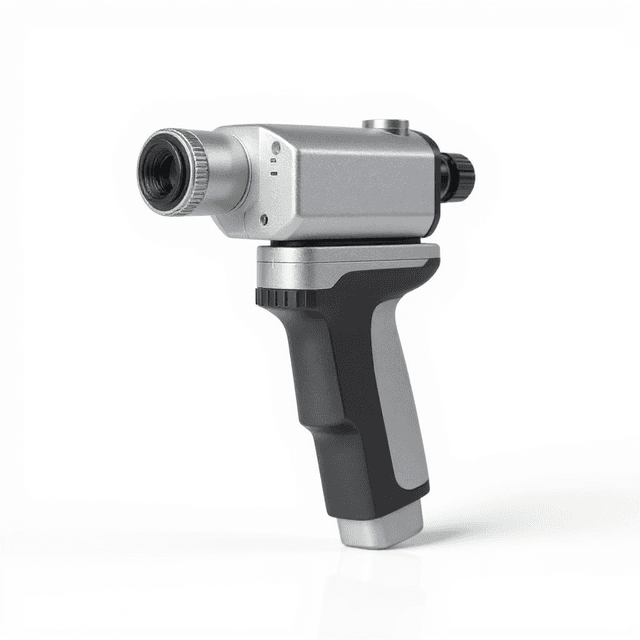
Brix Refractometer
Precision optical refractometer for measuring sugar concentration (0-20% Brix) in liquid samples using refractive index principles.
| Model | LH-T20 |
| LH-T20 | 0~20% |
| LH-T32 | 0~32% |
| LH-T80 | 0~80% |
| LH-T90 | 0~90% |
| Automation Level | manual |

The Brix Refractometer (Model LH-T20) is a precision optical instrument designed for accurate measurement of sugar concentration in liquid samples. Operating on the principle of refractive index variation with solute concentration, this refractometer provides reliable Brix readings from 0-20% for applications in food science, agricultural research, and quality control laboratories.
The instrument features simple operation, compact design, and direct readout capabilities, making it suitable for routine analysis of fruit juices, beverages, syrups, and other sugar-containing solutions. The optical measurement system eliminates the need for chemical reagents and provides immediate results for concentration determination.
How It Works
The Brix refractometer operates based on Snell's law of refraction, measuring the critical angle at which total internal reflection occurs when light passes from a sample into a glass prism. As sugar concentration increases in the sample, the refractive index increases proportionally, causing the critical angle to shift. This angular change is detected by the optical system and converted to a direct Brix reading.
The instrument uses a daylight plate to provide uniform illumination and a temperature-compensated optical system to minimize environmental effects on measurements. The sample is placed on the daylight plate where it forms a thin film, allowing light to pass through at the critical angle interface. The resulting light-dark boundary line position corresponds directly to the refractive index and hence the sugar concentration.
Temperature compensation is achieved through built-in thermal elements that adjust the optical path length based on ambient temperature, ensuring accurate readings across normal laboratory temperature ranges without manual correction factors.
Features & Benefits
Model
- LH-T20
LH-T20
- 0~20%
LH-T32
- 0~32%
LH-T80
- 0~80%
LH-T90
- 0~90%
Automation Level
- manual
Brand
- ConductScience
Research Domain
- Agricultural Research
- Analytical Chemistry
- Environmental Monitoring
- Food Science
- Microbiology
- Pharmaceutical QC
Weight
- 0.26 kg
Dimensions
- L: 20.0 mm
- W: 10.0 mm
- H: 5.0 mm
Comparison Guide
| Feature | This Product | Typical Alternative | Advantage |
|---|---|---|---|
| Measurement Range | 0-20% Brix | Entry-level models often offer 0-32% or broader ranges | Optimized range provides better resolution and accuracy for low-concentration samples common in fruit juice and beverage analysis. |
| Display Type | Direct optical reading | Many models use digital displays | Optical reading eliminates battery dependence and electronic failure points, ensuring reliable operation in field conditions. |
| Temperature Compensation | Built-in compensation | Basic models may lack temperature correction | Maintains measurement accuracy across laboratory temperature variations without requiring manual correction calculations. |
| Sample Volume | 2-3 drops required | Similar micro-volume requirements across most handheld refractometers | Minimal sample consumption allows analysis of precious or limited-volume research samples. |
| Calibration Method | Manual screw adjustment with distilled water | Digital models may offer push-button calibration | Simple mechanical calibration system provides long-term reliability and field serviceability without electronic components. |
The LH-T20 combines precision optical measurement with a focused 0-20% Brix range, making it particularly suitable for food science and agricultural applications requiring accurate low-concentration measurements. The optical reading system and temperature compensation provide reliable performance in both laboratory and field environments.
Practical Tips
Always calibrate with distilled water at the beginning of each measurement session and verify zero point stability.
Why: Environmental factors and sample residue can cause calibration drift that affects measurement accuracy.
Clean the daylight plate immediately after each sample to prevent crystallization of sugars on the optical surface.
Why: Dried sample residue can create permanent stains or scratches that interfere with the light-dark boundary detection.
Allow samples to reach room temperature before measurement and mix thoroughly to ensure homogeneous concentration.
Why: Temperature variations and concentration gradients can lead to inconsistent readings and poor reproducibility.
Take multiple readings from different portions of the same sample and calculate the average for critical measurements.
Why: Sample heterogeneity and optical variations can introduce measurement uncertainty that averaging helps minimize.
If the light-dark boundary appears fuzzy or indistinct, clean the optical surfaces and check for proper sample coverage of the daylight plate.
Why: Poor optical contact or contaminated surfaces prevent clear boundary formation necessary for accurate readings.
Handle the instrument carefully to avoid dropping or impacting the optical components, and store in the protective case when not in use.
Why: The precision optics are sensitive to mechanical shock and can lose calibration or suffer permanent damage from rough handling.
Record ambient temperature along with measurements for documentation and troubleshooting purposes.
Why: Temperature data helps identify when readings fall outside the compensation range and assists in method validation.
Setup Guide
What’s in the Box
- Brix refractometer main unit
- Calibration solution (typical)
- Plastic pipette for sample application (typical)
- Cleaning cloth (typical)
- Carrying case (typical)
- User manual with calibration procedures (typical)
Warranty
ConductScience provides a standard one-year manufacturer warranty covering defects in materials and workmanship, with technical support for calibration and operation questions.
Compliance
References
Background reading relevant to this product:
What is the measurement accuracy and precision of the LH-T20 model?
Consult the product datasheet for specific accuracy and precision specifications. Optical refractometers typically provide accuracy within ±0.2% Brix, but verification should be confirmed with the technical specifications.
How often should the instrument be calibrated?
Perform zero calibration with distilled water before each measurement session. Verify calibration with certified Brix standards weekly or when measurement accuracy is questioned.
Can this refractometer measure samples containing alcohol or other non-sugar solutes?
The instrument measures total dissolved solids, not specifically sugar. Alcohol and other solutes will contribute to the refractive index reading, potentially leading to overestimation of actual sugar content in fermented or mixed samples.
What sample volume is required for measurement?
Typically 2-3 drops of sample are sufficient to cover the daylight plate surface. The small sample requirement makes this suitable for precious or limited-volume samples.
How does temperature affect measurements?
The instrument includes temperature compensation, but samples should be at or near room temperature for optimal accuracy. Consult the datasheet for the specific temperature compensation range and limitations.
What maintenance is required for consistent performance?
Clean optical surfaces with distilled water and lint-free cloth after each use. Store in the protective case and avoid exposing the daylight plate to harsh chemicals or abrasive materials.
Can turbid or colored samples be measured accurately?
Suspended particles and strong color can interfere with the optical boundary detection. Filter turbid samples and consider dilution for intensely colored solutions, applying appropriate correction factors.
Have a question about this product?