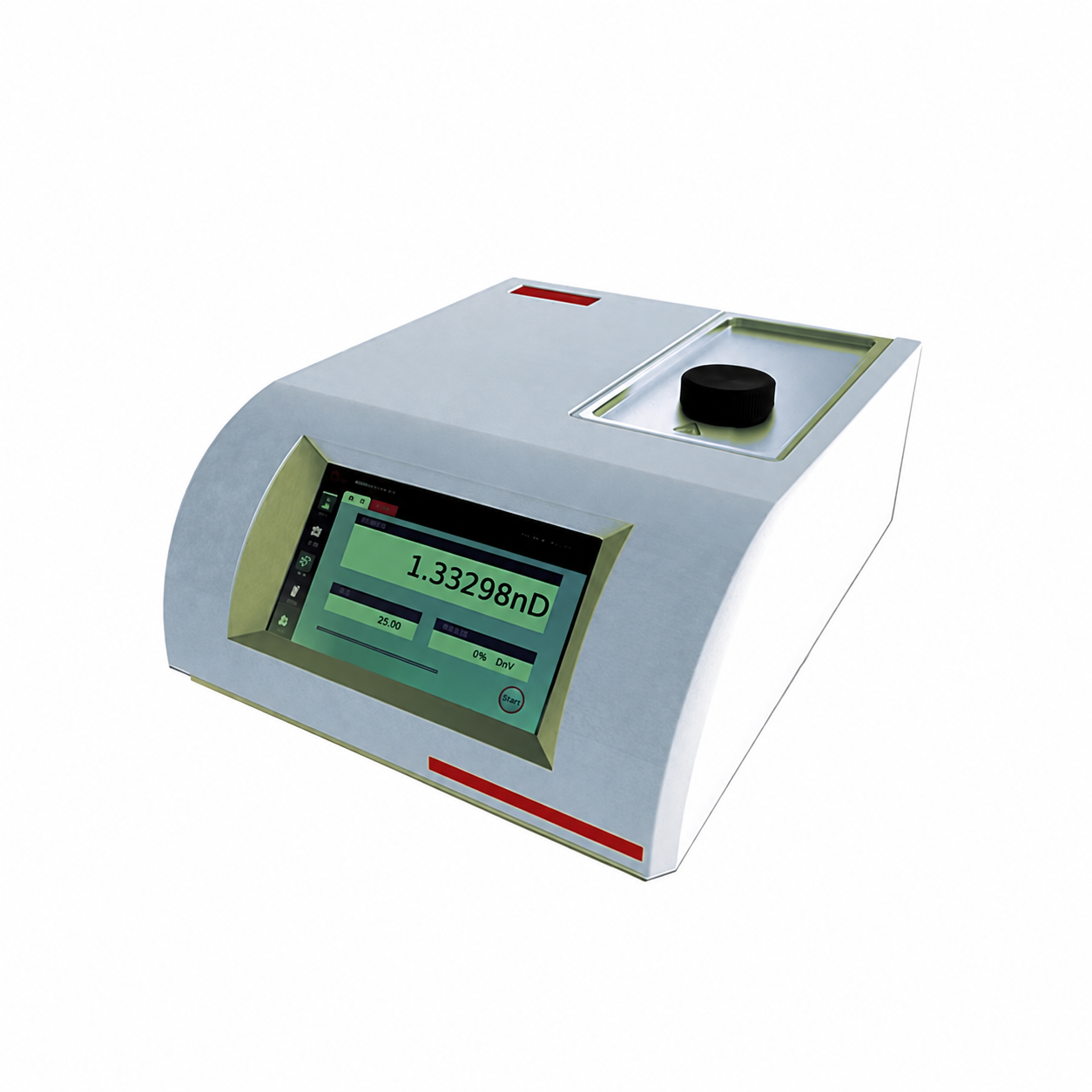
BK-R670 Automatic Refractometer Refractometers
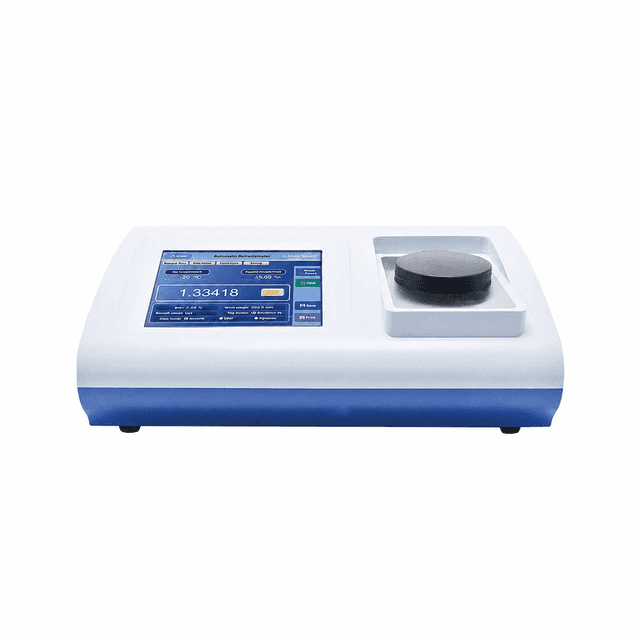
Automated refractometer with 1.30000-1.70000nD measurement range, Peltier temperature control, and touchscreen interface for precise refractive index and Brix analysis.

Louise Corscadden, PhD
Director of Science · ConductScience
Ask Louise about BK-R670 Automatic Refractometer Refractometers fit, setup, configuration, or quote prep.
Already working with us? Sign in to connect this with My Scientist.
Key Specifications
Full details →- Model fit
- Configured during quote
- SKU family
- BIO-0474
- Shipping box
- 15.0 x 36.5 x 30.0 cm
- Ordering
- Online checkout and quote request available
- Category
- Refractometers
- Build notes
- Confirm accessories, station layout, and support needs before purchase
The BK-R670 Automatic Refractometer is a precision analytical instrument designed for accurate refractive index and Brix measurements across diverse laboratory and industrial applications. This automated system features a wide refractive index measurement range of 1.30000-1.70000nD with exceptional accuracy of ±0.0001nD, making it suitable for characterizing liquid samples ranging from aqueous solutions to organic solvents and pharmaceutical formulations.
The instrument incorporates Peltier temperature control technology with precise regulation from 5-80°C (±0.02°C accuracy), ensuring consistent measurements across varying thermal conditions. The 7-inch TFT LCD touch screen interface provides intuitive operation, while multiple connectivity options (RS232, USB, Ethernet) and 4G data storage capacity support comprehensive data management workflows. With automated measurement capabilities and optional enhanced resolution modes, the BK-R670 streamlines routine analytical procedures while maintaining laboratory-grade precision.
How It Works
Refractometry operates on the principle of measuring the critical angle at which total internal reflection occurs when light passes from a sample into a medium with a known refractive index. The BK-R670 employs automated optical detection to precisely determine this critical angle, which is directly related to the sample's refractive index according to Snell's law. The instrument uses a high-intensity LED light source and photodetector array to measure the boundary between light and dark regions formed at the critical angle interface.
Temperature compensation is achieved through integrated Peltier temperature control, which maintains sample temperature within ±0.02°C across the 5-80°C range. This thermal stability is critical because refractive index exhibits temperature dependence, with variations of approximately 0.0001-0.0005 nD per degree Celsius for most liquids. The automated system continuously monitors and adjusts for thermal effects, ensuring measurement accuracy regardless of ambient conditions.
For Brix measurements, the instrument applies established correlations between refractive index and sugar concentration, automatically converting optical measurements to percentage values. The measurement resolution can be enhanced to 0.00001nD and 0.01% Brix through optional high-resolution modes, enabling detection of minute compositional changes in critical applications.
Features & Benefits
Automation Level
- fully-automated
Refractive Index Measuring Range
- 1.30000~1.70000nD
Measuring Error
- ±0.0001nD
Measuring Resolution
- 0.0001/0.00001(Optional)
Brix Measuring Range
- 0~100%
Measuring Error (Brix)
- ±0.1%
Measuring Resolution (Brix)
- 0.1%/0.01%(Optional)
Temperature Control Mode
- Peltier temperature controller
Temperature Control Range
- 5~80 ℃
Temperature Control Accuracy
- ±0.02℃
Interface
- RS232, USB, Ethernet interface
Data Storage Capacity
- 4G
Brand
- ConductScience
Research Domain
- Analytical Chemistry
- Environmental Monitoring
- Food Science
- Industrial Hygiene
- Materials Science
- Pharmaceutical QC
Display Type
- 7’’TFT LCD touch screen
Power/Voltage
- AC110V/220V±10%, 50/60HZ
Shipping weight
- 8.0 lb
Shipping box
- L: 15.0 cm
- W: 36.5 cm
- H: 30.0 cm
| Feature | This Product | Typical Alternative | Advantage |
|---|---|---|---|
| Refractive Index Range | 1.30000-1.70000nD | Entry-level models often limited to 1.33-1.50nD range | Extended range accommodates diverse sample types from aqueous solutions to high-concentration organic mixtures without instrument limitations. |
| Temperature Control | Peltier controller with 5-80°C range and ±0.02°C accuracy | Manual temperature compensation or limited heating capability | Automated thermal regulation eliminates temperature-related measurement drift and enables analysis of heated samples. |
| Measurement Resolution | 0.0001nD standard, 0.00001nD optional | Standard models typically offer 0.0001-0.001nD resolution | Enhanced resolution option provides maximum analytical sensitivity for research applications requiring minute compositional discrimination. |
| Data Connectivity | RS232, USB, and Ethernet interfaces with 4G storage | Basic models often limited to USB or no connectivity | Multiple interface options and extensive storage support comprehensive laboratory data management and LIMS integration. |
| User Interface | 7-inch TFT LCD touchscreen | Small LCD displays or basic button controls | Large touchscreen interface reduces training requirements and enables intuitive operation with guided measurement protocols. |
| Measurement Accuracy | ±0.0001nD for refractive index | Typical accuracy ranges from ±0.0002 to ±0.001nD | High accuracy specification supports pharmaceutical identity testing and critical quality control applications requiring analytical confidence. |
The BK-R670 combines extended measurement range, precise temperature control, and comprehensive connectivity options in an automated platform. The enhanced resolution capability and intuitive touchscreen interface provide advantages for laboratories requiring both routine analysis and research-grade precision.
Practical Tips
Perform daily zero-point verification using freshly distilled water and verify against certified refractive index standards monthly.
Why: Regular calibration verification ensures measurement accuracy and maintains analytical confidence for critical applications.
Allow samples to reach measurement temperature before analysis and ensure complete prism coverage with 2-3 sample drops.
Why: Temperature equilibration and proper sample application eliminate thermal gradients and optical irregularities that can affect measurement precision.
Clean the measurement prism with appropriate solvents after each use and perform monthly cleaning of the temperature control system.
Why: Proper cleaning prevents cross-contamination and maintains optical clarity while regular maintenance ensures Peltier controller efficiency.
Record multiple measurements for each sample and monitor measurement stability over the temperature equilibration period.
Why: Replicate measurements improve statistical confidence while stability monitoring confirms thermal equilibrium for accurate results.
If measurements show drift, verify temperature controller function and check for air bubbles or incomplete sample coverage on the prism.
Why: Temperature instability and optical irregularities are common sources of measurement variability that can be readily corrected.
Use appropriate chemical handling protocols when analyzing organic solvents and ensure proper ventilation in the measurement area.
Why: Chemical safety protocols protect operators while adequate ventilation prevents vapor accumulation that could affect measurement accuracy.
Store calibration standards in sealed containers and verify their refractive index values against certified reference data before use.
Why: Proper standard storage prevents contamination and evaporation effects that could compromise calibration accuracy.
Establish measurement protocols that specify temperature, equilibration time, and cleaning procedures for consistent analytical results.
Why: Standardized protocols reduce operator variability and ensure reproducible measurements across different users and time periods.
Setup Guide
What’s in the Box
- BK-R670 automatic refractometer main unit
- AC power adapter and cord
- USB cable for data transfer
- Sample applicator and cleaning accessories (typical)
- Refractive index calibration standards (typical)
- User manual and calibration certificate
- Software CD for data analysis (typical)
Warranty
ConductScience provides a standard one-year manufacturer warranty covering instrument defects and technical support. Extended warranty options and calibration services are available to ensure continued analytical performance.
Compliance
What is the measurement precision for pharmaceutical identity testing applications?
The standard ±0.0001nD accuracy meets typical pharmaceutical compendial requirements, with optional enhanced resolution to 0.00001nD for demanding applications requiring maximum analytical discrimination.
How does the temperature control system affect measurement reproducibility?
The Peltier controller maintains ±0.02°C accuracy across 5-80°C, compensating for thermal effects that typically cause 0.0001-0.0005nD variation per degree, ensuring consistent results regardless of ambient conditions.
What sample volume is required for measurement?
Consult product datasheet for specific volume requirements, though refractometers typically require 2-3 drops for complete prism coverage and accurate optical measurement.
Can the instrument measure samples with suspended particles?
Clear, homogeneous samples provide optimal accuracy; samples with particulates or turbidity may require filtration or clarification before measurement to avoid optical interference.
How frequently does the instrument require calibration verification?
Daily verification using certified reference standards is recommended for critical applications, with full calibration adjustment typically performed monthly or per laboratory SOP requirements.
What data export formats are supported through the interface options?
Multiple connectivity options (RS232, USB, Ethernet) support various data formats; consult technical specifications for specific protocol compatibility with laboratory information systems.
Is the instrument suitable for volatile solvent analysis?
The enclosed measurement chamber minimizes evaporation effects, though highly volatile samples may require rapid measurement or specialized sampling techniques to maintain accuracy.
How does this compare to manual Abbe refractometers?
Automated operation eliminates visual interpretation variability and user bias, while temperature control and digital readout provide superior precision compared to traditional manual methods.
Have a question about this product?
Have a question? Just ask.
Send it over and we'll email you a personalized answer — no call, no scheduling.
Prefer to talk it through?
Accessories
Enhance your setup with compatible accessories
Frequently Bought Together