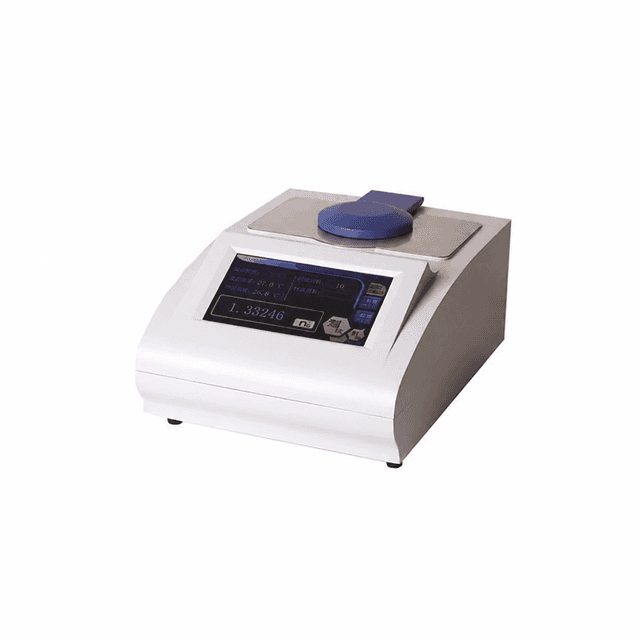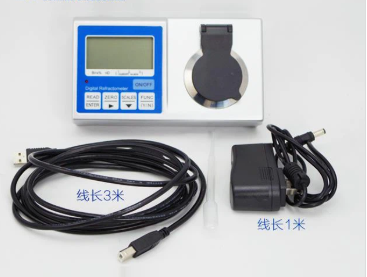
Digital Brix Refractometer
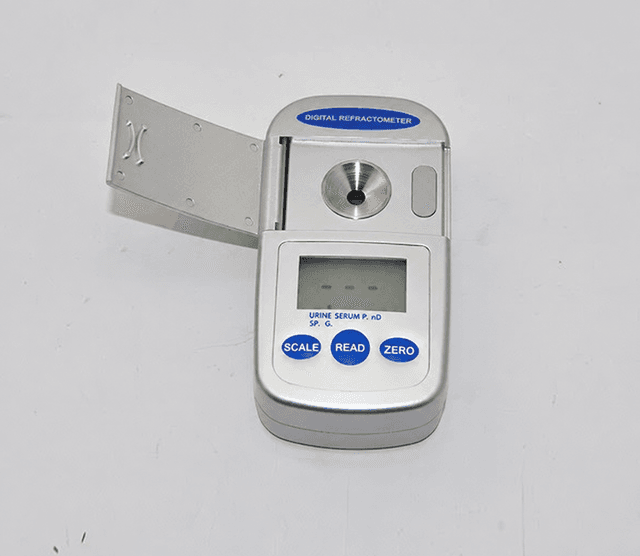
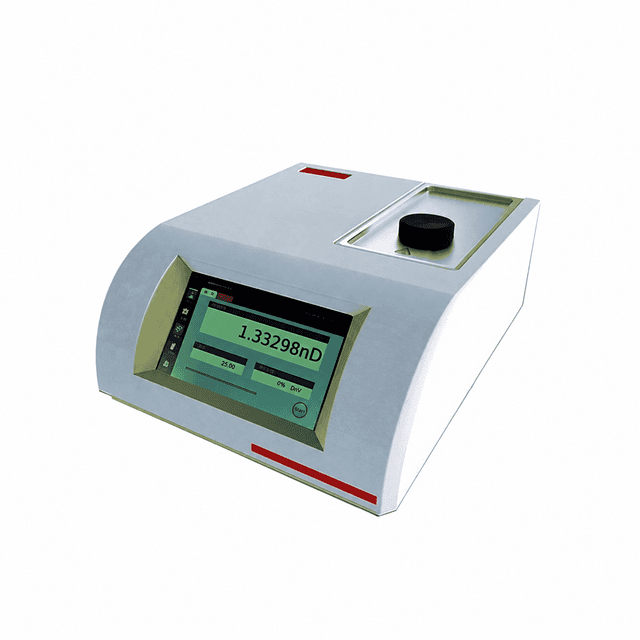
Digital refractometer measuring refractive index (1.3330-1.5318 nD) and Brix percentage with automatic temperature compensation, waterproof design, and PC connectivity for solution analysis applications.

Louise Corscadden, PhD
Director of Science · ConductScience
Ask Louise about Digital Brix Refractometer fit, setup, configuration, or quote prep.
Already working with us? Sign in to connect this with My Scientist.
Key Specifications
Full details →- Model fit
- Configured during quote
- SKU family
- CS-LH-PDR
- Shipping box
- 20.0 x 10.0 x 5.0 cm
- Ordering
- Online checkout and quote request available
- Category
- Refractometers
- Build notes
- Confirm accessories, station layout, and support needs before purchase
The Digital Brix Refractometer (LH-PDR) provides precise measurement of refractive index and Brix percentage for solution analysis across research and quality control applications. This waterproof digital instrument features automatic temperature compensation (ATC) and operates across a refractive index range of 1.3330-1.5318 nD with temperature measurement from 5-80°C (41-176°F). The unit incorporates built-in Brix % and nD scales plus three additional custom-programmable scales for specialized applications.
The refractometer includes PC connectivity for data logging and analysis, with power options including battery operation and AC adapter for continuous monitoring applications. High/low range limit alerts and auto shut-off functionality with low battery indication ensure reliable operation in laboratory and field environments. Temperature display with 0.1°F resolution supports precise environmental monitoring during measurements.
How It Works
Digital refractometry measures the refractive index of a solution by determining how light bends as it passes through the sample interface. When light travels from one medium to another with different optical densities, it changes direction according to Snell's law. The critical angle at which total internal reflection occurs is directly proportional to the refractive index of the sample.
The LH-PDR uses LED illumination and a digital imaging sensor to precisely measure this critical angle. The sample is placed on a daylight plate where light enters at various angles. The boundary between light and dark regions in the resulting image corresponds to the critical angle, which the digital processor converts to refractive index values. Temperature compensation is automatically applied since refractive index varies with temperature, ensuring accurate measurements across the 5-80°C operating range.
The instrument's digital processing system converts refractive index measurements to Brix percentage using established correlation algorithms. Custom scales allow programming of additional concentration relationships for specialized applications, while the PC interface enables real-time data logging and analysis of measurement trends.
Features & Benefits
Model
- LH-PDR
Product name
- Digital brix refractometer LH-PDR
Model No.
- Test item
LH-PDR
- Brix
RI(nD)
- 1.3330-1.5318
TEMP
- 5-80â
41-176 â
- 0.1 â
3 ADDITIONAL CUSTOM-SCALES
- /
Automation Level
- semi-automated
Brand
- ConductScience
Research Domain
- Analytical Chemistry
- Environmental Monitoring
- Food Science
- Industrial Hygiene
- Materials Science
- Pharmaceutical QC
Shipping weight
- 0.26 lb
Shipping box
- L: 20.0 cm
- W: 10.0 cm
- H: 5.0 cm
| Feature | This Product | Typical Alternative | Advantage |
|---|---|---|---|
| Refractive Index Range | 1.3330-1.5318 nD | Entry-level models often offer narrower ranges focused on specific applications | Broader range enables measurement of diverse solution types from aqueous samples to higher-concentration organic mixtures in a single instrument. |
| Temperature Range | 5-80°C (41-176°F) with ATC | Basic models may have limited temperature ranges or lack automatic compensation | Extended temperature range with automatic compensation ensures accurate measurements across varying laboratory and field conditions. |
| Custom Scale Programming | 3 additional custom-programmable scales | Standard models typically offer only built-in Brix and refractive index scales | Multiple custom scales eliminate need for manual conversion calculations and support specialized concentration measurements. |
| Environmental Protection | Waterproof design | Many digital refractometers lack waterproof construction | Waterproof design enables reliable operation in wet laboratory environments and field applications without equipment damage concerns. |
| Data Connectivity | PC connectivity with data logging | Basic models often provide only manual readout without data export | PC connectivity enables automated data collection, trend analysis, and integration with laboratory information systems for comprehensive quality control. |
The LH-PDR combines extended measurement capabilities with practical features for diverse applications. The waterproof design, automatic temperature compensation across a wide range, and multiple programmable scales provide versatility for both routine and specialized measurements.
Practical Tips
Use distilled water at room temperature as your zero reference point, ensuring the sample completely covers the daylight plate surface.
Why: Proper zero calibration establishes the baseline for all subsequent measurements and prevents systematic errors.
Clean the daylight plate with distilled water and a lint-free cloth between samples, avoiding abrasive materials that could scratch optical surfaces.
Why: Maintaining clean optical surfaces prevents measurement errors from residue contamination and preserves instrument precision.
Allow samples to equilibrate to instrument temperature for 30 seconds before taking readings, especially when measuring solutions at different temperatures.
Why: Temperature equilibration ensures the automatic temperature compensation system provides accurate corrections for thermal effects on refractive index.
If measurements appear inconsistent, check for air bubbles in the sample layer and ensure complete coverage of the daylight plate surface.
Why: Air bubbles and incomplete sample coverage create optical discontinuities that interfere with accurate critical angle determination.
Take multiple readings and calculate the average for critical measurements, especially when working near the instrument's measurement limits.
Why: Statistical averaging improves measurement precision and helps identify potential sample preparation or instrument issues.
When measuring organic solvents, ensure adequate ventilation and check material compatibility with the instrument's optical components.
Why: Some solvents may damage optical coatings or seals, while proper ventilation prevents exposure to potentially harmful vapors.
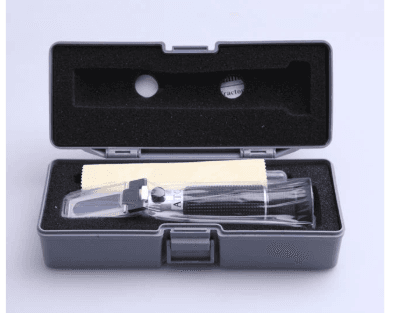
Store the instrument in its case with the daylight plate clean and dry to prevent optical damage and maintain calibration stability.
Why: Proper storage protects sensitive optical surfaces and prevents contamination that could affect measurement accuracy.
Setup Guide
What’s in the Box
- Digital Brix Refractometer LH-PDR main unit
- AC power adapter
- PC connection cable (typical)
- Calibration solutions (typical)
- Cleaning cloth
- User manual and software CD (typical)
- Carrying case (typical)
Warranty
ConductScience provides a comprehensive 1-year manufacturer warranty covering defects in materials and workmanship, with technical support for calibration and operational questions.
Compliance
References
Background reading relevant to this product:
What is the measurement precision for both refractive index and Brix readings?
Consult the product datasheet for specific precision specifications. Digital refractometers typically provide higher precision than manual instruments, with automatic temperature compensation ensuring accuracy across the 5-80°C operating range.
How do I program the three custom scales for specialized applications?
Custom scales are programmable through the instrument's menu system, allowing input of calibration points and concentration relationships specific to your application. The PC software interface may provide additional calibration curve programming options.
What sample volume is required for accurate measurements?
Typically 2-3 drops of sample are sufficient to cover the daylight plate surface. The sample should form a uniform layer without air bubbles for optimal light transmission and measurement accuracy.
Can the instrument measure both aqueous and organic solvents?
The refractive index range of 1.3330-1.5318 nD covers many aqueous solutions and some organic solvents. Verify chemical compatibility with the optical surfaces and sealing materials for specific solvents.
How frequently should calibration be performed?
Daily calibration with distilled water is recommended for critical measurements. Recalibration should also be performed when changing measurement ranges significantly or after cleaning with solvents.
What data formats are supported for PC connectivity?
Consult the product datasheet for specific data output formats and software compatibility. Most digital refractometers support CSV export and real-time data logging for integration with laboratory systems.
How does the waterproof design affect measurement accuracy?
Waterproof construction protects internal electronics without compromising optical performance. The sealed design maintains measurement accuracy in humid environments while preventing moisture damage to sensitive components.
Have a question about this product?
Have a question? Just ask.
Send it over and we'll email you a personalized answer — no call, no scheduling.
Prefer to talk it through?