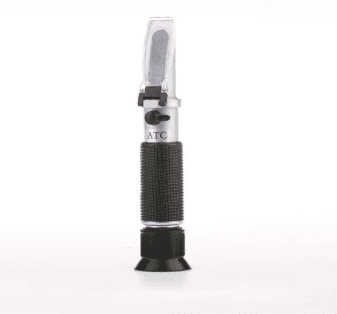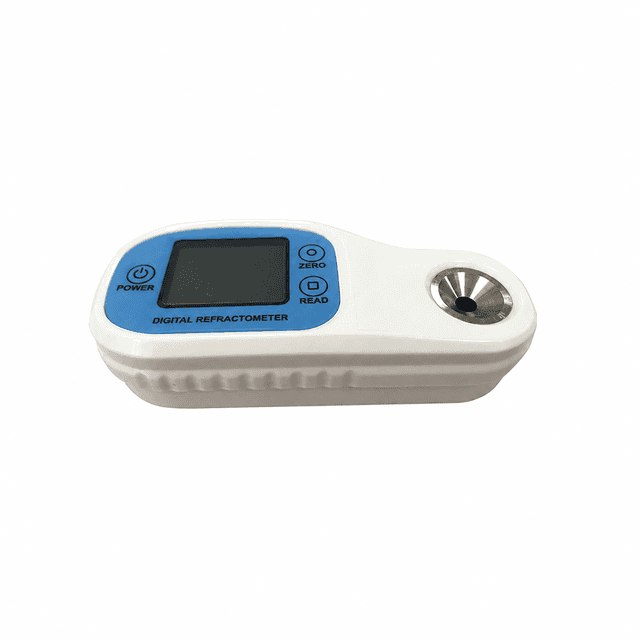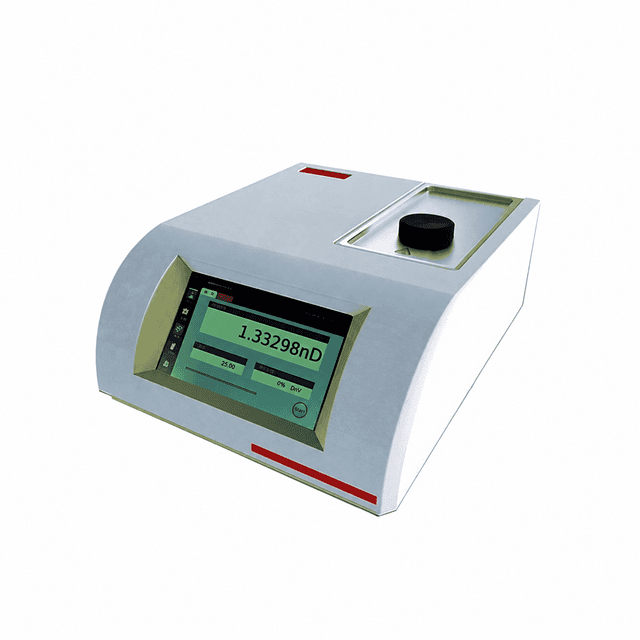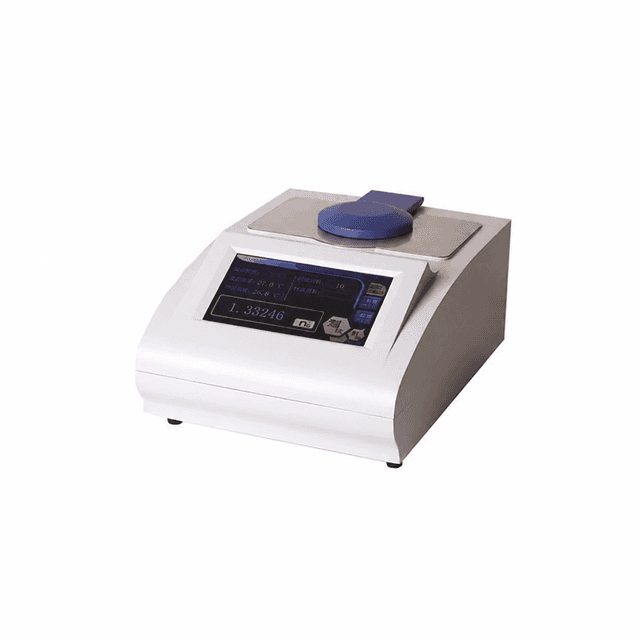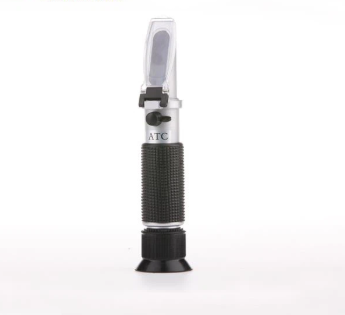
Specific Gravity Refractometer
Precision refractometer for measuring specific gravity and freezing point determination of antifreeze solutions and battery fluids with 0-70% concentration range.

Louise Corscadden, PhD
Director of Science · ConductScience
Ask Louise about Specific Gravity Refractometer fit, setup, configuration, or quote prep.
Already working with us? Sign in to connect this with My Scientist.
Key Specifications
Full details →- Model fit
- Configured during quote
- SKU family
- CS-LH-B70
- Shipping box
- 20.0 x 10.0 x 5.0 cm
- Ordering
- Online checkout and quote request available
- Category
- Refractometers
- Build notes
- Confirm accessories, station layout, and support needs before purchase
The Specific Gravity Refractometer (Model LH-B70) is a precision optical instrument designed for measuring the concentration of battery fluids, antifreeze solutions, and cleaning fluids in laboratory and industrial applications. This refractometer determines the specific gravity and freezing point of both propylene glycol and ethylene glycol-based solutions with a measurement range of 0-70% concentration.
The instrument features an integrated calibration screw that eliminates the need for additional tools during calibration procedures, streamlining routine maintenance protocols. The square prism housing provides enhanced stability during measurements, while the optical design delivers accurate concentration readings essential for quality control and formulation verification in automotive, pharmaceutical, and industrial applications.
How It Works
Refractometry operates on the principle of measuring the refractive index of a solution, which correlates directly with the concentration of dissolved solutes. When light passes through the sample-prism interface, it undergoes refraction at an angle proportional to the solution's density and composition. The instrument's optical system creates a distinct boundary line between light and dark regions in the field of view.
The LH-B70 utilizes a temperature-compensated optical system to account for thermal effects on refractive index measurements. The square prism design ensures consistent sample contact and uniform light transmission, while the precision optics resolve concentration differences as small as 1% in glycol solutions. The calibration mechanism allows for zero-point adjustment using distilled water as a reference standard.
For battery electrolyte measurements, the refractometer correlates specific gravity readings with acid concentration, enabling rapid assessment of battery charge state without the need for density measurements or chemical titrations.
Features & Benefits
Model
- LH-B70
Scope of use
- Model No.
specific gravity refractometer
- LH-B50
LH-B70
- 0-70%
Automation Level
- manual
Brand
- ConductScience
Research Domain
- Analytical Chemistry
- Environmental Monitoring
- Industrial Hygiene
- Materials Science
- Pharmaceutical QC
Shipping weight
- 0.26 lb
Shipping box
- L: 20.0 cm
- W: 10.0 cm
- H: 5.0 cm
| Feature | This Product | Typical Alternative | Advantage |
|---|---|---|---|
| Measurement Range | 0-70% concentration range for glycol solutions | Entry-level models often offer narrower ranges like 0-50% or require multiple scales | Covers the complete range of antifreeze concentrations used in automotive and industrial applications |
| Calibration System | Integrated calibration screw requiring no additional tools | Many models require separate screwdrivers or calibration keys | Enables rapid field calibration without carrying additional equipment or tools |
| Housing Design | Square prism housing for enhanced stability | Round housings are more common but less stable during measurements | Reduces measurement errors from instrument movement and ensures consistent sample contact |
| Application Versatility | Dual capability for both antifreeze and battery electrolyte measurements | Most instruments are specialized for either automotive or battery applications | Reduces equipment inventory requirements for laboratories handling multiple fluid types |
| Optical System | Temperature-compensated optical measurement | Basic models may lack temperature compensation features | Maintains measurement accuracy across laboratory temperature variations without manual corrections |
The LH-B70 combines extended measurement range with tool-free calibration and enhanced stability features. The dual-application capability for both antifreeze and battery testing provides versatility for multi-purpose laboratory environments.
Practical Tips
Perform calibration verification using certified glycol standards in addition to distilled water zero-point adjustment.
Why: Ensures accuracy across the entire measurement range, not just at the zero point.
Clean the prism surface immediately after each use with distilled water followed by lens tissue drying.
Why: Prevents sample residue buildup that can cause measurement drift and optical interference.
Allow samples to equilibrate to room temperature for 5-10 minutes before measurement, especially when testing refrigerated fluids.
Why: Temperature differences can affect refractive index readings even with compensation systems.
If the boundary line appears fuzzy or indistinct, check for air bubbles under the cover plate or insufficient sample volume.
Why: Sharp optical boundaries are essential for accurate concentration readings and measurement repeatability.
Take triplicate measurements and record the average, especially for critical quality control applications.
Why: Reduces random measurement errors and provides better statistical confidence in concentration determinations.
Wear appropriate personal protective equipment when handling battery electrolytes and unknown chemical solutions.
Why: Battery acids and industrial fluids can cause chemical burns and require proper handling precautions.
Store the instrument with the prism cover closed and in a temperature-stable environment.
Why: Prevents contamination and thermal shock that can affect optical calibration stability.
If readings drift over time, check the calibration screw tightness and verify zero-point with fresh distilled water.
Why: Mechanical loosening or water contamination are common sources of measurement instability.
Setup Guide
What’s in the Box
- LH-B70 Refractometer main unit
- Calibration screwdriver (typical)
- Sample pipette (typical)
- Cleaning cloth (typical)
- Protective carrying case (typical)
- User manual and calibration certificate (typical)
Warranty
ConductScience provides a standard one-year manufacturer warranty covering defects in materials and workmanship, with technical support available for calibration and measurement protocol questions.
Compliance
References
Background reading relevant to this product:
What is the measurement precision for glycol concentration determination?
The optical system provides concentration resolution appropriate for quality control applications. Consult product datasheet for specific precision specifications across the 0-70% measurement range.
Can this refractometer distinguish between propylene glycol and ethylene glycol solutions?
The instrument measures refractive index and provides concentration readings for both glycol types, but requires user knowledge of the glycol type being measured as the scale applies to either system independently.
What calibration frequency is recommended for routine laboratory use?
Daily calibration with distilled water is recommended for critical measurements, with weekly calibration sufficient for routine quality control applications depending on usage frequency and environmental conditions.
How does temperature affect measurement accuracy?
The instrument incorporates temperature compensation for standard laboratory conditions. Samples should be equilibrated to room temperature before measurement to ensure optimal accuracy.
What sample volume is required for measurement?
Measurements require 2-3 drops of sample applied to the prism surface, making this suitable for applications with limited sample availability.
Can this instrument measure other solution types besides glycols and battery electrolyte?
The refractometer is calibrated specifically for glycol solutions and battery electrolytes. Other solutions would require appropriate calibration standards and conversion factors.
How should the instrument be maintained for optimal performance?
Regular cleaning of the prism surface with distilled water, proper storage with cover closed, and periodic calibration verification maintain measurement reliability and optical clarity.
What are the limitations for measuring contaminated samples?
Particulate matter, air bubbles, or chemical contamination can interfere with optical measurements. Sample filtration or clarification may be necessary for accurate readings.
Have a question about this product?
Have a question? Just ask.
Send it over and we'll email you a personalized answer — no call, no scheduling.
Prefer to talk it through?