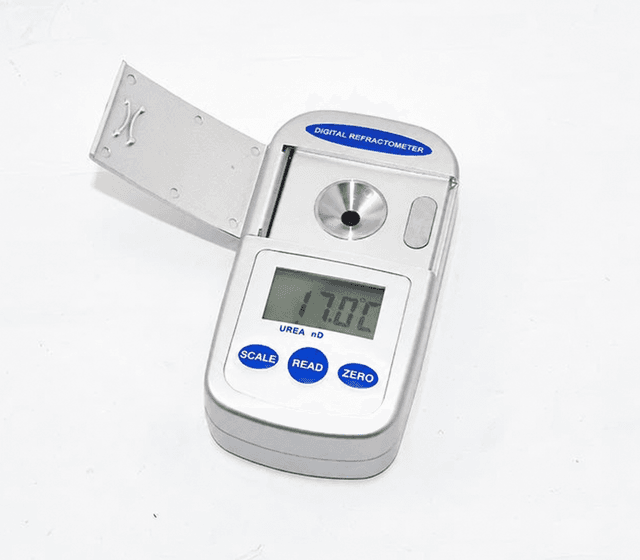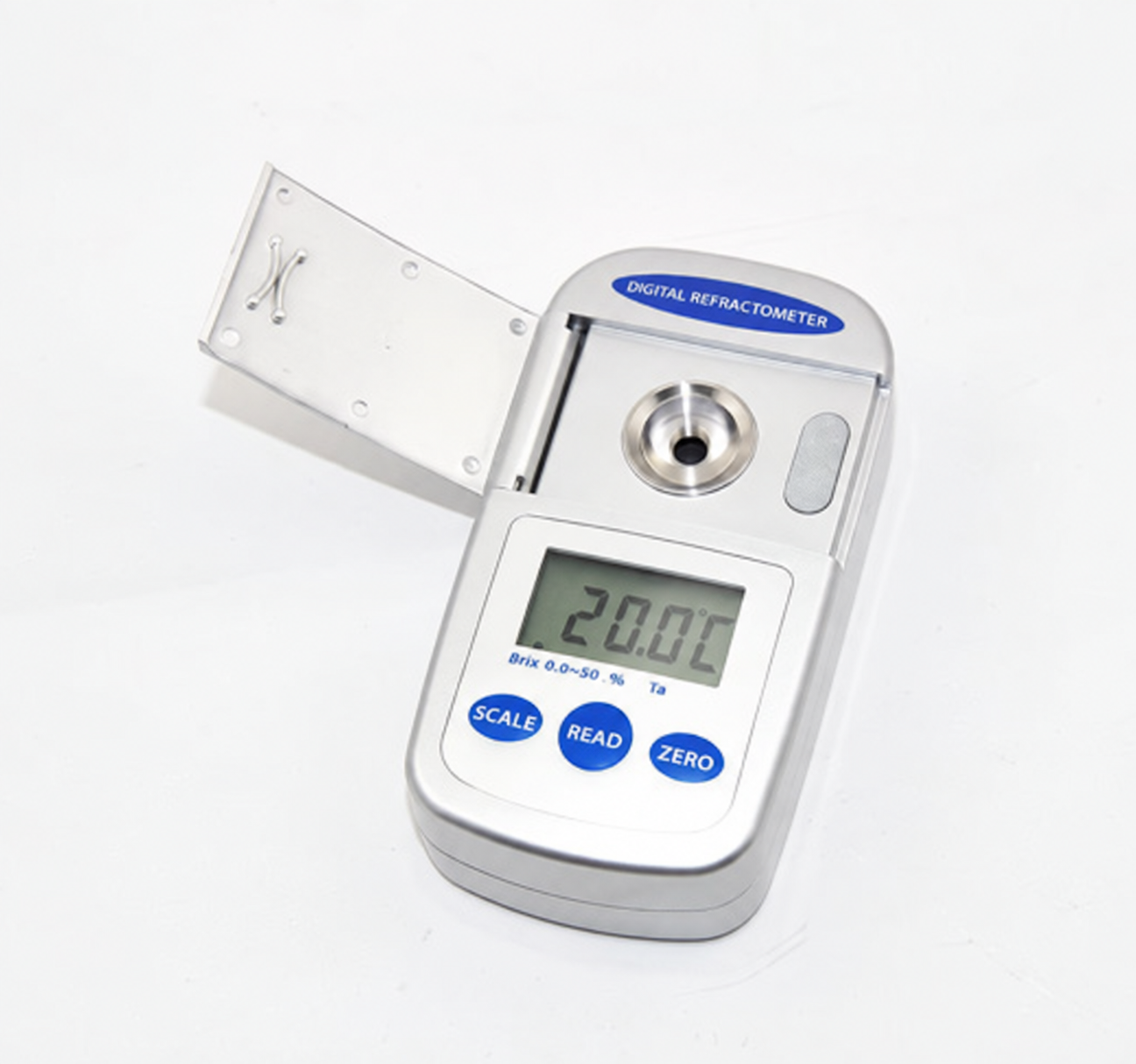
ATC Portable Refractometer
Digital honey refractometer for measuring Brix, moisture, Baumé degree, and refractive index. Model CNF92 with ±0.2% accuracy.

Louise Corscadden, PhD
Director of Science · ConductScience
Ask Louise about ATC Portable Refractometer fit, setup, configuration, or quote prep.
Already working with us? Sign in to connect this with My Scientist.
Key Specifications
Full details →- Model fit
- Configured during quote
- SKU family
- CS-LH-REF017
- Shipping box
- 20.0 x 10.0 x 5.0 cm
- Ordering
- Online checkout and quote request available
- Category
- Refractometers
- Build notes
- Confirm accessories, station layout, and support needs before purchase
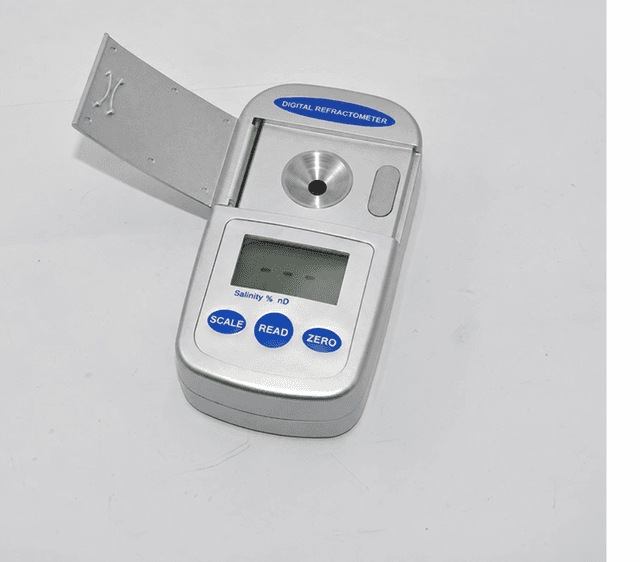
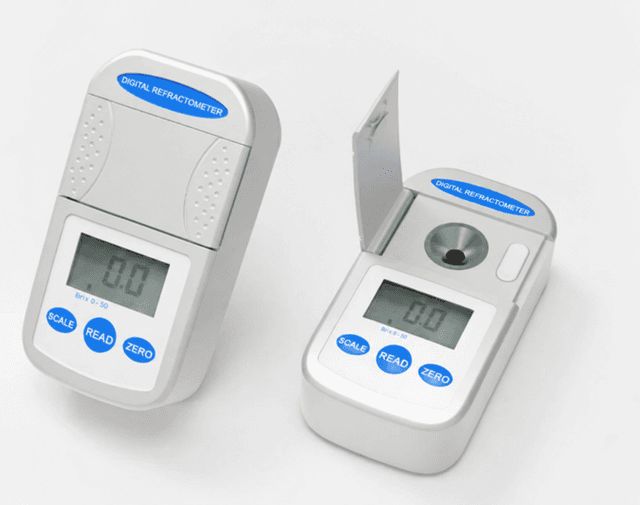
ATC Portable Refractometer (CNF92)
Digital honey refractometer designed to measure the 3 levels of honey quality: Brix, moisture, and Baume degree, as well as measuring refractive index of solution.
Technical Details
- Operation Temperature: 0.0-50.0°C (32.0-144.0°F)
- Power Supply: 1.5V battery (1x, not included)
- Features: Automatic shut-off, digital display
- Dimensions: 121 × 58 × 25 mm
- Net Weight: 90g (battery not included)
About This Instrument
The ATC Portable Refractometer is a precision optical instrument designed to measure the concentration of aqueous solutions by measuring their refractive index. All water-based solutions bend light, and the bending increases proportionally with solution concentration. This refractometer is characterized by its small volume, light weight, elegant design, and ease of operation, making it suitable for laboratory and field use.
Key Specifications
| Test Item | Measuring Range | Resolution | Accuracy |
|---|---|---|---|
| BRIX | 0.0-90% | 0.1% | ±0.2% |
| WATER | 5%-38% | 0.1% | ±0.2% |
| Baumé (Be') | 33-48 | 0.1 | ±0.4 |
| Refractive Index (nD) | 1.3330-1.5177 | 0.0001 | ±0.0003 |
Frequently Asked Questions
- Warranty
- 12 months warranty included
- Shipping Options
- For smaller items, we offer FedEx and DHL shipping. For larger orders, sea freight is available. Custom shipping quotes are provided upon request.
- Customization
- We offer OEM customization services. Please provide your detailed specifications for a custom quote.
- After-Sales Support
- Professional and reliable support before and after purchase. Our team is dedicated to ensuring your satisfaction and success with your equipment.
How It Works
Refractometry operates on the principle that light bends (refracts) when passing from one medium to another, with the degree of bending dependent on the optical density of the medium. When light passes through a solution, the refractive index changes proportionally to the concentration of dissolved substances. The instrument measures the critical angle at which total internal reflection occurs at the sample-prism interface.
The ATC feature compensates for temperature variations that affect refractive index measurements. As temperature influences molecular density and light velocity through the medium, the instrument applies algorithmic corrections to provide accurate readings across varying environmental conditions. Digital processing converts the optical measurements into standardized units including Brix (percentage sugar by weight), moisture content, and Baumé degrees (solution density scale).
Sample analysis requires only a few drops of solution placed on the daylight plate. The measurement chamber contains precision optical components that direct light through the sample, with digital sensors detecting the refractive boundary and converting this to numerical readings displayed on the integrated screen.
Features & Benefits
CNF92
- BRIX
WATER
- 5%-38%
Be'
- 33-48
RI(nD)
- 1.4400-1.5320
Automation Level
- manual
Brand
- ConductScience
Research Domain
- Analytical Chemistry
- Environmental Monitoring
- Food Science
- Industrial Hygiene
- Microbiology
- Pharmaceutical QC
Shipping weight
- 0.26 lb
Shipping box
- L: 20.0 cm
- W: 10.0 cm
- H: 5.0 cm
| Feature | This Product | Typical Alternative | Advantage |
|---|---|---|---|
| Refractive Index Range | 1.3330-1.5177 nD with extended range to 1.5320 nD | Basic models often limited to 1.3330-1.5000 nD range | Extended range accommodates high-concentration solutions and specialized applications requiring broader measurement capability. |
| Multi-Parameter Measurement | Simultaneous Brix, moisture content, and Baumé degree readings | Single-parameter instruments require separate measurements | Reduces analysis time and sample volume requirements while providing comprehensive solution characterization. |
| Temperature Compensation | Automatic temperature compensation (ATC) integrated | Manual temperature correction required on entry-level models | Eliminates calculation errors and improves measurement consistency across varying environmental conditions. |
| Display Interface | Digital numerical display | Analog scales requiring visual interpretation | Eliminates reading subjectivity and provides precise numerical results suitable for quality control documentation. |
| Water Content Range | 5%-38% measurement capability | Varies by model, often with narrower ranges | Covers typical moisture ranges for honey and food product analysis without requiring multiple instruments. |
This digital refractometer combines extended measurement range with multi-parameter capability and automatic temperature compensation. The simultaneous measurement of Brix, moisture, and Baumé parameters in a portable format addresses analytical efficiency requirements in field and laboratory applications.
Practical Tips
Perform daily zero calibration using distilled water at the beginning of each analytical session.
Why: Environmental temperature and humidity variations can drift the optical baseline, affecting measurement accuracy.
Clean the daylight plate and cover with distilled water and lint-free cloth after each sample measurement.
Why: Sample residue can create optical interference and cause cross-contamination between measurements.
Allow samples to equilibrate to room temperature before measurement for optimal ATC performance.
Why: Large temperature differentials can exceed the compensation range and introduce measurement errors.
Take multiple readings of the same sample and average the results for critical measurements.
Why: Random measurement variation can be reduced through replicate analysis, improving data reliability.
If readings appear inconsistent, check for air bubbles in the sample layer and ensure complete coverage of the daylight plate.
Why: Incomplete sample coverage or air inclusions create optical discontinuities that affect refractive index measurement.
Avoid using harsh solvents or abrasive materials on optical surfaces during cleaning procedures.
Why: Optical coatings and glass surfaces can be damaged by chemical attack or mechanical scratching, compromising measurement accuracy.
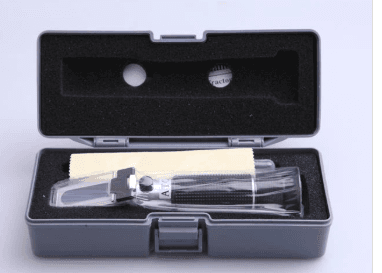
Store the instrument in its protective case when not in use to prevent optical surface contamination.
Why: Environmental dust and moisture can accumulate on optical components, requiring more frequent calibration and cleaning.
Setup Guide
What’s in the Box
- ATC Portable Refractometer main unit (typical)
- Calibration solution set (typical)
- Cleaning cloth and accessories (typical)
- User manual and calibration certificate (typical)
- Protective carrying case (typical)
Warranty
ConductScience provides a standard one-year manufacturer warranty covering defects in materials and workmanship, with technical support for calibration procedures and operational guidance.
Compliance
References
Background reading relevant to this product:
What is the measurement accuracy and precision for Brix determination?
Consult product datasheet for specific accuracy specifications. Digital refractometers typically provide ±0.1-0.2% Brix accuracy with proper calibration and temperature compensation.
How often should the instrument be calibrated for consistent results?
Daily calibration with distilled water is recommended for critical applications. Weekly calibration may be sufficient for routine quality control depending on usage frequency and environmental conditions.
Can this refractometer measure samples with suspended particles?
Particulates interfere with optical measurement accuracy. Samples should be filtered or clarified before analysis to ensure reliable refractive index determination.
What sample volume is required for measurement?
Typically 2-3 drops of sample are sufficient to cover the daylight plate for accurate measurement, making this suitable for limited-volume samples.
How does the ATC function affect measurement reliability?
Automatic temperature compensation adjusts readings based on sample temperature, eliminating the need for manual temperature corrections and improving measurement consistency across varying environmental conditions.
Is the instrument suitable for measuring alcoholic solutions?
The refractive index range accommodates various solution types, but specific alcohol content measurement capability should be verified against the instrument's calibration tables and measurement algorithms.
What maintenance procedures are required for optimal performance?
Regular cleaning of optical surfaces with distilled water, proper storage in the protective case, and periodic calibration verification are essential for maintaining measurement accuracy.
Have a question about this product?
Have a question? Just ask.
Send it over and we'll email you a personalized answer — no call, no scheduling.
Prefer to talk it through?