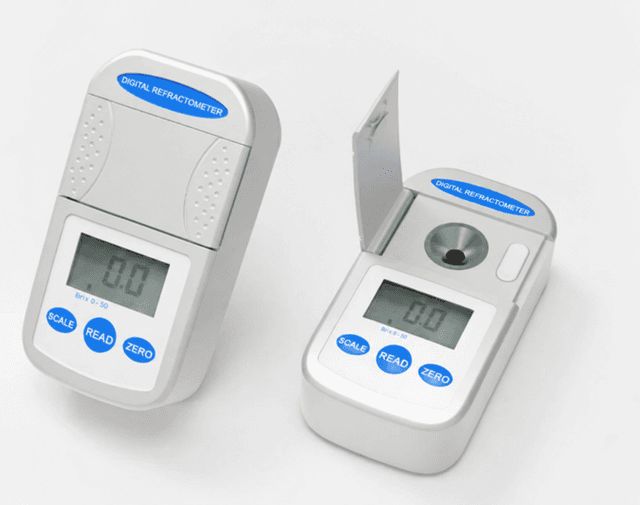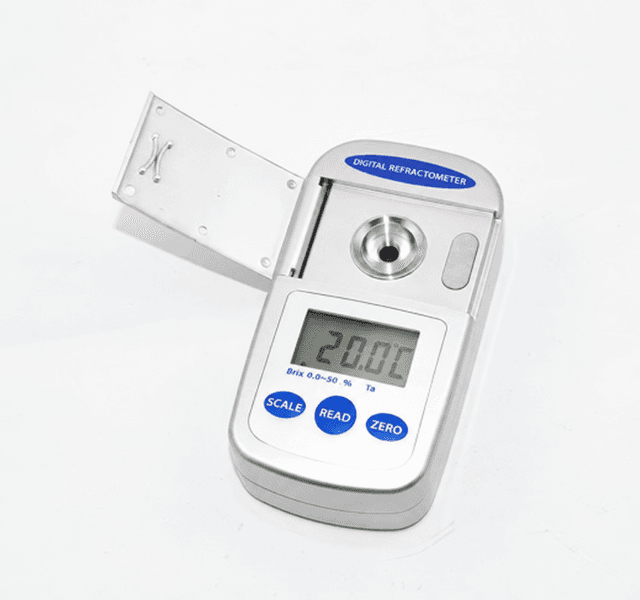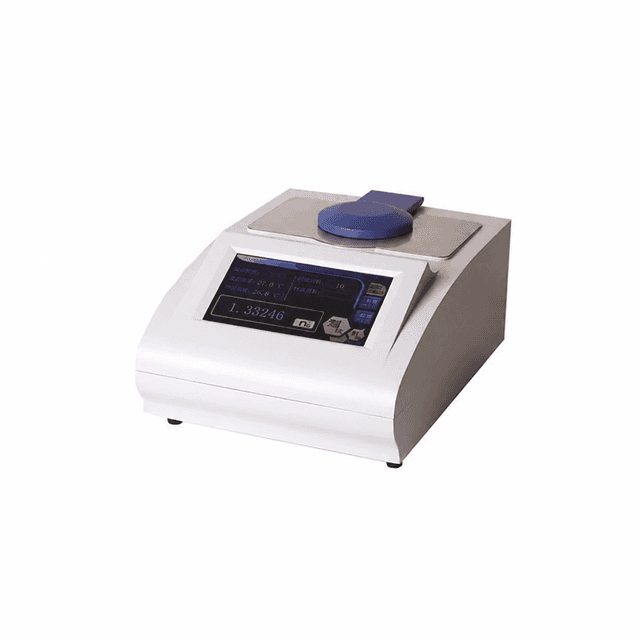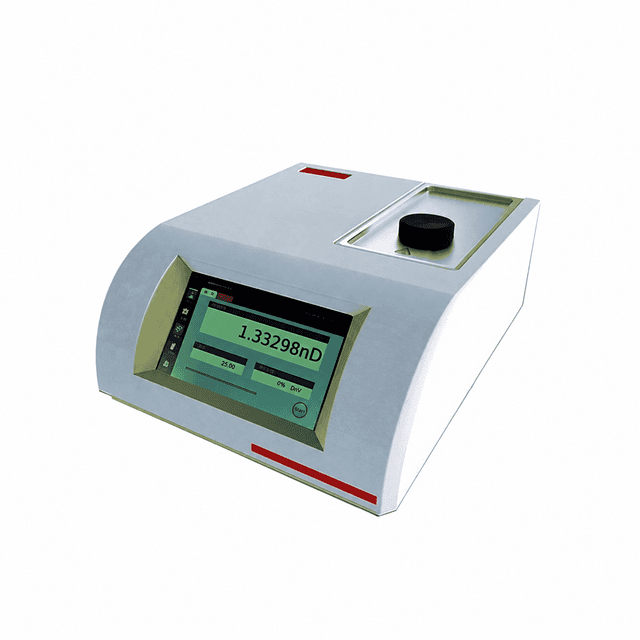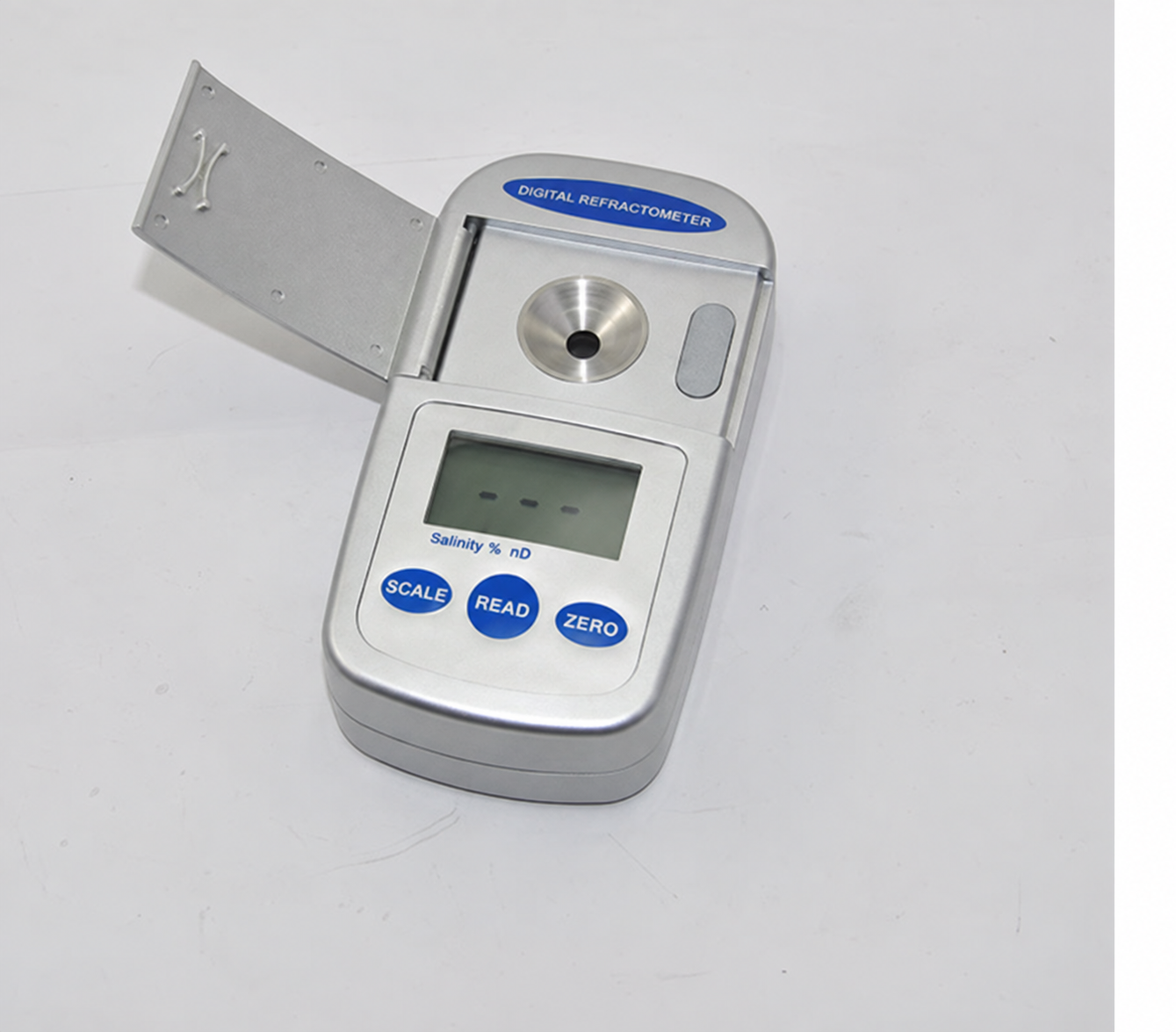
Digital Accuracy Refractometer
Digital refractometer utilizing LED-photodiode technology for precise refractive index measurements (1.3330-1.4098 nD) with automatic temperature compensation and multi-parameter output including Brix and salinity.

Louise Corscadden, PhD
Director of Science · ConductScience
Ask Louise about Digital Accuracy Refractometer fit, setup, configuration, or quote prep.
Already working with us? Sign in to connect this with My Scientist.
Key Specifications
Full details →- Model fit
- Configured during quote
- SKU family
- CS-LH-REF015
- Shipping box
- 20.0 x 10.0 x 5.0 cm
- Ordering
- Online checkout and quote request available
- Category
- Refractometers
- Build notes
- Confirm accessories, station layout, and support needs before purchase
The Digital Accuracy Refractometer CS-LH-REF015 employs LED-based photodiode array technology to provide precise refractive index measurements with automatic temperature compensation across the range 1.3330-1.4098 nD. This instrument eliminates the subjective interpretation inherent in optical refractometers by utilizing a linear photodiode array that detects the critical angle shadow line position, converting this to digital readouts for refractive index, Brix, and salinity measurements.
The system operates by directing LED light through the sample applied to the measuring prism surface. The refracted light creates a distinct shadow line on the photodiode array, with the position directly correlating to the refractive index. Internal algorithms process this optical data to provide measurements in multiple units including refractive index (nD), Brix concentration, and salinity (0-28%). Temperature compensation functionality (0-50°C range) ensures measurement accuracy across varying environmental conditions.
How It Works
The instrument operates on the principle of critical angle refractometry, where light passing through a sample at the interface between two media of different refractive indices creates a distinct boundary between light and dark regions. An LED light source illuminates the sample placed on the measuring prism surface. The refracted light beam creates a shadow line whose position on a linear photodiode array corresponds directly to the sample's refractive index.
The photodiode array converts the optical signal to electrical data, which is processed by internal software algorithms to calculate the refractive index value. The system correlates this measurement to derived parameters including Brix concentration and salinity percentage based on established conversion relationships. Automatic temperature compensation utilizes built-in temperature sensing to apply correction factors, ensuring accurate measurements across the 0-50°C operational range.
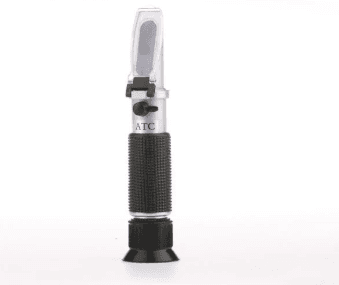
Digital processing eliminates the subjective interpretation required with optical refractometers, where users manually observe the boundary line position through an eyepiece. The electronic detection system provides objective, reproducible measurements with enhanced precision compared to visual reading methods.
Features & Benefits
CNY2
- BRIX
SALINITY
- 0-28%
RI(nD)
- 1.3330-1.4098
CNY28
- SALINITY
Automation Level
- semi-automated
Brand
- ConductScience
Research Domain
- Analytical Chemistry
- Environmental Monitoring
- Food Science
- Materials Science
- Pharmaceutical QC
Shipping weight
- 0.26 lb
Shipping box
- L: 20.0 cm
- W: 10.0 cm
- H: 5.0 cm
| Feature | This Product | Typical Alternative | Advantage |
|---|---|---|---|
| Detection Method | LED-photodiode array system with digital processing | Visual eyepiece reading in optical refractometers | Eliminates subjective interpretation and operator variability in boundary line detection |
| Temperature Compensation | Automatic compensation across 0-50°C range | Manual temperature corrections or limited compensation range | Provides accurate measurements across varying laboratory conditions without user calculations |
| Measurement Parameters | Refractive index, Brix, and salinity (0-28%) output | Single parameter output requiring conversion calculations | Versatility for multiple analytical applications without separate instruments or manual conversions |
| Refractive Index Range | 1.3330-1.4098 nD coverage | Varies by model, some with narrower ranges | Accommodates diverse sample types from aqueous solutions to moderate-concentration organics |
| Display Interface | Digital readout system | Analog scale reading in traditional models | Immediate numerical results with improved precision and simplified data recording |
The CS-LH-REF015 combines LED-photodiode detection technology with comprehensive temperature compensation and multi-parameter output capabilities. The digital processing system provides objective measurements across a broad refractive index range suitable for diverse analytical applications.
Practical Tips
Perform zero calibration with fresh distilled water daily before measurements to maintain baseline accuracy.
Why: Temperature and environmental changes can affect the optical baseline, requiring regular re-zeroing for accurate readings.
Allow samples and instrument to equilibrate to the same temperature before measurement to optimize temperature compensation accuracy.
Why: Thermal gradients between sample and instrument can introduce measurement errors despite automatic compensation.
Clean the prism surface immediately after each use with distilled water and a lint-free cloth to prevent residue buildup.
Why: Sample residues can create optical interference and affect subsequent measurement accuracy.
Take multiple readings and report the average when measuring critical samples to improve measurement reliability.
Why: Statistical averaging reduces the impact of minor variations in sample application or environmental conditions.
If readings appear unstable, check for air bubbles in the sample and ensure complete prism surface coverage.
Why: Air bubbles create optical discontinuities that interfere with accurate boundary line detection.
Filter or centrifuge turbid samples before analysis to remove particulates that can scatter light.
Why: Suspended particles interfere with the critical angle measurement and reduce measurement precision.
Use appropriate personal protective equipment when handling samples, particularly organic solvents or corrosive solutions.
Why: Chemical exposure risk requires standard laboratory safety protocols during sample preparation and analysis.
Setup Guide
What’s in the Box
- Digital accuracy refractometer main unit
- Power adapter (typical)
- Calibration dropper bottle (typical)
- Cleaning cloth (typical)
- User manual and operation guide (typical)
- Calibration certificate (typical)
Warranty
ConductScience provides a standard one-year manufacturer warranty covering defects in materials and workmanship, with technical support for operational questions and troubleshooting assistance.
Compliance
References
Background reading relevant to this product:
What is the measurement precision and accuracy of the refractive index readings?
Consult product datasheet for specific precision and accuracy specifications. Digital photodiode detection typically provides improved reproducibility compared to visual optical methods.
How does the automatic temperature compensation function work?
The instrument includes integrated temperature sensing that applies correction factors across the 0-50°C range, automatically adjusting readings to compensate for temperature effects on refractive index.
What sample volume is required for accurate measurements?
Typically 2-3 drops are sufficient to cover the prism surface completely. Exact volume requirements depend on sample viscosity and prism dimensions.
Can the instrument measure samples with particulates or turbidity?
Suspended particles may interfere with optical measurements. Samples should be filtered or clarified for optimal results, particularly for refractive index determinations.
How frequently does the instrument require calibration?
Daily zero calibration with distilled water is recommended. Additional calibration with certified reference standards may be required based on application requirements and quality protocols.
What cleaning solvents are compatible with the prism surface?
Distilled water is typically suitable for most applications. Consult product documentation for compatibility with organic solvents or harsh cleaning agents that might damage the prism coating.
Does the instrument store measurement data or connect to laboratory information systems?
Consult product specifications for data storage capabilities and connectivity options such as USB or RS-232 interfaces for data transfer.
Have a question about this product?
Have a question? Just ask.
Send it over and we'll email you a personalized answer — no call, no scheduling.
Prefer to talk it through?