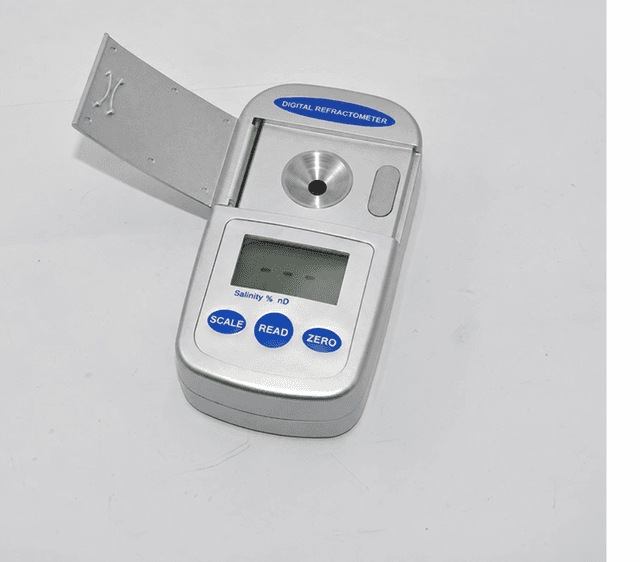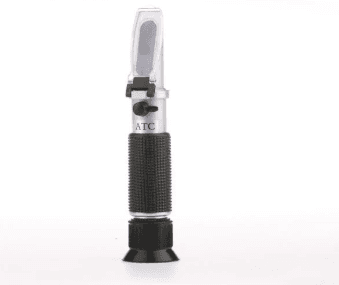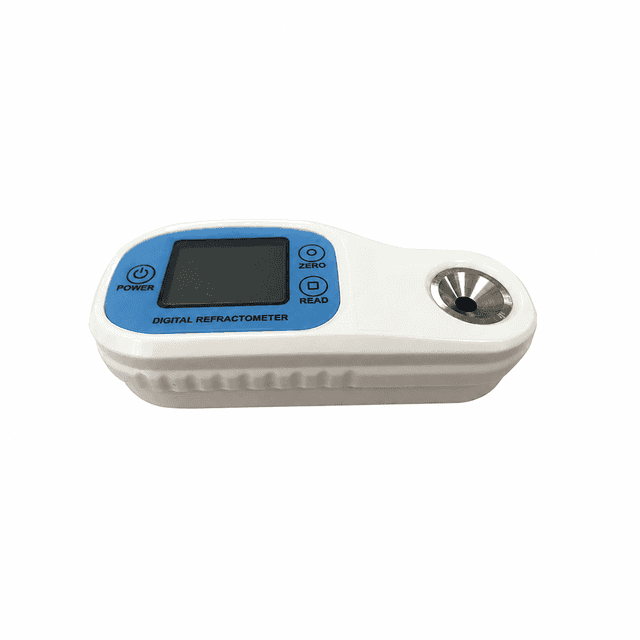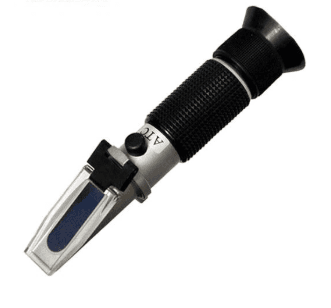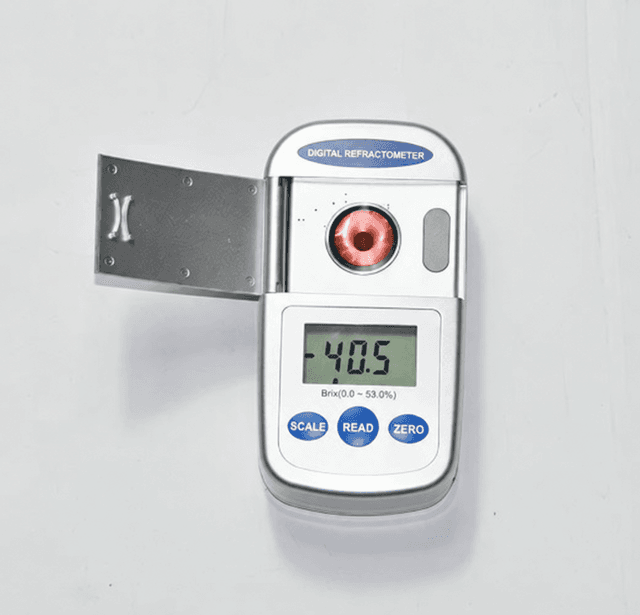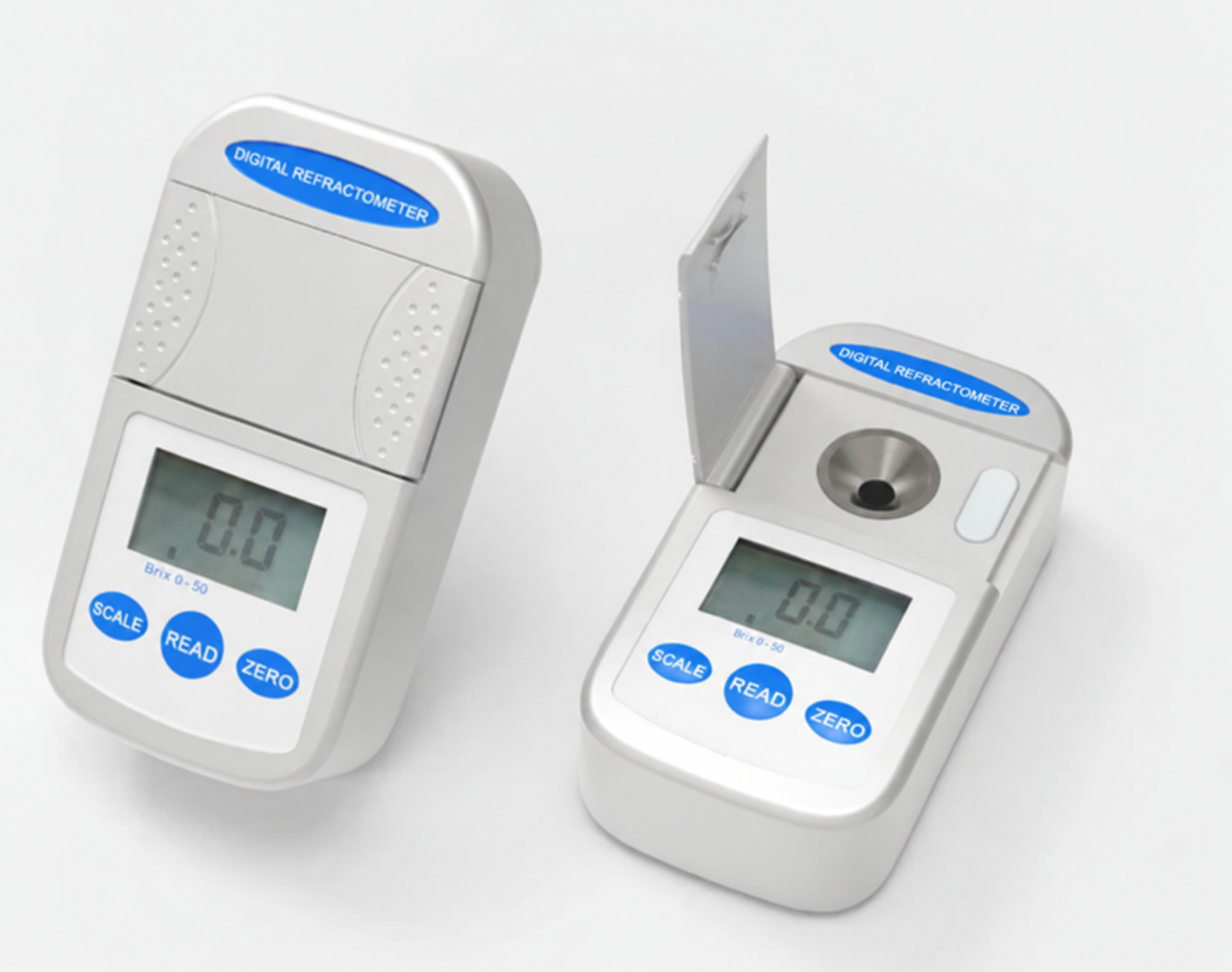
Aquarium Refractometer
Precision optical refractometer for measuring refractive index and salinity in marine and aquatic research applications, with measurement range 1.3330-1.4535 nD.

Louise Corscadden, PhD
Director of Science · ConductScience
Ask Louise about Aquarium Refractometer fit, setup, configuration, or quote prep.
Already working with us? Sign in to connect this with My Scientist.
Key Specifications
Full details →- Model fit
- Configured during quote
- SKU family
- CS-LH-REF016
- Shipping box
- 20.0 x 10.0 x 5.0 cm
- Ordering
- Online checkout and quote request available
- Category
- Refractometers
- Build notes
- Confirm accessories, station layout, and support needs before purchase
The Aquarium Refractometer CNT65 is a precision optical instrument designed for measuring the refractive index of aqueous solutions in marine and aquatic research environments. This refractometer utilizes the principle that light bending increases proportionally with solution concentration, enabling accurate determination of salinity and other dissolved substances in seawater and aquarium systems.
The instrument features a refractive index measurement range of 1.3330-1.4535 nD and BRIX scale capability, making it suitable for both marine biology research and aquaculture applications. Its compact design and straightforward operation allow for field measurements and routine laboratory analysis of water samples from various aquatic environments.
How It Works
The refractometer operates on the principle of light refraction through aqueous solutions. When light passes from one medium to another with different optical densities, it bends at a predictable angle determined by the refractive indices of both media. The degree of bending is directly proportional to the concentration of dissolved substances in the solution.
The instrument contains a prism system that creates a boundary between the sample solution and ambient light. As light passes through this boundary, it creates a distinct light-dark interface on a scale visible through the eyepiece. The position of this boundary corresponds to the refractive index of the sample, which can then be read directly from calibrated scales.
For salinity measurements, the refractive index correlates with the concentration of dissolved salts, allowing direct determination of salinity levels. The BRIX scale function enables measurement of sugar concentrations based on the same optical principle.
Features & Benefits
Aquarium refractometer CNT65
- BRIX
RI(nD)
- 1.3330-1.4535
Automation Level
- manual
Brand
- ConductScience
Research Domain
- Analytical Chemistry
- Environmental Monitoring
- Food Science
- Marine Biology
Shipping weight
- 0.26 lb
Shipping box
- L: 20.0 cm
- W: 10.0 cm
- H: 5.0 cm
| Feature | This Product | Typical Alternative | Advantage |
|---|---|---|---|
| Refractive Index Range | 1.3330-1.4535 nD | Entry-level models often offer narrower ranges or single-scale functionality | Wide measurement range accommodates diverse aqueous solutions from freshwater to concentrated brines |
| Scale Options | Both refractive index and BRIX scales | Many instruments provide single-scale measurements only | Dual-scale capability eliminates need for separate instruments in multi-application laboratories |
| Optical Design | Precision prism-based measurement system | Lower-cost models may use simpler optical configurations | Prism system provides sharp boundary definition for accurate visual readings |
| Sample Volume | 2-3 drops required for measurement | Some instruments require larger sample volumes | Minimal sample consumption important for precious or limited-volume specimens |
The CNT65 offers comprehensive refractive index measurement capability with dual-scale functionality in a manual operation format. The wide measurement range and prism-based optical system provide versatility for both marine research and food science applications.
Practical Tips
Perform zero calibration with distilled water at the beginning of each measurement session.
Why: Temperature and optical drift can affect measurement accuracy over time.
Clean optical surfaces immediately after measuring sticky or high-salt solutions to prevent residue buildup.
Why: Dried residue can create permanent staining or optical interference on prism surfaces.
Allow samples and instrument to reach thermal equilibrium before measurement, especially with temperature-sensitive solutions.
Why: Temperature differences between sample and prism can cause measurement drift and reduced precision.
If boundary line appears fuzzy or poorly defined, check for air bubbles between sample and prism surface.
Why: Air bubbles create optical discontinuities that interfere with accurate boundary detection.
Take multiple readings and record the average, especially for critical measurements.
Why: Manual reading variation can be reduced through replicate measurements and statistical analysis.
Handle samples containing unknown chemicals with appropriate personal protective equipment.
Why: Direct contact with sample droplets during loading and cleaning procedures requires safety consideration.
Setup Guide
What’s in the Box
- CNT65 refractometer main unit
- Calibration adjustment tool (typical)
- Lens cleaning tissue (typical)
- Protective carrying case (typical)
- User manual and calibration instructions (typical)
Warranty
ConductScience provides standard manufacturer warranty coverage with technical support for instrument calibration and measurement procedures.
Compliance
What is the measurement precision for salinity determination?
Consult product datasheet for specific precision values. Precision depends on proper calibration, temperature stability, and sample preparation technique.
Does the instrument require temperature compensation?
Most refractometers require temperature consideration for accurate measurements. Consult product specifications for automatic temperature compensation features or manual correction procedures.
What sample volume is required for measurement?
Typically 2-3 drops of sample solution are sufficient to cover the prism surface for accurate refractive index measurement.
How do I calibrate the instrument for seawater measurements?
Use distilled water (nD = 1.3330) for zero calibration, then verify with standard seawater solutions of known salinity if available.
Can this refractometer measure both salinity and sugar content?
Yes, the instrument features both refractive index (1.3330-1.4535 nD) and BRIX scales for measuring dissolved salts and sugar concentrations respectively.
What maintenance is required for optical components?
Clean prism and daylight plate surfaces with distilled water and lens tissue after each use. Avoid abrasive materials that could scratch optical surfaces.
Is the instrument suitable for field measurements?
Yes, the compact design and manual operation make it suitable for field use, though measurements should be protected from direct sunlight and temperature extremes.
Have a question about this product?
Have a question? Just ask.
Send it over and we'll email you a personalized answer — no call, no scheduling.
Prefer to talk it through?