Pocket Refractometer
Handheld refractometer with automatic temperature compensation (10-30°C range) for field and laboratory refractive index measurements.

Louise Corscadden, PhD
Director of Science · ConductScience
Ask Louise about Pocket Refractometer fit, setup, configuration, or quote prep.
Already working with us? Sign in to connect this with My Scientist.
Key Specifications
Full details →- Model fit
- Configured during quote
- SKU family
- CS-LH-Y12
- Shipping box
- 20.0 x 10.0 x 5.0 cm
- Ordering
- Online checkout and quote request available
- Category
- Refractometers
- Build notes
- Confirm accessories, station layout, and support needs before purchase
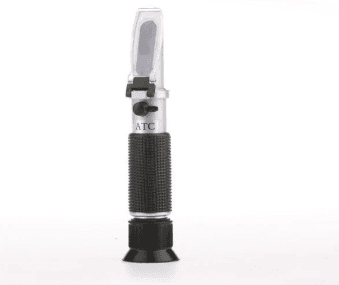
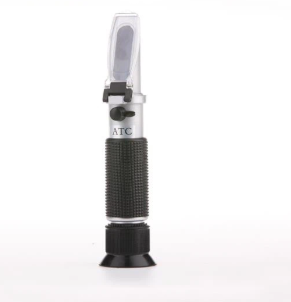
The ConductScience Pocket Refractometer (Model LH-Y12) is a handheld optical instrument designed for rapid refractive index measurements with built-in automatic temperature compensation (ATC) over a 10°C to 30°C range. This field-portable refractometer eliminates the need for recalibration when ambient operating temperatures change, making it suitable for laboratory, field, and industrial applications requiring consistent measurements across variable environmental conditions.
The instrument features a soft rubber eyepiece for extended use comfort and delivers measurements within seconds of sample application. The compact design enables one-handed operation while maintaining measurement precision through its integrated temperature compensation system, which automatically adjusts readings to a standard reference temperature regardless of ambient conditions within the specified range.
How It Works
Refractometry operates on Snell's law of refraction, measuring the critical angle at which total internal reflection occurs when light passes from a sample into a prism of known refractive index. When a liquid sample is placed on the instrument's daylight plate, light enters the sample and refracts at the sample-prism interface. The critical angle of refraction correlates directly with the sample's refractive index, which varies predictably with concentration for most solutions.
The built-in automatic temperature compensation system uses a bimetallic temperature sensor to detect ambient temperature changes between 10°C and 30°C. The compensation mechanism automatically adjusts the optical path or applies mathematical corrections to maintain measurement accuracy across this temperature range, eliminating the need for manual temperature corrections or recalibration when environmental conditions change.
Visual readout is achieved through an optical system that projects a sharp boundary line onto a graduated scale visible through the eyepiece. The position of this boundary line corresponds to the refractive index value, which can be correlated to concentration using established calibration curves for specific solutions such as urea, sugar solutions, or salt water.
Features & Benefits
Model
- LH-Y12
Scope of use
- Model No.
Pocketrefractometer
- LH-Y12
Automation Level
- manual
Brand
- ConductScience
Research Domain
- Analytical Chemistry
- Environmental Monitoring
- Food Science
- Industrial Hygiene
- Pharmaceutical QC
Shipping weight
- 0.26 lb
Shipping box
- L: 20.0 cm
- W: 10.0 cm
- H: 5.0 cm
| Feature | This Product | Typical Alternative | Advantage |
|---|---|---|---|
| Temperature Compensation Range | 10-30°C automatic temperature compensation | Basic models often lack ATC or have narrower compensation ranges | Maintains accuracy across common laboratory and field temperature variations without manual corrections |
| Eyepiece Design | Soft rubber eyepiece for comfortable viewing | Standard hard plastic eyepieces in entry-level models | Reduces eye fatigue during extended measurement sessions and provides impact protection |
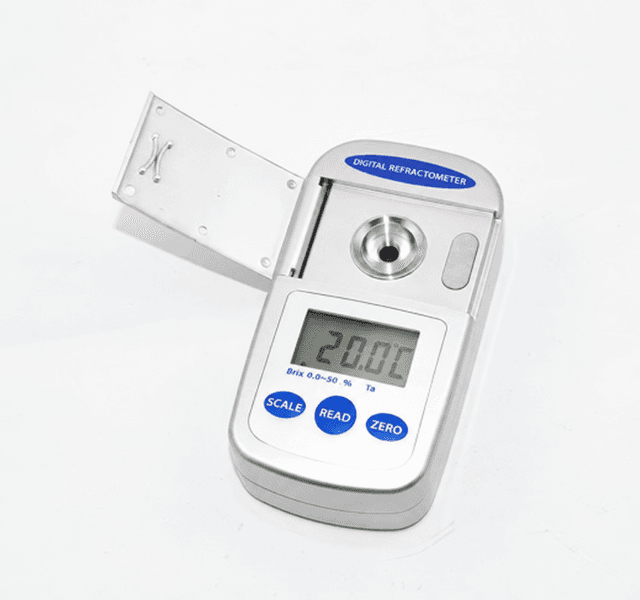
| Power Requirements | No power required - purely optical operation | Digital models require battery power and replacement | Eliminates power-related failures in field environments and reduces operational costs |
| Measurement Speed | Immediate visual readout upon sample application | Digital models may require stabilization time | Enables rapid screening of multiple samples without waiting for electronic processing |
The LH-Y12 combines automatic temperature compensation typically found in premium instruments with robust optical measurement principles suited for field applications. The soft rubber eyepiece and temperature compensation range address common user comfort and accuracy concerns in portable refractometry.
Practical Tips
Verify zero calibration with distilled water at the beginning of each measurement session, especially after transport or temperature changes.
Why: Temperature changes and mechanical vibration can shift the optical alignment affecting measurement accuracy.
Allow samples and instrument to equilibrate to similar temperatures before measurement, even with ATC compensation.
Why: Large temperature differentials between sample and instrument can temporarily affect optical properties and boundary line clarity.
Clean the daylight plate immediately after measuring samples that may crystallize or leave residues upon drying.
Why: Dried residues can create optical distortions and permanently stain the prism surface if not removed promptly.
Take multiple readings of the same sample by removing and reapplying the solution to verify measurement repeatability.
Why: Air bubbles or uneven sample distribution can cause reading variations that indicate measurement problems.
Use lens tissue or cotton swabs for cleaning; avoid abrasive materials that could scratch the optical surfaces.
Why: Scratched optical surfaces cause light scattering that permanently degrades measurement precision and boundary line sharpness.
If boundary line appears fuzzy or indistinct, check for contamination on optical surfaces and ensure adequate light source intensity.
Why: Poor optical conditions reduce measurement precision and can lead to systematic reading errors.
Setup Guide
What’s in the Box
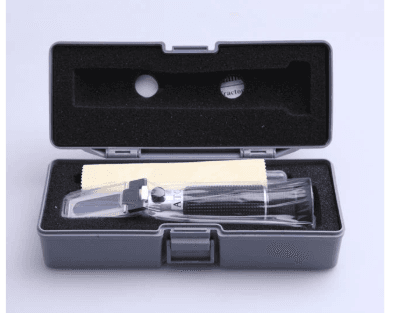
- Pocket refractometer main unit
- Plastic carrying case (typical)
- Calibration screwdriver (typical)
- Lens cleaning cloth (typical)
- User manual and calibration certificate (typical)
Warranty
ConductScience provides standard manufacturer warranty coverage for materials and workmanship defects, with technical support available for calibration and operational guidance.
Compliance
References
Background reading relevant to this product:
What is the measurement principle and how does the ATC system work?
The refractometer measures refractive index using the critical angle method with total internal reflection. The ATC system uses a bimetallic temperature sensor to detect ambient temperature between 10-30°C and automatically applies corrections to maintain accuracy without manual temperature compensation.
What sample volume is required and how quickly are results obtained?
The instrument requires only 2-3 drops of sample solution applied to the daylight plate. Results are visible immediately through the eyepiece as a boundary line position on the graduated scale, with measurement time under 10 seconds.
How should the instrument be calibrated and how often?
Calibration is performed using distilled water as a zero reference, adjusting the calibration screw until the boundary line reads 0.00. Calibration should be checked at the start of each measurement session and whenever measurement accuracy is questioned.
What types of solutions can be measured with this refractometer?
The refractometer can measure any transparent solution where refractive index correlates with concentration, including urea solutions, sugar solutions (Brix), salt water, coolants, and other binary aqueous solutions with sufficient refractive index differences.
What are the limitations of the automatic temperature compensation range?
ATC functions only within 10-30°C ambient temperature range. Outside this range, measurements may require manual temperature corrections or the instrument should be allowed to equilibrate within the compensation range before use.
How does this compare to digital refractometers for field use?
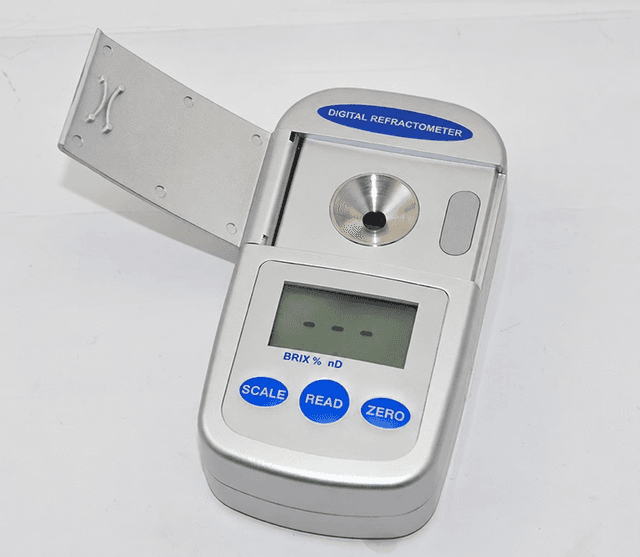
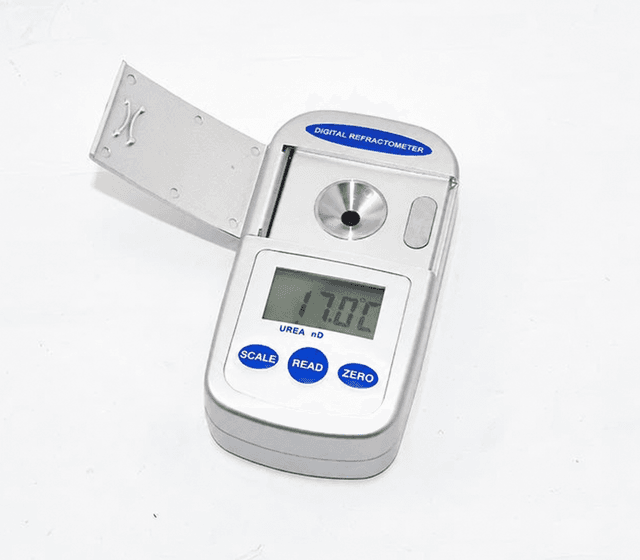
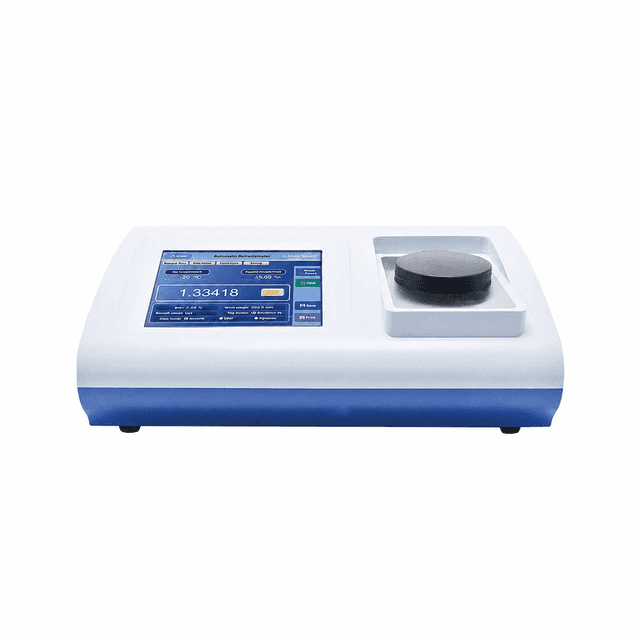
This optical refractometer requires no batteries or electronics, making it more robust for field conditions but requiring visual interpretation of scale readings. Digital units provide numerical displays but depend on power sources and may be less reliable in harsh environments.
What cleaning and maintenance procedures are required?
Clean the daylight plate and cover plate with distilled water after each use, dry with lint-free tissue. Store in a clean, dry environment and verify calibration regularly. The optical system requires no internal maintenance but should be protected from mechanical impact.
Have a question about this product?
Have a question? Just ask.
Send it over and we'll email you a personalized answer — no call, no scheduling.
Prefer to talk it through?
Accessories
Enhance your setup with compatible accessories