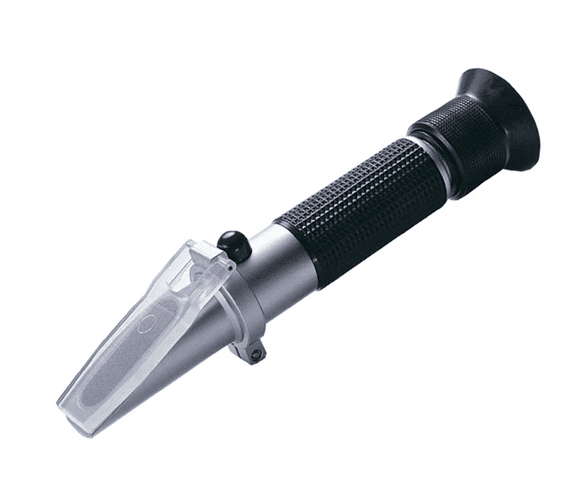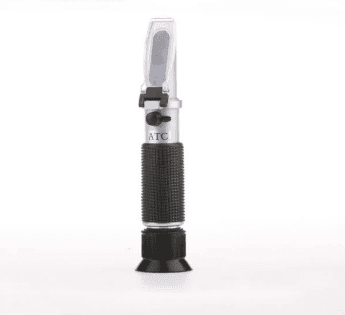
Hand Refractometer
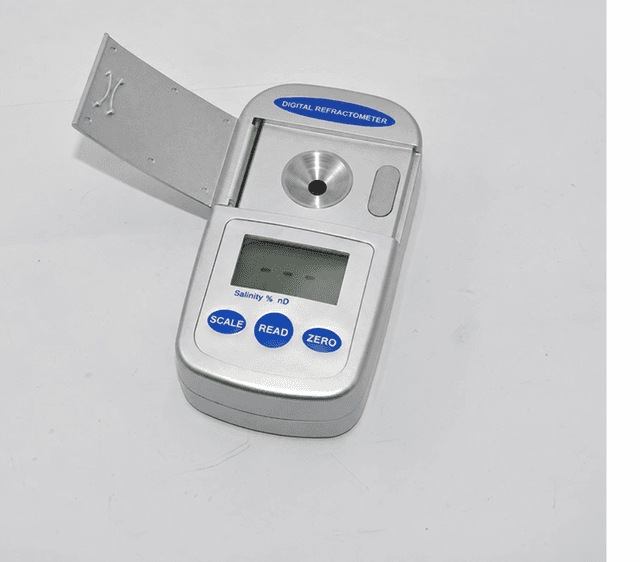
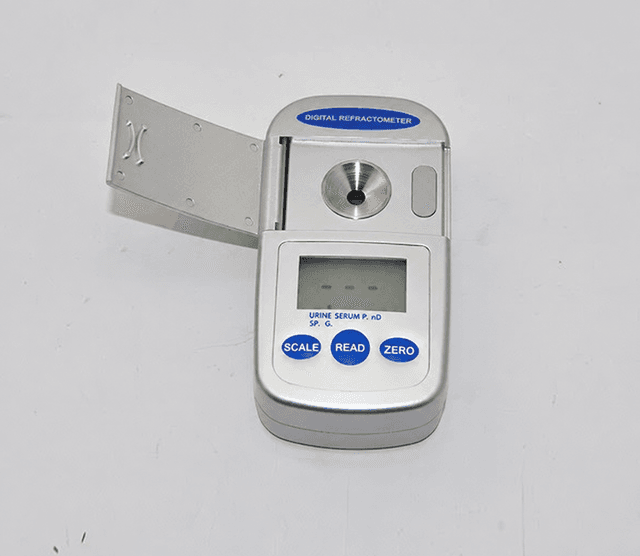
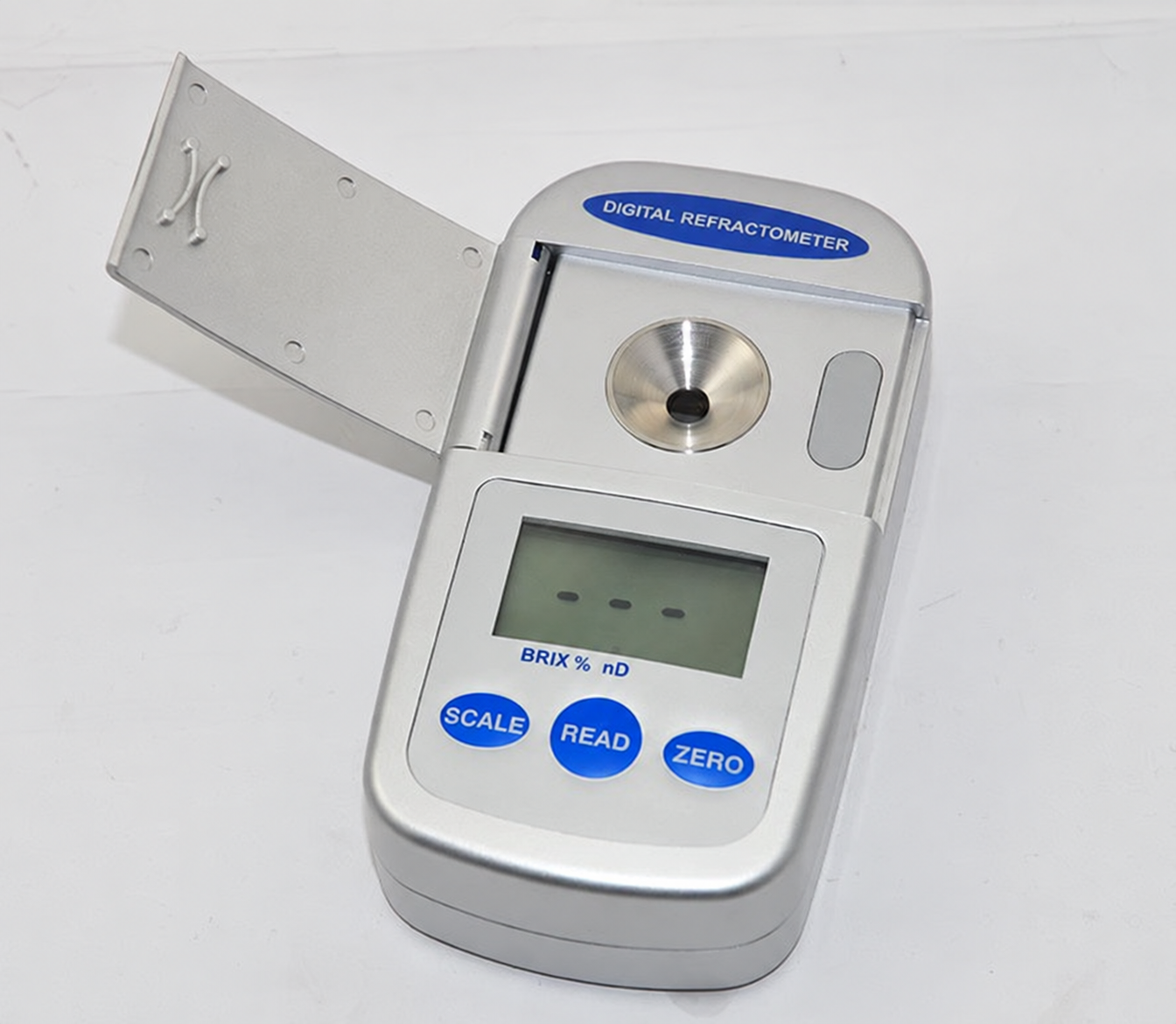
Digital Brix refractometer for measuring soluble solids concentration in aqueous solutions, with refractive index range 1.3330-1.5320 nD and LED-based critical angle measurement system.

Louise Corscadden, PhD
Director of Science · ConductScience
Ask Louise about Hand Refractometer fit, setup, configuration, or quote prep.
Already working with us? Sign in to connect this with My Scientist.
Key Specifications
Full details →- Model fit
- Configured during quote
- SKU family
- CS-LH-REF019
- Shipping box
- 20.0 x 10.0 x 5.0 cm
- Ordering
- Online checkout and quote request available
- Category
- Refractometers
- Build notes
- Confirm accessories, station layout, and support needs before purchase
The Hand Refractometer (CS-LH-REF019) is a digital Brix refractometer designed for quantitative measurement of soluble solids concentration in aqueous solutions. Operating on the critical angle principle, this instrument measures refractive index across the range 1.3330-1.5320 nD, providing direct digital readout of Brix values for sugar content analysis.
The system employs LED light source and photodiode array detection to automatically determine the shadow line position, correlating this measurement to refractive index and displaying results on an integrated LCD display. Applications include analysis of fruit juices, syrups, beverages, water-soluble cutting oils, and other process solutions where soluble solids monitoring is required for quality control or process optimization.
How It Works
Digital refractometry operates on Snell's law and the critical angle principle. When light passes from a dense medium (the instrument's prism) to a less dense medium (the sample), total internal reflection occurs at angles greater than the critical angle. This critical angle is directly related to the refractive index difference between the two media.
The instrument focuses LED light onto the underside of a measurement prism. When a liquid sample contacts the prism surface, light at angles below the critical angle passes through the sample, while light at higher angles undergoes total internal reflection. This creates a distinct shadow line boundary that is detected by a linear photodiode array.
The photodiode array generates electrical signals proportional to the light intensity distribution, allowing precise determination of the shadow line position. Internal software correlates this position to refractive index values and converts to Brix or other concentration units for display on the LCD screen. Temperature compensation algorithms may be applied to account for thermal effects on refractive index measurements.
Features & Benefits
Laboratory refractometerCNT95
- BRIX
RI(nD)
- 1.3330-1.5320
Automation Level
- semi-automated
Brand
- ConductScience
Research Domain
- Analytical Chemistry
- Environmental Monitoring
- Food Science
- Industrial Hygiene
- Materials Science
- Pharmaceutical QC
Shipping weight
- 0.26 lb
Shipping box
- L: 20.0 cm
- W: 10.0 cm
- H: 5.0 cm
| Feature | This Product | Typical Alternative | Advantage |
|---|---|---|---|
| Detection Method | Photodiode array with automated shadow line detection | Manual optical viewing with analog scale reading | Eliminates subjective interpretation and reduces operator-dependent measurement variability. |
| Display Type | Digital LCD readout | Analog scale with manual interpolation required | Provides precise numerical values without estimation errors from scale reading. |
| Light Source | LED illumination system | Daylight or halogen lamp dependent systems | Consistent illumination independent of ambient conditions and reduced heat generation. |
| Measurement Range | Refractive index 1.3330-1.5320 nD | Limited range models often cover narrower spans | Accommodates diverse sample types from dilute solutions to concentrated process fluids. |
| Calibration Method | Digital calibration with distilled water reference | Manual adjustment of analog zero point | Simplified calibration procedure with reduced potential for adjustment errors. |
This digital refractometer combines automated measurement capability with portable design for field and laboratory applications. The LED-photodiode system provides objective readings across a wide refractive index range suitable for diverse aqueous solutions.
Practical Tips
Calibrate using distilled water at the same temperature as your samples to minimize thermal effects on measurement accuracy.
Why: Temperature differences between calibration and measurement can introduce systematic errors in refractive index determination.
Apply sample drops to completely cover the prism surface without creating air bubbles or overflow conditions.
Why: Incomplete coverage or air bubbles create optical discontinuities that interfere with shadow line formation.
Clean the prism surface immediately after each measurement using distilled water and lint-free tissue in gentle wiping motions.
Why: Sample residue can crystallize or polymerize on the surface, affecting subsequent measurement accuracy.
Allow 30 seconds for thermal equilibration between sample application and measurement reading to ensure stable results.
Why: Thermal gradients cause refractive index drift until temperature equilibrium is established.
If readings appear unstable, check for proper sample coverage and eliminate air bubbles by reapplying the sample.
Why: Air interfaces create multiple shadow lines that confuse the photodiode detection system.
Handle the prism assembly carefully to avoid scratching or chipping the optical surface during cleaning and sample application.
Why: Surface damage creates light scattering that degrades measurement precision and may require costly optical component replacement.
Filter samples containing particulates or dilute highly viscous solutions to ensure clear optical interface for measurement.
Why: Suspended particles scatter light and prevent formation of the distinct shadow line required for accurate detection.
Setup Guide
What’s in the Box
- Digital refractometer main unit
- Protective carrying case (typical)
- Calibration pipette (typical)
- Lint-free cleaning cloths (typical)
- User manual and calibration certificate (typical)
- Distilled water for calibration (typical)
Warranty
ConductScience provides standard one-year manufacturer warranty covering defects in materials and workmanship. Technical support includes calibration guidance and troubleshooting assistance for optimal measurement performance.
Compliance
References
Background reading relevant to this product:
What is the measurement accuracy and precision of this refractometer?
Consult product datasheet for specific accuracy and precision specifications. Digital refractometers typically provide better repeatability than analog models due to automated shadow line detection.
Can this instrument measure samples with particulates or high turbidity?
Particulate matter and high turbidity can interfere with shadow line detection. Filter samples or dilute as needed to achieve clear optical interface for reliable measurement.
How often does the instrument require calibration?
Calibrate daily or before each measurement session using distilled water. Perform periodic verification with certified reference standards according to your quality system requirements.
What temperature compensation is provided?
Consult product specifications for temperature compensation range and method. Allow samples and instrument to equilibrate to similar temperatures before measurement.
Can this measure non-aqueous solutions or organic solvents?
The instrument is designed for aqueous solutions. Organic solvents may damage seals or optical components and could fall outside the specified refractive index range.
How does this compare to laboratory benchtop refractometers?
Handheld units offer portability and immediate results but may have lower precision than temperature-controlled benchtop models. Suitable for field testing and routine quality control applications.
What maintenance is required for optimal performance?
Clean prism surface after each use with distilled water and lint-free tissue. Store in protective case and perform regular calibration verification with known standards.
Have a question about this product?
Have a question? Just ask.
Send it over and we'll email you a personalized answer — no call, no scheduling.
Prefer to talk it through?