Caterpillar Y-Maze
Three-arm behavioral maze for assessing spatial learning, working memory, and exploratory behavior in laboratory rodents through spontaneous alternation paradigms.
| Automation Level | manual |
| Species | Mouse, Rat |

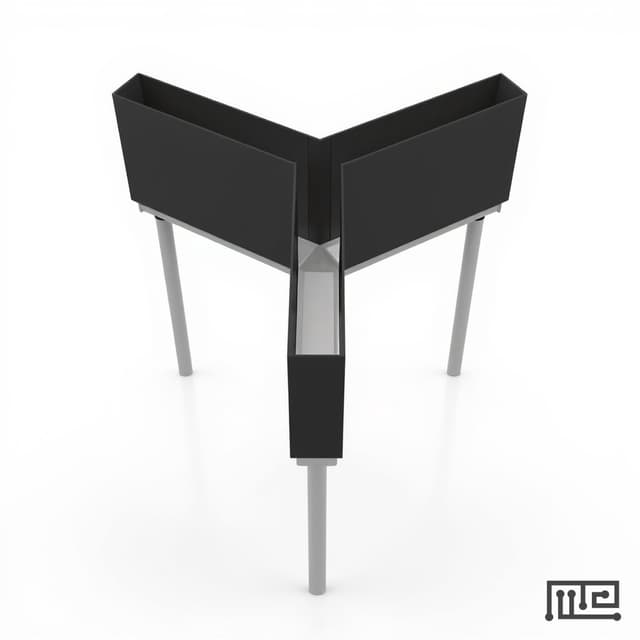
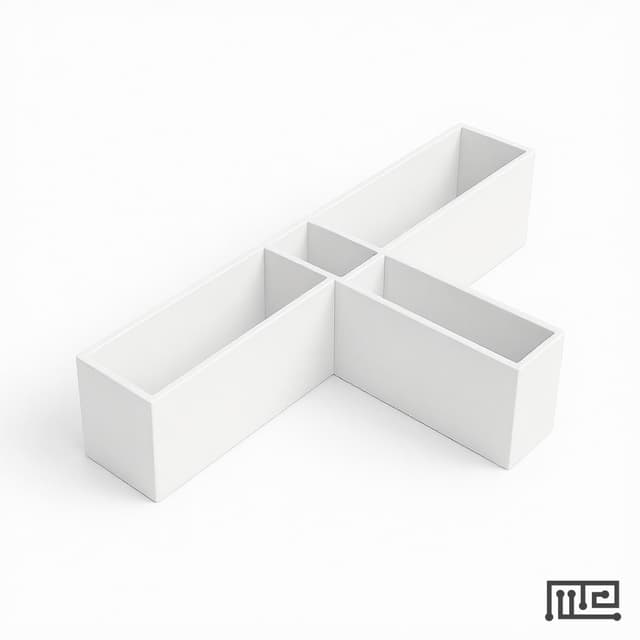
The Caterpillar Y-Maze is a specialized behavioral testing apparatus designed for assessing spatial learning, memory, and exploration behaviors in small laboratory animals. This three-arm maze configuration provides researchers with a controlled environment to evaluate cognitive function through spontaneous alternation tasks and novel arm exploration paradigms.
The Y-maze design leverages the natural exploratory tendencies of rodents to investigate spatial working memory without the need for food deprivation or aversive stimuli. The apparatus enables assessment of hippocampus-dependent spatial memory processes through analysis of arm entry sequences and exploration patterns, making it a valuable tool for neurocognitive research applications.
How It Works
The Y-maze exploits the natural tendency of rodents to explore novel environments through spontaneous alternation behavior. When placed in the maze, animals typically alternate between the three arms rather than returning to recently visited locations, a behavior dependent on intact spatial working memory and hippocampal function.
The testing protocol involves placing the animal in the center of the maze and allowing free exploration for a defined period, typically 5-10 minutes. Researchers record the sequence of arm entries to calculate the alternation percentage, which reflects the animal's ability to remember recently visited locations and make spatial decisions based on working memory.
Successful alternation requires the animal to maintain spatial information about visited arms while navigating, making this paradigm sensitive to hippocampal dysfunction and cognitive impairments associated with aging, disease, or pharmacological interventions.
Features & Benefits
Behavioral Construct
- Spatial Working Memory
- Exploratory Behavior
- Spontaneous Alternation
- Spatial Learning
- Cognitive Function
Automation Level
- manual
Research Domain
- Aging Research
- Anxiety and Depression
- Behavioral Pharmacology
- Learning and Memory
- Neurodegeneration
- Neuroscience
Species
- Mouse
- Rat
Weight
- 6.06 kg
Dimensions
- L: 65.0 mm
- W: 36.0 mm
- H: 27.0 mm
Comparison Guide
| Feature | This Product | Typical Alternative | Advantage |
|---|---|---|---|
| Testing paradigm | Spontaneous alternation without training requirement | Complex spatial tasks often require extensive training protocols | Enables rapid cognitive screening without time-intensive habituation periods |
| Stress level | Low-stress exploration-based assessment | Water-based mazes introduce swimming stress and temperature factors | Isolates cognitive performance from confounding stress-related behavioral changes |
| Session duration | 5-10 minute testing sessions | Multi-day training protocols common in other spatial tasks | Allows high-throughput screening and reduces animal handling requirements |
| Age applicability | Suitable for young to aged animals | Swimming-based tests may be challenging for very young or aged subjects | Permits cognitive assessment across broader age ranges in longitudinal studies |
The Y-maze provides an efficient platform for spatial working memory assessment through natural exploration behaviors, offering advantages in testing speed and subject welfare compared to more complex spatial learning paradigms.
Practical Tips
Verify arm dimensions are identical and central platform provides equal access to prevent structural bias in choice behavior.
Why: Dimensional variations can create preferred pathways that confound cognitive assessment results.
Clean all surfaces thoroughly between subjects using consistent disinfectant to eliminate olfactory trails from previous animals.
Why: Residual scent marks can bias exploration patterns and invalidate spatial memory measurements.
Allow animals to acclimate to the testing room for 30-60 minutes before maze exposure to minimize stress-related behavior changes.
Why: Environmental stress can impair working memory performance and reduce alternation rates below baseline levels.
Record complete arm entry sequences rather than just alternation counts to enable analysis of exploration patterns and revisit behaviors.
Why: Detailed sequence data provides additional insights into spatial strategy use and cognitive processing differences.
If animals show persistent arm preferences, check for environmental asymmetries such as lighting gradients or external visual cues.
Why: Spatial biases indicate experimental confounds that can mask genuine cognitive differences between treatment groups.
Ensure maze height prevents jumping while allowing normal locomotion, and maintain consistent lighting to avoid shadows that could influence movement.
Why: Physical safety and consistent conditions are essential for reliable behavioral measurements and animal welfare.
Setup Guide
What’s in the Box
- Y-maze apparatus components (typical)
- Assembly hardware (typical)
- User manual with testing protocols (typical)
- Cleaning and maintenance guidelines (typical)
Warranty
ConductScience provides standard manufacturer warranty coverage with technical support for behavioral apparatus setup and troubleshooting assistance.
Compliance
References
Background reading relevant to this product:
What is the standard testing duration for Y-maze spontaneous alternation assessment?
Typical testing sessions range from 5-10 minutes, allowing sufficient time for multiple arm entries while maintaining animal engagement and minimizing habituation effects.
How is alternation percentage calculated in Y-maze protocols?
Alternation percentage equals the number of successful alternations divided by total possible alternations (total entries minus 2) multiplied by 100, with chance level at 50%.
What factors can influence spontaneous alternation behavior?
Age, strain differences, lighting conditions, maze cleanliness, handling stress, and time of day can all affect alternation rates and should be controlled across experimental groups.
How does Y-maze performance correlate with other spatial memory tests?
Y-maze alternation often correlates with Morris water maze performance and Barnes maze learning, though each test assesses different aspects of spatial cognition.
What constitutes an arm entry for scoring purposes?
Typically defined as all four paws entering an arm, though some protocols use front paws only. Consistent criteria must be applied across all subjects and sessions.
Can the Y-maze be used for forced alternation protocols?
Yes, by blocking one arm during sample phase and opening all arms during choice phase, researchers can assess delayed spatial alternation and working memory retention.
What is considered normal alternation behavior in healthy rodents?
Healthy adult mice and rats typically show 65-85% alternation rates, significantly above chance level, with values varying by strain, age, and testing conditions.
Have a question about this product?