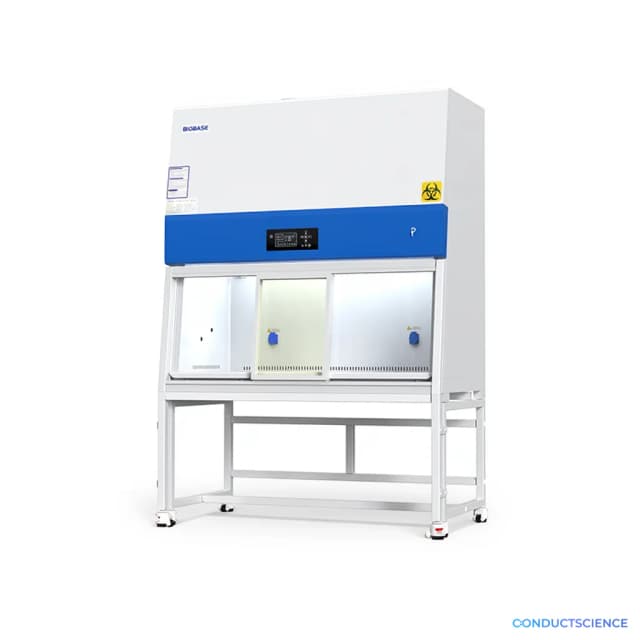
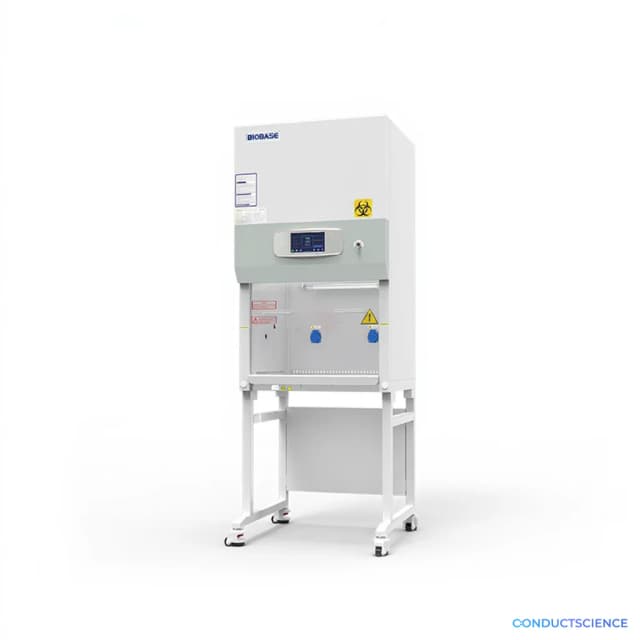
Class II A2 Biological Safety Cabinet EA2-2F
Class II A2 biological safety cabinet with dual ULPA filtration (99.9995% at 0.12μm) providing personnel, product, and environmental protection for microbiological work with BSL-1 through BSL-3 agents.
| Automation Level | semi-automated |
| External Size(W*D*H) | 700*700*2000mm |
| Internal Size(W*D*H) | 600*500*540mm |
| Tested Opening | Safety height 200mm |
| Max Opening | 360mm |
| Inflow Velocity | 0.53±0.025m/s |

The Class II A2 Biological Safety Cabinet EA2-2F provides personnel, product, and environmental protection for microbiological work with BSL-1, BSL-2, and BSL-3 agents. This cabinet incorporates dual ULPA filtration with 99.9995% efficiency at 0.12 micrometers, maintaining sterile work surfaces through laminar downflow air patterns while containing aerosols through negative pressure containment.
The system features precise airflow control with inflow velocity of 0.53±0.025 m/s and downflow velocity of 0.33±0.025 m/s, monitored continuously via LCD display. The 600×500×540mm work chamber accommodates standard laboratory procedures while the tempered glass front window with UV protection allows clear visualization of work surfaces. Filter life indicators and working time displays support preventive maintenance scheduling in laboratory environments.
How It Works
Class II A2 biological safety cabinets operate on the principle of directional airflow containment combined with ULPA filtration. Room air enters through the front opening and is drawn downward by the cabinet's exhaust system, creating an air barrier that prevents contaminated air from escaping the work zone. This inflow air is mixed with recirculated cabinet air that has been ULPA-filtered, creating the laminar downflow pattern across the work surface.
The dual ULPA filter system removes 99.9995% of particles at 0.12 micrometers, including bacterial and viral contaminants. Approximately 70% of the air is recirculated within the cabinet after filtration, while 30% is exhausted to maintain proper containment. The negative pressure within the work chamber relative to the laboratory environment ensures that any aerosols generated during procedures are contained and filtered before release.
Continuous monitoring systems track filter differential pressure, airflow velocities, and operational parameters via LCD display. The tempered glass front window provides physical containment while allowing manipulation access through the 200mm safety opening. UV lamps provide surface decontamination between work sessions.
Features & Benefits
Automation Level
- semi-automated
External Size(W*D*H)
- 700*700*2000mm
Internal Size(W*D*H)
- 600*500*540mm
Tested Opening
- Safety height 200mm
Max Opening
- 360mm
Inflow Velocity
- 0.53±0.025m/s
Downflow Velocity
- 0.33±0.025m/s
ULPA Filter
- Two, 99.9995% efficiency at 0.12μm, filter life indicator
Front Window
- Manual and electric. Tempered glass≥5mm. Anti UV.
Noise
- ≤65dB
LED Lamp
- 8W*2
Illumination
- ≥1000Lux
Consumption
- ≤500W
Socket
- Two, total consumption: 500W
Brand
- ConductScience
Research Domain
- Cancer Research
- Cell Biology
- Clinical Diagnostics
- Immunology
- Microbiology
- Pharmaceutical QC
Display Type
- LCD display: exhaust filter and downflow filter pressure, filter and UV lamp working time, inflow an
Weight
- 172.0 kg
Dimensions
- L: 200.0 mm
- W: 70.0 mm
- H: 70.0 mm
Comparison Guide
| Feature | This Product | Typical Alternative | Advantage |
|---|---|---|---|
| ULPA Filter Efficiency | 99.9995% efficiency at 0.12μm with dual filter system | Entry-level models often provide 99.97% efficiency at 0.3μm | Superior submicron filtration removes smaller viral particles and aerosols for enhanced containment |
| Airflow Monitoring | LCD display with real-time filter pressure and operational hours | Basic models rely on periodic manual measurements | Continuous monitoring enables proactive maintenance and prevents containment failures |
| Window Operation | Both manual and electric front window control | Most cabinets offer only manual sash operation | Electric operation ensures consistent positioning and can integrate with safety interlocks |
| Filter Life Indication | Integrated filter life indicator system | Standard models require manual pressure measurements | Automated monitoring prevents filter breakthrough and optimizes replacement timing |
| UV Integration | Built-in UV lamp with anti-UV window protection | Many models lack integrated UV decontamination | Enables chemical-free surface decontamination between work sessions |
| Work Chamber Size | 600×500×540mm internal dimensions | Compact models often provide smaller work areas | Accommodates standard laboratory equipment and multiple procedure setups |
The EA2-2F combines superior submicron filtration, continuous airflow monitoring, and dual window operation modes in a standard work chamber configuration. The integrated filter life indicators and UV decontamination system reduce maintenance complexity while maintaining consistent containment performance.
Practical Tips
Verify airflow velocities monthly using calibrated anemometer at multiple points across the work opening and exhaust grille.
Why: Consistent airflow patterns ensure proper containment and early detection of filter loading or system degradation.
Monitor filter pressure differentials weekly and document trends rather than waiting for alarm conditions.
Why: Gradual pressure increases indicate filter loading and allow planned replacement before containment is compromised.
Allow cabinet to operate for 15 minutes before beginning work and maintain steady workflow patterns to minimize airflow disruption.
Why: Stable airflow conditions optimize containment performance and prevent contamination from air turbulence.
Keep work materials at least 4 inches from front and rear work chamber boundaries to maintain proper airflow patterns.
Why: Equipment placement outside airflow zones can create dead spaces and compromise containment effectiveness.
If LCD display shows unusual pressure readings, immediately stop work and check for obstructions in air intake grilles.
Why: Blocked grilles alter airflow patterns and can lead to containment failure or equipment damage.
Use slow, deliberate movements within the work chamber and avoid rapid arm motions that disrupt laminar flow.
Why: Air turbulence can carry contaminants across containment boundaries and compromise both product and personnel protection.
Clean work surfaces with appropriate disinfectant after each use and run UV decontamination cycle between different projects.
Why: Surface decontamination prevents cross-contamination between experiments and maintains sterile work conditions.
Document filter pressure readings and operational hours in laboratory records to establish baseline performance trends.
Why: Historical data enables predictive maintenance scheduling and provides evidence of proper containment during regulatory inspections.
Setup Guide
What’s in the Box
- Class II A2 Biological Safety Cabinet EA2-2F main unit
- Power cord and electrical connections
- User manual and operational procedures
- Filter installation documentation
- Calibration certificate (typical)
- Maintenance schedule template (typical)
Warranty
ConductScience provides comprehensive warranty coverage for manufacturing defects and technical support for installation and operational guidance. Standard coverage includes parts and service for the first year of operation with extended warranty options available.
Compliance
References
Background reading relevant to this product:
What is the difference between Class II A2 and other biological safety cabinet types?
Class II A2 cabinets exhaust 30% of air through ULPA filters while recirculating 70%, suitable for work with microorganisms and minute amounts of toxic chemicals. Unlike Class II B cabinets, A2 models can recirculate air and do not require hard ducting to building exhaust systems.
How do I verify proper airflow performance?
Use calibrated anemometer to measure inflow velocity at 0.53±0.025 m/s and downflow velocity at 0.33±0.025 m/s. Monitor LCD display for filter pressure differentials and ensure readings remain within normal operating ranges indicated by manufacturer specifications.
What types of work require Class II A2 containment?
BSL-1 and BSL-2 microorganisms, cell culture work, sterility testing, and procedures generating aerosols from infectious materials. Suitable for work with minute amounts of hazardous chemicals that do not interfere with airflow patterns.
How often do ULPA filters require replacement?
Filter replacement depends on usage intensity and laboratory conditions, typically 12-18 months. The filter life indicator system monitors pressure differential and operational hours to determine optimal replacement timing based on actual performance rather than arbitrary schedules.
Can this cabinet handle volatile chemicals or chemotherapy drugs?
Limited chemical work is acceptable for volatile chemicals at low concentrations that do not affect airflow patterns. For significant chemical work or chemotherapy drug preparation, consult product datasheet for specific chemical compatibility and consider Class II B or Class III cabinets.
What maintenance procedures are required?
Daily surface decontamination, weekly UV lamp cycle verification, monthly airflow velocity checks, and quarterly filter pressure monitoring. Annual certification by qualified technicians includes airflow verification, filter integrity testing, and electrical safety checks.
How does the electric front window operation work?
The cabinet features both manual and electric window controls allowing precise positioning between safety height of 200mm and maximum opening of 360mm. Electric operation provides consistent positioning and can integrate with automatic safety shutoffs during alarm conditions.
What happens if power fails during operation?
Power interruption stops airflow and containment, requiring immediate cessation of work and closure of front window. Upon power restoration, allow cabinet to reach operational parameters before resuming work and verify filter pressure readings return to normal ranges.
Have a question about this product?
Accessories
Enhance your setup with compatible accessories