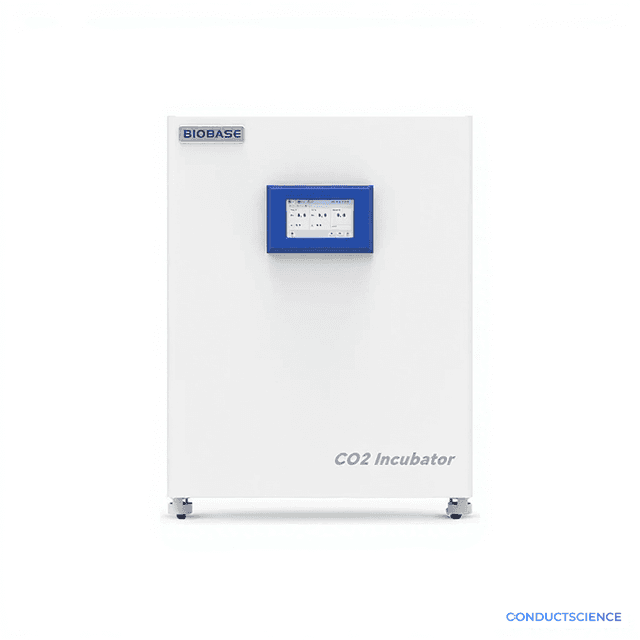
Advanced CO2 Cell Incubators
Benchtop CO2 incubators with infrared sensing, air jacket heating, and steam sterilization for precise mammalian cell culture environments.
| Heating | Air jacket |
| internal_dimensions | 338×392×442 mm |
| co2_range | 0-20% |
| co2_control_resolution | 0.1% |
| temperature_fluctuation | ≤ ±0.2℃ (at 37℃) |
| temperature_uniformity | ≤ ±0.3℃ (at 37℃) |
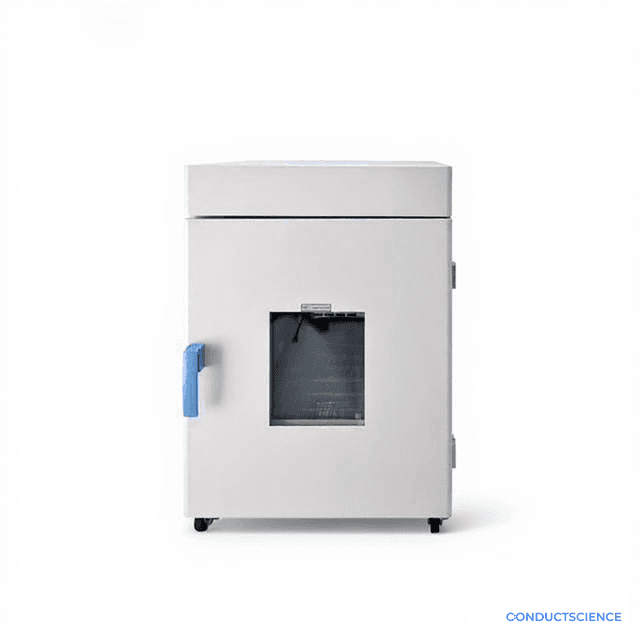
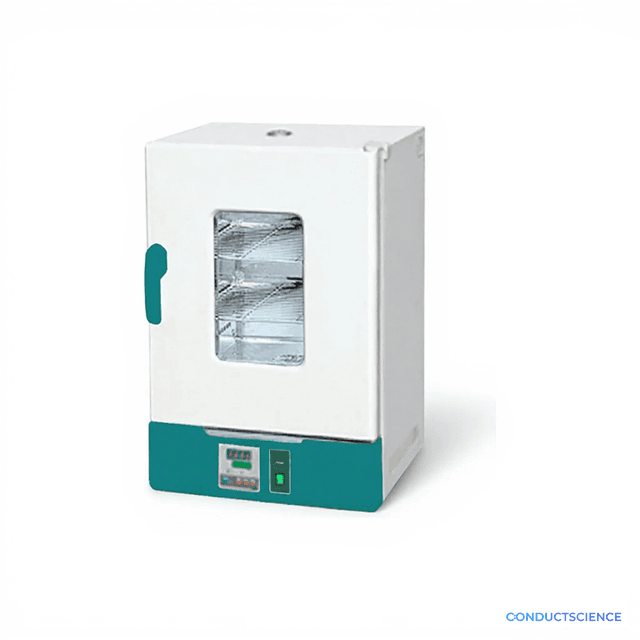
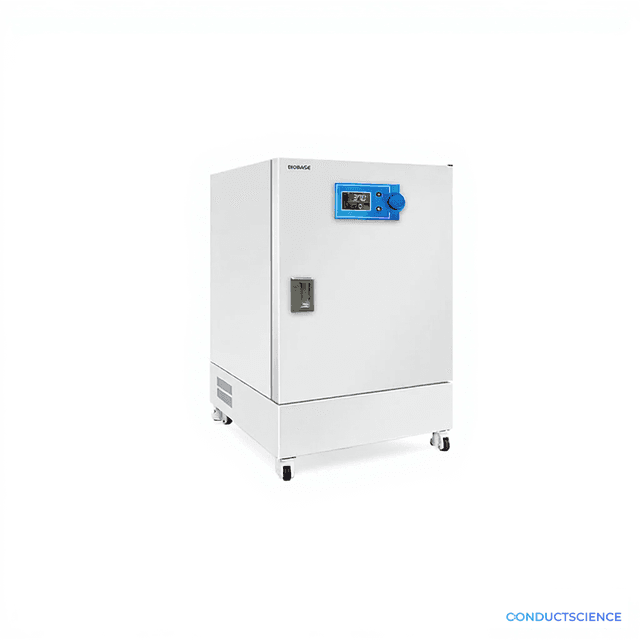
The Advanced CO2 Cell Incubators provide controlled environments for mammalian cell and tissue culture applications requiring precise temperature, CO2, and humidity regulation. These benchtop incubators utilize air jacket heating technology with infrared CO2 sensing to maintain physiological conditions essential for cell viability and growth. Available in three capacity configurations (50L, 80L, and 160L), each unit features dual-door design, adjustable shelving, and integrated data logging capabilities.
The incubators maintain temperature uniformity within ±0.3°C at 37°C and CO2 control resolution of 0.1% across the 0-20% range. Steam sterilization capability at 90°C provides decontamination between experiments. Real-time monitoring via LCD touchscreen interface with USB data export supports protocol documentation and quality assurance workflows. The 3-liter water reservoir ensures sustained humidity levels between 90-99% RH for extended culture periods.
How It Works
The Advanced CO2 Cell Incubators employ air jacket heating technology to achieve uniform temperature distribution throughout the chamber. Heat is circulated through an air jacket surrounding the culture chamber, providing gentle, even warming that minimizes temperature fluctuations and hot spots that could affect cell viability. The system maintains temperature uniformity within ±0.3°C at 37°C through continuous circulation and precise thermostat control.
CO2 regulation utilizes infrared sensing technology to monitor and control atmospheric composition from 0-20% with 0.1% resolution. The infrared sensor directly measures CO2 concentration without consuming the gas, providing stable, long-term monitoring capability. This non-consumptive detection method eliminates sensor drift and contamination issues associated with thermal conductivity sensors. The dual-door configuration minimizes atmospheric disturbance during sample access, with an inner door maintaining environmental stability while the outer door provides primary chamber access.
Humidity control is achieved through a 3-liter water reservoir that generates water vapor to maintain relative humidity between 90-99%. The large reservoir capacity ensures extended operation without frequent refilling, while the steam sterilization capability at 90°C provides effective decontamination between experiments without chemical agents.
Features & Benefits
Heating
- Air jacket
internal_dimensions
- 338×392×442 mm
co2_range
- 0-20%
co2_control_resolution
- 0.1%
temperature_fluctuation
- ≤ ±0.2℃ (at 37℃)
temperature_uniformity
- ≤ ±0.3℃ (at 37℃)
relative_humidity
- 90%≤relative humidity≤99%
ambient_temperature
- 18-30℃
ambient_relative_humidity
- ≤80%
timing_range
- 999h or continuous
water_reservoir_capacity
- 3 liters
sterilization_temperature
- 90℃
sterilization_humidity
- 95%≤humidity≤99%RH
ph_maintenance
- 7.4
shelves
- 2 adjustable shelves with holes
sensor_type
- infrared sensor
alarms
- audible and visual alarm, over-temperature alarm, CO2 concentration alarm
data_storage
- USB port
door_configuration
- inner door and external door
Capacity
- 50L
- 80L
- 160L
Automation Level
- semi-automated
CO2 Uniformity
- 0.2vol%
Internal Dimensions (W×D×H)
- 308×392×442mm
External Dimensions (W×D×H)
- 551×713×765mm
Material
- cold-rolled steel with painting
- Stainless Steel
Temperature Range
- +5 to 60°C
Display Type
- LCD
Weight
- 60kg
Dimensions
- 632 mm x 575 mm x 830 mm
Research Domain
- Cancer Research
- Cell Biology
- Developmental Biology
- Immunology
- Microbiology
- Pharmaceutical QC
Power/Voltage
- 300W
Weight
- 132.28 lbs
Dimensions
- L: 30.12 in
- W: 28.07 in
- H: 21.69 in
Comparison Guide
| Feature | This Product | Typical Alternative | Advantage |
|---|---|---|---|
| CO2 Detection Method | Infrared sensor with 0.1% resolution | Thermal conductivity sensors with higher drift rates | Non-consumptive detection eliminates sensor drift and provides more stable long-term CO2 monitoring |
| Temperature Uniformity | ±0.3°C uniformity at 37°C with air jacket heating | Direct heating methods often show greater temperature variation | Air jacket technology eliminates hot spots that could damage sensitive cell cultures |
| Door Configuration | Dual-door system with inner and outer doors | Single door design in entry-level models | Minimizes atmospheric disturbance during sample access while maintaining environmental stability |
| Sterilization Method | Steam sterilization at 90°C | Chemical decontamination or UV sterilization | Chemical-free decontamination eliminates toxic residues that could affect cell viability |
| Data Logging | USB data export with LCD touchscreen interface | Basic analog displays without data recording | Automated documentation supports quality assurance and regulatory compliance requirements |
| Humidity Control | 3-liter water reservoir maintaining 90-99% RH | Smaller reservoirs requiring more frequent refilling | Extended operation periods without maintenance interruption for consistent culture conditions |
The Advanced CO2 Cell Incubators combine infrared CO2 sensing, air jacket heating, and dual-door design to provide superior environmental control compared to entry-level units. The steam sterilization capability and comprehensive data logging support both research applications and quality assurance requirements in regulated environments.
Practical Tips
Verify CO2 concentration using an independent gas analyzer quarterly to ensure infrared sensor accuracy.
Why: Sensor drift over time can affect cell culture conditions and experimental reproducibility.
Clean the water reservoir weekly and replace with fresh distilled water to prevent microbial growth and mineral deposits.
Why: Contaminated water can introduce pathogens and affect humidity control performance.
Allow the incubator to stabilize for at least 24 hours after any parameter changes before introducing cultures.
Why: Full environmental equilibration ensures stable conditions for optimal cell growth and experimental consistency.
If CO2 levels fluctuate, check gas line connections and verify adequate CO2 supply pressure before suspecting sensor issues.
Why: Gas supply problems are more common than sensor failures and easier to correct.
Export data logs regularly via USB and archive with experimental records for complete protocol documentation.
Why: Environmental data provides crucial metadata for interpreting results and meeting quality assurance requirements.
Test alarm functions monthly by temporarily adjusting set points to trigger temperature and CO2 alerts.
Why: Functional alarms prevent culture loss from undetected environmental deviations during extended experiments.
Position culture vessels with adequate spacing on shelves to allow air circulation throughout the chamber.
Why: Proper airflow ensures uniform environmental conditions across all cultures and prevents localized variations.
Perform steam sterilization cycles monthly even during continuous use to prevent biofilm formation on interior surfaces.
Why: Regular decontamination maintains sterile conditions and prevents cross-contamination between experiments.
Setup Guide
What’s in the Box
- Advanced CO2 Cell Incubator main unit
- 2 adjustable shelves with holes
- Power cord
- CO2 gas connection tubing (typical)
- User manual and operation guide
- Calibration certificate (typical)
- USB data cable (typical)
Warranty
ConductScience provides a standard one-year manufacturer warranty covering parts and labor, with comprehensive technical support for installation, calibration, and troubleshooting assistance.
Compliance
References
Background reading relevant to this product:
What is the CO2 recovery time after door opening?
The dual-door design minimizes CO2 loss, with the infrared sensor providing rapid detection and gas injection to restore set points. Consult product datasheet for specific recovery time specifications.
Can the incubator maintain sterile conditions during long-term culture?
The steam sterilization capability at 90°C provides effective decontamination between uses, while the sealed chamber design and HEPA filtration (if equipped) maintain sterile conditions during operation.
What data formats are available for export via USB?
The system provides data logging with USB export capability. Consult product documentation for specific file formats and data parameters recorded.
How does air jacket heating compare to water jacket systems?
Air jacket heating provides faster temperature recovery, eliminates contamination risk from water leaks, and offers easier maintenance compared to water jacket systems, while maintaining comparable temperature uniformity.
What is the recommended calibration frequency?
Temperature and CO2 sensors should be calibrated according to laboratory quality standards, typically annually or as required by institutional protocols. The infrared CO2 sensor is more stable than thermal conductivity types.
Can multiple incubators be networked for centralized monitoring?
Individual units feature USB data export capability. Consult technical specifications for networking options and compatible monitoring software systems.
What is the maximum shelf loading capacity?
The adjustable shelves with holes are designed for standard culture vessels. Consult product datasheet for specific weight limits and recommended loading configurations.
How does the alarm system function during power outages?
The unit features audible and visual alarms for temperature and CO2 deviations. Battery backup for alarm systems during power interruption should be verified in product specifications.
Have a question about this product?
Upgrade Options