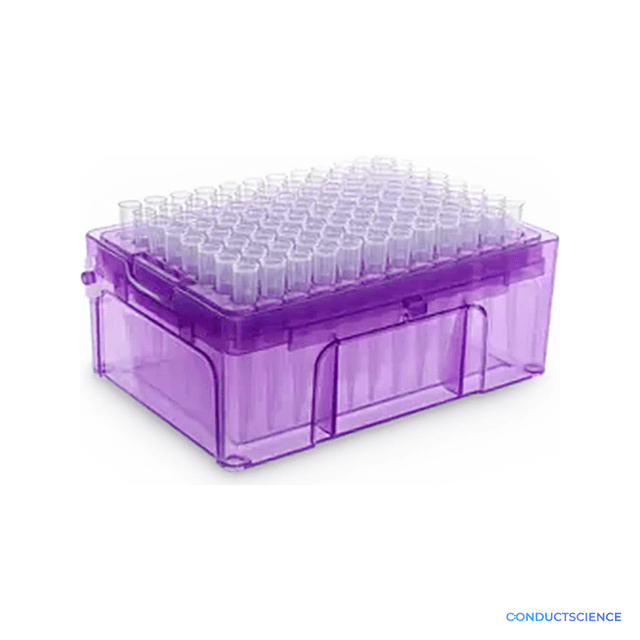
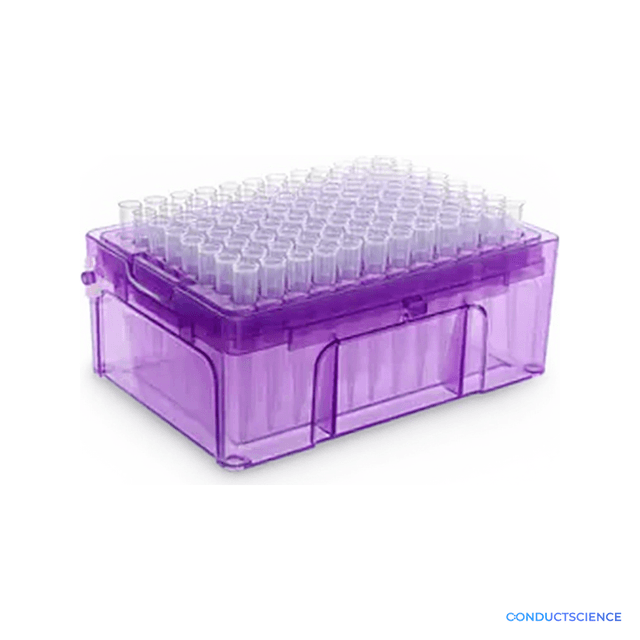
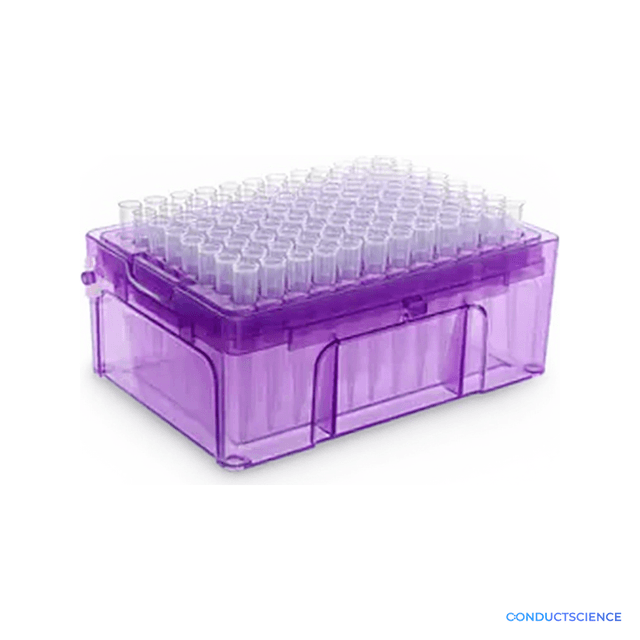
ConductScience Microscope Slides, Positive Charged, 25x75mm (Pack of 15)
$48.00 per unit | 15 units per pack Bulk pricing: Pack of 15 at $720.00 ($48.00 per unit)

ConductScience Microscope Slides with positive charge coating provide enhanced adhesion properties for immunohistochemistry and histological applications. The 25x75mm glass slides feature a frosted end for sample identification and labeling, with positively charged surface treatment to improve tissue section adhesion during processing and staining procedures.
The positive charge coating electrostatically attracts negatively charged tissue components, reducing section loss during multiple wash steps common in IHC protocols. These slides are designed for standard brightfield and fluorescence microscopy applications where reliable tissue retention is critical for accurate morphological and immunological analysis.
How It Works
Positively charged microscope slides utilize electrostatic surface modification to enhance tissue adhesion through ionic interactions. The glass surface is treated with positively charged coating materials that create an electrostatic attraction to negatively charged cellular components, including nucleic acids, proteins, and cell membranes.
This electrostatic adhesion mechanism provides superior tissue retention compared to standard glass slides, particularly during the multiple washing and incubation steps required in immunohistochemical protocols. The positive charge distribution across the slide surface ensures uniform tissue attachment while maintaining optical clarity for microscopic examination.
The frosted end provides a roughened surface area for mechanical labeling with pencil or pen, allowing for permanent sample identification that remains legible throughout processing procedures.
Features & Benefits
Research Domain
- Cancer Research
- Cell Biology
- Developmental Biology
- Histopathology
- Immunology
- Neuroscience
Weight
- 4.41 kg
Dimensions
- L: 2952.76 mm
- W: 984.25 mm
- H: 15.1 mm
Comparison Guide
| Feature | This Product | Typical Alternative | Advantage |
|---|---|---|---|
| Surface Charge Treatment | Positive charge coating for electrostatic adhesion | Standard glass or poly-L-lysine coating | Electrostatic adhesion provides more consistent tissue retention across diverse sample types compared to mechanical or protein-based adhesion methods. |
| Labeling Area | Frosted end for permanent identification | Varies by manufacturer - some offer plain glass ends | Frosted surface allows reliable labeling that withstands chemical processing and handling throughout staining protocols. |
| Slide Dimensions | Standard 25x75mm format | Varies by application - some specialty sizes available | Standard dimensions ensure compatibility with existing microscopy equipment and storage systems without workflow modifications. |
| Glass Substrate Quality | Optical quality glass for clear visualization | Lower grades may have optical imperfections | High optical clarity enables accurate morphological assessment and reliable imaging for documentation and analysis. |
These positively charged slides offer reliable tissue adhesion through electrostatic surface treatment while maintaining standard dimensions and optical quality. The frosted end labeling area provides practical sample identification capabilities for laboratory workflow management.
Practical Tips
Handle slides by the edges to avoid contaminating the charged surface with oils or residues from gloves.
Why: Surface contamination can reduce charge effectiveness and compromise tissue adhesion.
Store slides in original packaging with desiccant to prevent moisture absorption and charge dissipation.
Why: Moisture can neutralize surface charge and reduce adhesion performance over time.
Allow tissue sections to air dry completely before proceeding with staining protocols.
Why: Proper drying ensures maximum electrostatic contact between tissue and charged surface.
If sections detach during processing, check slide storage conditions and consider reducing wash agitation.
Why: Charge dissipation or excessive mechanical stress can overcome electrostatic adhesion forces.
Use consistent section thickness and mounting pressure to ensure uniform adhesion across samples.
Why: Variable contact with the charged surface can lead to inconsistent staining results and section loss.
Follow standard laboratory safety procedures for glass handling and disposal of processed slides.
Why: Glass slides pose cut hazards and may contain biological or chemical contaminants after use.
Setup Guide
What’s in the Box
- Positively charged microscope slides (quantity varies by pack size)
- Product documentation and specifications (typical)
Warranty
ConductScience provides standard warranty coverage for manufacturing defects, with technical support available for application guidance and troubleshooting.
Compliance
References
Background reading relevant to this product:
What is the advantage of positively charged slides over standard glass slides?
Positive charge coating provides electrostatic adhesion that significantly reduces tissue section loss during multiple wash steps in immunohistochemical protocols, particularly important for delicate or poorly adherent tissues.
Are these slides compatible with automated staining systems?
Yes, the standard 25x75mm dimensions ensure compatibility with most automated immunostainers and slide processing equipment.
Can these slides be used for fluorescence microscopy?
Yes, the optical quality glass substrate maintains clarity for both brightfield and fluorescence applications without interfering with signal detection.
What labeling methods work on the frosted end?
Pencil, permanent markers, and laboratory labeling pens provide durable identification that remains legible through processing procedures.
How should these slides be stored to maintain charge properties?
Store in dry conditions in original packaging to prevent charge dissipation and surface contamination that could affect adhesion performance.
Are special mounting media required with charged slides?
Standard aqueous and organic mounting media are compatible, though the positive charge may slightly affect ionic mounting solutions.
Have a question about this product?
Upgrade Options


Related Products