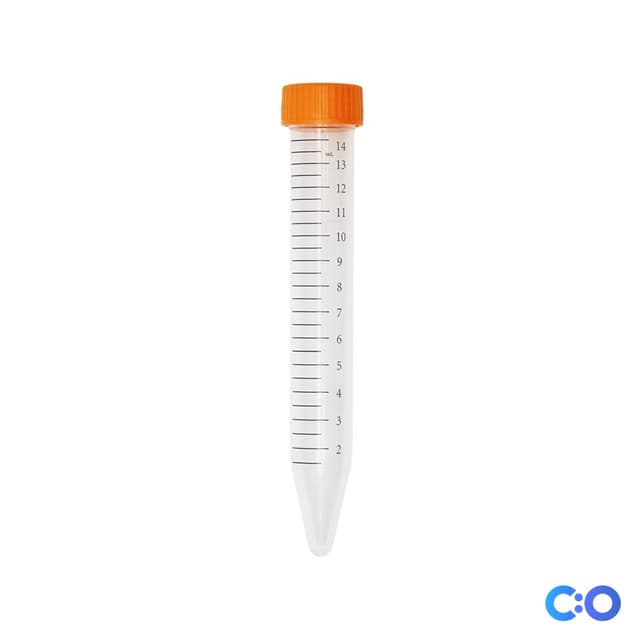
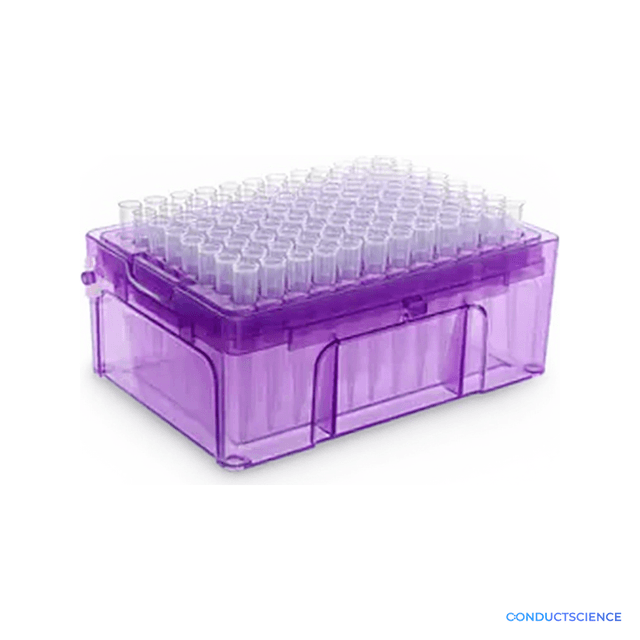
ConductScience PCR Tubes 0.2mL, Flat Cap, Clear (Case of 20)
$32.00 per unit | 20 units per pack Bulk pricing: Case of 20 at $640.00 ($32.00 per unit)

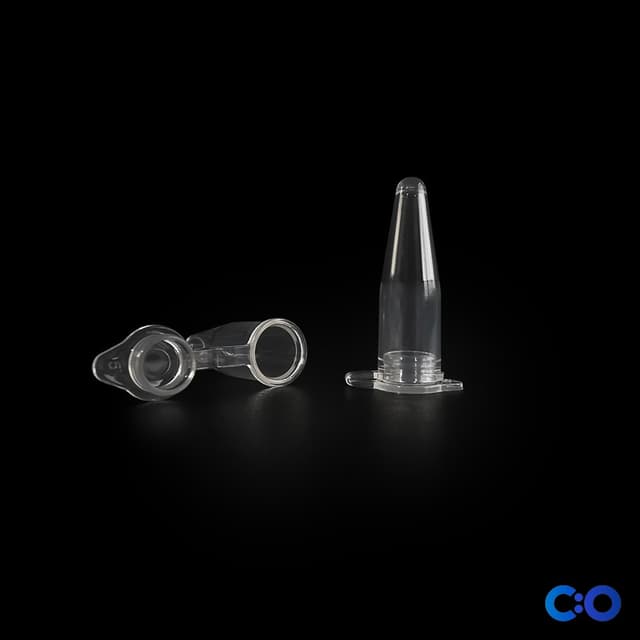
The ConductScience PCR Tubes 0.2mL with flat cap provide essential reaction vessels for polymerase chain reaction applications. These thin-wall polypropylene tubes are designed for optimal thermal conductivity and clear optical detection in standard thermal cyclers. The ultra-clear construction enables real-time monitoring of fluorescent reporter dyes during qPCR and endpoint detection protocols.
Each tube is manufactured from high-grade polypropylene and certified DNase/RNase free to prevent nucleic acid contamination. The 0.2mL volume accommodates standard reaction volumes while the thin-wall design ensures rapid thermal equilibration during cycling. Compatible with all standard thermal cycler blocks and formats commonly used in molecular biology laboratories.
How It Works
PCR tubes function as reaction vessels that contain all components necessary for DNA amplification through thermal cycling. The polymerase chain reaction relies on repeated cycles of denaturation (94-98°C), primer annealing (50-65°C), and extension (72°C) to exponentially amplify target DNA sequences. The thin-wall construction of these tubes ensures rapid heat transfer from the thermal cycler block to the reaction mixture, enabling precise temperature control throughout each cycle.
The ultra-clear polypropylene material provides excellent optical properties for real-time PCR applications. During qPCR, fluorescent reporter molecules increase proportionally to amplicon concentration, and the clear tube walls allow unimpeded detection by the thermal cycler's optical system. The flat cap design provides a secure seal while accommodating various thermal cycler formats and preventing evaporation during extended cycling protocols.
Features & Benefits
Research Domain
- Clinical Diagnostics
- Environmental Monitoring
- Food Science
- Microbiology
- Molecular Biology
- Pharmaceutical QC
Weight
- 3.62 kg
Dimensions
- L: 21.1 mm
- W: 17.6 mm
- H: 14.1 mm
Comparison Guide
| Feature | This Product | Typical Alternative | Advantage |
|---|---|---|---|
| Wall Thickness | Thin-wall construction for rapid thermal transfer | Standard wall tubes may have slower thermal equilibration | Ensures uniform heating throughout reaction volume for consistent amplification kinetics |
| Optical Clarity | Ultra-clear polypropylene for fluorescence detection | Standard tubes may have limited optical transmission | Enables accurate real-time fluorescence monitoring with minimal background interference |
| Cap Design | Flat cap configuration | Some models use domed or attached caps | Provides better compatibility with automated liquid handling and thermal cycler systems |
| Contamination Control | Certified DNase/RNase free | Not all suppliers provide nuclease-free certification | Prevents nucleic acid degradation that could compromise PCR specificity and reproducibility |
| Volume Capacity | 0.2mL working volume | Entry-level options may be limited to smaller volumes | Accommodates standard reaction volumes while minimizing reagent waste and thermal mass |
These PCR tubes combine thin-wall construction for rapid thermal transfer with ultra-clear optics for fluorescence detection. The flat cap design and DNase/RNase free certification provide reliable performance for both standard and real-time PCR applications.
Practical Tips
Pre-cool tubes on ice before adding temperature-sensitive components like DNA polymerase.
Why: Prevents enzyme degradation and maintains reaction component stability during setup.
Avoid overfilling tubes beyond 50μL to ensure proper thermal contact with cycler block.
Why: Larger volumes may experience thermal gradients that affect amplification efficiency and reproducibility.
Briefly centrifuge loaded tubes before cycling to eliminate air bubbles.
Why: Air bubbles can create thermal barriers and cause uneven heating during temperature cycling.
Inspect caps for proper sealing before each run to prevent evaporation.
Why: Sample evaporation changes reagent concentrations and can lead to reaction failure or inconsistent results.
If amplification is inconsistent, verify thermal cycler block temperature calibration.
Why: Even minor temperature deviations can significantly impact polymerase activity and primer annealing specificity.
Handle tubes with powder-free gloves to prevent DNA contamination.
Why: Skin cells and residual DNA can introduce template contamination leading to false positive results.
Store opened tube packages in clean, dry conditions with caps secured.
Why: Exposure to humidity or contaminants can compromise the DNase/RNase free status.
Use consistent pipetting techniques and avoid introducing bubbles when loading reactions.
Why: Uniform sample preparation is critical for reproducible thermal transfer and optical detection.
Setup Guide
What’s in the Box
- 1000 PCR tubes, 0.2mL capacity (typical)
- 1000 flat caps (typical)
- Certificate of analysis (typical)
Warranty
ConductScience provides a standard quality guarantee on consumable products with technical support for application-specific questions and troubleshooting.
Compliance
References
Background reading relevant to this product:
What thermal cycling temperature range can these tubes withstand?
Consult product datasheet for specific temperature specifications. Standard PCR tubes typically handle cycling from -20°C to 110°C, covering all standard PCR protocol requirements.
Are these tubes compatible with automated liquid handling systems?
Yes, the flat cap design and standard dimensions are compatible with most automated pipetting systems and thermal cycler robotics platforms.
How do the optical properties compare to glass or other materials?
The ultra-clear polypropylene provides excellent optical clarity for fluorescence detection with minimal background interference, suitable for most qPCR applications.
What is the maximum centrifuge speed these tubes can handle?
Consult product datasheet for specific centrifugation limits. Standard 0.2mL PCR tubes typically handle brief centrifugation up to 10,000-15,000 x g for reaction mixing.
Do these tubes require special storage conditions?
Store at room temperature in original packaging away from direct sunlight. Maintain clean, dry conditions to preserve DNase/RNase free status.
Can these tubes be reused or autoclaved?
These are single-use consumables. Autoclaving may compromise optical clarity and dimensional stability, potentially affecting thermal cycler performance.
What primer annealing temperatures work best with the thin-wall design?
The thin-wall construction provides rapid thermal equilibration suitable for any annealing temperature. Primer Tm calculations remain standard regardless of tube wall thickness.
Have a question about this product?
Related Products