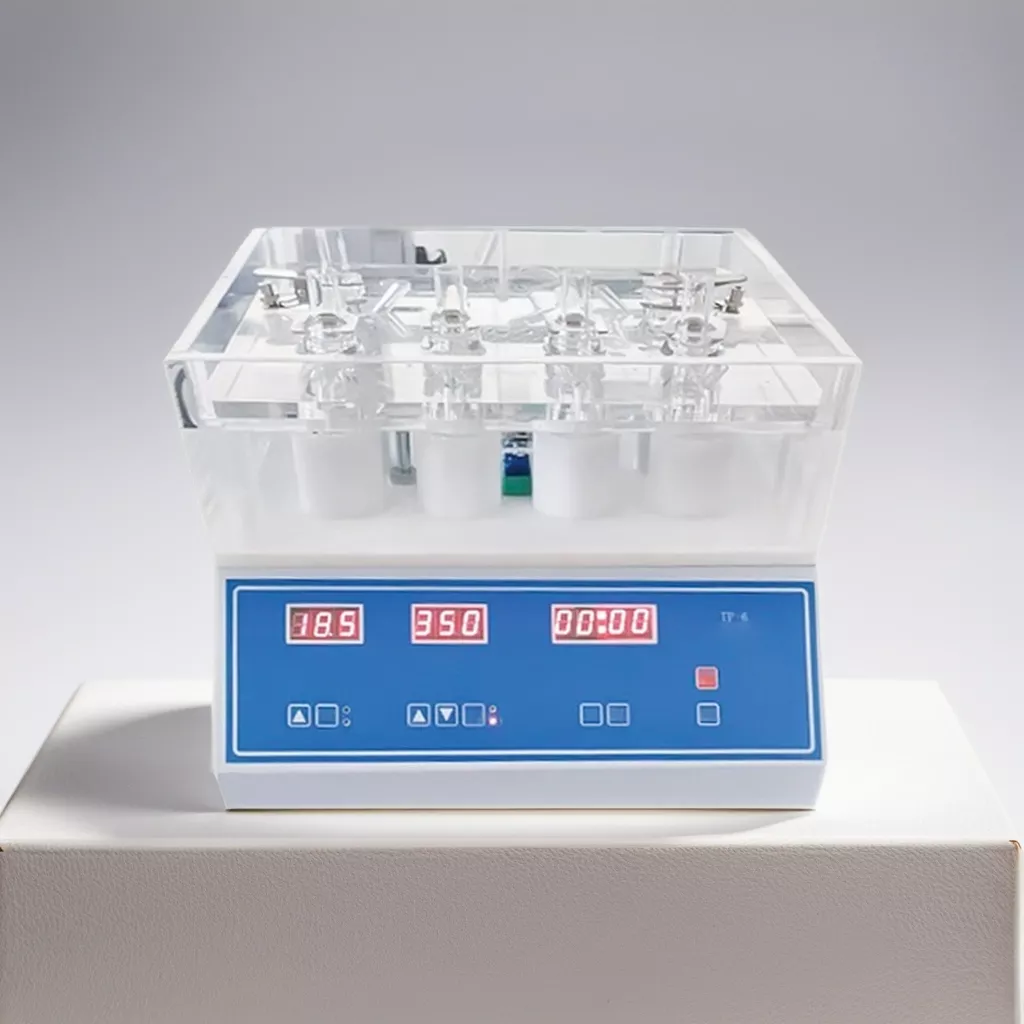
Diffusion Cell Apparatus
Six-position diffusion cell system for in vitro permeation and dissolution testing with temperature control, magnetic stirring, and membrane accommodation up to 2 mm thickness.
| number_of_cells | 6 |
| cell_options | 15 ml Vertical Cells (Standard), 10 ml Vertical Cell, 5 ml Horizontal Cells (optional) |
| stirring_positions | 6 |
| transdermal_cups | 6 |
| membrane_thickness_max | 2mm |
| cell_type | Unjacketed (Vertical / Horizontal) |
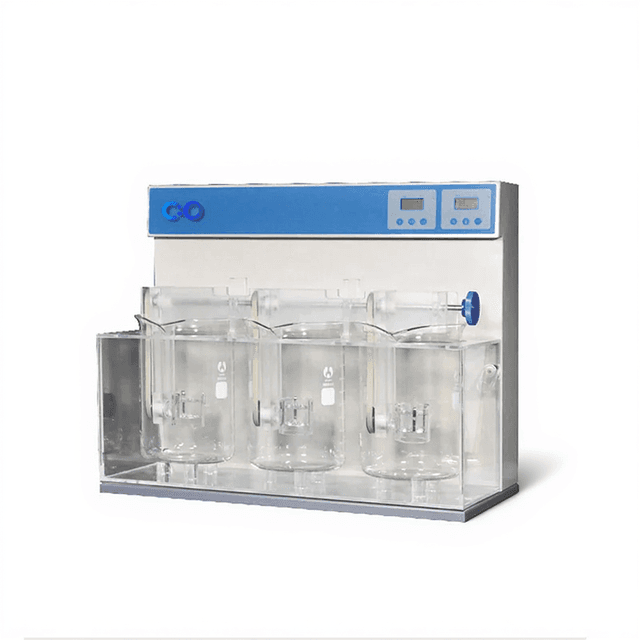
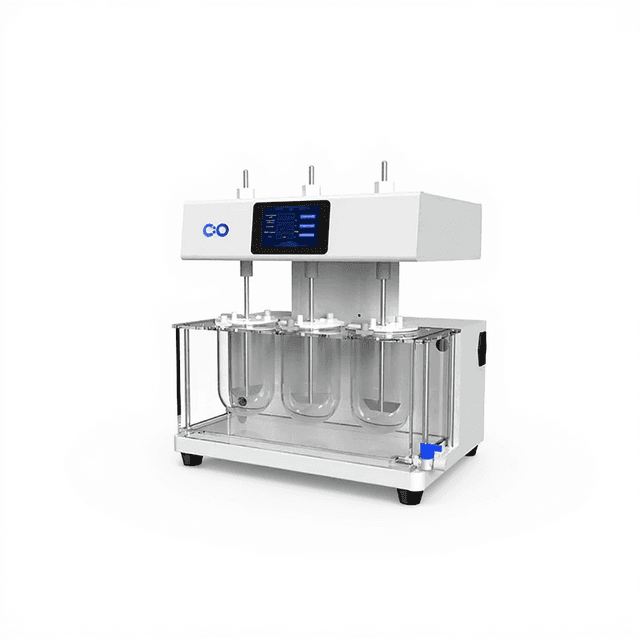
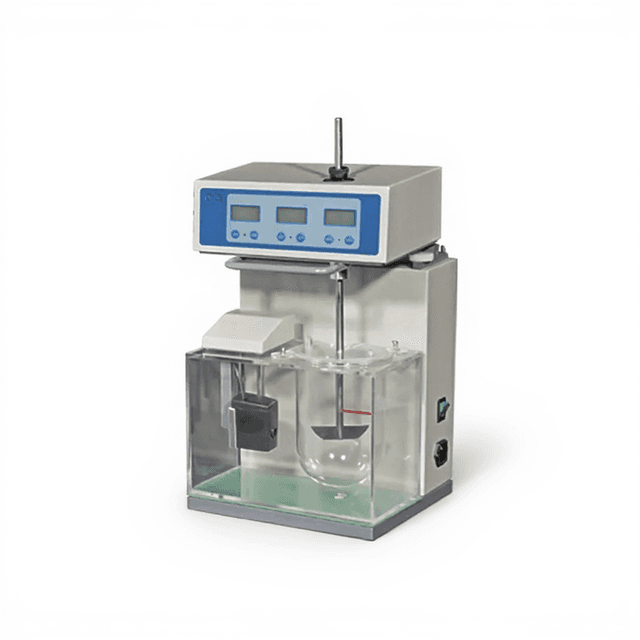
The Diffusion Cell Apparatus is a six-position system engineered for in vitro permeation and dissolution testing of pharmaceutical formulations, cosmetic products, and semisolid preparations. The system accommodates Franz-type diffusion studies with individual 15 ml capacity cells (standard configuration), each equipped with dedicated magnetic stirring and temperature-controlled water circulation. Membrane-based diffusion studies support maximum membrane thickness of 2 mm, enabling evaluation of drug release kinetics and permeation profiles under controlled conditions.
The apparatus features both vertical and horizontal cell configurations to accommodate different experimental requirements. Digital control provides precise stirring speed regulation from 200 to 800 rpm, while integrated water circulation with heating element maintains uniform temperature across all six testing positions. Stainless steel construction with secure membrane clips ensures reproducible results with standardized orifice dimensions for consistent sample processing.
How It Works
The diffusion cell apparatus operates on Fickian diffusion principles, where molecules move across a membrane barrier driven by concentration gradients. Each cell consists of a donor compartment (containing the test sample) and a receptor compartment (containing the receiving medium), separated by the test membrane. Magnetic stirring in the receptor compartment eliminates boundary layer effects and maintains sink conditions for accurate permeation measurements.
Temperature-controlled water circulation maintains consistent thermal conditions across all six positions, as diffusion rates are temperature-dependent according to the Arrhenius equation. The standardized cell geometry and orifice dimensions ensure reproducible diffusion area calculations for kinetic modeling. Samples are withdrawn from receptor compartments at predetermined intervals for analytical quantification, allowing construction of permeation profiles and calculation of flux rates, lag times, and permeability coefficients.
The system accommodates various membrane types including synthetic polymers, biological tissues, or specialized barrier materials depending on the application. Horizontal and vertical cell configurations provide flexibility for different sample viscosities and experimental protocols while maintaining the fundamental diffusion chamber principle.
Features & Benefits
number_of_cells
- 6
cell_options
- 15 ml Vertical Cells (Standard), 10 ml Vertical Cell, 5 ml Horizontal Cells (optional)
stirring_positions
- 6
transdermal_cups
- 6
membrane_thickness_max
- 2mm
cell_type
- Unjacketed (Vertical / Horizontal)
water_circulation_system
- Yes
water_level_sensor
- Yes
heating_element
- Yes
stirring_bars_included
- Yes
cell_covers_available
- Yes
membrane_included
- No
Capacity of Cell
- 15 ml Vertical Cells (Standard)
- 10 ml Vertical Cell
- 5 ml Horizontal Cells (optional)
Automation Level
- semi-automated
Material
- Borosilicate glass
- Stainless Steel
Speed/RPM
- 200 to 800rpm
Capacity
- 5 / 10 / 15 ml
Display Type
- Digital
Research Domain
- Analytical Chemistry
- Cell Biology
- Food Science
- Materials Science
- Pharmaceutical QC
Weight
- 26.46 lbs
Dimensions
- L: 42.0 in
- W: 42.0 in
- H: 38.0 in
Comparison Guide
| Feature | This Product | Typical Alternative | Advantage |
|---|---|---|---|
| Number of Test Positions | 6 independent diffusion cells | Single-cell systems require sequential testing | Simultaneous testing of multiple formulations or replicates reduces experimental time and inter-test variability. |
| Temperature Control System | Integrated water circulation with heating element | External water baths often used for temperature regulation | Built-in thermal control eliminates need for separate water bath equipment and ensures uniform temperature distribution. |
| Stirring Speed Control | Digital control from 200 to 800 rpm | Manual stirring or limited speed ranges | Precise agitation control maintains consistent boundary layer conditions for reproducible permeation measurements. |
| Cell Configuration Options | Vertical 15 ml standard, plus 10 ml vertical and 5 ml horizontal options | Fixed cell volumes in most systems | Experimental flexibility to match cell volume with sample requirements and analytical sensitivity needs. |
| Membrane Accommodation | Up to 2 mm membrane thickness with steel clip securing | Thinner membrane limits or less secure mounting | Supports diverse membrane types including thicker biological tissues for expanded application range. |
| Monitoring Features | Water level sensor and digital parameter display | Manual monitoring typically required | Automated monitoring prevents system damage and provides real-time parameter verification for quality assurance. |
This six-position system offers integrated temperature control, digital stirring regulation, and flexible cell configurations in a single benchtop unit. The combination of multiple test positions with automated parameter control increases experimental efficiency while maintaining the precision required for regulatory permeation studies.
Practical Tips
Verify temperature uniformity across all six positions using calibrated thermometers before beginning experiments, allowing 30 minutes equilibration time.
Why: Temperature variations between cells can significantly affect diffusion kinetics and compromise data comparability.
Flush water circulation system with distilled water after each use and perform monthly cleaning with mild detergent to prevent mineral buildup.
Why: Scale deposits in circulation lines reduce heat transfer efficiency and can cause temperature control problems.
Pre-condition membranes in receptor medium for 30-60 minutes before loading test samples to achieve steady-state hydration.
Why: Membrane hydration state affects permeability and eliminates artificial lag times from membrane swelling during experiments.
If stirring bars become dislodged, stop experiment immediately and check for proper magnetic coupling before resuming to avoid boundary layer formation.
Why: Interrupted mixing disrupts sink conditions and invalidates permeation rate calculations.
Calculate permeation area precisely based on membrane mounting geometry and verify consistent area across all cells for accurate flux comparisons.
Why: Permeation flux calculations are directly dependent on diffusion area accuracy, and small errors propagate through kinetic modeling.
Monitor water level sensor alerts and maintain adequate water volume to prevent heating element damage during extended experiments.
Why: Dry heating can damage system components and create safety hazards in unattended operation.
Use consistent sampling volumes and timing intervals across all cells, replacing withdrawn volumes with fresh receptor medium to maintain sink conditions.
Why: Volume changes affect concentration gradients and must be accounted for in permeation rate calculations.
Verify stirring speed accuracy periodically using a tachometer, as magnetic coupling efficiency can change with stirring bar wear or contamination.
Why: Actual stirring speeds may deviate from display values, affecting boundary layer thickness and permeation measurements.
Setup Guide
What’s in the Box
- Main diffusion cell apparatus unit
- Six 15 ml vertical diffusion cells (standard)
- Six magnetic stirring bars
- Steel membrane clips for cell sealing
- Water circulation tubing and fittings
- Digital control interface
- User manual and operation protocols (typical)
- Power cord and electrical connections (typical)
Warranty
ConductScience provides a standard one-year manufacturer warranty covering defects in materials and workmanship, along with technical support for setup and operation guidance.
Compliance
References
Background reading relevant to this product:
What membrane types are compatible with this diffusion cell system?
The system accommodates membranes up to 2 mm thickness including synthetic polymers (cellulose acetate, polycarbonate), biological tissues (skin, intestinal), and specialized barrier materials. Membrane selection depends on the specific permeation study requirements and chemical compatibility.
How is temperature uniformity maintained across all six cells?
Integrated water circulation with heating element provides uniform thermal distribution. The system includes water level monitoring and allows equilibration time of approximately 30 minutes to achieve stable temperature conditions across all testing positions.
What stirring speeds are appropriate for different types of receptor media?
The 200-800 rpm range accommodates various receptor media viscosities. Aqueous solutions typically use 300-500 rpm, while higher viscosity media may require up to 800 rpm. Speed selection should avoid vortex formation while maintaining sink conditions.
Can the system accommodate different cell volumes simultaneously?
Optional configurations include 10 ml vertical and 5 ml horizontal cells that can be used with the standard 15 ml cells. However, mixed configurations require careful consideration of sampling volumes and permeation area calculations for data interpretation.
What is the recommended sampling protocol for receptor compartments?
Sampling frequency depends on expected permeation kinetics, typically ranging from 30 minutes to several hours. Complete receptor medium replacement maintains sink conditions, while partial sampling (typically 1 ml) allows extended monitoring with volume correction calculations.
How do you ensure membrane integrity throughout the experiment?
Steel clips provide secure sealing, and membrane integrity is verified by visual inspection for air bubbles and monitoring for unexpected permeation patterns. Pre-experiment membrane conditioning may be required depending on membrane type.
What analytical methods are typically used with receptor samples?
HPLC, UV-Vis spectroscopy, or other analytical methods appropriate for the test compound. Sample preparation may include filtration or dilution depending on receptor medium composition and analytical method requirements.
How does this compare to single-cell Franz diffusion systems?
The six-position design increases experimental throughput and allows simultaneous testing of multiple conditions or replicates. This reduces inter-experiment variability compared to sequential single-cell testing while maintaining the same fundamental diffusion principles.
Have a question about this product?