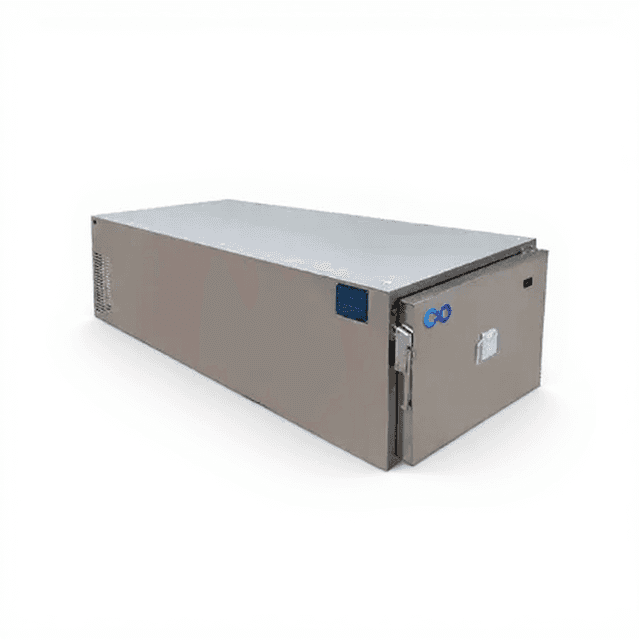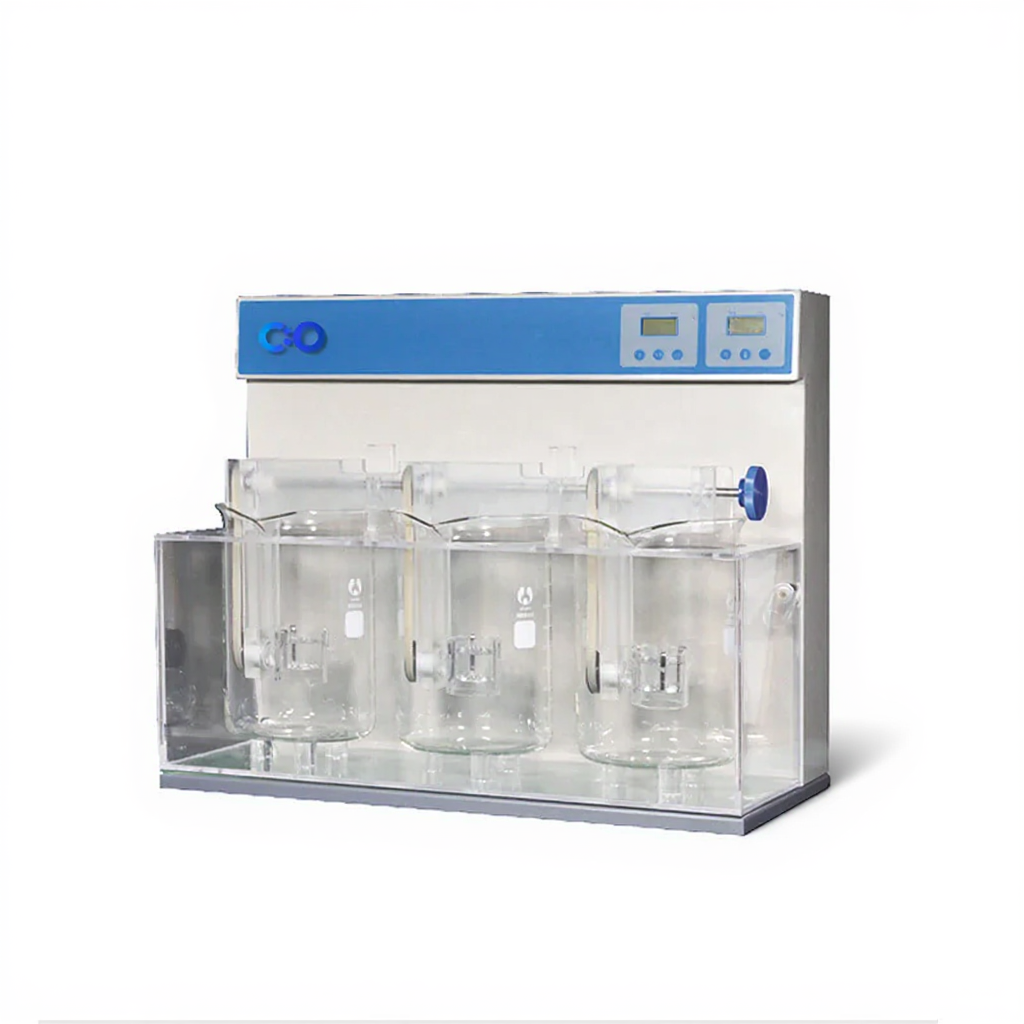
Thaw Tester
Temperature-controlled dissolution testing system with three synchronized test vessels for pharmaceutical tablet and capsule disintegration studies.

Louise Corscadden, PhD
Director of Science · ConductScience
Ask Louise about Thaw Tester fit, setup, configuration, or quote prep.
Already working with us? Sign in to connect this with My Scientist.
Key Specifications
Full details →- Model fit
- 2 selectable configurations
- SKU family
- BIO-BTT-1 | BIO-BTT-4B
- Shipping box
- 1.97 x 0.16 x 38.0 cm
- Ordering
- Online checkout and quote request available
- Category
- Lab Equipment
- Build notes
- Stainless steel net racks
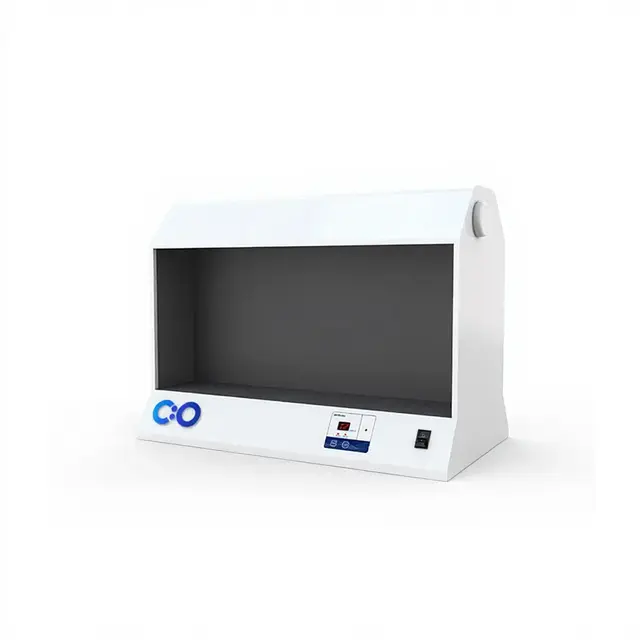
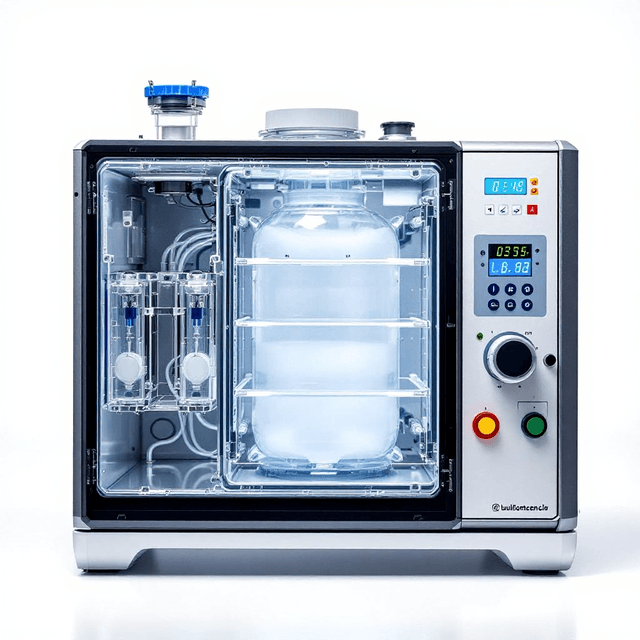
The Thaw Tester is a precision-controlled dissolution testing apparatus designed for pharmaceutical tablet and capsule disintegration studies. This system provides temperature-controlled aqueous environments with synchronized agitation mechanisms to evaluate drug release kinetics under standardized conditions.
Available in two configurations - the BIO-BTT-1 with manual basket inversion and the BIO-BTT-4B featuring automated inversion with programmable timing - both models accommodate three simultaneous test vessels with independent temperature and timing control. The magnetic circulation system ensures uniform heat distribution across all test positions, while stainless steel mesh baskets provide consistent sample containment during dissolution protocols.
How It Works
The Thaw Tester operates on the principle of controlled aqueous dissolution under standardized temperature and agitation conditions. Each test vessel contains a 5-liter water bath maintained at precise temperatures between 20-45°C through automated heating and magnetic circulation systems. The circulation pump ensures uniform heat distribution, eliminating temperature gradients that could affect dissolution kinetics.
Sample tablets or capsules are contained within stainless steel mesh baskets (50mm diameter with 39 holes of 4mm each) that provide consistent fluid flow while retaining solid particles. The baskets undergo periodic inversion - either manually (BIO-BTT-1) or automatically (BIO-BTT-4B) - to simulate physiological agitation and prevent particle settling. Transparent sleeves allow continuous visual monitoring of the dissolution process.
Temperature and timing precision (±0.5°C and ±0.5 minutes respectively) ensure reproducible test conditions across multiple runs, enabling quantitative comparison of dissolution profiles between formulations or batches.
Features & Benefits
Beaker Paths
- Three-beaker, three-path, three-path synchronization
Overturn Mechanism Btt1
- Manual overturn
Overturn Mechanism Btt4b
- Automatic overturn
Sleeve Type
- Transparent sleeve
Rack Material
- Stainless steel net racks
Temperature Control
- Automatic temperature control
Time Keeping
- Automatic time keeping
Alarm System Btt4b
- Timing overturn indication forecast and fault alarm
Circulation System
- Magnetic water pump circulating water flow uniform heat system
Bath Temperature
- Uniform bath temperature
Head Functionality Btt4b
- Double-functional head which can lift and descend electrically and turn over manually
Automation Level
- semi-automated
Material
- Stainless Steel
Display Type
- LCD
Research Domain
- Analytical Chemistry
- Materials Science
- Pharmaceutical QC
Shipping weight
- 99.21 lb
Shipping box
- L: 1.97 cm
- W: 0.16 cm
- H: 38.0 cm
| Feature | This Product | Typical Alternative | Advantage |
|---|---|---|---|
| Test Vessel Capacity | Three 5-liter vessels with synchronized operation | Single vessel or smaller capacity systems are common in entry-level models | Enables concurrent testing of multiple samples or replicates, improving statistical reliability and laboratory efficiency. |
| Temperature Control Precision | ±0.5°C accuracy across 20-45°C range | Entry-level models often provide ±1-2°C precision | Tighter temperature control reduces variability in dissolution kinetics, critical for regulatory testing protocols. |
| Inversion Mechanism | Choice of manual (BIO-BTT-1) or automated programmable inversion (BIO-BTT-4B) | Many systems offer only manual agitation methods | Automated inversion provides consistent timing and reduces operator variability in test protocols. |
| Circulation System | Magnetic pump circulation for uniform heat distribution | Basic models may rely on passive heating with potential temperature gradients | Uniform temperature distribution eliminates position-dependent variability in dissolution results. |
| Timer Range and Precision | 10-900 minutes with ±0.5 minute precision | Limited timing ranges or lower precision in basic models | Wide timing range accommodates both immediate and extended-release formulation testing with high temporal accuracy. |
This Thaw Tester provides laboratory-grade precision with multiple vessel capacity and choice of manual or automated operation. The magnetic circulation system and tight temperature control support reproducible dissolution testing protocols for pharmaceutical quality control applications.
| Model | SKU | Listed price | Status | Shipping box |
|---|---|---|---|---|
| BIO-BTT-4B | BIO-BTT-4B | $5,400.00 | Available | 1.97 x 0.16 x 38.0 cm |
| BIO-BTT-1 | BIO-BTT-1 | $3,400.00 | Available | 1.97 x 0.16 x 38.0 cm |
Practical Tips
Verify temperature accuracy using a calibrated reference thermometer placed in each test vessel before beginning protocols.
Why: Temperature variations directly affect dissolution kinetics and can invalidate comparative studies between formulations.
Clean magnetic circulation components weekly and inspect for particle buildup that could affect flow patterns.
Why: Restricted circulation reduces temperature uniformity and can create position-dependent dissolution variations.
Allow full thermal equilibration (15-20 minutes) before loading samples, especially when changing temperature setpoints.
Why: Temperature transients during the initial test period can skew dissolution profiles and affect reproducibility.
If temperature control becomes erratic, check for air bubbles in circulation lines and verify pump operation.
Why: Air in circulation systems disrupts heat transfer efficiency and creates temperature instability.
Document basket inversion timing precisely, especially for manual operation (BIO-BTT-1), to ensure protocol reproducibility.
Why: Inconsistent agitation timing introduces variability that can mask real differences between formulations.
Always verify electrical connections are dry before operation and use appropriate personal protective equipment when handling dissolution media.
Why: Water-electrical equipment combinations require careful attention to prevent shock hazards and equipment damage.
Pre-filter dissolution media to remove particulates that could clog mesh baskets or interfere with optical clarity.
Why: Clean dissolution media ensures accurate visual monitoring and prevents artifacts in dissolution measurements.
Setup Guide
What’s in the Box
- Main dissolution testing unit
- Three stainless steel mesh baskets (50mm diameter)
- Three transparent test sleeves
- Power cord with regional adapter
- User manual and operation protocols
- Temperature calibration certificate (typical)
- Warranty documentation
Warranty
ConductScience provides a standard one-year manufacturer warranty covering parts and labor, with technical support for installation, calibration, and operational guidance.
Compliance
What dissolution media volumes and types are compatible with this system?
Each vessel accommodates 5 liters of dissolution medium. Compatible with aqueous buffers, simulated gastric fluid, and other pharmacopeial dissolution media within the pH range suitable for the stainless steel components.
How do the manual vs automated inversion mechanisms differ in terms of reproducibility?
The BIO-BTT-4B provides programmable automated inversion with consistent timing and force, improving reproducibility compared to the manual BIO-BTT-1. The automated system also includes fault monitoring and timing alerts.
What is the temperature equilibration time for the system?
Allow 15-20 minutes for thermal equilibration when changing temperature setpoints. The magnetic circulation system accelerates heat distribution compared to passive heating methods.
Can the mesh basket dimensions accommodate different tablet sizes?
The 50mm diameter baskets with 4mm perforations are designed for standard pharmaceutical tablets and capsules. Consult product datasheet for specific size compatibility or custom basket options.
What data logging capabilities does the system provide?
The LCD display shows real-time temperature and timing data. For automated data logging and analysis, external recording equipment or software integration may be required - consult product datasheet for interface options.
How does this compare to paddle dissolution apparatus for method development?
This basket-type system provides different hydrodynamic conditions than paddle methods, with periodic inversion rather than continuous stirring. It may be preferred for disintegrating dosage forms where particle retention is important.
What maintenance is required for the magnetic circulation system?
Regular inspection of pump seals and impellers, cleaning of circulation channels to prevent buildup, and periodic verification of temperature uniformity across vessel positions.
Have a question about this product?
Have a question? Just ask.
Send it over and we'll email you a personalized answer — no call, no scheduling.
Prefer to talk it through?