Rodent Heating Pad
Precision heating pads for laboratory rodents with 0.1°C accuracy and multiple size configurations to prevent hypothermia during surgical procedures and research protocols.
| available_sizes | Mouse XS, Mouse, Rat, Cage Sm, Cage, Cage XL, Cage XXL |
| temperature_probe_dimensions | ø1.5 x 15mm |
| stereotaxic_compatibility | compatible with various stereotaxic instruments |
| prewarming_time | 30 minutes |
| target_body_temperature | 37°C |
| hyperthermia_threshold | 38°C |
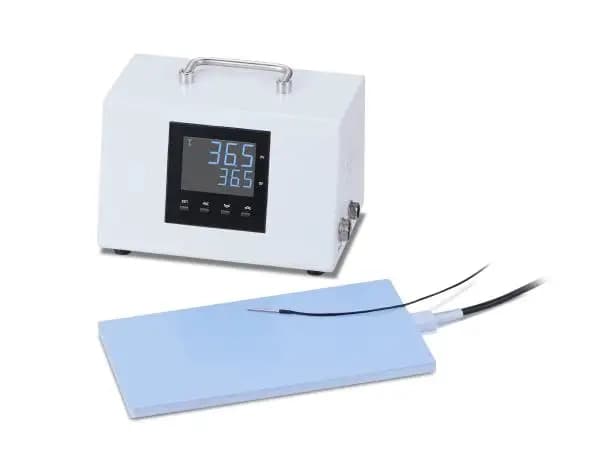
The Rodent Heating Pad provides precise temperature control for laboratory animals during surgical procedures, recovery periods, and research protocols. Manufactured with non-toxic silicone materials, the system maintains target temperatures between 25-45°C with 0.1°C accuracy to prevent hypothermia in anesthetized mice and rats. The heating pad connects to temperature monitoring systems via a standard temperature probe (ø1.5 x 15mm) for real-time thermal regulation.
Available in seven configurations ranging from mouse XS (70×100mm) to cage XXL (400×600mm), the heating pads accommodate different animal sizes and experimental setups. The 12V power supply delivers 8W to 50W depending on pad size, with stereotaxic instrument compatibility for neurosurgical applications. Standard prewarming protocols recommend 30-minute activation before animal placement to achieve stable 37°C body temperature maintenance.
Applications & Use Cases
- Neuroscience: Maintaining normothermic conditions during stereotaxic surgery and electrode implantation procedures in mice and rats to prevent anesthesia-induced hypothermia that could affect neural activity and surgical outcomes.
- Behavioral Pharmacology: Temperature regulation during drug administration studies and behavioral testing protocols where anesthesia is required for compound delivery or surgical preparation.
- Pain Research: Thermal homeostasis maintenance during nociceptive testing procedures and post-surgical recovery periods to eliminate temperature as a confounding variable in pain response measurements.
- Addiction Research: Body temperature control during catheter implantation surgeries for intravenous self-administration studies and during recovery from anesthesia following surgical procedures.
- Cardiovascular: Preventing hypothermic cardiovascular depression during cardiac catheterization procedures and vascular surgery in rodent models of cardiovascular disease.
- Toxicology: Temperature stabilization during acute toxicity studies and surgical implantation of telemetry devices for continuous physiological monitoring in toxicological assessments.
How It Works
The heating pad system operates through resistive heating elements embedded within non-toxic silicone material that generates controlled thermal output when connected to a 12V power supply. The heating elements distribute thermal energy evenly across the pad surface, while the temperature probe provides continuous feedback to maintain precise temperature control within the 25-45°C operating range.
Temperature regulation occurs through real-time monitoring of animal body temperature via the probe sensor, which transmits thermal data to the control system. The system adjusts power output to the heating elements to maintain target temperature setpoints, typically 37°C for normothermic conditions. The 0.1°C accuracy specification ensures stable thermal conditions that prevent both hypothermic heat loss and hyperthermic overheating above the 38°C threshold.
Heat transfer from the pad to the animal occurs through conduction, with the silicone material providing biocompatible contact surface that distributes thermal energy uniformly. The variable wattage output (8W to 50W) across different pad sizes ensures appropriate heating capacity for animals ranging from mouse to rat size, with larger cage configurations supporting multiple animals or extended surface area coverage.
Features & Benefits
- 0.1°C temperature accuracy — Provides precise thermal control to prevent hypothermia while avoiding hyperthermic overheating that could affect physiological parameters
- Seven size configurations (70×100mm to 400×600mm) — Accommodates different animal sizes from mouse XS to multiple animals in cage setups for flexible experimental design
- Non-toxic silicone construction — Ensures biocompatible contact with laboratory animals while providing durable, cleanable surface for repeated use
- 25-45°C operating temperature range — Covers full range of research temperature requirements from mild hypothermia studies to controlled hyperthermia protocols
- Stereotaxic instrument compatibility — Integrates with neurosurgical equipment for temperature-controlled stereotaxic procedures without interference with surgical access
- Variable wattage output (8W-50W) — Provides appropriate heating capacity matched to pad size and animal heat load requirements for efficient temperature maintenance
- Standard ø1.5 x 15mm temperature probe — Enables continuous core body temperature monitoring with minimal tissue trauma for accurate thermal feedback control
- 30-minute prewarming protocol — Establishes stable thermal conditions before animal placement to eliminate temperature equilibration delays during time-sensitive procedures
Technical Specifications
The heating pad system delivers precise temperature control with 0.1°C accuracy across a 25-45°C operating range, powered by 12V supply with variable wattage from 8W to 50W depending on pad size. The standard configuration includes a 120×205mm heating pad suitable for most mouse applications, with six additional sizes ranging from mouse XS (70×100mm) to cage XXL (400×600mm) for different experimental requirements.
Temperature monitoring utilizes a standard ø1.5 x 15mm probe compatible with various monitoring systems, with target body temperature maintenance at 37°C and hyperthermia prevention above 38°C threshold. The non-toxic silicone construction provides biocompatible animal contact surface while ensuring durability for repeated laboratory use, with stereotaxic instrument compatibility for neurosurgical applications.
Setup & Operation
- Unpack and Inspect: Remove heating pad and temperature probe from packaging and inspect for physical damage to silicone surface and electrical connections.
- Power Connection: Connect the 12V power supply to the heating pad controller and verify proper electrical connection before powering on the system.
- Temperature Probe Setup: Insert the ø1.5 x 15mm temperature probe into the monitoring system and verify probe functionality with initial temperature readings.
- Prewarming Protocol: Activate heating pad 30 minutes before animal placement to achieve stable operating temperature and eliminate thermal lag effects.
- Temperature Calibration: Set target temperature to 37°C and verify system maintains setpoint within 0.1°C accuracy using an independent temperature measurement device.
- Animal Placement: Position anesthetized animal on heating pad surface and insert temperature probe for continuous body temperature monitoring during procedures.
- Monitor and Adjust: Continuously monitor animal temperature and adjust setpoints as needed to maintain normothermic conditions while avoiding hyperthermia above 38°C.
Compliance & Standards
- IACUC Guidelines: Supports institutional animal care protocols requiring temperature maintenance during anesthesia and surgical procedures to minimize animal distress.
- ARRIVE Guidelines: Facilitates standardized reporting of animal temperature control methods in research publications by providing precise thermal regulation parameters.
- AAALAC Standards: Commonly used in AAALAC-accredited facilities to meet animal welfare requirements for temperature control during research procedures.
What's in the Box
- Heating pad (120×205mm standard configuration)
- Temperature probe (ø1.5 x 15mm)
- 12V power adapter (typical)
- Controller unit (typical)
- User manual and setup guide (typical)
- Electrical connection cables (typical)
Warranty & Support
ConductScience provides a standard one-year manufacturer warranty covering defects in materials and workmanship, with technical support for setup, calibration, and troubleshooting assistance.
Product Highlights
| Feature | This Product | Category Context |
|---|---|---|
| Temperature Accuracy | 0.1°C precision control | Basic heating pads often provide ±1-2°C accuracy |
| Size Configuration Options | Seven sizes from 70×100mm to 400×600mm | Most systems offer 2-3 standard sizes |
| Operating Temperature Range | 25-45°C adjustable range | Fixed temperature or limited range systems |
| Power Output Range | 8W to 50W variable by pad size | Fixed wattage systems regardless of heating area |
| Material Construction | Non-toxic silicone surface | Standard heating elements with basic coverings |
| Stereotaxic Compatibility | Compatible with various stereotaxic instruments | Limited compatibility with surgical equipment |
This heating pad system provides superior temperature precision and experimental flexibility compared to basic heating solutions. The combination of 0.1°C accuracy, multiple size options, and stereotaxic compatibility addresses the specific thermal control needs of laboratory animal research protocols.
Practical Tips
Calibration: Verify temperature accuracy monthly using an independent calibrated thermometer placed on the heating pad surface during operation.
Ensures continued measurement accuracy and identifies any drift in the temperature control system over time.
Maintenance: Clean the silicone surface with appropriate disinfectants after each use and inspect for cracks or wear that could affect heat distribution.
Prevents contamination between animals and maintains uniform thermal contact across the heating surface.
Best Practices: Always initiate the 30-minute prewarming protocol before animal placement and verify stable temperature before beginning procedures.
Eliminates thermal lag effects that could cause temperature fluctuations during critical experimental phases.
Safety: Monitor animal temperature continuously and set alarm thresholds at 38°C to prevent hyperthermia during extended procedures.
Overheating can cause physiological stress and affect experimental outcomes, particularly in anesthetized animals with impaired thermoregulation.
Troubleshooting: If temperature control becomes erratic, check probe placement and electrical connections before assuming controller malfunction.
Poor thermal contact or loose connections are common causes of temperature instability that can be resolved without equipment replacement.
Data Quality: Record heating pad temperature alongside animal core temperature to document thermal gradient and heat transfer efficiency.
Provides documentation of thermal conditions for experimental reproducibility and helps identify optimal heating parameters for specific protocols.
Best Practices: Select heating pad size to match animal size closely rather than using oversized configurations for small animals.
Proper size matching improves heat transfer efficiency and reduces power consumption while maintaining precise temperature control.
How It Works
The heating pad system operates through resistive heating elements embedded within non-toxic silicone material that generates controlled thermal output when connected to a 12V power supply. The heating elements distribute thermal energy evenly across the pad surface, while the temperature probe provides continuous feedback to maintain precise temperature control within the 25-45°C operating range.
Temperature regulation occurs through real-time monitoring of animal body temperature via the probe sensor, which transmits thermal data to the control system. The system adjusts power output to the heating elements to maintain target temperature setpoints, typically 37°C for normothermic conditions. The 0.1°C accuracy specification ensures stable thermal conditions that prevent both hypothermic heat loss and hyperthermic overheating above the 38°C threshold.
Heat transfer from the pad to the animal occurs through conduction, with the silicone material providing biocompatible contact surface that distributes thermal energy uniformly. The variable wattage output (8W to 50W) across different pad sizes ensures appropriate heating capacity for animals ranging from mouse to rat size, with larger cage configurations supporting multiple animals or extended surface area coverage.
Features & Benefits
available_sizes
- Mouse XS, Mouse, Rat, Cage Sm, Cage, Cage XL, Cage XXL
temperature_probe_dimensions
- ø1.5 x 15mm
stereotaxic_compatibility
- compatible with various stereotaxic instruments
prewarming_time
- 30 minutes
target_body_temperature
- 37°C
hyperthermia_threshold
- 38°C
Automation Level
- semi-automated
Size
- Mouse
- Rat
- Mouse XS
- Cage Sm
- Cage
- Cage XL
- Cage XXL
Material
- non-toxic silicone
Temperature Range
- 25-45°C
Accuracy
- 0.1°C
Species
- Mouse
- Rat
Dimensions
- 205mm x 120mm
Research Domain
- Addiction Research
- Behavioral Pharmacology
- Cardiovascular
- Neuroscience
- Pain Research
- Toxicology
Weight
- 7.0 kg
Dimensions
- L: 590.55 mm
- W: 59.06 mm
- H: 17.78 mm
Comparison Guide
| Feature | This Product | Typical Alternative | Advantage |
|---|---|---|---|
| Temperature Accuracy | 0.1°C precision control | Basic heating pads often provide ±1-2°C accuracy | Eliminates temperature as a confounding variable in physiological measurements and ensures consistent experimental conditions |
| Size Configuration Options | Seven sizes from 70×100mm to 400×600mm | Most systems offer 2-3 standard sizes | Accommodates diverse experimental designs from single mouse studies to multi-animal cage heating |
| Operating Temperature Range | 25-45°C adjustable range | Fixed temperature or limited range systems | Supports both normothermic maintenance and controlled temperature manipulation protocols |
| Power Output Range | 8W to 50W variable by pad size | Fixed wattage systems regardless of heating area | Matches heating capacity to thermal load requirements for efficient temperature control without overheating |
| Material Construction | Non-toxic silicone surface | Standard heating elements with basic coverings | Provides biocompatible animal contact surface that can withstand repeated cleaning and sterilization |
| Stereotaxic Compatibility | Compatible with various stereotaxic instruments | Limited compatibility with surgical equipment | Enables temperature control during neurosurgical procedures without compromising surgical access |
This heating pad system provides superior temperature precision and experimental flexibility compared to basic heating solutions. The combination of 0.1°C accuracy, multiple size options, and stereotaxic compatibility addresses the specific thermal control needs of laboratory animal research protocols.
Practical Tips
Verify temperature accuracy monthly using an independent calibrated thermometer placed on the heating pad surface during operation.
Why: Ensures continued measurement accuracy and identifies any drift in the temperature control system over time.
Clean the silicone surface with appropriate disinfectants after each use and inspect for cracks or wear that could affect heat distribution.
Why: Prevents contamination between animals and maintains uniform thermal contact across the heating surface.
Always initiate the 30-minute prewarming protocol before animal placement and verify stable temperature before beginning procedures.
Why: Eliminates thermal lag effects that could cause temperature fluctuations during critical experimental phases.
Monitor animal temperature continuously and set alarm thresholds at 38°C to prevent hyperthermia during extended procedures.
Why: Overheating can cause physiological stress and affect experimental outcomes, particularly in anesthetized animals with impaired thermoregulation.
If temperature control becomes erratic, check probe placement and electrical connections before assuming controller malfunction.
Why: Poor thermal contact or loose connections are common causes of temperature instability that can be resolved without equipment replacement.
Record heating pad temperature alongside animal core temperature to document thermal gradient and heat transfer efficiency.
Why: Provides documentation of thermal conditions for experimental reproducibility and helps identify optimal heating parameters for specific protocols.
Select heating pad size to match animal size closely rather than using oversized configurations for small animals.
Why: Proper size matching improves heat transfer efficiency and reduces power consumption while maintaining precise temperature control.
Setup Guide
What’s in the Box
- Heating pad (120×205mm standard configuration)
- Temperature probe (ø1.5 x 15mm)
- 12V power adapter (typical)
- Controller unit (typical)
- User manual and setup guide (typical)
- Electrical connection cables (typical)
Warranty
ConductScience provides a standard one-year manufacturer warranty covering defects in materials and workmanship, with technical support for setup, calibration, and troubleshooting assistance.
Compliance
What prewarming time is required before animal placement?
The heating pad requires 30 minutes of prewarming to achieve stable operating temperature and eliminate thermal lag effects that could affect temperature control during initial animal placement.
How does the temperature probe interface with existing monitoring equipment?
The standard ø1.5 x 15mm temperature probe connects to most laboratory temperature monitoring systems and provides continuous feedback for closed-loop temperature control with 0.1°C accuracy.
What is the maximum safe temperature to prevent hyperthermia?
The system maintains target temperature at 37°C with hyperthermia prevention protocols above 38°C threshold to avoid thermal stress while ensuring adequate heat delivery.
Can multiple animals be accommodated on larger pad configurations?
Yes, cage configurations (200×350mm to 400×600mm) can accommodate multiple animals, though individual temperature monitoring may be required depending on experimental protocol requirements.
Is the heating pad compatible with stereotaxic surgical procedures?
The heating pad design is compatible with various stereotaxic instruments, allowing temperature control during neurosurgical procedures without interfering with surgical access or instrument positioning.
How should the silicone surface be cleaned between animal uses?
The non-toxic silicone material can be cleaned with standard laboratory disinfectants, though consult product datasheet for specific cleaning protocols to maintain surface integrity and biocompatibility.
What power requirements are needed for different pad sizes?
Power requirements range from 8W for mouse XS pads to 50W for cage XL configurations, all operating on 12V supply with wattage matched to heating surface area and thermal load.
Have a question about this product?
Upgrade Options