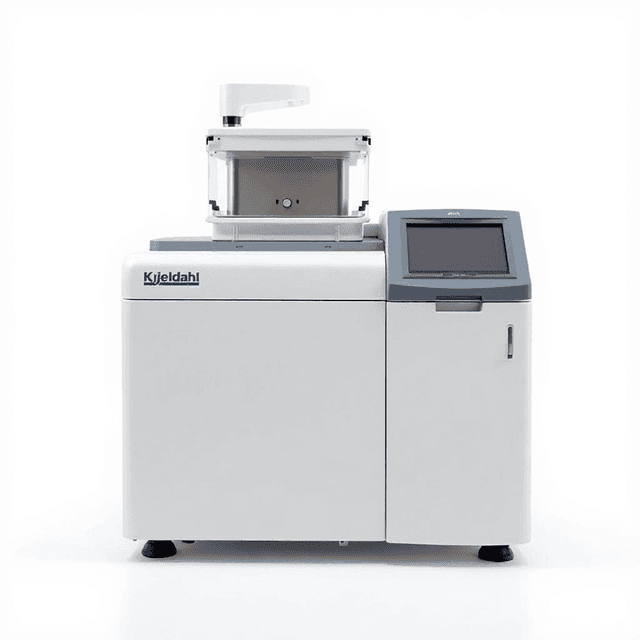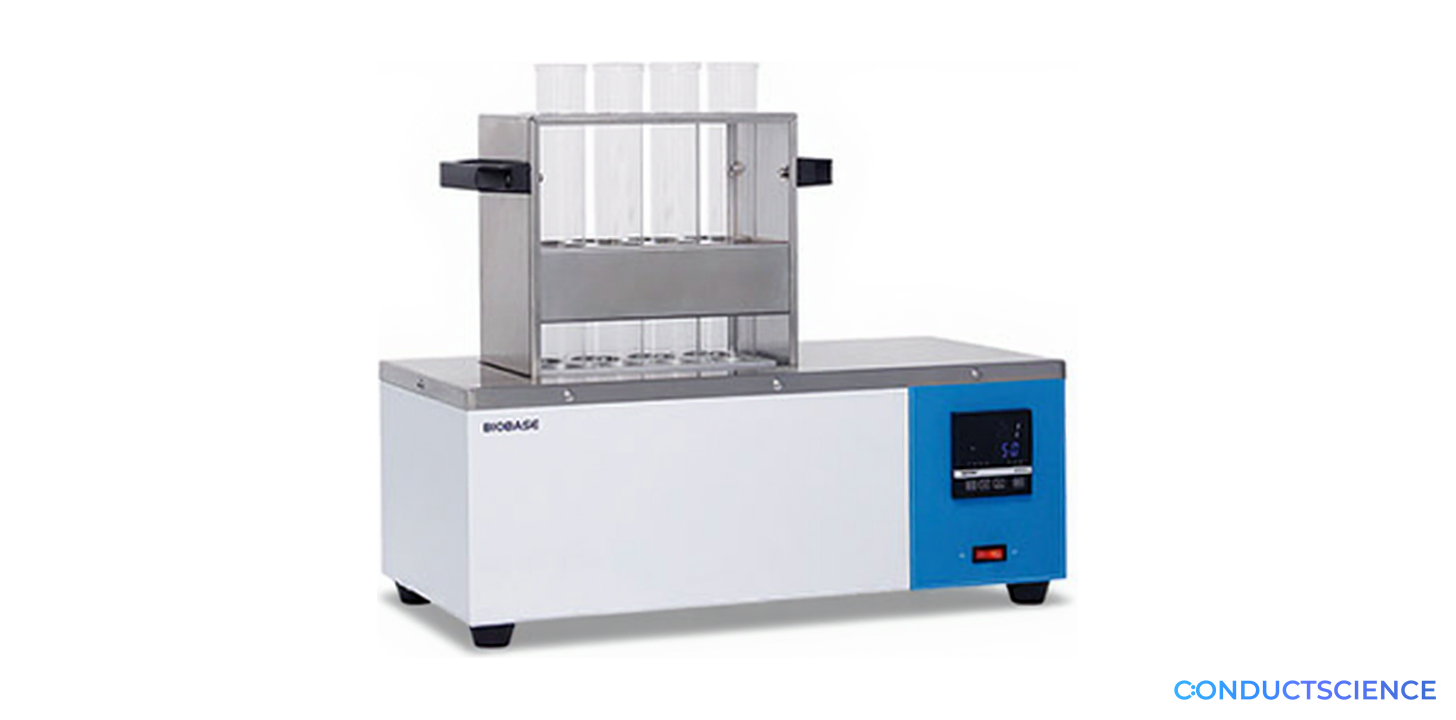
Kjeldahl Digestion Furnace
Eight-position thermal digestion furnace with temperature control from RT to 450°C, designed for Kjeldahl protein analysis and analytical sample preparation.
| Automation Level | manual |
| Temp. Range | RT~450°C |
| Temp. Precision | ±1°C |
| Heating Pipe | Aluminium alloy pipe(Nichrome wire) |
| Heating Speed | 8~15°C/min |
| Heating Holes | 8 |

The Kjeldahl Digestion Furnace provides controlled thermal processing for protein analysis and sample preparation in analytical chemistry workflows. This benchtop instrument features eight heating positions with aluminum alloy heating pipes containing nichrome wire elements, delivering precise temperature control from room temperature to 450°C with ±1°C precision. The unit accommodates 300ml digestion tubes through standardized 43.5mm apertures, enabling simultaneous processing of multiple samples.
Designed for laboratories requiring consistent thermal processing conditions, the furnace delivers heating rates of 8-15°C/min with 2.1kW power consumption. The system supports standard Kjeldahl digestion protocols and other thermal sample preparation methods where controlled heating profiles are essential for reproducible analytical results.
How It Works
The Kjeldahl digestion process relies on controlled thermal decomposition to convert organic nitrogen compounds into ammonium sulfate through acid digestion. The furnace provides precise heating through aluminum alloy pipes containing nichrome wire elements, which deliver uniform heat distribution across eight independent heating positions. Temperature control maintains digestion conditions within ±1°C of setpoint values, ensuring consistent reaction conditions for quantitative nitrogen recovery.
During operation, samples in 300ml digestion tubes are heated according to programmed temperature profiles, typically involving initial moderate heating followed by sustained high-temperature digestion phases. The heating rate of 8-15°C/min allows controlled temperature ramping to prevent sample loss through violent boiling while ensuring complete organic matter decomposition. Each heating position operates independently, enabling simultaneous processing of samples with different thermal requirements or processing schedules.
Features & Benefits
Automation Level
- manual
Temp. Range
- RT~450°C
Temp. Precision
- ±1°C
Heating Pipe
- Aluminium alloy pipe(Nichrome wire)
Heating Speed
- 8~15°C/min
Heating Holes
- 8
Aperture
- Φ42mm × 50mm (depth)
Digestion Tube Size
- 300ml±0.25ml
Consumption
- 2KW
Package Size(W*D*H)
- 610×610×630mm
Brand
- ConductScience
Research Domain
- Analytical Chemistry
- Environmental Monitoring
- Food Science
- Materials Science
- Pharmaceutical QC
Power/Voltage
- AC220V, 50/60Hz
Weight
- 29kg
Design Temperature
- 500°C
Max Operating Temperature
- 450°C
Display Type
- LCD with PID control
Unit Dimensions(W*D*H)
- 545×315×215mm
Weight
- 23.0 kg
Dimensions
- L: 49.0 mm
- W: 62.0 mm
- H: 42.0 mm
Comparison Guide
| Feature | This Product | Typical Alternative | Advantage |
|---|---|---|---|
| Number of Heating Positions | 8 independent heating positions | Entry-level models often offer 4-6 positions | Higher sample throughput enables more efficient batch processing in busy analytical laboratories. |
| Temperature Range | Room temperature to 450°C | Many units limited to 400°C maximum | Extended temperature range accommodates diverse digestion protocols and sample types. |
| Temperature Precision | ±1°C precision | Basic models offer ±3-5°C accuracy | Tighter temperature control ensures consistent analytical results and method reproducibility. |
| Heating Rate Control | 8-15°C/min controlled heating rate | Fixed heating rates or limited control options | Controlled ramping prevents sample loss while ensuring complete decomposition. |
| Digestion Tube Capacity | 300ml standard tube size | Smaller capacity units often limited to 100-250ml | Larger sample volumes support diverse analytical requirements and reduce dilution effects. |
This eight-position furnace combines precise temperature control with higher sample throughput compared to basic heating blocks. The controlled heating rate and extended temperature range support diverse analytical protocols while maintaining the precision needed for quantitative work.
Practical Tips
Verify temperature accuracy using a calibrated thermometer in each heating position during initial setup and periodic maintenance.
Why: Independent verification ensures measurement traceability and analytical method compliance.
Clean apertures regularly to remove sample residue and ensure proper thermal contact with digestion tubes.
Why: Contamination buildup can affect heat transfer and lead to temperature variations between samples.
Allow adequate warm-up time before sample processing to ensure thermal equilibrium across all heating positions.
Why: Thermal equilibrium ensures consistent starting conditions for reproducible analytical results.
Use appropriate heat-resistant gloves and ensure adequate ventilation when operating at maximum temperature.
Why: Surface temperatures reach 450°C presenting burn hazards, and sample processing may generate vapors requiring ventilation.
Monitor heating rate consistency during critical temperature ramp phases of your analytical protocol.
Why: Controlled temperature ramping prevents sample loss through violent boiling while ensuring complete decomposition.
Check power connections and circuit protection if heating elements fail to reach target temperature.
Why: Adequate power supply is essential for reaching maximum temperature with full sample loading.
Setup Guide
What’s in the Box
- Kjeldahl Digestion Furnace main unit
- Power cord (typical)
- User manual and operating instructions (typical)
- Temperature verification certificate (typical)
Warranty
ConductScience provides a standard one-year manufacturer warranty covering defects in materials and workmanship, with technical support for installation and operational guidance.
Compliance
What is the temperature uniformity across the eight heating positions?
The aluminum alloy heating pipes with nichrome wire elements are designed for uniform heat distribution, though specific temperature uniformity specifications should be confirmed through the product datasheet or calibration verification.
Can the heating positions be controlled independently?
Each of the eight heating positions operates independently, allowing different samples to be processed simultaneously with varying thermal requirements or processing schedules.
What digestion tube materials are compatible with 450°C operation?
Standard borosilicate glass digestion tubes are typically used for Kjeldahl digestion at these temperatures. Consult your analytical method specifications for approved tube materials and thermal limits.
How do I verify temperature accuracy for analytical compliance?
Temperature accuracy should be verified using a calibrated reference thermometer or temperature probe placed in one of the heating positions during routine calibration checks.
What safety considerations apply to 450°C operation?
High-temperature operation requires appropriate laboratory ventilation, heat-resistant personal protective equipment, and adherence to laboratory safety protocols for hot surface contact prevention.
Can this furnace accommodate different digestion tube sizes?
The unit is designed specifically for 300ml digestion tubes through 43.5mm apertures. Different tube sizes would require verification of proper fit and thermal contact.
What maintenance is required for the heating elements?
Regular inspection of heating elements and cleaning of apertures to remove sample residue. Consult the user manual for specific maintenance schedules and procedures.
Have a question about this product?
Upgrade Options