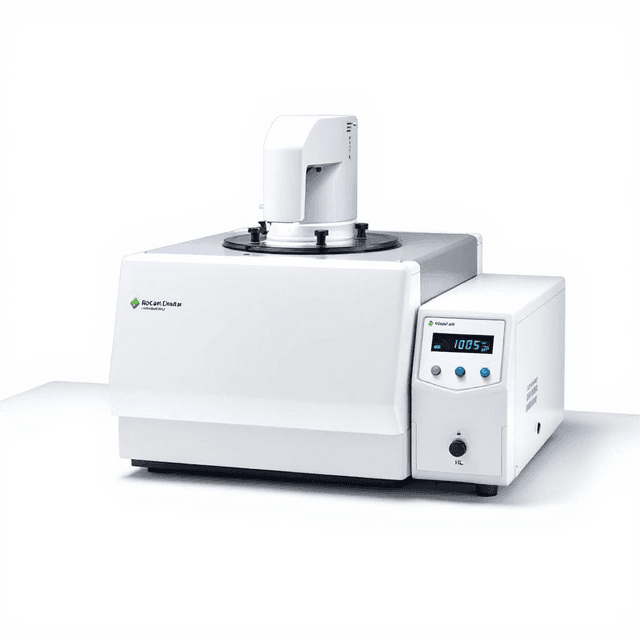
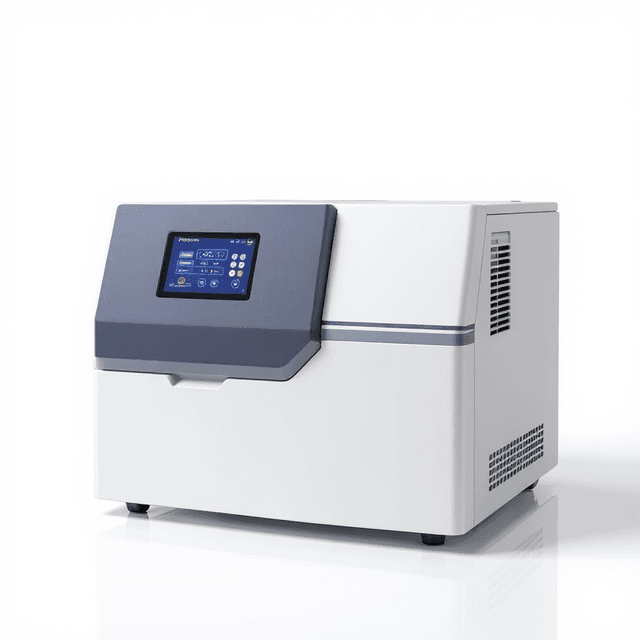
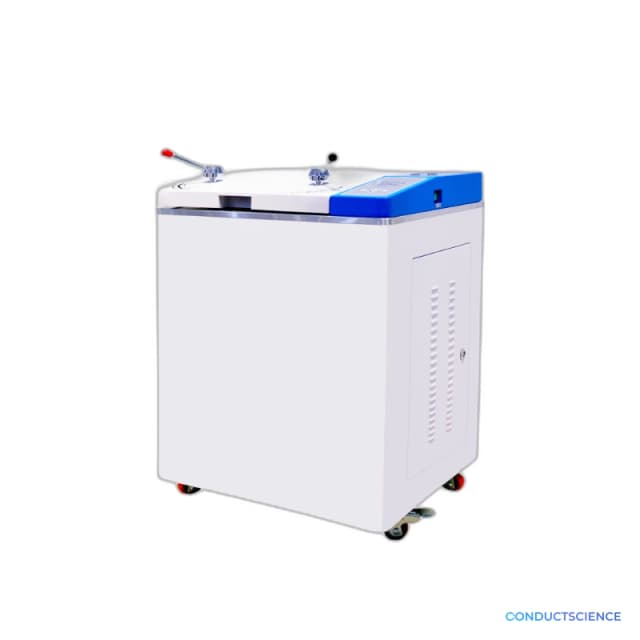
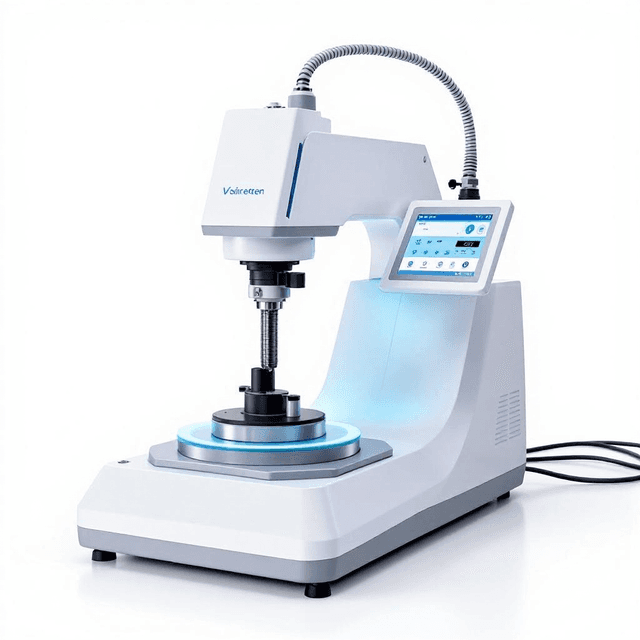
Explosion-proof Rotary Evaporator - 10L
Large-capacity explosion-proof rotary evaporator for safe concentration of flammable solvents and heat-sensitive materials under controlled negative pressure conditions.

Louise Corscadden, PhD
Director of Science · ConductScience
Ask Louise about Explosion-proof Rotary Evaporator - 10L fit, setup, configuration, or quote prep.
Already working with us? Sign in to connect this with My Scientist.
Key Specifications
Full details →- Model fit
- Configured during quote
- SKU family
- BIO-EXRE-1002
- Shipping box
- 42.0 x 43.6 x 38.0 cm
- Ordering
- Online checkout and quote request available
- Category
- Benchtop Instruments
- Build notes
- Confirm accessories, station layout, and support needs before purchase
The Explosion-proof Rotary Evaporator - 10L is a large-capacity solvent concentration system designed for safe operation with flammable and volatile solvents under controlled temperature and negative pressure conditions. This instrument incorporates explosion-proof construction to enable solvent evaporation in environments where flammable vapors may be present, providing essential safety features for laboratories handling hazardous organic solvents.
Operating under constant temperature and negative pressure conditions, this 10-liter capacity system enables efficient concentration of heat-sensitive compounds while minimizing thermal degradation. The explosion-proof design makes it suitable for applications requiring solvent recovery from flammable materials, pharmaceutical intermediate purification, and analytical sample preparation where conventional rotary evaporators may pose safety risks.
How It Works
Rotary evaporation operates on the principle of reducing solvent boiling point through vacuum application while providing controlled heating and continuous agitation. The rotating flask increases surface area for evaporation while the vacuum system lowers the atmospheric pressure, enabling solvents to vaporize at temperatures well below their normal boiling points. This combination protects heat-sensitive compounds from thermal degradation while achieving efficient solvent removal.
The explosion-proof construction incorporates specialized electrical components and housing materials designed to prevent ignition of flammable vapors that may accumulate during operation. Internal components are rated for use in potentially explosive atmospheres, with sealed motor housings and explosion-resistant electrical connections. The constant temperature control system maintains precise heating conditions while the negative pressure environment ensures consistent evaporation rates and prevents solvent vapor accumulation.
Features & Benefits
Automation Level
- semi-automated
Research Domain
- Analytical Chemistry
- Environmental Monitoring
- Food Science
- Industrial Hygiene
- Materials Science
- Pharmaceutical QC
Shipping weight
- 116.0 lb
Shipping box
- L: 42.0 cm
- W: 43.6 cm
- H: 38.0 cm
| Feature | This Product | Typical Alternative | Advantage |
|---|---|---|---|
| Explosion-Proof Rating | Full explosion-proof construction for flammable solvent safety | Standard models lack explosion-proof certification | Enables safe operation in environments where flammable vapors may be present without ignition risk |
| Evaporation Capacity | 10L maximum capacity | Entry-level models typically offer 1-5L capacity | Supports large-batch processing and industrial-scale solvent recovery applications |
| Temperature Control | Constant temperature operation | Basic models may have limited temperature control | Ensures consistent evaporation conditions and protects heat-sensitive compounds |
| Pressure Management | Negative pressure operation | Some models operate only at atmospheric pressure | Reduces required evaporation temperatures and improves process efficiency |
This explosion-proof rotary evaporator combines large 10L capacity with specialized safety features for flammable solvent applications. The constant temperature and negative pressure operation provides controlled evaporation conditions suitable for heat-sensitive compounds in potentially hazardous environments.
Practical Tips
Always verify explosion-proof electrical connections are secure and properly grounded before operation with flammable solvents.
Why: Compromised electrical connections can create ignition sources in the presence of flammable vapors.
Begin vacuum application gradually and monitor for bumping or violent boiling, especially with high-boiling solvents.
Why: Rapid pressure reduction can cause sudden solvent vaporization and sample loss or contamination.
Inspect vapor tubes and vacuum connections regularly for solvent residue buildup that could affect performance.
Why: Accumulated residues can restrict vapor flow and reduce evaporation efficiency over time.
Verify temperature accuracy using calibrated thermometers in the heating bath at regular intervals.
Why: Temperature drift can affect evaporation rates and potentially damage heat-sensitive compounds.
Record vacuum levels and temperatures for each solvent type to develop consistent protocols.
Why: Documented conditions enable reproducible results and optimization of evaporation parameters.
If rotation becomes irregular or noisy, check flask balance and joint lubrication before continuing operation.
Why: Unbalanced loads or dry joints can damage the rotary mechanism and create safety hazards.
Use appropriate flask sizes relative to sample volume, typically filling no more than 50% of flask capacity.
Why: Proper fill levels prevent sample carryover and ensure efficient heat transfer during evaporation.
Setup Guide
What’s in the Box
- Explosion-proof rotary evaporator main unit (typical)
- 10L round-bottom flask with ground glass joint (typical)
- Vacuum controller and gauge assembly (typical)
- Condenser unit with cooling coils (typical)
- Collection flask with ground glass connections (typical)
- Vapor tube and vacuum tubing (typical)
- Power cord rated for hazardous locations (typical)
- Operating manual and safety documentation (typical)
Warranty
ConductScience provides a standard one-year manufacturer warranty covering defects in materials and workmanship, with technical support for installation and operation questions. Extended service plans may be available for critical applications requiring regular maintenance and calibration.
Compliance
What types of solvents can be safely processed with this explosion-proof system?
The explosion-proof design enables safe handling of flammable organic solvents including alcohols, ethers, hydrocarbons, and halogenated compounds. Consult the product manual for specific solvent compatibility and vapor pressure limitations.
How does the explosion-proof rating affect installation requirements?
Installation requires explosion-proof electrical connections and proper grounding according to hazardous location electrical codes. The unit must be connected to appropriately rated electrical outlets and may require specific ventilation arrangements.
What vacuum levels and temperature ranges are achievable?
Consult the product datasheet for specific vacuum and temperature specifications. The system operates under negative pressure with constant temperature control suitable for most organic solvent evaporation applications.
Can this system handle heat-sensitive compounds effectively?
Yes, the combination of reduced pressure and controlled temperature enables evaporation at lower temperatures than atmospheric distillation, protecting thermolabile compounds from degradation during concentration.
What maintenance is required for explosion-proof components?
Regular inspection of electrical seals, explosion-proof housing integrity, and motor connections is essential. All maintenance must follow hazardous location electrical safety procedures and manufacturer guidelines.
How does this compare to standard rotary evaporators?
The explosion-proof design adds safety features for flammable solvent handling but may have higher initial cost and installation requirements compared to standard laboratory rotovaps.
What collection and recovery options are available?
The system includes collection flasks for recovered solvents with ground glass connections. Multiple collection vessels can be used for different solvent fractions or continuous operation.
Have a question about this product?
Have a question? Just ask.
Send it over and we'll email you a personalized answer — no call, no scheduling.
Prefer to talk it through?