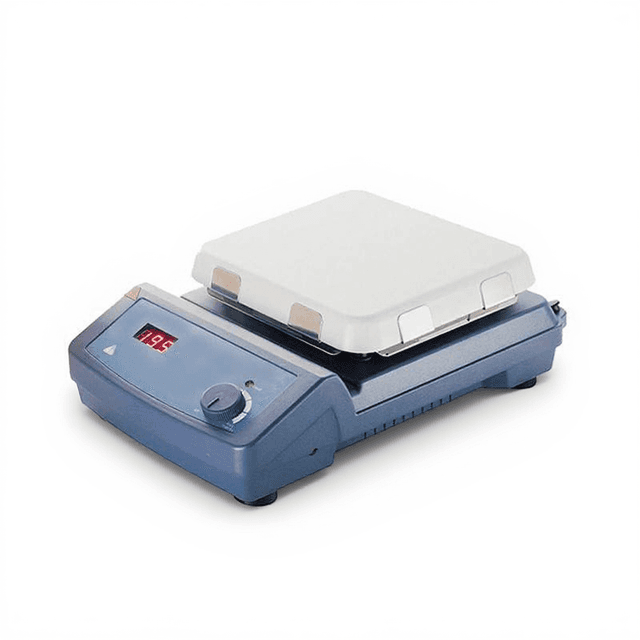
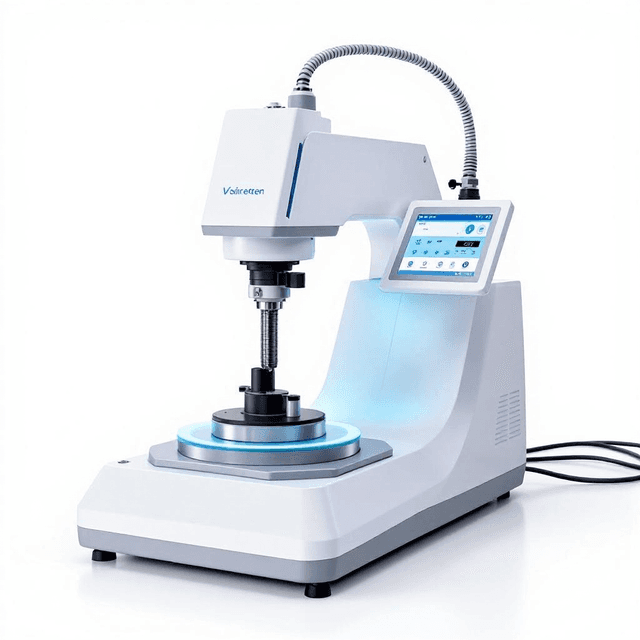
Rotary Evaporator - 1L
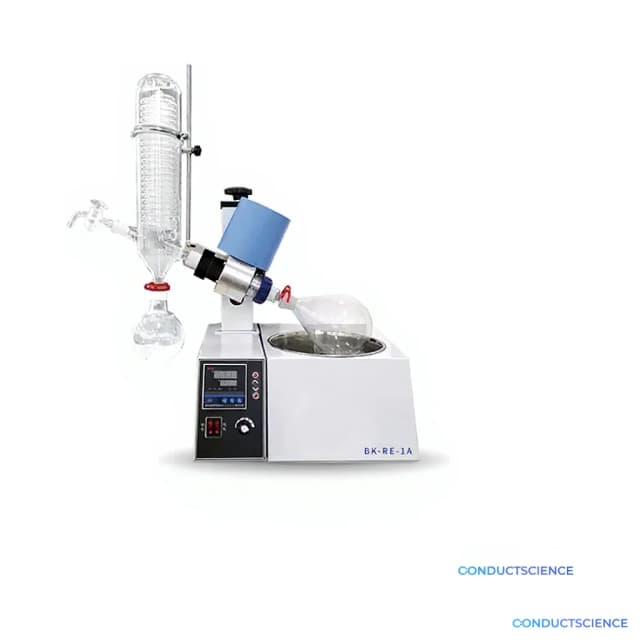
Benchtop rotary evaporator with 1L capacity, 0-200 RPM rotation speed, and temperature control to 99°C for efficient solvent evaporation and sample concentration.

Louise Corscadden, PhD
Director of Science · ConductScience
Ask Louise about Rotary Evaporator - 1L fit, setup, configuration, or quote prep.
Already working with us? Sign in to connect this with My Scientist.
Key Specifications
Full details →- Model fit
- Configured during quote
- SKU family
- BIO-RE-2000A
- Shipping box
- 42.0 x 43.6 x 38.0 cm
- Ordering
- Online checkout and quote request available
- Category
- Benchtop Instruments
- Build notes
- Confirm accessories, station layout, and support needs before purchase
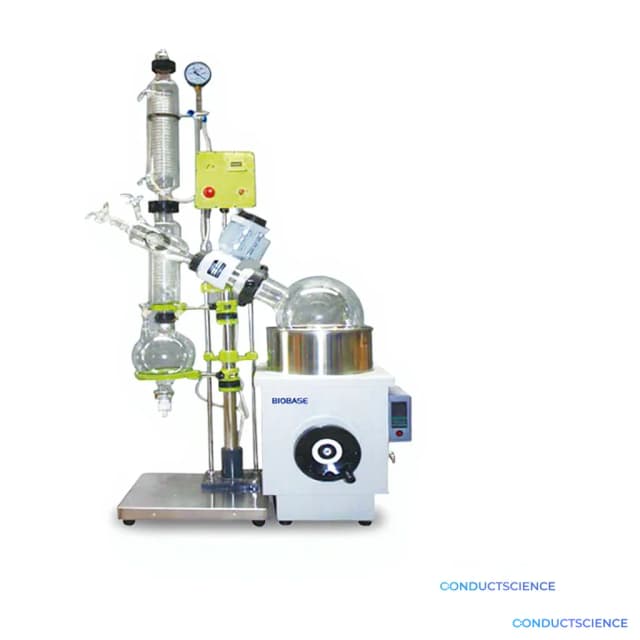
The Rotary Evaporator - 1L is a benchtop solvent concentration system designed for efficient evaporation, distillation, and purification of liquid samples. The system combines controlled rotation, vacuum application, and precise temperature control to enable rapid solvent removal while maintaining sample integrity. With a 1L evaporating flask capacity and rotation speeds up to 200 RPM, this evaporator provides reliable performance for routine laboratory applications.
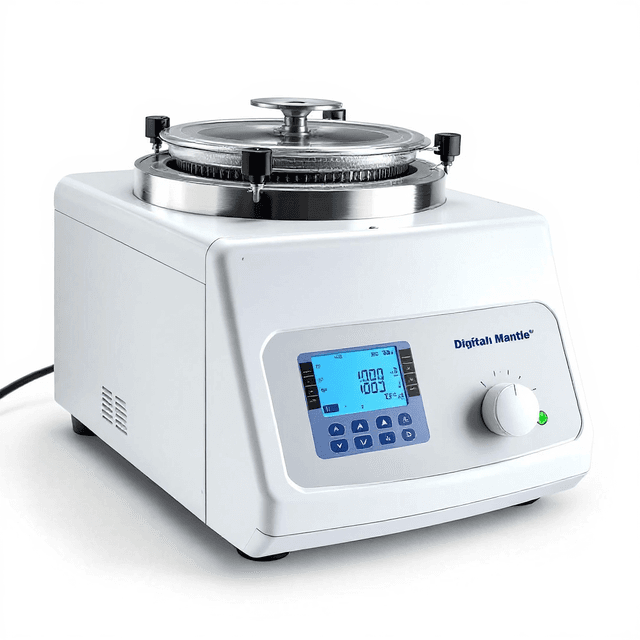
The unit features a temperature range from room temperature to 99°C with ±1°C accuracy, supported by a 1.5 kW heating system. Vacuum capability reaches -0.098 MPa, enabling efficient evaporation at reduced temperatures to protect heat-sensitive compounds. The compact design (630 x 400 x 690-810 mm) and 25 kg weight make it suitable for benchtop installation in most laboratory environments.
How It Works
Rotary evaporation operates on the principle of reducing boiling point through vacuum application combined with gentle heating and continuous agitation. The evaporating flask rotates at controlled speeds (0-200 RPM), creating a thin film of liquid across the flask surface. This increased surface area, combined with reduced pressure (-0.098 MPa vacuum), enables evaporation at temperatures significantly below the solvent's atmospheric boiling point.
Temperature-controlled heating (RT to 99°C) provides the energy required for phase transition while maintaining precise control to prevent sample degradation. Evaporated solvent vapor travels through the vapor tube to a chilled condenser where it recondenses and collects in the receiving flask. The continuous rotation prevents bumping and ensures uniform heat distribution throughout the sample.
The system maintains a closed environment under controlled vacuum, allowing for solvent recovery and preventing atmospheric contamination. The 1.5 kW heating system provides rapid temperature equilibration with ±1°C accuracy for reproducible processing conditions.
Features & Benefits
Automation Level
- semi-automated
Research Domain
- Analytical Chemistry
- Cell Biology
- Environmental Monitoring
- Food Science
- Materials Science
- Pharmaceutical QC
Shipping weight
- 25.0 lb
Shipping box
- L: 42.0 cm
- W: 43.6 cm
- H: 38.0 cm
| Feature | This Product | Typical Alternative | Advantage |
|---|---|---|---|
| Evaporating Flask Capacity | 1L evaporating and collecting flasks | Entry-level models often limited to 500 mL capacity | Larger capacity reduces the number of processing batches required for moderate sample volumes. |
| Rotation Speed Range | 0-200 RPM continuously variable | Basic models may offer fixed speeds or limited adjustment range | Variable speed control enables optimization for different sample viscosities and volatilities. |
| Temperature Control Accuracy | ±1°C accuracy across RT to 99°C range | Lower-cost units may have ±3-5°C accuracy | Precise temperature control improves reproducibility and prevents thermal degradation of sensitive compounds. |
| Vacuum Capability | -0.098 MPa maximum vacuum | Basic models may achieve only moderate vacuum levels | Deep vacuum capability enables evaporation at lower temperatures for heat-sensitive samples. |
| Height Adjustability | 690-810 mm adjustable height range | Fixed-height designs limit flask size compatibility | Adjustable height accommodates different flask sizes and optimizes vapor path geometry. |
This 1L rotary evaporator provides variable speed rotation, precise temperature control, and strong vacuum capability in a compact benchtop design. The combination of 1L capacity and adjustable height offers practical flexibility for routine laboratory solvent removal applications.
Practical Tips
Verify temperature accuracy monthly using a calibrated thermometer in the heating bath and document any deviations.
Why: Temperature accuracy directly affects evaporation efficiency and sample integrity.
Clean heating bath weekly and replace bath fluid every 3-6 months depending on usage intensity.
Why: Clean bath fluid ensures efficient heat transfer and prevents contamination of subsequent samples.
Start rotation before applying vacuum and increase vacuum gradually to prevent sudden solvent loss.
Why: Gradual vacuum application prevents violent boiling that can cause sample loss or cross-contamination.
Always use appropriate bump traps and ensure vacuum release valve is easily accessible during operation.
Why: Bump traps prevent sample carryover while accessible vacuum release enables rapid pressure equalization in emergencies.
Record rotation speed, temperature, and vacuum level for each sample to enable method reproducibility.
Why: Documented parameters allow optimization of processing conditions and troubleshooting of inconsistent results.
If evaporation rate decreases unexpectedly, check vacuum connections and clean condenser surfaces.
Why: Vacuum leaks and dirty condensers are common causes of reduced evaporation efficiency.
Setup Guide
What’s in the Box
- Rotary evaporator main unit
- 1L evaporating flask
- 1L collecting flask
- Vapor tube assembly
- Power cord
- User manual and operation guide
- Basic maintenance kit (typical)
Warranty
ConductScience provides a standard 1-year manufacturer warranty covering defects in materials and workmanship, with technical support for operation and maintenance guidance.
Compliance
What is the maximum sample volume that can be processed safely?
The 1L evaporating flask should be filled to no more than 50% capacity (500 mL) to prevent splashing and ensure proper rotation dynamics during operation.
Can this unit handle aqueous samples or only organic solvents?
The system can process both aqueous and organic samples, though water removal requires higher temperatures and longer processing times due to its high boiling point and heat of vaporization.
What vacuum pump specifications are required for optimal performance?
A vacuum pump capable of achieving at least -0.098 MPa (approximately 2 mbar absolute pressure) with adequate pumping speed for the flask volume is required for specified performance.
How do I prevent sample bumping during evaporation?
Maintain appropriate rotation speed (typically 80-120 RPM), apply vacuum gradually, avoid excessive heating, and consider using anti-bumping granules for particularly prone samples.
What maintenance is required for the heating bath?
Regular cleaning of the heating bath, periodic replacement of bath fluid, and calibration verification of temperature sensors are recommended for consistent performance.
Can the glassware be replaced with different sizes?
Standard taper joints allow use of compatible glassware sizes, though the system is optimized for 1L flask capacity and performance may vary with significantly different volumes.
What is the typical evaporation rate for common solvents?
Evaporation rates depend on solvent properties, sample volume, temperature, and vacuum level. Consult product datasheet for specific performance data with different solvent systems.
Have a question about this product?
Have a question? Just ask.
Send it over and we'll email you a personalized answer — no call, no scheduling.
Prefer to talk it through?