Microvolume Spectrophotometer
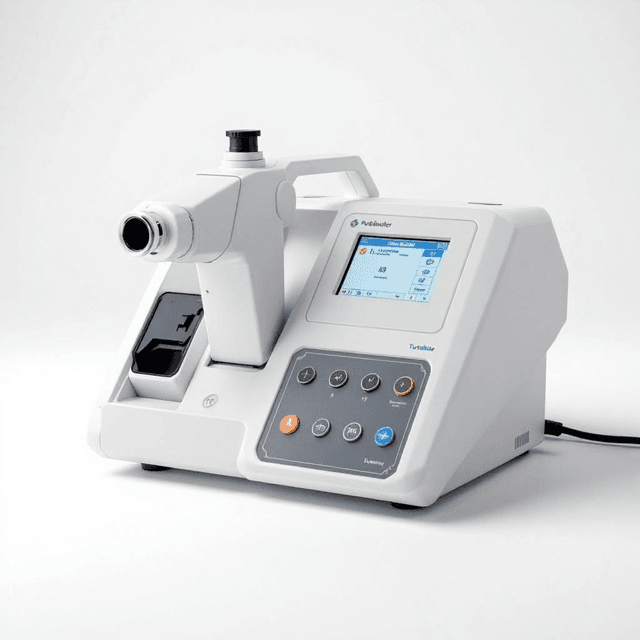
Benchtop spectrophotometer for microvolume nucleic acid and protein quantification with 0.5 µL minimum sample volume and integrated touchscreen interface.

Louise Corscadden, PhD
Director of Science · ConductScience
Ask Louise about Microvolume Spectrophotometer fit, setup, configuration, or quote prep.
Already working with us? Sign in to connect this with My Scientist.
Key Specifications
Full details →- Model fit
- Configured during quote
- SKU family
- CS-958402
- Shipping box
- 9.84 x 8.07 x 6.3 cm
- Ordering
- Online checkout and quote request available
- Category
- Analytical Instruments
- Build notes
- Confirm accessories, station layout, and support needs before purchase
The Microvolume Spectrophotometer is a benchtop analytical instrument designed for precise concentration measurements of nucleic acids and proteins using minimal sample volumes. Utilizing a xenon flash lamp light source and 2048-element linear CCD array detector, this system quantifies biomolecules across a 190-850 nm wavelength range with measurement volumes as low as 0.5 µL. The instrument supports both microvolume pedestal measurements and standard cuvette-based analysis, enabling researchers to conserve precious samples while maintaining analytical accuracy.
The system features an integrated touchscreen interface with pre-loaded measurement protocols for DNA, RNA, and protein quantification, eliminating the need for external computer control during routine operations. Multiple measurement modes including absorbance, concentration, purity ratios, kinetics, and OD600 cell density measurements provide comprehensive analytical capabilities for molecular biology applications. Rapid measurement cycles of less than 5 seconds for microvolume samples enable high-throughput sample processing in research workflows.
How It Works
The instrument operates on the Beer-Lambert law principle, measuring light absorption by samples at specific wavelengths to determine concentration. A xenon flash lamp generates broad-spectrum light from 190-850 nm, which passes through the sample and is dispersed by a diffraction grating onto a 2048-element linear CCD array detector. This configuration enables simultaneous measurement across the entire UV-visible spectrum, providing both concentration data and spectral profiles for purity assessment.
For microvolume measurements, samples are pipetted onto a pedestal with defined 0.5 mm or 1.0 mm path lengths, utilizing surface tension to maintain sample geometry. The system automatically adjusts path length selection based on sample concentration to optimize measurement range. Standard cuvette measurements employ a 10 mm path length for conventional absorption spectroscopy. The CCD array captures the complete absorption spectrum in a single measurement cycle, enabling rapid analysis and calculation of concentration ratios such as A260/A280 for nucleic acid purity assessment.
Features & Benefits
Instrument Type
- Spectrophotometry
Application Area
- Molecular Biology
Automation Level
- manual
Minimum Sample Volume
- 0.5 µl
Sample Volume Range
- 0.5 µl to 10 µl
Typical Sample Volume
- 1-2 μL
Warmup Time
- 10 minutes minimum
Sample Types Supported
- DNA, RNA, proteins, microarrays
Measurement Modes
- absorbance, concentration, purity
Concentration Units
- ng/μL or μg/mL
Software Requirement
- none (stand-alone instrument)
Computer Connection Required
- no
Display Type
- Touchscreen
Research Domain
- Analytical Chemistry
- Cancer Research
- Cell Biology
- Microbiology
- Molecular Biology
- Pharmaceutical QC
Shipping weight
- 5.51 lb
Shipping box
- L: 9.84 cm
- W: 8.07 cm
- H: 6.3 cm
| Feature | This Product | Typical Alternative | Advantage |
|---|---|---|---|
| Minimum Sample Volume | 0.5 µL microvolume measurement capability | Entry-level systems often require 100-1000 µL sample volumes | Preserves precious samples and reduces reagent costs in molecular biology applications. |
| Wavelength Range | 190-850 nm full UV-visible spectrum | Basic models may offer limited wavelength ranges or require filter changes | Enables comprehensive spectral analysis and multiple measurement types without hardware modifications. |
| User Interface | Integrated touchscreen with pre-loaded methods | Many systems require external computer control and software installation | Simplifies operation and reduces equipment footprint in crowded laboratory environments. |
| Measurement Speed | Less than 5 seconds for microvolume measurements | Traditional systems often require longer measurement cycles | Increases sample throughput and reduces analysis time in busy laboratories. |
| Path Length Options | Dual microvolume path lengths (0.5 mm and 1.0 mm) plus standard cuvette | Fixed path length systems limit concentration range flexibility | Accommodates wide concentration ranges without sample dilution requirements. |
| Detector Technology | 2048-element linear CCD array for simultaneous spectrum capture | Single photodiode systems measure one wavelength at a time | Provides complete spectral information and purity ratios in single measurement cycle. |
This microvolume spectrophotometer combines minimal sample volume requirements with comprehensive analytical capabilities and user-friendly operation. The integration of CCD array detection, touchscreen interface, and dual path length options provides a versatile platform for molecular biology and analytical chemistry applications where sample conservation is critical.
Practical Tips
Allow minimum 10 minutes warmup time for xenon lamp stabilization before performing measurements or calibration checks.
Why: Lamp output stability is critical for measurement accuracy and reproducibility.
Clean the pedestal surface with lint-free wipes and appropriate solvent between samples to prevent cross-contamination.
Why: Residual sample can affect subsequent measurements and alter path length geometry.
Match the blank solvent exactly to your sample solvent and perform fresh blanks when changing buffer systems.
Why: Solvent absorption characteristics can vary significantly across the UV-visible range.
If measurements appear inconsistent, check for air bubbles in the sample drop and ensure complete pedestal coverage.
Why: Air bubbles and incomplete sample coverage alter the effective path length and scatter light.
Use the appropriate path length (0.5 mm or 1.0 mm) based on expected concentration to optimize measurement accuracy.
Why: Path length selection affects the absorbance range and measurement precision for different concentration levels.
Avoid looking directly at the xenon flash lamp during operation and ensure proper ventilation around the instrument.
Why: Xenon lamps produce intense UV radiation and generate heat during operation.
Store samples at appropriate temperature and measure immediately after removal from storage to minimize degradation.
Why: Nucleic acids and proteins can degrade rapidly at room temperature, affecting concentration measurements.
Review the complete absorption spectrum, not just concentration values, to identify potential contaminants or degradation products.
Why: Spectral profiles provide additional information about sample quality beyond simple concentration measurements.
Setup Guide
What’s in the Box
- Microvolume Spectrophotometer main unit
- Power cord
- USB cable
- User manual and software documentation
- Calibration certificate (typical)
- Sample cleaning kit (typical)
Warranty
ConductScience provides a 1-year limited warranty covering manufacturing defects and component failures under normal laboratory use conditions. Technical support includes software updates, calibration guidance, and troubleshooting assistance.
Compliance
References
Background reading relevant to this product:
What is the measurement accuracy for low-concentration DNA samples?
The instrument can measure dsDNA concentrations as low as 2 ng/µL using the 1.0 mm path length. Accuracy depends on proper blanking and path length selection. Consult product datasheet for specific accuracy specifications across the concentration range.
Can the system measure protein A280 absorbance for concentration calculations?
Yes, the 190-850 nm wavelength range includes the 280 nm protein absorption peak. The system can calculate protein concentrations using A280 measurements and extinction coefficients, with a measurement range of 0.03-200 mg/mL.
How do I maintain measurement accuracy over time?
Perform regular blank measurements using appropriate solvents, clean the pedestal surface between samples, and allow proper warmup time. The xenon lamp provides stable output but may require periodic calibration verification.
What data export formats are available?
The system includes USB and Ethernet connectivity for data transfer. Optional PC software enables data export and further analysis. Consult user manual for specific file formats and data management capabilities.
Can I measure samples in organic solvents?
The system can measure samples in various solvents within the UV-visible range. Solvent compatibility depends on path length material and UV absorption characteristics. Perform appropriate blanking with the same solvent used for samples.
How does this compare to traditional cuvette-based spectrophotometers?
The primary advantage is microvolume capability (0.5 µL minimum) versus traditional systems requiring 100-1000 µL samples. The pedestal design eliminates cuvette requirements for small samples while maintaining measurement accuracy.
What is the typical measurement reproducibility?
Reproducibility depends on sample type, concentration, and measurement conditions. The CCD array detector and xenon lamp provide stable measurements. Consult product datasheet for specific precision specifications.
Can I perform kinetic measurements for enzyme assays?
Yes, the system includes kinetic measurement modes for time-course experiments. The rapid measurement cycles (<5 seconds) enable monitoring of enzymatic reactions and other dynamic processes.
Have a question about this product?
Have a question? Just ask.
Send it over and we'll email you a personalized answer — no call, no scheduling.
Prefer to talk it through?
Accessories
Enhance your setup with compatible accessories
Frequently Bought Together