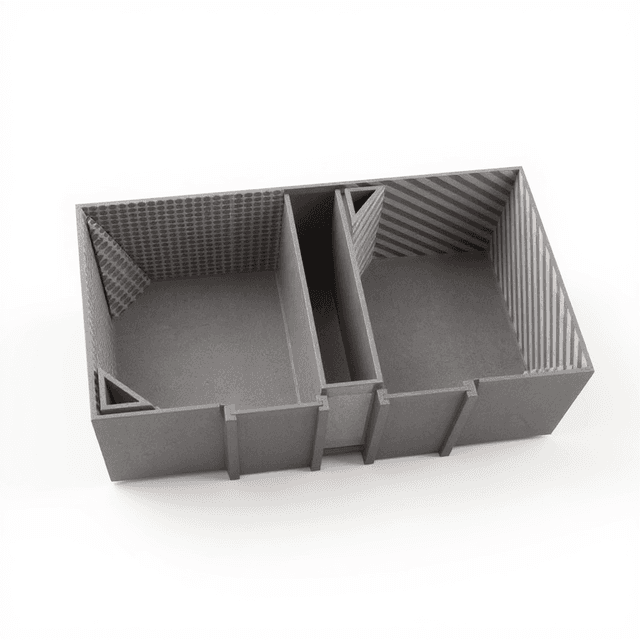
Vapor Chambers
Dual-chamber vapor inhalation system for controlled exposure of rodents to volatile substances in developmental toxicology and teratology research.

Louise Corscadden, PhD
Director of Science · ConductScience
Ask Louise about Vapor Chambers fit, setup, configuration, or quote prep.
Already working with us? Sign in to connect this with My Scientist.
Key Specifications
Full details →- Model fit
- Mouse
- SKU family
- CS-958351
- Shipping box
- 22.0 x 32.0 x 14.0 cm
- Ordering
- Online checkout and quote request available
- Category
- Behavioral Mazes
- Build notes
- Acrylic
The Vapor Chambers system provides controlled inhalation exposure of volatile substances to rodent subjects for developmental toxicology and teratology research. This dual-chamber system exposes animals to vaporized test chemicals in a precisely controlled environment, maintaining consistent vapor concentrations, airflow, humidity, and temperature throughout exposure periods. The system is specifically designed for prenatal and developmental exposure studies where precise timing and dosage control are critical.
Each chamber accommodates up to 6 standard shoebox mouse cages, allowing simultaneous exposure of multiple subjects while maintaining standardized housing conditions. The system includes one test chamber for experimental exposures and one control chamber for concurrent control groups, enabling robust experimental design. The vapor delivery system can accommodate any volatile liquid, with particular applications in ethanol exposure research for modeling fetal alcohol spectrum disorders and other developmental neurotoxicity studies.
How It Works
The vapor chamber system operates by generating controlled concentrations of volatile test substances through evaporation and precise airflow mixing. The 600 ml capacity vapor source flask contains the test chemical, which evaporates and mixes with incoming air through adjustable flow regulators. The ethanol-air mixture flows at approximately half the volume of plain air, allowing fine control of vapor concentration.
Air circulation is maintained by a central air pump with T-connector distribution to both chambers. Each chamber features dedicated vapor inlets and air outlets to ensure consistent environmental conditions and prevent cross-contamination. The acrylic construction provides visual monitoring of subjects while maintaining chemical compatibility with volatile substances.
Temperature, humidity, and airflow are maintained at consistent levels throughout exposure periods, reducing variability that could confound experimental results. The dual-chamber design enables simultaneous control and treatment group exposure under identical environmental conditions except for the presence of test vapor.
Features & Benefits
Add-ons and modifications
| Add-on | Price | Details |
|---|---|---|
| Vapor Delivery Apparatus | $4,990 | 2 Enclosures: Acrylic, 22 L x 32 W x 14 H inch + door + vapor inlets + air outlets Vapor delivery: Air pump with T connector; 2 air flow regulators; filter flas |
Add any of these to your quote request.
Number of Chambers
- 2 chambers (1 test chamber, 1 control chamber)
Cage Capacity
- up to 6 standard shoebox mouse cages per chamber
Chamber Volume
- 22 L x 32 W x 14 H inches each
Vapor Source Capacity
- 600 ml volatile test chemical
Compatible Substances
- any volatile liquid, including ethanol
Airflow Regulation
- adjustable airflow with ethanol-air mix roughly half volume of plain air
Components Included
- 2 enclosures with vapor inlets and air outlets, air pump with T connector, 2 air flow regulators, filter flask
Automation Level
- manual
Material
- Acrylic
Species
- Mouse
Dimensions
- 22 inches x 32 inches x 14 inches
Research Domain
- Behavioral Pharmacology
- Developmental Toxicology
- Neuroscience
- Toxicology
Shipping weight
- 6.06 lb
Shipping box
- L: 22.0 cm
- W: 32.0 cm
- H: 14.0 cm
| Feature | This Product | Typical Alternative | Advantage |
|---|---|---|---|
| Chamber Configuration | Dual-chamber system with dedicated test and control chambers | Single chamber systems requiring sequential exposures | Enables concurrent treatment and control groups under identical environmental conditions. |
| Housing Capacity | Up to 6 standard shoebox mouse cages per chamber | Smaller capacity systems accommodate 2-4 cages | Supports larger group sizes for improved statistical power in developmental studies. |
| Vapor Source Capacity | 600 ml volatile test chemical capacity | Entry-level systems often have 100-300 ml capacity | Enables extended exposure periods without interruption for refilling. |
| Flow Control | Adjustable airflow regulators with precise vapor-to-air mixing | Fixed flow systems with limited concentration control | Allows fine-tuning of exposure concentrations for dose-response studies. |
| Construction Material | Acrylic chambers with visual access | Metal chambers without visual monitoring capability | Permits continuous behavioral observation during exposure periods. |
| Chemical Compatibility | Compatible with any volatile liquid including ethanol | Systems limited to specific chemical classes | Provides flexibility for diverse research applications across different volatile substances. |
This vapor chamber system offers dual-chamber capability for concurrent experimental design, high-capacity housing for larger study groups, and flexible chemical compatibility. The 600 ml vapor source and adjustable flow controls support extended developmental exposure protocols.
Practical Tips
Calibrate airflow rates before each study using a flow meter to ensure consistent vapor delivery.
Why: Precise flow control is essential for reproducible exposure concentrations across experimental sessions.
Clean vapor contact surfaces with appropriate solvents and inspect tubing for chemical degradation after each use.
Why: Residual chemicals can affect subsequent exposures and degraded tubing can alter flow characteristics.
Allow the system to equilibrate for 15-30 minutes before introducing animals to achieve stable vapor concentrations.
Why: Initial concentration fluctuations can introduce variability in early exposure periods.
Operate in a well-ventilated area with appropriate fume extraction and personal protective equipment.
Why: Volatile test substances pose inhalation risks to laboratory personnel during setup and operation.
Monitor chamber temperature and humidity alongside vapor concentration to account for environmental variables.
Why: Temperature and humidity can affect vapor generation rates and animal physiology during exposure.
Check all tubing connections and airflow regulators if vapor delivery appears inconsistent between chambers.
Why: Loose connections or clogged regulators can create uneven exposure conditions across treatment groups.
Use the control chamber for every experiment even when not required by the specific research question.
Why: Concurrent controls account for handling stress and environmental factors that could confound results.
Setup Guide
What’s in the Box
- 2 acrylic exposure chambers (22 x 32 x 14 inches each)
- Air pump with T-connector
- 2 airflow regulators
- Filter flask (600 ml capacity)
- Connecting tubing
- Setup instructions (typical)
Warranty
ConductScience provides a standard 1-year manufacturer warranty covering defects in materials and workmanship, with technical support for setup and operation protocols.
Compliance
What vapor concentrations can be achieved with this system?
Vapor concentration depends on the volatility of the test substance, temperature, and airflow settings. The adjustable regulators allow ethanol-air mixture at approximately half the volume of plain air flow. Consult product datasheet for specific concentration calculations for your test compound.
How long can continuous exposures be maintained?
The 600 ml vapor source capacity supports extended exposure periods typical of developmental studies. Duration depends on evaporation rate of the test substance and desired vapor concentration.
What maintenance is required between studies?
Clean all vapor contact surfaces with appropriate solvents, replace any contaminated tubing, and verify airflow calibration. The acrylic chambers can be cleaned with standard laboratory detergents.
Can the system accommodate species other than mice?
While designed for standard mouse cages, the chambers can house other small rodent species with appropriate cage modifications, provided total volume does not exceed 6 standard shoebox equivalents per chamber.
How is cross-contamination prevented between chambers?
Each chamber has dedicated vapor inlets and air outlets with no shared air paths. The control chamber receives only filtered air while the test chamber receives vapor mixture.
What volatile substances are compatible with the system?
Any volatile liquid can be used, including ethanol, organic solvents, and other chemical vapors. Ensure compatibility with acrylic construction and provide adequate ventilation for the specific substance.
How is vapor concentration monitored during exposure?
The system does not include integrated monitoring equipment. External vapor analyzers or sampling ports may be added to measure actual concentrations during exposure periods.
Have a question about this product?
Have a question? Just ask.
Send it over and we'll email you a personalized answer — no call, no scheduling.
Prefer to talk it through?
Accessories
Enhance your setup with compatible accessories

Frequently Bought Together