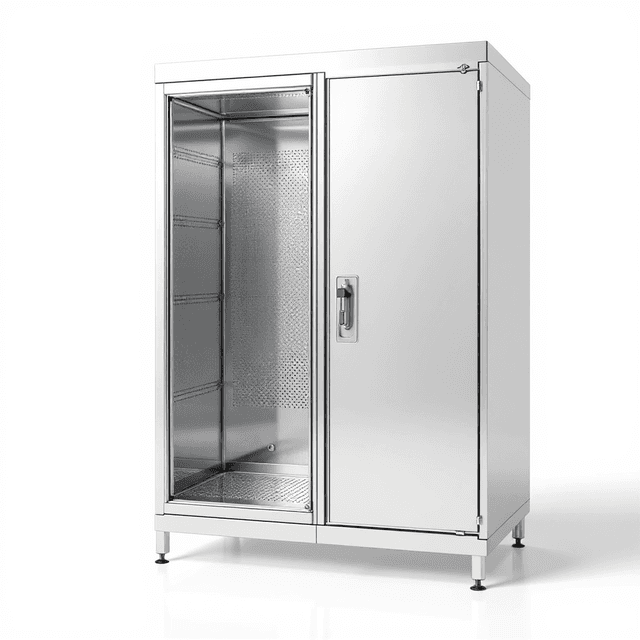
Laboratory Metal Stainless Steel Single Faucet Double Sink Hand Basin
Stainless steel dual-basin laboratory sink with single faucet design for dedicated hand hygiene and equipment decontamination workflows in research environments.
| Automation Level | manual |
| Brand | ConductScience |

The Laboratory Metal Stainless Steel Single Faucet Double Sink Hand Basin provides dedicated handwashing and equipment decontamination capabilities for research environments. Constructed from stainless steel, this dual-basin configuration enables simultaneous or sequential hand hygiene and tool cleaning workflows while maintaining separation between personnel and equipment decontamination processes.
The single faucet design with dual basins allows researchers to establish distinct protocols for hand hygiene versus equipment cleaning, supporting contamination control procedures in microbiological, pharmaceutical, and clinical research settings. The stainless steel construction provides chemical resistance and facilitates routine disinfection protocols required in regulated laboratory environments.
How It Works
The dual-basin configuration operates on the principle of workflow separation to minimize cross-contamination between personnel hygiene and equipment cleaning processes. The single faucet design allows controlled water flow to either basin, enabling researchers to establish distinct protocols for each basin while maintaining centralized water control.
The stainless steel construction provides a non-porous surface that resists bacterial adhesion and facilitates effective disinfection with standard laboratory cleaning agents. The dual-basin design allows simultaneous hand hygiene and equipment cleaning activities, or sequential use with different decontamination protocols for each basin. Water flow can be directed to either basin as needed, supporting flexible workflow management in laboratory settings.
Features & Benefits
Automation Level
- manual
Brand
- ConductScience
Research Domain
- Cell Biology
- Clinical Diagnostics
- Environmental Monitoring
- Food Science
- Microbiology
- Pharmaceutical QC
Weight
- 36.71 kg
Dimensions
- L: 78.0 mm
- W: 70.0 mm
- H: 73.3 mm
Comparison Guide
| Feature | This Product | Typical Alternative | Advantage |
|---|---|---|---|
| Basin Configuration | Dual-basin design with single faucet control | Single-basin configurations are more common in basic laboratory setups | Enables workflow separation between hand hygiene and equipment cleaning to reduce cross-contamination risk. |
| Construction Material | Stainless steel construction | Entry-level models may use composite or ceramic materials | Provides superior chemical resistance and facilitates effective disinfection with laboratory cleaning agents. |
| Faucet Design | Single faucet with dual-basin access | Some models offer separate faucets for each basin | Simplifies plumbing installation while maintaining flexible water flow control for different basin uses. |
| Laboratory Focus | Designed specifically for research laboratory applications | General-purpose utility sinks may lack laboratory-specific features | Optimized dimensions and configuration support research workflow requirements and contamination control protocols. |
This laboratory sink offers dual-basin functionality with single faucet control in stainless steel construction, providing workflow flexibility for research environments requiring separation of hand hygiene and equipment cleaning protocols.
Practical Tips
Designate specific basins for hand hygiene versus equipment cleaning and post clear signage for laboratory personnel.
Why: Consistent basin usage protocols minimize cross-contamination between personnel and equipment workflows.
Clean and disinfect both basins daily with appropriate laboratory disinfectant, paying attention to drain areas where residues can accumulate.
Why: Regular cleaning prevents bacterial buildup and maintains the effectiveness of contamination control protocols.
Install appropriate water temperature controls to prevent scalding while ensuring adequate temperature for effective handwashing.
Why: Proper water temperature supports effective hand hygiene while protecting personnel from thermal injury.
Verify water temperature regularly to ensure compliance with handwashing protocol requirements in your laboratory's biosafety guidelines.
Why: Consistent water temperature is critical for effective handwashing efficacy in contamination control protocols.
If drainage becomes slow in either basin, check for debris accumulation in drain screens and clean as needed.
Why: Proper drainage prevents standing water that can harbor bacterial growth and compromise laboratory hygiene.
Document basin usage protocols in laboratory SOPs and train personnel on proper handwashing versus equipment cleaning procedures.
Why: Standardized protocols ensure consistent contamination control practices across all laboratory personnel.
Setup Guide
What’s in the Box
- Stainless steel dual-basin sink unit (typical)
- Single faucet assembly (typical)
- Mounting hardware (typical)
- Installation instructions (typical)
- Plumbing connection fittings (typical)
Warranty
ConductScience provides standard manufacturer warranty coverage for material defects and construction quality. Technical support available for installation and operational questions.
Compliance
References
Background reading relevant to this product:
What are the advantages of dual basins versus single basin laboratory sinks?
Dual basins enable workflow separation between hand hygiene and equipment cleaning, reducing cross-contamination risk. One basin can be dedicated to personnel handwashing while the second handles tool and glassware decontamination.
What disinfectants are compatible with stainless steel laboratory sinks?
Standard laboratory disinfectants including 70% ethanol, isopropanol, quaternary ammonium compounds, and sodium hypochlorite solutions are compatible with stainless steel surfaces. Avoid prolonged contact with strong acids or chloride-containing cleaners.
How should different protocols be established for each basin?
Designate one basin specifically for hand hygiene following standard handwashing protocols, and reserve the second basin for equipment cleaning and decontamination. Post clear signage indicating the intended use for each basin.
What plumbing requirements are needed for installation?
Standard hot and cold water supply lines are required, along with proper drainage for both basins. Consult local plumbing codes for specific requirements in laboratory environments.
Can this sink meet biosafety level requirements for microbiology laboratories?
The unit provides handwashing capability required across all biosafety levels. For BSL-2 and higher, verify placement near laboratory exit and consider foot or elbow-operated controls per facility requirements.
How does this compare to single-basin laboratory sinks?
Dual-basin design provides workflow flexibility and contamination control advantages over single-basin units, though requires more bench space. Single-basin sinks are adequate for basic handwashing but limit simultaneous hand hygiene and equipment cleaning activities.
Have a question about this product?