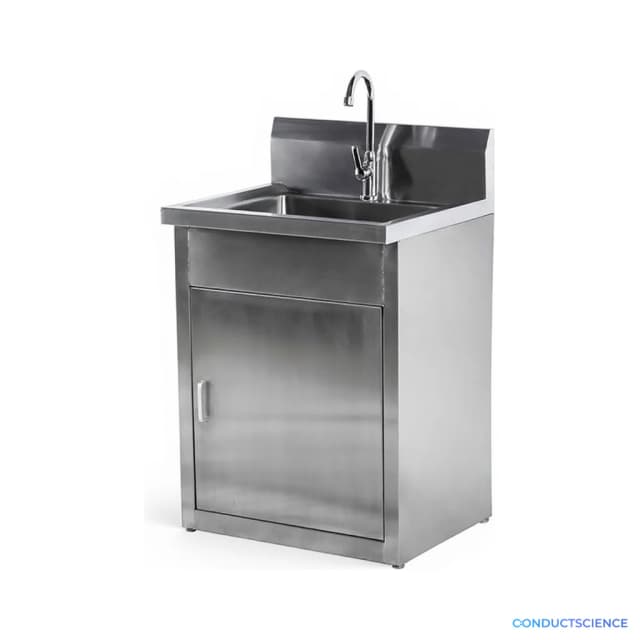
Safety Storage Cabinet
Double-wall anti-fire steel safety cabinet for secure storage of flammable liquids and hazardous chemicals in laboratory environments, available in capacities from 4 to 90 gallons.

Louise Corscadden, PhD
Director of Science · ConductScience
Ask Louise about Safety Storage Cabinet fit, setup, configuration, or quote prep.
Already working with us? Sign in to connect this with My Scientist.
Key Specifications
Full details →- Model fit
- Configured during quote
- SKU family
- BIO-0754
- Shipping box
- 42.0 x 43.6 x 38.0 cm
- Ordering
- Online checkout and quote request available
- Category
- Storage & Furniture
- Build notes
- Double-layer anti-fire cold-rolled steel
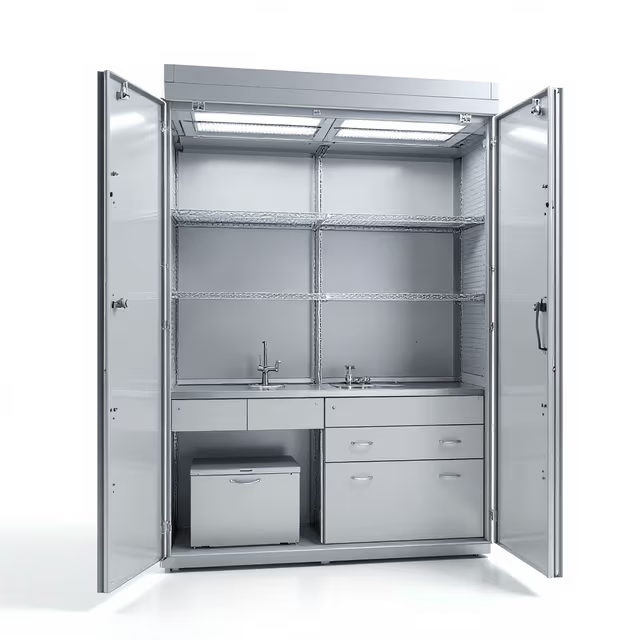
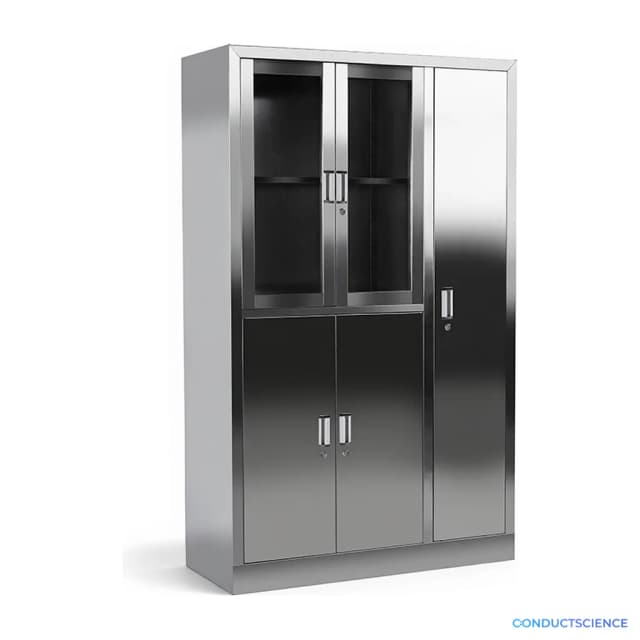
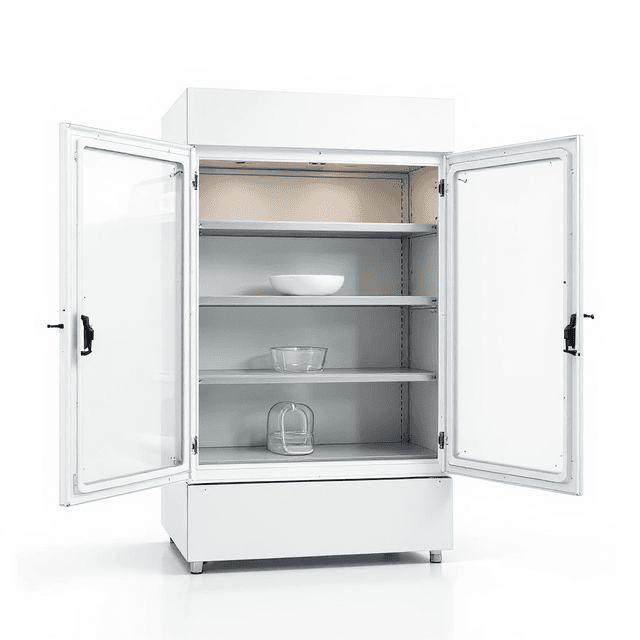
The Safety Storage Cabinet is a double-layer anti-fire cold-rolled steel security cabinet designed for safe storage of flammable liquids, chemicals, and hazardous materials in laboratory and industrial environments. Available in six capacity options ranging from 4 gallons (15L) to 90 gallons (340L), these cabinets feature manual single doors and adjustable shelving systems to accommodate various container sizes and storage requirements.
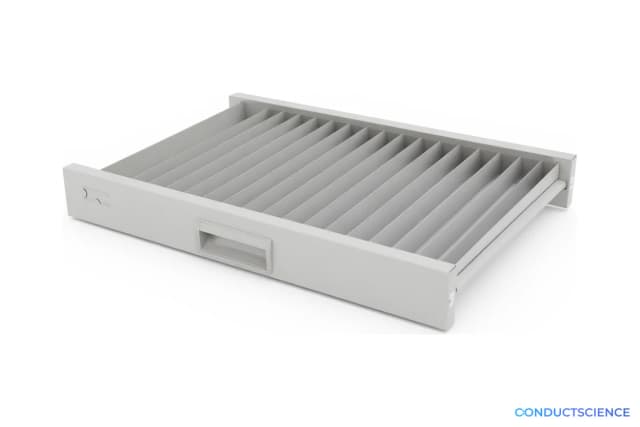
The double-wall steel construction with anti-fire properties provides containment and protection for volatile solvents, reagents, and other hazardous chemicals commonly used in research facilities. Each cabinet includes adjustable shelving (1-3 pieces depending on model) to optimize storage space utilization while maintaining proper segregation of incompatible materials.
How It Works
Safety storage cabinets operate on the principle of secondary containment and fire resistance through double-wall steel construction. The outer and inner walls are separated by an air gap that provides thermal insulation, while the anti-fire cold-rolled steel composition resists temperature elevation during fire events. This design prevents external heat from reaching stored chemicals and limits vapor release during emergency situations.
The cabinet's ventilation design allows for optional connection to laboratory exhaust systems while maintaining negative pressure to contain vapors. Manual door operation with secure latching mechanisms prevents unauthorized access while allowing quick retrieval during normal operations. Adjustable shelving systems accommodate various container sizes while maintaining proper weight distribution and preventing tipping hazards.
Features & Benefits
Automation Level
- manual
BKSC-12Y
- BKSC-22Y
BKSC-30Y
- BKSC-45Y
BKSC-60Y
- BKSC-90Y
Material
- Double-layer anti-fire cold-rolled steel
12 galton(45L)
- 22 gallon(83L)
30 gallon(114L)
- 45 gallon(170L)
60 gallon(227L)
- 90 gallon(340L)
Adjustable Shelf
- 1pc
3pcs
- 1pc
Door
- Single/Manual
External Size(W*D*H)mm
- 430*430*560
590*460*890
- 600*460*1650
1090*460*1120
- 1090*460*1650
Brand
- ConductScience
Research Domain
- Analytical Chemistry
- Environmental Monitoring
- Industrial Hygiene
- Materials Science
- Microbiology
- Pharmaceutical QC
- Toxicology
Capacity
- 4 gallon(15L)
Shipping weight
- 28.0 lb
Shipping box
- L: 42.0 cm
- W: 43.6 cm
- H: 38.0 cm
| Feature | This Product | Typical Alternative | Advantage |
|---|---|---|---|
| Construction Material | Double-layer anti-fire cold-rolled steel | Single-wall steel or plastic construction in entry-level models | Enhanced fire protection and structural integrity for long-term chemical storage safety. |
| Capacity Range | Six models from 4 to 90 gallons | Limited size options in basic cabinet lines | Accommodates diverse laboratory storage requirements from small research groups to production facilities. |
| Shelf Adjustability | 1-3 adjustable shelves depending on model | Fixed shelving in budget storage units | Optimizes space utilization for varying container sizes and improves inventory organization. |
| Door Configuration | Single manual door with secure latching | Varies by model, some lack secure locking mechanisms | Provides controlled access while maintaining quick retrieval capabilities during normal operations. |
This safety cabinet series offers comprehensive fire protection through double-wall steel construction across multiple capacity options. The adjustable shelving system and manual door operation provide practical functionality for diverse laboratory chemical storage requirements.
Practical Tips
Organize chemicals by compatibility groups and label shelf locations for quick identification during emergency situations.
Why: Proper organization prevents accidental mixing of incompatible materials and speeds emergency response.
Clean up chemical spills immediately using appropriate absorbent materials and verify cabinet integrity after incidents.
Why: Prompt cleanup prevents corrosion damage and maintains the cabinet's protective capabilities.
Maintain proper grounding connections to prevent static electricity buildup during chemical transfer operations.
Why: Static discharge can ignite flammable vapors, making grounding essential for fire prevention.
Avoid storing containers directly on cabinet floor; use shelving to enable proper air circulation and spill containment.
Why: Elevated storage improves ventilation and prevents containers from sitting in potential spilled liquids.
Inspect door seals monthly and replace if cracking or gaps develop to maintain vapor containment.
Why: Damaged seals allow vapor escape and reduce the cabinet's ability to contain hazardous fumes.
If door alignment issues develop, check for level installation and adjust feet as needed before adjusting hinges.
Why: Unlevel installation causes door misalignment and can prevent proper sealing of the storage compartment.
Keep inventory logs current and conduct regular inspections for container integrity and expiration dates.
Why: Updated records enable proper chemical rotation and help identify containers requiring replacement or disposal.
Setup Guide
What’s in the Box
- Safety storage cabinet main unit
- Adjustable shelves (quantity varies by model)
- Door hardware and keys
- Installation and safety manual
- Warning labels and placards (typical)
- Grounding strap and hardware (typical)
Warranty
ConductScience provides standard one-year manufacturer warranty covering defects in materials and workmanship, with technical support available for installation and operational guidance.
Compliance
What types of chemicals can be safely stored together in these cabinets?
Store only compatible chemicals together following established segregation protocols. Separate acids from bases, oxidizers from flammables, and water-reactive compounds from aqueous solutions. Consult safety data sheets and institutional chemical hygiene plans for specific compatibility requirements.
How do I determine the appropriate cabinet size for my laboratory?
Calculate total volume of flammable liquids requiring storage, considering future inventory growth. Factor in container sizes and shapes for shelf configuration planning. Smaller labs typically use 12-30 gallon models, while production facilities may require 60-90 gallon capacity.
Is ventilation required for these storage cabinets?
Ventilation requirements depend on local regulations and chemicals stored. Many installations benefit from connection to laboratory exhaust systems to control vapor buildup, though cabinets can operate without forced ventilation in compliance with applicable codes.
What maintenance is required for optimal safety performance?
Inspect door seals and hinges monthly, clean spills immediately, and verify proper shelf loading. Check grounding connections quarterly and ensure warning labels remain visible and intact. Replace damaged components promptly to maintain containment integrity.
Can these cabinets be used for acid storage?
These cabinets are designed primarily for flammable liquid storage. Acid storage requires specialized corrosion-resistant materials and ventilation systems. Consult product specifications and local regulations before storing corrosive materials.
How much weight can each shelf support?
Shelf weight capacity varies by model size and shelf configuration. Distribute weight evenly across shelf surface and avoid concentrated loads. Consult product datasheet for specific weight limits per shelf and total cabinet capacity.
Have a question about this product?
Have a question? Just ask.
Send it over and we'll email you a personalized answer — no call, no scheduling.
Prefer to talk it through?