PP Wall Bench
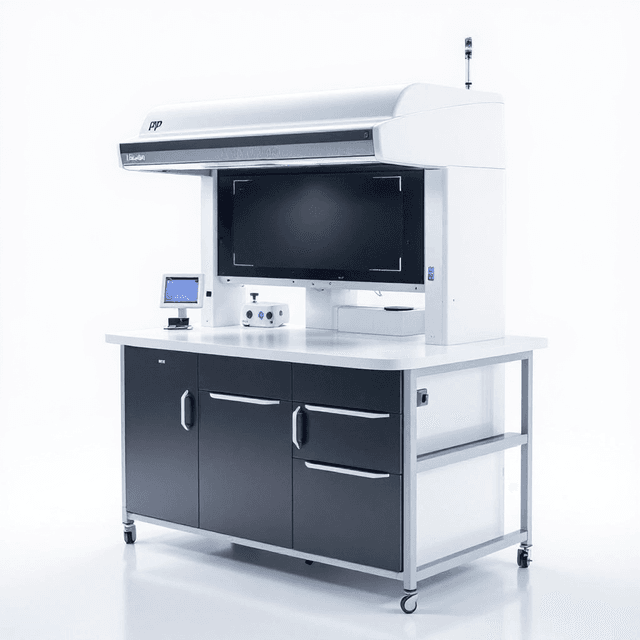
Wall-mounted polypropylene laboratory bench providing chemical-resistant workspace for sample preparation and instrumentation in research environments.

Louise Corscadden, PhD
Director of Science · ConductScience
Ask Louise about PP Wall Bench fit, setup, configuration, or quote prep.
Already working with us? Sign in to connect this with My Scientist.
Key Specifications
Full details →- Model fit
- Configured during quote
- SKU family
- BIO-0756
- Shipping box
- 42.0 x 43.6 x 38.0 cm
- Ordering
- Online checkout and quote request available
- Category
- Storage & Furniture
- Build notes
- Confirm accessories, station layout, and support needs before purchase
The PP Wall Bench is a laboratory-grade furniture solution designed for scientific environments requiring durable, chemical-resistant work surfaces. Constructed from polypropylene (PP), this wall-mounted bench provides a stable platform for laboratory operations while maximizing floor space utilization. The polypropylene construction offers excellent chemical resistance to acids, bases, and organic solvents commonly used in research settings.
This bench serves as a versatile workspace for sample preparation, instrumentation placement, and general laboratory activities. The wall-mounted design eliminates floor support requirements, facilitating cleaning protocols and maintaining unobstructed floor access for equipment mobility. The non-porous surface characteristics of polypropylene prevent contamination absorption and enable thorough decontamination procedures essential in controlled research environments.
How It Works
The PP Wall Bench operates as a passive structural component, utilizing the inherent properties of polypropylene polymer to provide a chemically inert work surface. Polypropylene exhibits excellent resistance to chemical attack due to its saturated hydrocarbon structure, which lacks reactive functional groups that could interact with laboratory chemicals. The material's crystalline structure provides mechanical strength while maintaining flexibility to resist impact damage.
The wall-mounting system transfers load directly to the structural wall, eliminating the need for floor supports and creating an unobstructed workspace below. This design facilitates airflow for laboratory ventilation systems and enables comprehensive cleaning of floor surfaces. The non-porous surface prevents liquid penetration and bacterial growth, while the smooth finish allows for effective decontamination using standard laboratory disinfectants.
Features & Benefits
Brand
- ConductScience
Research Domain
- Analytical Chemistry
- Clinical Diagnostics
- Environmental Monitoring
- Materials Science
- Microbiology
- Pharmaceutical QC
Shipping weight
- 29.98 lb
Shipping box
- L: 42.0 cm
- W: 43.6 cm
- H: 38.0 cm
| Feature | This Product | Typical Alternative | Advantage |
|---|---|---|---|
| Surface Material | Polypropylene construction | Steel or phenolic resin surfaces common in laboratory furniture | Polypropylene offers superior chemical resistance to acids and bases without requiring protective coatings |
| Mounting System | Wall-mounted design | Floor-supported benches with legs or pedestals | Wall mounting maximizes floor space and facilitates comprehensive cleaning beneath work surface |
| Surface Properties | Non-porous polypropylene surface | Varies by model with some having porous or textured surfaces | Non-porous surface prevents contamination absorption and enables thorough decontamination |
| Chemical Compatibility | Broad chemical resistance across acids, bases, and many solvents | Limited chemical resistance requiring surface treatments or coatings | Intrinsic chemical resistance eliminates need for protective surface treatments or frequent replacement |
This polypropylene wall bench offers chemical-resistant workspace with space-efficient mounting design. The non-porous surface enables effective decontamination while the wall-mounted configuration maximizes laboratory floor space utilization.
Practical Tips
Verify wall structural capacity before installation and use appropriate fasteners for the wall material type.
Why: Proper mounting ensures bench stability and prevents failure under load.
Clean spills immediately to prevent staining and inspect mounting points periodically for loosening.
Why: Prompt cleaning maintains surface appearance and regular inspection ensures continued structural integrity.
Use cutting boards or protective mats when performing procedures that could score the polypropylene surface.
Why: Surface scratches can harbor contaminants and compromise the non-porous surface properties.
Ensure bench installation height accommodates proper ergonomic working posture for laboratory personnel.
Why: Proper ergonomics reduces operator fatigue and improves safety during extended laboratory procedures.
Maintain consistent bench organization to prevent cross-contamination between different analytical procedures.
Why: Systematic workspace organization reduces the risk of sample contamination affecting analytical results.
Address any bench movement or instability immediately by checking and retightening mounting hardware.
Why: Bench movement can affect precision procedures and indicates potential mounting system failure.
Setup Guide
What’s in the Box
- PP wall bench surface (typical)
- Mounting brackets (typical)
- Installation hardware (typical)
- Installation instructions (typical)
Warranty
ConductScience provides standard manufacturer warranty coverage for materials and workmanship defects. Technical support is available for installation guidance and product specifications.
Compliance
What chemicals are compatible with the polypropylene surface?
Polypropylene exhibits excellent resistance to most acids, bases, alcohols, and many organic solvents. It is not recommended for use with strong oxidizing agents or aromatic hydrocarbons at elevated temperatures. Consult chemical compatibility charts for specific reagents.
What is the maximum load capacity for this wall-mounted bench?
Load capacity depends on wall structure and mounting configuration. Consult product datasheet for specific weight ratings and ensure wall construction can support the intended load.
Can this bench be used in cleanroom environments?
The non-porous polypropylene surface can be effectively decontaminated for cleanroom use. However, verify that all components meet specific cleanroom classification requirements for your facility.
How should the bench surface be cleaned and maintained?
Clean with mild detergent solution or isopropanol. Avoid abrasive cleaners that could scratch the surface. For disinfection, use standard laboratory disinfectants compatible with polypropylene.
What wall types are suitable for mounting this bench?
Suitable for mounting on structural walls capable of supporting the bench and intended load. Consult installation instructions for specific fastener requirements for different wall materials.
Is the bench resistant to UV degradation?
Polypropylene can experience UV degradation over extended exposure. For laboratories with significant UV exposure, consider UV-stabilized grades or protective measures.
Can the bench height be adjusted after installation?
Height adjustment capability depends on the mounting system design. Consult product specifications for adjustability features and installation requirements.
Have a question about this product?
Have a question? Just ask.
Send it over and we'll email you a personalized answer — no call, no scheduling.
Prefer to talk it through?