Locust Y-Maze
Three-arm behavioral maze for assessing spatial learning, memory, and cognitive function in laboratory rodents through standardized choice paradigms.
| Automation Level | manual |
| Species | Mouse, Rat |

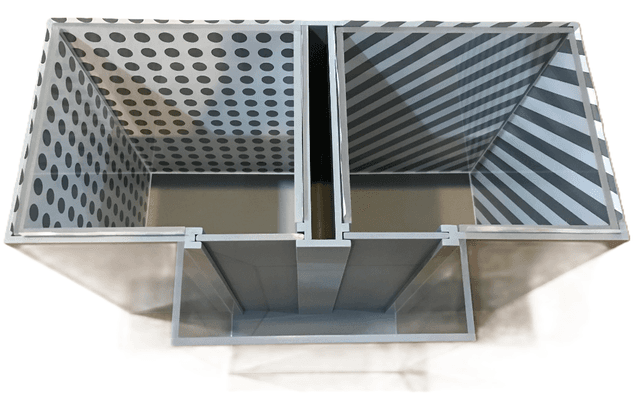
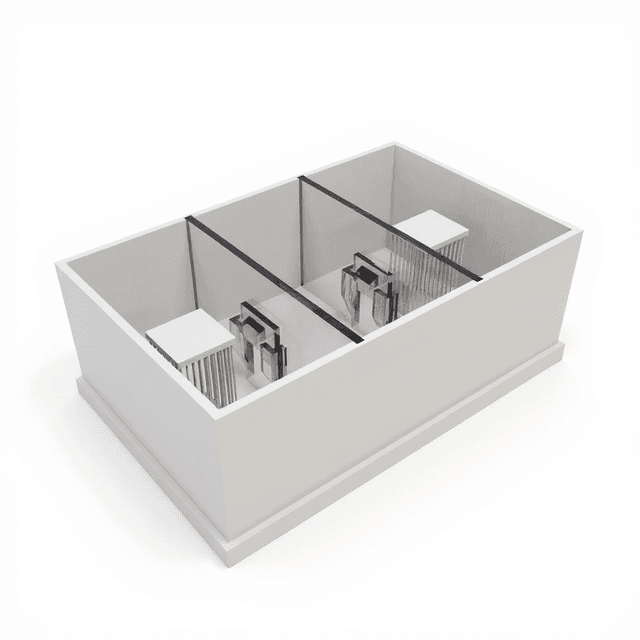
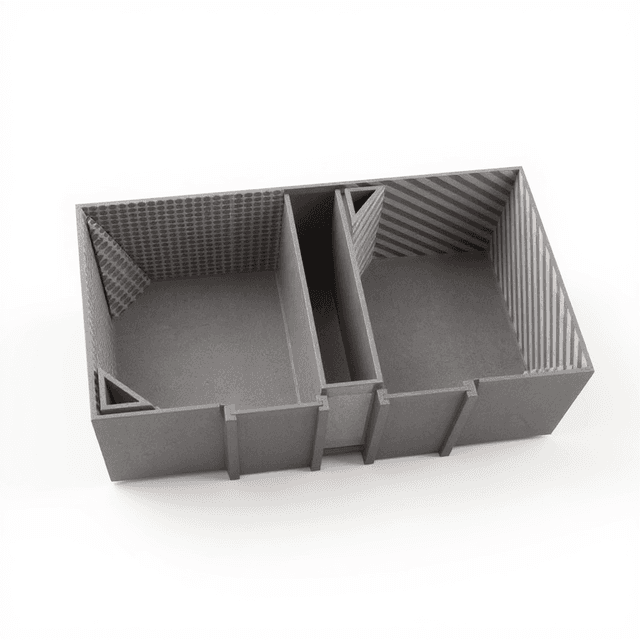
The Locust Y-Maze is a behavioral testing apparatus designed for investigating spatial learning, memory, and decision-making processes in laboratory rodents. This three-arm maze configuration allows researchers to assess cognitive function through forced choice paradigms, where subjects navigate between identical arms to locate rewards or avoid aversive stimuli. The Y-shaped design provides a controlled environment for studying hippocampus-dependent spatial memory formation and retrieval mechanisms.
The apparatus enables standardized behavioral protocols for examining neurological function, cognitive impairment, and the effects of pharmacological interventions on learning and memory processes. Researchers can implement various experimental paradigms including spontaneous alternation, delayed alternation, and spatial reference memory tasks to evaluate different aspects of cognitive performance in rodent models.
How It Works
The Y-maze operates on the principle of spatial choice behavior, where rodents utilize hippocampal-dependent spatial memory systems to navigate between three identical arms. During testing, subjects are placed in the start arm and must choose between two goal arms based on spatial cues, reward contingencies, or learned associations. The maze configuration eliminates visual bias by maintaining identical arm characteristics, forcing reliance on spatial memory rather than visual discrimination.
Behavioral analysis focuses on choice patterns, latency to decision, and alternation frequencies. In spontaneous alternation protocols, intact spatial working memory is demonstrated when animals avoid recently visited arms, typically achieving 60-70% alternation rates above chance levels. Delayed alternation paradigms introduce temporal delays between sample and choice phases, testing working memory capacity under increasing cognitive load.
Data collection involves recording arm entries, time spent in each arm, and choice sequences across multiple trials. These measures provide quantitative assessments of spatial memory accuracy, cognitive flexibility, and learning acquisition rates, enabling statistical comparison between treatment groups and experimental conditions.
Features & Benefits
Behavioral Construct
- Spatial Memory
- Working Memory
- Cognitive Flexibility
- Decision Making
- Spatial Learning
Automation Level
- manual
Research Domain
- Aging Research
- Behavioral Pharmacology
- Learning and Memory
- Neurodegeneration
- Neuroscience
- Toxicology
Species
- Mouse
- Rat
Weight
- 6.06 kg
Dimensions
- L: 65.0 mm
- W: 36.0 mm
- H: 27.0 mm
Comparison Guide
| Feature | This Product | Typical Alternative | Advantage |
|---|---|---|---|
| Arm Configuration | Three-arm Y-shaped design | T-mazes typically offer two-arm configurations | Reduces positional bias and provides more balanced choice paradigms for spatial memory assessment. |
| Spatial Complexity | Moderate complexity with three identical arms | Radial arm mazes offer higher complexity with 8+ arms | Maintains hippocampal-dependent memory demands while reducing task complexity for reliable behavioral assessment. |
| Protocol Flexibility | Supports multiple behavioral paradigms | Some mazes are designed for single protocol types | Enables diverse cognitive assessments from spontaneous alternation to reference memory tasks within one apparatus. |
| Visual Recording | Open-top design for overhead video capture | Enclosed mazes may limit recording angles | Facilitates comprehensive behavioral analysis and automated tracking system integration. |
The Locust Y-Maze provides a balanced approach to spatial memory assessment with moderate complexity suitable for diverse research applications. The three-arm configuration offers reliable behavioral measurements while maintaining experimental flexibility for various cognitive testing protocols.
Practical Tips
Establish baseline performance using naive subjects before experimental manipulations to characterize normal behavioral patterns.
Why: Baseline data provides reference values for detecting treatment-induced changes in cognitive performance.
Clean maze surfaces thoroughly with 70% ethanol between subjects and allow complete drying before next trial.
Why: Olfactory cues from previous subjects can bias behavioral choices and compromise data validity.
Maintain consistent handling procedures and acclimatization periods before testing to minimize stress-induced behavioral variability.
Why: Handling stress can significantly impact cognitive performance and introduce unwanted experimental variance.
Record multiple behavioral parameters simultaneously including choice latency, arm entries, and exploration patterns for comprehensive analysis.
Why: Multiple measures provide robust characterization of cognitive function and increase statistical power for group comparisons.
If subjects show strong arm preferences, rotate maze orientation and check for environmental bias sources like lighting or odor gradients.
Why: Positional biases can mask cognitive deficits and reduce sensitivity to treatment effects in behavioral studies.
Conduct testing at consistent times of day to control for circadian influences on cognitive performance.
Why: Circadian rhythms significantly affect learning and memory processes, potentially confounding experimental results.
Ensure maze edges are smooth and secure to prevent subject injury during behavioral testing sessions.
Why: Subject safety is paramount and injuries can introduce stress responses that affect cognitive performance.
Setup Guide
What’s in the Box
- Y-maze apparatus with three arms and central hub (typical)
- Assembly hardware and connection fittings (typical)
- User manual with behavioral protocols (typical)
- Cleaning and maintenance guidelines (typical)
Warranty
ConductScience provides a standard one-year manufacturer warranty covering defects in materials and workmanship, with technical support for behavioral protocol optimization and troubleshooting.
Compliance
References
Background reading relevant to this product:
What behavioral parameters can be measured using the Y-maze?
The Y-maze enables measurement of choice accuracy, alternation frequency, arm entry latency, time spent in each arm, and total exploration time. These parameters provide quantitative assessment of spatial working memory, cognitive flexibility, and exploratory behavior patterns.
How does spontaneous alternation differ from delayed alternation protocols?
Spontaneous alternation relies on natural exploratory tendencies without training, typically achieving 60-70% alternation rates. Delayed alternation introduces temporal delays between sample and choice phases, requiring explicit training and testing working memory capacity under increasing cognitive load.
What are the optimal trial parameters for reliable behavioral data?
Standard protocols use 5-10 minute trial durations with 8-15 trials per session. Inter-trial intervals of 30-60 seconds allow for maze cleaning between subjects. Multiple testing sessions over 3-5 days provide robust behavioral characterization.
How should the maze be positioned to minimize environmental bias?
Position the maze away from room corners and prominent visual landmarks. Maintain consistent lighting without shadows across arms. Rotate maze orientation between subjects to control for potential spatial bias from room cues.
What statistical analyses are appropriate for Y-maze data?
Use chi-square tests for alternation frequency analysis against chance performance (33.3%). ANOVA or t-tests compare group differences in choice latency and exploration time. Non-parametric tests may be required for non-normally distributed behavioral measures.
Can the Y-maze be adapted for different experimental paradigms?
Yes, the maze supports multiple protocols including rewarded alternation, spatial reference memory tasks, and pharmacological challenge studies. Arm rewards, start positions, and delay intervals can be modified to address specific research questions.
What factors influence behavioral performance in Y-maze testing?
Performance is affected by subject age, strain, sex, handling stress, circadian timing, and prior testing experience. Environmental factors include lighting conditions, temperature, noise levels, and olfactory cues from previous subjects.
Have a question about this product?