Lohand Water Hardness Test
Portable colorimetric test kit for rapid determination of total water hardness using standardized EDTA titration methodology.
| Product name | Model No. |
| Water hardness test | LH2013 |
| Automation Level | manual |
| Brand | ConductScience |

The Lohand Water Hardness Test provides rapid colorimetric and titrimetric analysis of total water hardness expressed as CaCO3 equivalent. This portable test kit employs standardized EDTA titration methodology to quantify calcium and magnesium ion concentrations in water samples. The system requires no specialized instrumentation or training, making it suitable for field measurements and routine laboratory screening.
The kit utilizes visual colorimetric comparison against calibrated charts, enabling determination of water hardness levels within minutes of sample collection. Each test provides quantitative results for total hardness, supporting water quality assessments across multiple research applications where mineral content affects experimental outcomes or equipment performance.
How It Works
The test kit employs EDTA (ethylenediaminetetraacetic acid) complexometric titration principles to quantify calcium and magnesium ions. EDTA forms stable 1:1 complexes with divalent metal ions, with the endpoint detected through colorimetric indicator systems that change color when all metal ions are complexed.
Visual colorimetry is achieved by comparing the developed color against standardized color charts under adequate lighting conditions. The intensity of color development correlates directly with total hardness concentration, expressed as mg/L CaCO3 equivalent. This approach eliminates the need for electronic instrumentation while maintaining analytical reliability based on internationally recognized test methods.
Features & Benefits
Product name
- Model No.
Water hardness test
- LH2013
Automation Level
- manual
Brand
- ConductScience
Research Domain
- Analytical Chemistry
- Environmental Monitoring
- Food Science
- Industrial Hygiene
- Microbiology
- Pharmaceutical QC
Weight
- 0.26 kg
Dimensions
- L: 30.0 mm
- W: 20.0 mm
- H: 10.0 mm
Comparison Guide
| Feature | This Product | Typical Alternative | Advantage |
|---|---|---|---|
| Analysis Method | Visual colorimetry with EDTA titration chemistry | Digital meters often use ion-selective electrodes | No electronic components to calibrate or maintain in field conditions |
| Result Time | Several minutes per sample analysis | Electronic meters provide immediate readings | Rapid analysis without instrument warm-up or calibration procedures |
| Portability | Small size, light weight design | Digital instruments require batteries and protective cases | No power requirements or fragile electronics for remote field use |
| Training Requirements | No specialized training needed | Digital meters often require calibration and maintenance training | Field personnel can conduct testing without extensive technical background |
| Reagent System | Pre-packaged reagents with standardized formulation | Varies by method - some require fresh reagent preparation | Eliminates reagent preparation errors and ensures consistent chemistry |
The kit offers immediate field deployment capability with standardized EDTA chemistry requiring no electronic instrumentation. Visual colorimetry provides quantitative hardness determination through comparison with calibrated charts, suitable for water quality screening applications where rapid results outweigh the precision of laboratory methods.
Practical Tips
Verify colorimetric chart accuracy periodically using certified reference standards with known hardness values.
Why: Chart fading or damage can introduce systematic errors in visual comparisons.
Store reagent packets in sealed containers with desiccant to prevent moisture absorption and degradation.
Why: Humidity exposure can cause reagent clumping and reduced color development intensity.
Conduct color comparisons under consistent lighting conditions, preferably natural daylight or standardized laboratory lighting.
Why: Different light sources can alter color perception and result in measurement variations.
If color development appears incomplete, ensure thorough mixing after reagent addition and verify reaction time requirements.
Why: Insufficient mixing or short reaction time leads to weak color development and low hardness readings.
Run duplicate tests on 10% of samples and investigate results differing by more than one color chart increment.
Why: Duplicate analysis identifies sampling errors, reagent issues, or operator technique problems.
Handle reagents with appropriate personal protective equipment and dispose of test solutions according to local regulations.
Why: EDTA reagents require proper handling and metal complex solutions need appropriate waste disposal.
Record sample temperature, source, and collection time along with hardness results for complete documentation.
Why: Environmental conditions and sample history provide context for interpreting hardness variations.
Setup Guide
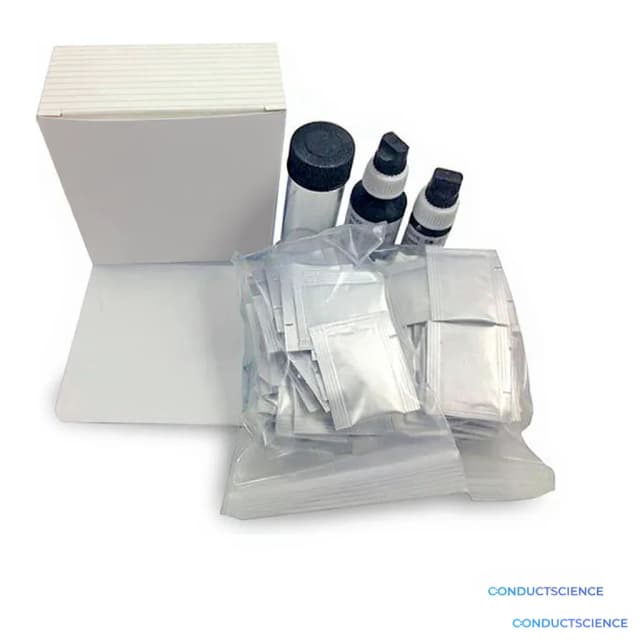
What’s in the Box
- Test tubes for sample analysis (typical)
- Reagent packets for hardness determination
- Colorimetric comparison chart
- Instruction manual with protocol details (typical)
- Sampling guidelines (typical)
Warranty
ConductScience provides standard manufacturer warranty coverage for materials and workmanship. Technical support is available for method questions and troubleshooting assistance.
Compliance
What is the detection range and precision of the hardness measurements?
Consult product datasheet for specific detection limits, measurement range, and precision specifications for the colorimetric methodology employed.
How does sample temperature affect the colorimetric reaction?
Allow samples to equilibrate to room temperature before testing, as temperature variations can affect color development kinetics and final color intensity.
Can the test distinguish between calcium and magnesium hardness?
The standard kit measures total hardness (calcium plus magnesium) as CaCO3 equivalent. Individual ion determination would require separate analytical methods.
What interfering substances affect the colorimetric endpoint?
Heavy metals, iron, and high alkalinity can interfere with EDTA complexation. Consult method documentation for interference information and sample pretreatment options.
How should reagents be stored to maintain stability?
Store reagent packets in cool, dry conditions away from light. Check expiration dates before use and replace reagents showing signs of degradation or clumping.
What quality control procedures ensure reliable results?
Run duplicate analyses on selected samples and use reference standard solutions when available to verify colorimetric chart accuracy and reagent performance.
Can the method be used for highly mineralized water samples?
Very hard water may require sample dilution before analysis to bring results within the colorimetric chart range. Apply appropriate dilution factors to final calculations.
Have a question about this product?
Accessories
Enhance your setup with compatible accessories
Frequently Bought Together
Upgrade Options