Microwave Digester
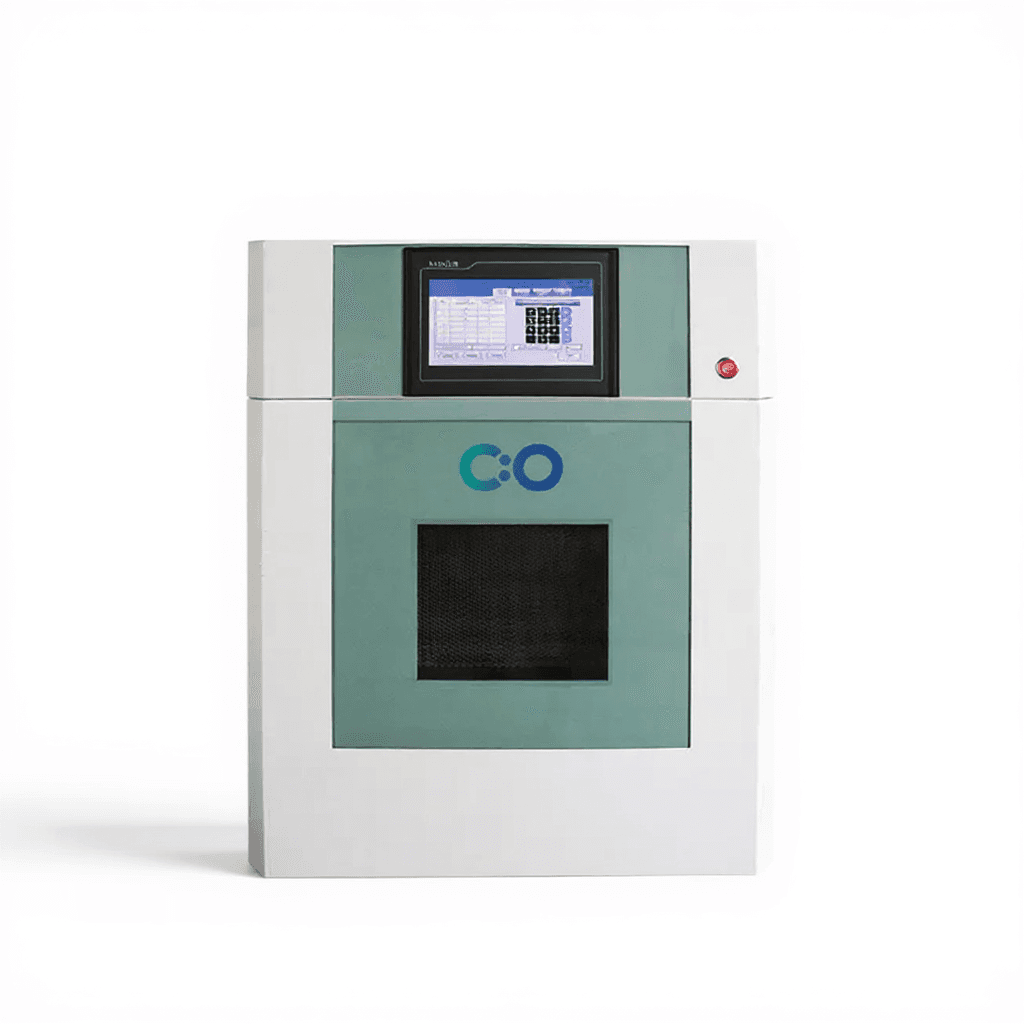
Laboratory microwave digestion system with automatic frequency conversion control, 360° rotation, and non-contact temperature/pressure monitoring for acid digestion of solid samples.
| microwave_control | non-pulse continuous automatic frequency conversion control |
| wave_guide_design | vertical bidirectional wave guide design with 3D output technology |
| chamber_material | SUS316 stainless steel |
| door_type | self-locking buffer explosion-proof furnace door |
| rotation | 360° continuous rotation in same direction |
| temperature_control | non-contact infrared temperature control system |
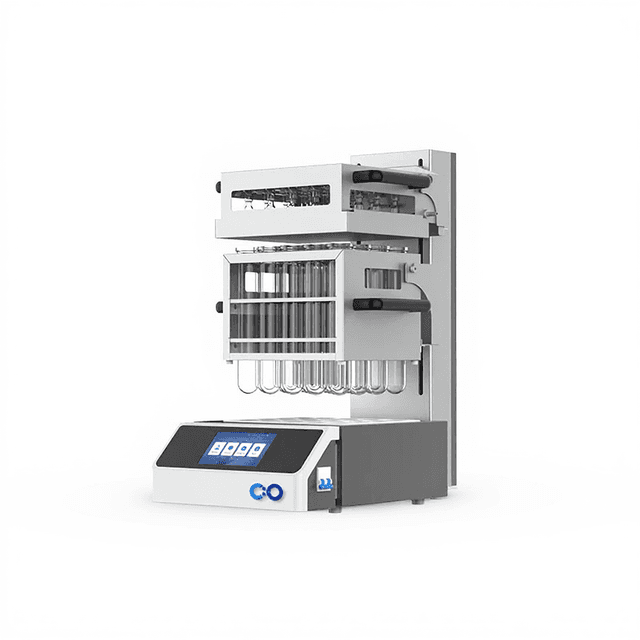
The Microwave Digester is a laboratory-grade sample preparation system designed for acid digestion of solid samples prior to elemental analysis. The system employs non-pulse continuous automatic frequency conversion microwave control with vertical bidirectional wave guide design and 3D output technology to achieve uniform field distribution across all sample positions. The instrument features a SUS316 stainless steel chamber with 360° continuous rotation capability, ensuring consistent microwave exposure for each sample vessel.
The system incorporates non-contact infrared temperature monitoring and pressure control systems with real-time display via 8" TFT-LED touchscreen. Safety features include self-locking buffer explosion-proof door design and fault self-test capabilities with automatic microwave cutoff. Sample vessels utilize TFM inner construction with PEEK aerospace composite outer casing for chemical resistance and pressure containment. The integrated exhaust system provides acid-resistant ventilation with minimum 5m³/min airflow and continuous air cooling function.
How It Works
Microwave-assisted acid digestion utilizes electromagnetic energy at 2.45 GHz frequency to directly heat polar molecules within the sample matrix through dielectric heating. The system's vertical bidirectional wave guide design with 3D output technology ensures uniform field distribution, while continuous automatic frequency conversion control provides precise power modulation from 0-100% output. The 360° continuous rotation mechanism ensures each sample vessel experiences identical microwave exposure conditions, eliminating position-dependent heating variations.
Non-contact infrared temperature monitoring and pressure sensing systems provide real-time process control without direct sensor contact with corrosive digestion media. The TFM inner vessels resist aggressive acid combinations while PEEK outer casings provide pressure containment and thermal insulation. The self-locking buffer explosion-proof door system incorporates pressure relief mechanisms to maintain operator safety during high-pressure digestion procedures.
The integrated exhaust system with acid-resistant centrifugal fan removes corrosive vapors at minimum 5m³/min flow rate, while continuous air cooling prevents vessel overheating during extended digestion cycles. Fault detection algorithms monitor temperature and pressure parameters, automatically terminating microwave emission and triggering alarms when preset safety limits are exceeded.
Features & Benefits
Model
- BIO-BMD-10H
- BIO-BMD-12H
- BIO-BMD-Z40
microwave_control
- non-pulse continuous automatic frequency conversion control
wave_guide_design
- vertical bidirectional wave guide design with 3D output technology
chamber_material
- SUS316 stainless steel
door_type
- self-locking buffer explosion-proof furnace door
rotation
- 360° continuous rotation in same direction
temperature_control
- non-contact infrared temperature control system
pressure_control
- non-contact pressure control system
exhaust_volume
- not less than 5m³/min
cooling_system
- air cooling function with continuous cooling
safety_features
- fault self-test system with automatic microwave cutoff and alarm
inner_vessel_material
- TFM
outer_casing_material
- PEEK aerospace composite material
Automation Level
- semi-automated
Material
- PEEK aerospace composite material
- SUS316 stainless steel
- TFM
Power/Voltage
- 0~100% automatic output
Display Type
- 8" TFT-LED touch screen
Research Domain
- Analytical Chemistry
- Environmental Monitoring
- Food Science
- Industrial Hygiene
- Materials Science
- Pharmaceutical QC
Weight
- 6.06 lbs
Dimensions
- L: 65.0 in
- W: 36.0 in
- H: 27.0 in
Comparison Guide
| Feature | This Product | Typical Alternative | Advantage |
|---|---|---|---|
| Wave Guide Design | Vertical bidirectional wave guide with 3D output technology | Single-direction wave guides or multimode cavities common in entry-level systems | Provides superior field uniformity and eliminates hot spots that can cause uneven digestion or vessel damage. |
| Microwave Control | Non-pulse continuous automatic frequency conversion (0-100% output) | Pulsed microwave systems or fixed frequency control in basic models | Enables precise power modulation for gentle heating of temperature-sensitive samples and complex matrices. |
| Monitoring System | Non-contact infrared temperature and pressure control | Contact sensors or limited monitoring capabilities in lower-cost units | Eliminates sensor contamination and provides accurate real-time process control without maintenance of sensor components. |
| Sample Positioning | 360° continuous rotation in same direction | Stationary vessel holders or oscillating platforms in some systems | Ensures identical microwave exposure for every sample position, improving reproducibility across large sample batches. |
| Safety Systems | Self-locking buffer explosion-proof door with fault self-test | Basic door interlocks without pressure relief mechanisms | Provides comprehensive operator protection and system integrity during high-pressure operations with automatic emergency shutdown. |
| User Interface | 8" TFT-LED touchscreen with real-time curve display | Basic LED displays or smaller screens in compact models | Offers intuitive operation with comprehensive process monitoring and documentation capabilities for method validation. |
This system combines advanced wave guide technology with precise microwave control and comprehensive safety features. The non-contact monitoring systems and continuous rotation capability provide superior process control and reproducibility compared to conventional microwave digestion platforms.
Practical Tips
Verify temperature and pressure sensor accuracy using certified reference standards before critical analytical work.
Why: Non-contact sensors require periodic validation to ensure measurement accuracy for method validation and regulatory compliance.
Inspect TFM vessels regularly for stress cracks or discoloration that may indicate chemical attack or overheating.
Why: Early detection of vessel degradation prevents contamination and ensures safe operation during high-pressure digestion cycles.
Use the 360° rotation function even for single samples to ensure uniform heating and prevent localized overheating.
Why: Continuous rotation eliminates microwave hot spots that can cause incomplete digestion or vessel failure in stationary positions.
Allow adequate cooling time before opening vessels and ensure proper exhaust ventilation is operating before starting digestion.
Why: Prevents exposure to high-pressure vapors and corrosive acid mists that can cause injury or equipment damage.
If fault alarms trigger frequently, check for proper vessel seating and verify exhaust system flow rates meet minimum specifications.
Why: Improper vessel positioning or inadequate ventilation can cause pressure buildup or overheating that activates safety interlocks.
Document temperature and pressure profiles for each sample type to develop optimized methods and ensure reproducible results.
Why: Real-time curve data enables method optimization and provides documentation for analytical validation and troubleshooting.
Pre-clean new TFM vessels with dilute nitric acid and blank digestion cycles before processing samples.
Why: Removes manufacturing residues and establishes baseline contamination levels for trace element analysis.
Clean the SUS316 chamber regularly with appropriate solvents to remove acid residues and prevent cross-contamination.
Why: Maintains system cleanliness and prevents accumulation of interfering elements that could affect analytical results.
Setup Guide
What’s in the Box
- Microwave digester main unit (typical)
- Sample vessel set with TFM inner vessels (typical)
- PEEK outer vessel casings (typical)
- Vessel caps and sealing components (typical)
- Power cable and connection hardware (typical)
- User manual and operation guide (typical)
- Calibration certificates (typical)
Warranty
ConductScience provides a standard one-year manufacturer warranty covering defects in materials and workmanship, with comprehensive technical support for method development and troubleshooting assistance.
Compliance
What acid combinations are compatible with the TFM vessel construction?
TFM (tetrafluoromethoxil) vessels are compatible with most common digestion acids including nitric acid, hydrochloric acid, hydrofluoric acid, and aqua regia mixtures. Consult product datasheet for specific concentration and temperature limits.
How does the 360° rotation system affect digestion uniformity?
Continuous same-direction rotation ensures each vessel experiences identical microwave field exposure, eliminating position-dependent heating variations that can occur in stationary or multi-directional rotation systems.
What sample throughput can be achieved with the different models?
Throughput depends on model selection, sample matrix complexity, and digestion method. Consult product specifications for vessel capacity details for each model (BMD-10H, BMD-12H, BMD-Z40).
How does non-contact monitoring compare to thermocouple-based systems?
Non-contact infrared temperature and pressure sensing eliminates sensor contamination from corrosive acids, reduces maintenance requirements, and provides accurate monitoring without introducing metallic components into the digestion environment.
What safety protocols are required for high-pressure digestion?
The self-locking explosion-proof door system provides automatic pressure relief and buffer mechanisms. Fault detection automatically terminates microwave emission when temperature or pressure limits are exceeded, requiring operator acknowledgment before restart.
Can the system handle hydrofluoric acid digestions?
TFM vessel construction is compatible with HF-based digestion procedures. Ensure proper exhaust ventilation and follow appropriate safety protocols for HF handling as the exhaust system requires HF-compatible materials.
What data output capabilities does the touchscreen interface provide?
The 8" TFT-LED display shows real-time temperature and pressure curves during digestion cycles. Consult product datasheet for data export capabilities and connectivity options.
How often does the exhaust system require maintenance?
The acid-resistant centrifugal fan and exhaust components should be inspected regularly for chemical corrosion, with frequency depending on usage intensity and acid types. Minimum 5m³/min flow rate should be verified periodically.
Have a question about this product?
Upgrade Options