Automatic Digester
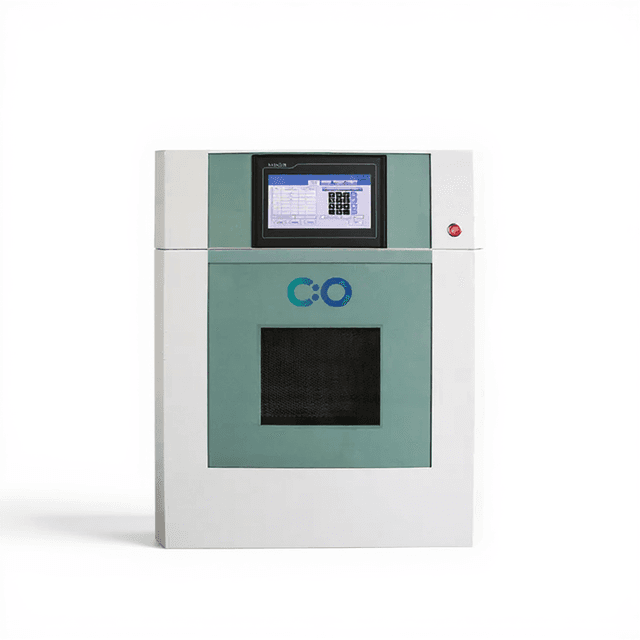
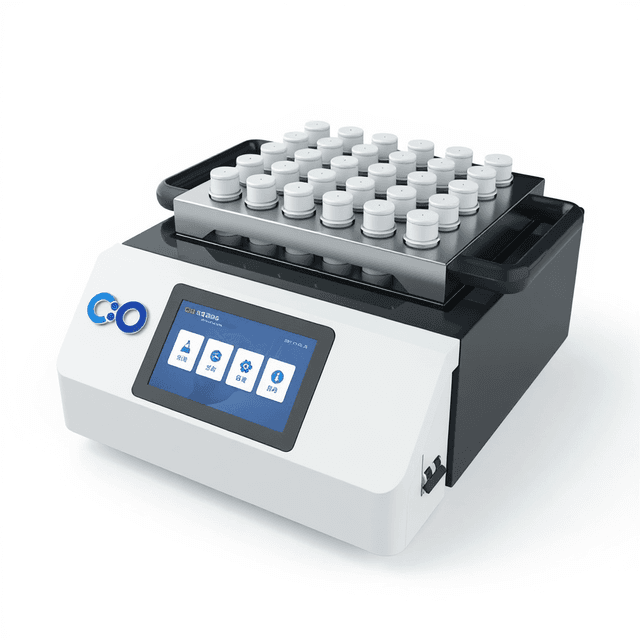
20-position automatic digester with programmable high-power electric heating and built-in automatic lifting system.
Converts solid samples to clear homogeneous liquid via a fully automated digestion sequence. RT+5 to 450 °C; ±1 °C accuracy; 2.7 kW; 7-inch LCD touchscreen.

Louise Corscadden, PhD
Director of Science · ConductScience
Ask Louise about Automatic Digester fit, setup, configuration, or quote prep.
Already working with us? Sign in to connect this with My Scientist.
Key Specifications
Full details →- Model fit
- Configured during quote
- SKU family
- BIO-GDA-20S
- Shipping box
- 42.0 x 43.6 x 38.0 cm
- Ordering
- Online checkout and quote request available
- Category
- Solid Processing
- Build notes
- Explosion-proof safety glass
This automatic digester converts solid test samples into clear, homogeneous liquid
through a programmed high-power electric heating system. The built-in one-key automatic
lifting mechanism fully automates the digestion sequence — no manual intervention during
the run. Aluminum deep-hole heating modules deliver fast warmup (8–15 °C/min), and the
304 stainless steel rack with PTFE tube caps and anodized aluminum parts provide
resistance to acid corrosion throughout.
Technical Specifications
| Parameter | GDA-20S |
|---|---|
| Temperature Range | RT+5 to 450 °C |
| Temperature Accuracy | ±1 °C |
| Capacity | 20 positions |
| Digestion Tube | Glass 300 mL × 20 |
| Heating Rate | 8–15 °C/min |
| Display | 7-inch LCD color touchscreen |
| Power Consumption | 2.7 kW |
| Power Supply | AC 220 V ±10%, 50/60 Hz (110 V optional) |
| Dimensions (W×D×H) | 435 × 640 × 750 mm |
| Net Weight | 60 kg |
| Gross Weight | 85 kg |
How It Works
The Automatic Digester employs controlled acid digestion to decompose complex sample matrices, breaking down organic and inorganic compounds to release target analytes for subsequent instrumental analysis. The aluminum deep-hole heating modules provide uniform thermal energy distribution across all 20 sample positions, ensuring consistent digestion conditions. High-power electric heating tubes deliver precise temperature control with rapid heating rates of 8-15°C per minute, enabling efficient sample matrix destruction.
The automated lifting mechanism positions digestion tubes at optimal heights during different phases of the digestion process, maximizing heat transfer efficiency while maintaining safety protocols. The 304 stainless steel construction provides corrosion resistance against aggressive acid mixtures, while explosion-proof safety glass tubes contain samples during high-temperature digestion. PTFE caps maintain chemical inertness and prevent sample contamination or loss during processing.
Temperature regulation within ±1°C accuracy ensures reproducible digestion conditions essential for quantitative elemental analysis. The system's automated operation reduces manual intervention requirements while maintaining consistent processing parameters across all sample positions, supporting high-throughput analytical workflows.
Features & Benefits
Digestion Tubes Material
- Explosion-proof safety glass
Waste Discharge Pipes Material
- Explosion-proof safety glass
Heating Modules Material
- Aluminum deep-hole heating modules
Heating Element
- High-power electric heating tubes
Digestion Rack Material
- 304 stainless steel
Waste Hood Material
- 304 stainless steel
Digestion Tube Caps Material
- PTFE (polytetrafluoroethylene)
Aluminum Surface Treatment
- Anodized surface treatment
Lifting Device
- Standard lifting device with one-key operation
Operation Mode
- Automatic lifting during whole experiment
Automation Level
- semi-automated
Material
- 304 stainless steel
- Aluminum
- Explosion-proof safety glass
- PTFE (polytetrafluoroethylene)
Research Domain
- Analytical Chemistry
- Environmental Monitoring
- Food Science
- Industrial Hygiene
- Materials Science
- Pharmaceutical QC
Shipping weight
- 29.0 lb
Shipping box
- L: 42.0 cm
- W: 43.6 cm
- H: 38.0 cm
| Feature | This Product | Typical Alternative | Advantage |
|---|---|---|---|
| Sample Capacity | 20 simultaneous samples in 300mL tubes | Entry-level digesters often accommodate 6-12 samples, while microwave systems typically handle 6-40 samples depending on vessel size | Higher throughput reduces processing time for large sample batches common in environmental and quality control laboratories. |
| Temperature Range and Accuracy | Ambient +5°C to 450°C with ±1°C accuracy | Basic heating blocks may offer ±3-5°C accuracy with limited upper temperature range | Precise temperature control ensures reproducible digestion conditions essential for quantitative analytical methods. |
| Heating Rate | 8-15°C per minute with aluminum deep-hole modules | Standard heating blocks typically achieve 3-8°C per minute heating rates | Faster heating reduces total digestion time while maintaining uniform temperature distribution across sample positions. |
| Automation Level | Automated lifting mechanism with one-key operation | Manual positioning systems require operator intervention throughout digestion cycles | Unattended operation improves laboratory safety and allows personnel to focus on other analytical tasks. |
| Construction Materials | 304 stainless steel racks and waste hoods with PTFE caps | Lower-grade materials may offer limited acid resistance or durability | Superior corrosion resistance ensures long-term performance with aggressive acid mixtures commonly used in digestion protocols. |
| User Interface | 7-inch high-resolution color LCD display | Basic models may feature simple LED displays or mechanical controls | Intuitive interface enables programming of complex temperature profiles and real-time monitoring of digestion progress. |
The BIO-GDA-20S combines high-capacity simultaneous processing with automated operation and precise temperature control, making it well-suited for laboratories requiring consistent high-throughput sample preparation. The system's robust construction and intuitive interface support reliable operation in demanding analytical environments where reproducible digestion conditions are critical.
Practical Tips
Verify temperature accuracy quarterly using certified reference thermometers at multiple points across the 20-position array, not just the center positions.
Why: Temperature uniformity validation ensures all sample positions meet analytical method requirements for reproducible results.
Clean aluminum heating modules weekly with appropriate solvents to remove acid residues and prevent heat transfer degradation.
Why: Residue buildup reduces heating efficiency and can cause temperature non-uniformity across sample positions.
Load samples in a balanced pattern across the digestion rack to maintain thermal equilibrium and prevent mechanical stress on the lifting mechanism.
Why: Balanced loading ensures uniform heat distribution and extends the service life of automated components.
Always verify proper seating of PTFE caps and inspect explosion-proof glass tubes for cracks before high-temperature operation.
Why: Compromised containment can lead to sample loss, cross-contamination, or safety hazards during acid digestion.
Program temperature ramp rates based on sample matrix density to prevent violent reactions that can cause sample loss or tube damage.
Why: Controlled heating prevents excessive foaming or spattering that compromises analytical accuracy and sample recovery.
Monitor initial heating cycles for proper automated lifting operation and temperature ramp performance before leaving the system unattended.
Why: Early detection of mechanical or thermal issues prevents sample loss and ensures consistent digestion results.
Document digestion parameters and results for each sample batch to establish reproducible protocols for different matrix types.
Why: Method documentation supports quality assurance requirements and enables optimization of digestion conditions for specific applications.
Inspect and clean the automated lifting mechanism monthly to prevent acid vapor corrosion of mechanical components.
Why: Regular maintenance prevents mechanical failures that could disrupt unattended operation and compromise sample processing schedules.
Setup Guide
What’s in the Box
- Automatic Digester main unit with automated lifting mechanism
- 20 explosion-proof safety glass digestion tubes (300mL)
- PTFE digestion tube caps (20 pieces)
- 304 stainless steel digestion rack
- Power cable and electrical connections
- User manual and operation instructions
- Temperature calibration certificate (typical)
- Safety documentation and compliance certificates (typical)
Warranty
ConductScience provides a standard one-year manufacturer warranty covering defects in materials and workmanship, with comprehensive technical support for system setup, calibration verification, and troubleshooting assistance.
Compliance
References
Background reading relevant to this product:
What acid mixtures are compatible with the explosion-proof safety glass tubes and PTFE caps?
The system accommodates most common acid digestion mixtures including nitric acid, hydrochloric acid, and aqua regia. PTFE caps provide chemical inertness against aggressive acid combinations, while explosion-proof glass tubes are designed for high-pressure acid digestion applications.
How does the automated lifting mechanism improve digestion efficiency compared to static heating?
The automated lifting system optimizes tube positioning during different digestion phases, maximizing heat transfer efficiency while maintaining safety protocols. This reduces digestion time and improves temperature uniformity across all 20 sample positions.
What sample volumes and matrices can be processed effectively in the 300mL tubes?
The 300mL tubes accommodate various sample types including soil, sediment, plant tissue, food matrices, and pharmaceutical materials. Sample size depends on matrix density and acid volume requirements, typically ranging from 0.1-5g solid samples.
How is temperature uniformity maintained across all 20 digestion positions?
Aluminum deep-hole heating modules provide uniform heat distribution, while the ±1°C temperature accuracy ensures consistent conditions across all positions. The system design minimizes temperature gradients through optimized heating element placement.
What maintenance procedures are required for the 304 stainless steel components?
Regular cleaning with appropriate solvents removes acid residues and prevents corrosion buildup. Periodic inspection of heating modules and automated lifting mechanisms ensures continued performance and safety compliance.
Can the system accommodate different digestion protocols for varying sample matrices?
The 7-inch color LCD display allows programming of custom temperature profiles and timing sequences to match specific sample matrix requirements and analytical method protocols.
What safety features protect against overpressure during high-temperature digestion?
Explosion-proof safety glass tubes are specifically designed to contain high-pressure conditions during acid digestion, while the automated lifting mechanism includes safety interlocks to prevent operation outside safe parameters.
How does this system compare to microwave digestion for sample throughput?
The 20-position capacity provides higher simultaneous sample throughput than most microwave systems, though individual digestion times may be longer. The unattended automated operation compensates for longer processing times through reduced hands-on requirements.
Have a question about this product?
Have a question? Just ask.
Send it over and we'll email you a personalized answer — no call, no scheduling.
Prefer to talk it through?