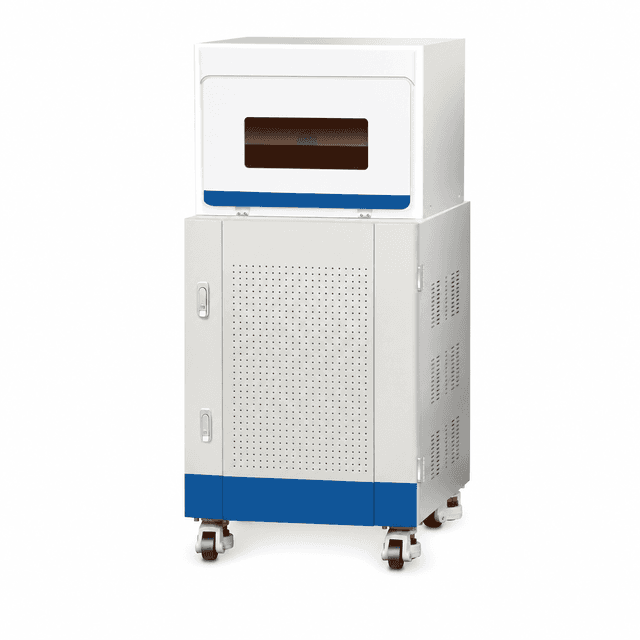
Heavy Metal Digester
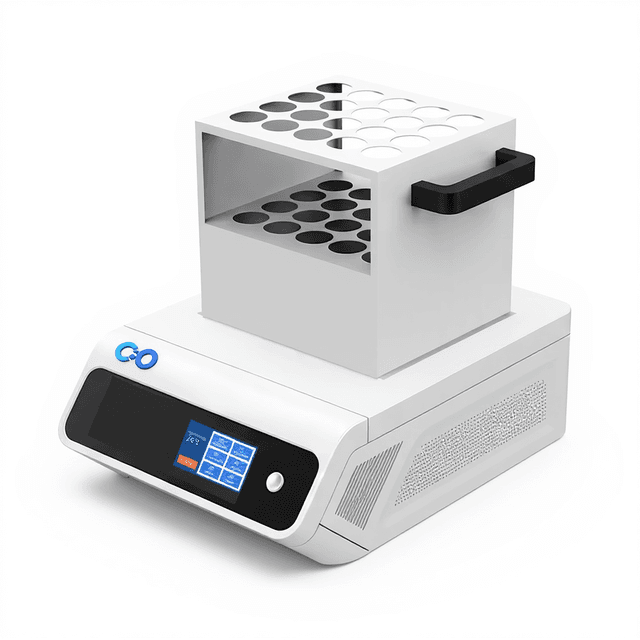
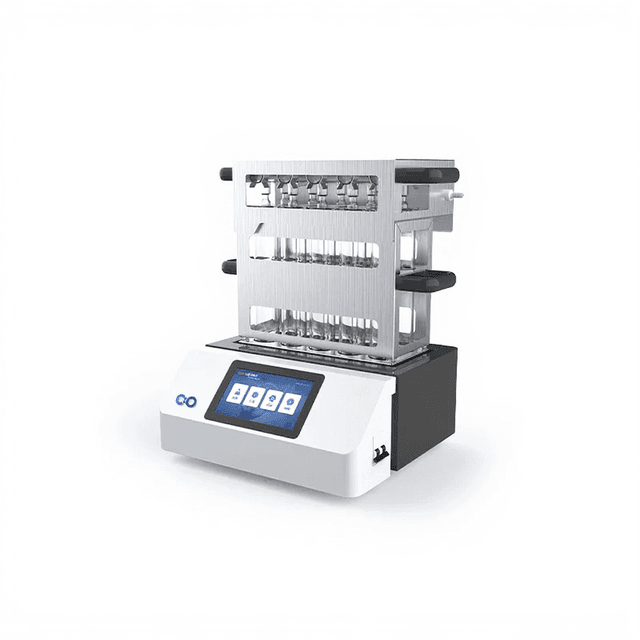
30-position graphite block digester optimized for heavy metal and elemental analysis pre-treatment.
Three-dimensional surround heating; dual tube options (glass or PTFE); RT+5 to 450 °C; ±1 °C; 7-inch LCD. Compatible with AAS and ICP-MS.

Louise Corscadden, PhD
Director of Science · ConductScience
Ask Louise about Heavy Metal Digester fit, setup, configuration, or quote prep.
Already working with us? Sign in to connect this with My Scientist.
Key Specifications
Full details →- Model fit
- Configured during quote
- SKU family
- BIO-GDA-30
- Shipping box
- 42.0 x 43.6 x 38.0 cm
- Ordering
- Online checkout and quote request available
- Category
- Solid Processing
- Build notes
- Flame retardant environmental protection materials
This 30-position graphite block digester is built for pre-treatment of soil, feed,
food, water, and ore samples before atomic absorption spectroscopy (AAS) or ICP mass
spectrometry. Three-dimensional surround heating and infrared radiation through a
specially treated anti-oxidation graphite block deliver uniform temperature distribution.
The control and heating units are separated to minimize radiation and corrosion exposure
to electronics. Both glass (50/100 mL) and PTFE (50/70 mL) tube options are supported.
Embedded PID temperature control maintains ±1 °C with automatic fault detection and
module identification.
Technical Specifications
| Parameter | GDA-30 |
|---|---|
| Temperature Range | RT+5 to 450 °C |
| Temperature Accuracy | ±1 °C |
| Capacity | 30 positions |
| Tube Options | Glass 50/100 mL (full) or PTFE 50/70 mL (full) |
| Heating Mode | Infrared + graphite block conduction; 3D surround |
| Insulation | Ceramic fiber with split air duct |
| Display | 7-inch color LCD |
| Power Consumption | 3.4 kW |
| Power Supply | 220 V ±10%, 50/60 Hz (110 V optional) |
| External Dimensions (W×D×H) | 480 × 390 × 177 mm |
| Net Weight | 26 kg |
| Gross Weight | 38 kg |
How It Works
The Heavy Metal Digester operates on the principle of controlled acid digestion using concentrated mineral acids at elevated temperatures. The graphite block provides uniform heat distribution across the sample array, while the three-dimensional heating design ensures consistent temperature profiles throughout the digestion volume. The PID control system continuously monitors and adjusts heating elements to maintain precise temperature setpoints.
Sample matrices are decomposed through oxidative acid attack, typically using nitric acid, hydrochloric acid, or acid mixtures. The controlled temperature ramping breaks down organic matrices and releases metals from bound complexes, converting them to soluble ionic forms suitable for instrumental analysis. The PTFE and borosilicate glass test tube compatibility allows selection of appropriate vessel materials based on acid type and digestion temperature requirements.
The separate isolation of control and heating systems prevents corrosive acid vapors from damaging electronic components, while the embedded software maintains thermal stability throughout multi-hour digestion cycles. Safety monitoring systems continuously track voltage, current, and temperature parameters to prevent equipment damage and ensure operator safety.
Features & Benefits
Test Tube Types
- PTFE and borosilicate glass
Heating Type
- Surround three-dimensional heating
Temperature Control
- PID temperature control
Control System
- Embedded software temperature control technology
Safety Features
- Overvoltage, overcurrent, overheat, overtemperature alarm
System Design
- Separate isolation design of control system and heating system
Graphite Treatment
- Special anti-oxidation technology
Insulation Materials
- Flame retardant environmental protection materials
Automation Level
- semi-automated
Material
- Borosilicate glass
- Graphite
- PTFE
Research Domain
- Analytical Chemistry
- Environmental Monitoring
- Food Science
- Materials Science
- Pharmaceutical QC
- Toxicology
Shipping weight
- 30.0 lb
Shipping box
- L: 42.0 cm
- W: 43.6 cm
- H: 38.0 cm
| Feature | This Product | Typical Alternative | Advantage |
|---|---|---|---|
| Temperature Control Range | RT+5°C to 450°C with PID control | Basic models often limited to lower maximum temperatures | Extended range accommodates high-temperature digestion protocols for refractory matrices. |
| Test Tube Compatibility | Both PTFE and borosilicate glass tubes | Many units limited to single tube type | Flexibility to select optimal vessel material based on acid type and contamination requirements. |
| Heating Design | Surround three-dimensional heating | Bottom-heating only in entry-level models | Uniform heat distribution eliminates temperature gradients across sample positions. |
| Control System Protection | Separate isolation design | Integrated designs in lower-cost units | Protects electronics from acid vapor corrosion, extending equipment lifetime. |
| Safety Monitoring | Overvoltage, overcurrent, and overtemperature alarms | Basic temperature monitoring only | Comprehensive protection prevents equipment damage during extended unattended operation. |
The BIO-GDA-30 combines precise PID temperature control with dual tube compatibility and comprehensive safety monitoring. The three-dimensional heating design and isolated control system provide advantages over basic block digesters in terms of temperature uniformity and equipment durability.
Practical Tips
Verify temperature accuracy using a calibrated thermocouple placed in a test tube filled with mineral oil at each major temperature setpoint.
Why: Ensures accurate temperature control for reproducible digestion results across different sample types.
Inspect graphite block wells regularly for acid residue buildup and clean with dilute acid solution followed by thorough rinsing.
Why: Prevents sample cross-contamination and maintains optimal thermal contact between block and tubes.
Pre-heat the block to digestion temperature before adding samples to minimize thermal shock to test tubes.
Why: Reduces risk of tube cracking and ensures immediate optimal digestion conditions upon sample addition.
Always operate in a fume hood and ensure adequate ventilation before opening hot samples after digestion.
Why: Prevents exposure to concentrated acid vapors and potential NOx gases generated during digestion.
Include certified reference materials and method blanks in each digestion batch for quality control.
Why: Validates digestion efficiency and identifies potential contamination or systematic errors in the procedure.
If temperature control becomes unstable, check for acid corrosion around heating elements and clean contact points.
Why: Acid residue can interfere with temperature sensing and heating element performance over time.
Match tube material to acid type - use PTFE for HF-containing mixtures and borosilicate glass for HNO3/HCl protocols.
Why: Prevents tube dissolution that could contaminate samples and damage the analytical measurement.
Replace test tubes when visible etching or discoloration appears, even if they appear structurally intact.
Why: Degraded tube surfaces can contribute trace element contamination to subsequent digestions.
Setup Guide
What’s in the Box
- Heavy Metal Digester main unit (typical)
- Graphite block with sample wells (typical)
- Power cord and adapter (typical)
- Temperature probe (typical)
- User manual and safety documentation (typical)
- Sample test tubes (PTFE or borosilicate glass) (typical)
- Calibration certificate (typical)
Warranty
ConductScience provides a standard one-year manufacturer warranty covering parts and labor, with comprehensive technical support for installation, operation, and maintenance procedures.
Compliance
References
Background reading relevant to this product:
What acid types are compatible with the PTFE and borosilicate glass test tubes?
PTFE tubes are compatible with all common digestion acids including concentrated HNO3, HCl, HF, and acid mixtures. Borosilicate glass tubes are suitable for HNO3 and HCl but not recommended for HF due to glass dissolution.
How many samples can be processed simultaneously?
Sample capacity depends on the specific graphite block configuration. Consult the product datasheet for exact well count and tube dimensions for your application.
What is the temperature accuracy and stability of the PID control system?
The embedded software temperature control technology provides precise regulation, but specific accuracy specifications should be verified in the product technical documentation.
Can the digester handle microwave-assisted digestion protocols?
This is a conventional heating digester, not a microwave system. It provides controlled thermal digestion using resistive heating elements with three-dimensional heat distribution.
What maintenance is required for the graphite block?
The graphite block features special anti-oxidation treatment for extended lifetime. Regular inspection for cracks or wear is recommended, with replacement based on visual condition and thermal performance.
Is the system suitable for volatile element analysis?
The open-vessel design may result in losses of volatile elements like Hg, As, and Se. For these analytes, consider closed-vessel digestion or specialized protocols with appropriate trapping methods.
How does this compare to microwave digestion systems?
Conventional block digestion offers lower equipment cost and simpler operation but requires longer digestion times and may have higher reagent consumption compared to microwave systems.
What safety precautions are needed for operation?
Operate in a fume hood due to acid vapors. The system includes overvoltage, overcurrent, and overtemperature alarms, but proper PPE and ventilation are essential for safe operation.
Have a question about this product?
Have a question? Just ask.
Send it over and we'll email you a personalized answer — no call, no scheduling.
Prefer to talk it through?