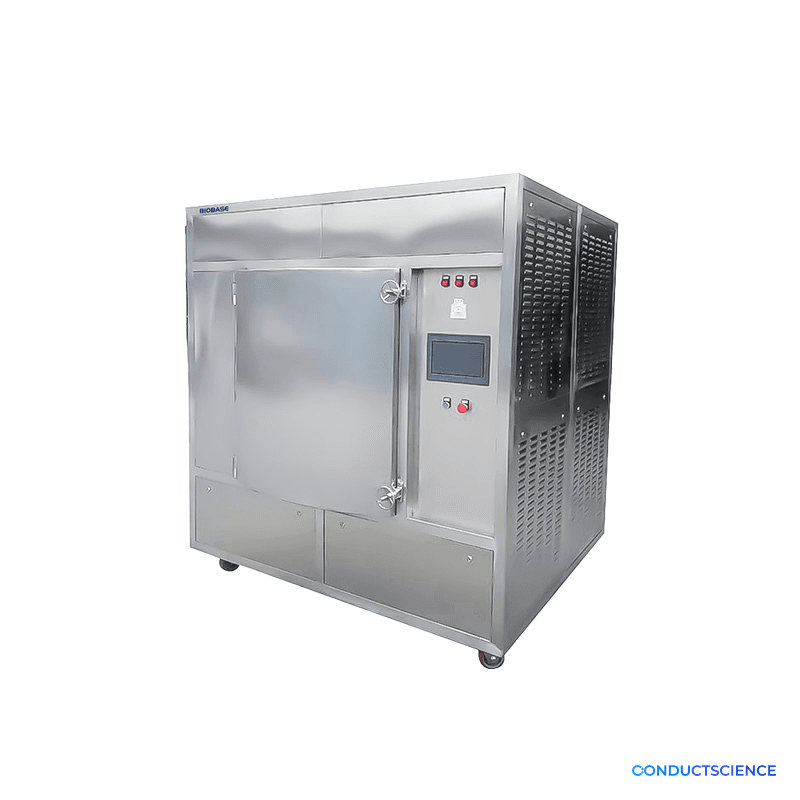
Microwave Vacuum Dryer
The BK-MVD60 Microwave Vacuum Dryer combines 6 kW microwave power with 0.08–0.1 MPa vacuum pressure for efficient low-temperature drying at 4–5 kg/h, ideal for heat-sensitive materials in food science, pharmaceutical, and chemical research applica...
| Automation Level | semi-automated |
| Vacuum Pressure | 0.08~0.1 MPa |
| Product Size(W*D*H) | 1450x1350x1650mm |
| Packing Size(W*D*H) | 1550x1450x1750mm |
| Capacity | 4~5kg/h |
| Microwave Power | 6kW |
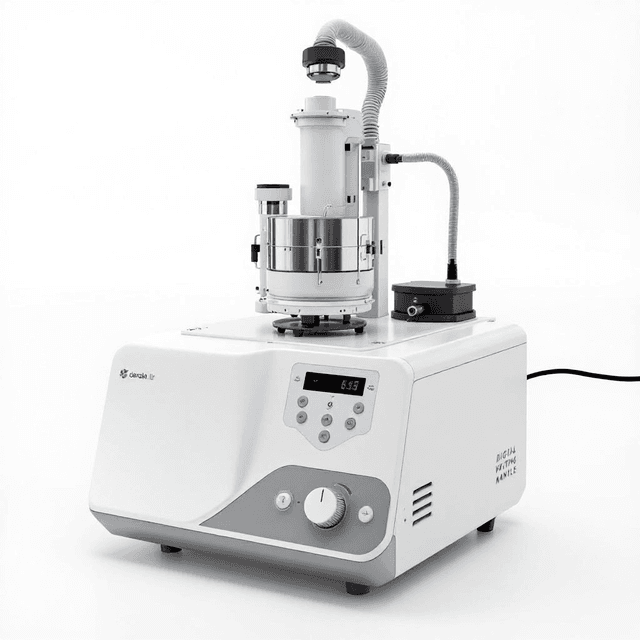
The Microwave Vacuum Dryer represents an advanced drying system that combines microwave energy with vacuum technology to achieve efficient moisture removal from laboratory samples and materials. Operating at vacuum pressures of 0.08-0.1 MPa, this system reduces boiling points and prevents thermal degradation of heat-sensitive compounds while achieving processing capacities of 4-5 kg/h.
This benchtop instrument utilizes 6KW microwave power to provide uniform heating throughout the sample matrix, while the vacuum environment enables lower-temperature processing compared to conventional hot-air drying methods. The system accommodates standard laboratory workflows requiring controlled moisture removal, sample preparation, and material processing under precisely controlled environmental conditions.
Manufacturer Specification Sheet
The BK-MVD60 combines 6kW microwave energy with vacuum technology (0.08-0.1 MPa) for efficient, low-temperature drying at 4-5 kg/h. Designed for dehydrating agricultural products, health products, foods, medicinal materials, and chemical raw materials. Also suitable for low-temperature concentration, crystallization dehydration, and vacuum extraction of herbal medicines.
Key Features
- Extends shelf life of food products significantly
- Maintains shape, color, nutritional content, and aroma of materials
- Low-temperature drying under vacuum conditions
- Faster and more efficient than traditional heating methods
- Optional PLC control panel for advanced process control
Technical Parameters (BK-MVD60)
| Parameter | Value |
|---|---|
| Model | BK-MVD60 |
| Capacity | 4~5 kg/h |
| Vacuum Pressure | 0.08-0.1 MPa |
| Microwave Power | 6 kW |
| Power Supply | Standard: AC380V 50/60Hz; Optional: AC220V 50/60Hz (3-phase) |
| Product Size (WxDxH) | 1450 x 1350 x 1650 mm |
| Net Weight | 500 kg |
| Packing Size (WxDxH) | 1550 x 1450 x 1750 mm |
| Gross Weight | 580 kg |
Download Full Specification Sheet (PDF)
Applications & Use Cases
- Pharmaceutical QC: Drying active pharmaceutical ingredients and excipients under controlled conditions to prevent thermal degradation while achieving target moisture content specifications.
- Food Science: Processing food samples for moisture analysis and shelf-life studies while preserving heat-sensitive nutrients and bioactive compounds.
- Materials Science: Removing solvents and moisture from polymer matrices and composite materials without inducing thermal stress or dimensional changes.
- Analytical Chemistry: Sample preparation for gravimetric analysis and moisture determination in organic and inorganic materials requiring precise water content measurement.
- Environmental Monitoring: Processing soil and sediment samples for contaminant analysis by removing moisture while preserving volatile organic compounds for subsequent extraction.
- Clinical Diagnostics: Drying biological specimens and tissue samples for histological analysis and pathological examination under controlled temperature conditions.
How It Works
Microwave vacuum drying operates on the principle of dielectric heating combined with reduced atmospheric pressure. Microwave energy at 2.45 GHz penetrates the sample matrix, causing water molecules to oscillate and generate heat uniformly throughout the material. Unlike conventional surface heating, this volumetric heating ensures rapid and even moisture removal from both surface and interior regions.
The vacuum environment reduces the boiling point of water, enabling moisture removal at significantly lower temperatures than atmospheric pressure drying. At the operating vacuum pressure of 0.08-0.1 MPa, water boils at approximately 40-50°C rather than 100°C, preserving heat-sensitive compounds and preventing thermal degradation. The combination of microwave heating and vacuum pressure creates rapid vapor transport, resulting in efficient drying rates while maintaining sample integrity.
Features & Benefits
- 6KW microwave power system — Provides rapid, uniform heating throughout sample matrix for efficient moisture removal and reduced processing time
- 0.08-0.1 MPa vacuum pressure operation — Enables low-temperature drying to preserve heat-sensitive compounds while maintaining high efficiency
- 4-5 kg/h processing capacity — Accommodates medium-scale laboratory operations with consistent throughput for routine sample preparation
- Dual voltage power supply options — Supports installation in various laboratory electrical configurations with AC380V standard or AC220V 3-phase options
- Substantial chamber dimensions (1450×1350×1650mm) — Provides ample workspace for processing multiple samples or larger sample volumes in single batches
- Robust construction (500kg net weight) — Ensures stable operation and minimal vibration during high-power microwave processing cycles
Technical Specifications
The system operates with 6KW microwave power under vacuum conditions of 0.08-0.1 MPa, achieving processing rates of 4-5 kg/h. Physical dimensions of 1450×1350×1650mm provide substantial processing volume while the 500kg net weight ensures operational stability. Dual power supply options accommodate AC380V 50/60Hz standard configuration or AC220V 50/60Hz 3-phase installation.
The vacuum pressure range enables water boiling point reduction from 100°C to approximately 40-50°C, critical for heat-sensitive materials. The microwave power density and vacuum combination optimize energy transfer efficiency while maintaining precise environmental control throughout the drying process.
Setup & Operation
- Installation and Power Connection: Position the unit on a stable, level surface with adequate clearance for ventilation. Connect to appropriate power supply (AC380V or AC220V 3-phase as specified).
- Vacuum System Verification: Connect vacuum pump and verify system achieves target pressure range of 0.08-0.1 MPa. Check all seals and connections for vacuum integrity.
- Initial Calibration: Run empty chamber calibration cycle to verify temperature uniformity and vacuum performance according to manufacturer protocols.
- Sample Loading: Load samples in appropriate containers ensuring even distribution and avoiding overloading beyond 4-5 kg capacity.
- Parameter Setting: Set microwave power level, vacuum pressure, and cycle time based on sample type and moisture content requirements.
- Cycle Execution: Initiate drying cycle and monitor pressure and temperature parameters throughout the process for optimal results.
- Sample Retrieval: Allow chamber to return to atmospheric pressure before opening and retrieve samples using appropriate safety procedures.
Compliance & Standards
- ASTM D2974: Supports moisture content determination workflows commonly used in materials testing laboratories
- USP : Applicable to pharmaceutical moisture analysis procedures requiring controlled drying conditions
- ISO 1442: Supports food analysis protocols for moisture determination in agricultural and food products
What's in the Box
- Microwave vacuum dryer main unit
- Vacuum pump and connection lines (typical)
- Sample trays and holders (typical)
- Power cables for specified voltage
- User manual and operating procedures
- Safety documentation and warnings
- Calibration certificate (typical)
Warranty & Support
ConductScience provides comprehensive warranty coverage including one-year manufacturer warranty on all components with technical support for installation, calibration, and operational guidance.
Product Highlights
| Feature | This Product | Category Context |
|---|---|---|
| Processing Capacity | 4-5 kg/h continuous processing | Entry-level units often limited to 1-2 kg batches |
| Microwave Power | 6KW microwave system | Smaller units typically offer 2-4KW power levels |
| Vacuum Range | 0.08-0.1 MPa operating pressure | Basic vacuum dryers may operate at higher pressures |
| Chamber Size | 1450×1350×1650mm internal dimensions | Compact units offer significantly smaller processing volumes |
| Power Supply Options | AC380V standard with AC220V 3-phase optional | Many units limited to single voltage configuration |
This microwave vacuum dryer combines high-capacity processing with powerful microwave energy delivery and precise vacuum control. The 6KW power system and 4-5 kg/h capacity position it for medium-scale laboratory operations requiring efficient moisture removal while preserving sample integrity.
Practical Tips
Calibration: Perform monthly vacuum pressure calibration using certified pressure gauges to ensure accurate operating conditions.
Accurate vacuum pressure directly affects boiling point and drying efficiency.
Maintenance: Inspect and clean microwave waveguides quarterly to prevent power loss and ensure uniform heating distribution.
Contaminated waveguides reduce heating efficiency and create hot spots that can damage samples.
Best Practices: Distribute samples evenly across chamber volume and avoid overloading beyond 4-5 kg capacity for optimal results.
Even distribution ensures uniform microwave exposure and prevents local overheating or incomplete drying.
Safety: Always verify chamber is at atmospheric pressure before opening and use appropriate PPE when handling dried samples.
Vacuum release can cause rapid moisture reabsorption and dried samples may be electrostatically charged.
Data Quality: Record initial moisture content, processing parameters, and final moisture levels for process validation and repeatability.
Consistent documentation enables process optimization and regulatory compliance in validated environments.
Troubleshooting: If vacuum cannot be achieved, check door seals and gaskets for wear or contamination before proceeding with operation.
Poor vacuum compromises the low-temperature advantage and extends processing time significantly.
Background Reading
The following papers provide general scientific background on the measurement techniques and methodologies relevant to this product category. They are not validation studies of this specific instrument.
[1] Hamza Bozkır (2020). Effects of hot air, vacuum infrared, and vacuum microwave dryers on the drying kinetics and quality characteristics of orange slices. Journal of Food Process Engineering. DOI: 10.1111/jfpe.13485
Demonstrates the comparative performance of vacuum microwave drying technology in preserving quality characteristics during food processing applications.
[2] Weerachai Kaensup et al. (2002). EXPERIMENTAL STUDY ON DRYING OF CHILLI IN A COMBINED MICROWAVE-VACUUM-ROTARY DRUM DRYER. Drying Technology. DOI: 10.1081/drt-120015585
Provides experimental validation of microwave-vacuum drying principles and their application to agricultural product processing.
[3] Ricardo Lemos Monteiro et al. (2015). How to make a microwave vacuum dryer with turntable. Journal of Food Engineering. DOI: 10.1016/j.jfoodeng.2015.06.029
Offers technical insights into microwave vacuum dryer design principles and operational considerations for uniform heating.
[4] Jackie G. White (1994). On-Line Moisture Detection for a Microwave Vacuum Dryer. Pharmaceutical Research. DOI: 10.1023/a:1018936631642
Demonstrates application of microwave vacuum drying technology in pharmaceutical manufacturing with focus on process monitoring and control.
How It Works
Microwave vacuum drying operates on the principle of dielectric heating combined with reduced atmospheric pressure. Microwave energy at 2.45 GHz penetrates the sample matrix, causing water molecules to oscillate and generate heat uniformly throughout the material. Unlike conventional surface heating, this volumetric heating ensures rapid and even moisture removal from both surface and interior regions.
The vacuum environment reduces the boiling point of water, enabling moisture removal at significantly lower temperatures than atmospheric pressure drying. At the operating vacuum pressure of 0.08-0.1 MPa, water boils at approximately 40-50°C rather than 100°C, preserving heat-sensitive compounds and preventing thermal degradation. The combination of microwave heating and vacuum pressure creates rapid vapor transport, resulting in efficient drying rates while maintaining sample integrity.
Features & Benefits
Automation Level
- semi-automated
Vacuum Pressure
- 0.08~0.1 MPa
Product Size(W*D*H)
- 1450x1350x1650mm
Packing Size(W*D*H)
- 1550x1450x1750mm
Capacity
- 4~5kg/h
Microwave Power
- 6kW
Power/Voltage
- Standard: AC380V, 50/60Hz; Optional: AC220V, 50/60Hz (3-phase)
Net Weight
- 500kg
Gross Weight
- 580kg
Brand
- ConductScience
Research Domain
- Analytical Chemistry
- Clinical Diagnostics
- Environmental Monitoring
- Food Science
- Materials Science
- Pharmaceutical QC
Weight
- 500.0 lbs
Dimensions
- L: 165.0 in
- W: 145.0 in
- H: 135.0 in
Comparison Guide
| Feature | This Product | Typical Alternative | Advantage |
|---|---|---|---|
| Processing Capacity | 4-5 kg/h continuous processing | Entry-level units often limited to 1-2 kg batches | Higher throughput enables processing larger sample volumes or multiple samples simultaneously for improved laboratory efficiency |
| Microwave Power | 6KW microwave system | Smaller units typically offer 2-4KW power levels | Higher power enables faster heating and more uniform energy distribution throughout larger sample volumes |
| Vacuum Range | 0.08-0.1 MPa operating pressure | Basic vacuum dryers may operate at higher pressures | Lower pressure reduces boiling point further, enabling gentler processing of extremely heat-sensitive materials |
| Chamber Size | 1450×1350×1650mm internal dimensions | Compact units offer significantly smaller processing volumes | Larger chamber accommodates diverse sample configurations and enables batch processing flexibility |
| Power Supply Options | AC380V standard with AC220V 3-phase optional | Many units limited to single voltage configuration | Dual voltage capability simplifies installation across different laboratory electrical systems |
This microwave vacuum dryer combines high-capacity processing with powerful microwave energy delivery and precise vacuum control. The 6KW power system and 4-5 kg/h capacity position it for medium-scale laboratory operations requiring efficient moisture removal while preserving sample integrity.
Practical Tips
Perform monthly vacuum pressure calibration using certified pressure gauges to ensure accurate operating conditions.
Why: Accurate vacuum pressure directly affects boiling point and drying efficiency.
Inspect and clean microwave waveguides quarterly to prevent power loss and ensure uniform heating distribution.
Why: Contaminated waveguides reduce heating efficiency and create hot spots that can damage samples.
Distribute samples evenly across chamber volume and avoid overloading beyond 4-5 kg capacity for optimal results.
Why: Even distribution ensures uniform microwave exposure and prevents local overheating or incomplete drying.
Always verify chamber is at atmospheric pressure before opening and use appropriate PPE when handling dried samples.
Why: Vacuum release can cause rapid moisture reabsorption and dried samples may be electrostatically charged.
Record initial moisture content, processing parameters, and final moisture levels for process validation and repeatability.
Why: Consistent documentation enables process optimization and regulatory compliance in validated environments.
If vacuum cannot be achieved, check door seals and gaskets for wear or contamination before proceeding with operation.
Why: Poor vacuum compromises the low-temperature advantage and extends processing time significantly.
Setup Guide
What’s in the Box
- Microwave vacuum dryer main unit
- Vacuum pump and connection lines (typical)
- Sample trays and holders (typical)
- Power cables for specified voltage
- User manual and operating procedures
- Safety documentation and warnings
- Calibration certificate (typical)
Warranty
ConductScience provides comprehensive warranty coverage including one-year manufacturer warranty on all components with technical support for installation, calibration, and operational guidance.
Compliance
References
Background reading relevant to this product:
What types of samples are compatible with microwave vacuum drying?
The system accommodates various materials including pharmaceutical powders, food products, polymers, and biological specimens. Heat-sensitive compounds benefit most from the low-temperature vacuum environment, while dense materials utilize the penetrating microwave heating effectively.
How does processing time compare to conventional hot-air drying?
Microwave vacuum drying typically reduces processing time by 50-80% compared to hot-air methods due to volumetric heating and reduced boiling point under vacuum conditions. Actual time depends on sample moisture content, thickness, and heat sensitivity.
What vacuum pump specifications are required?
The system requires a vacuum pump capable of achieving and maintaining 0.08-0.1 MPa pressure with adequate pumping capacity for the chamber volume. Consult product datasheet for specific pump recommendations and connection requirements.
Can the microwave power be adjusted for different sample types?
Yes, the 6KW microwave system typically includes power level controls for optimization based on sample characteristics. Lower power settings suit delicate materials while higher settings accelerate processing of robust samples.
What safety considerations apply to microwave vacuum operation?
Primary safety concerns include microwave exposure prevention, vacuum system integrity, and proper handling of dried samples. The system includes safety interlocks and requires adherence to microwave safety protocols during operation and maintenance.
How is temperature monitored during the drying process?
Temperature monitoring methods vary by configuration and may include infrared sensors or thermocouples compatible with microwave environments. Consult product datasheet for specific temperature measurement and control capabilities.
What maintenance procedures are required?
Regular maintenance includes vacuum system inspection, microwave waveguide cleaning, seal replacement, and calibration verification. Frequency depends on usage intensity and sample types processed.
Have a question about this product?
Accessories
Enhance your setup with compatible accessories