Mini Spray Dryer
Benchtop mini spray dryer with 2000 ml/h maximum water evaporation capacity. Features a 0.7 mm dual-fluid nozzle, inlet temperature range of 30–250°C (±1°C), 7-inch color touchscreen, and dual operation modes (manual and automatic) for laboratory-...
| Automation Level | Semi-Automated |
| Maximum Water Evaporation | 2000 ml/h |
| Inlet Air Temperature | 30–250°C (±1°C) |
| Outlet Air Temperature | 30–120°C (±1°C) |
| Spray System | 0.7 mm diameter dual-fluid nozzle |
| Average Drying Time | 1.0–1.5 seconds |

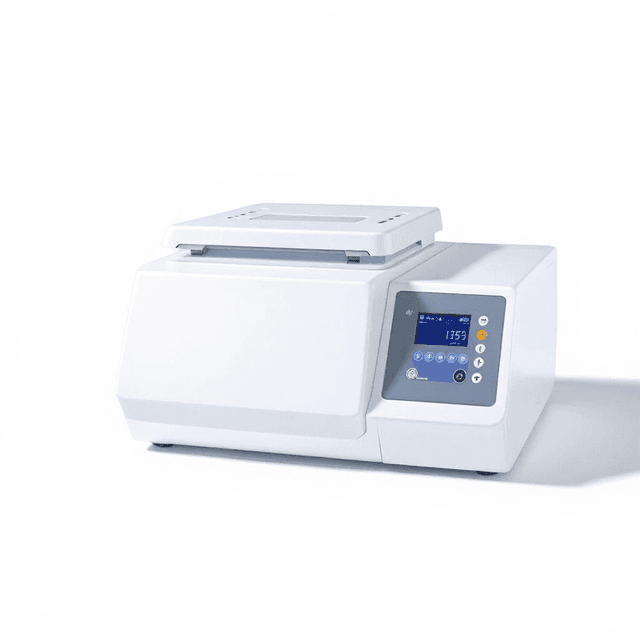
The Mini Spray Dryer is a compact benchtop instrument engineered for laboratory-scale spray drying across pharmaceutical, food science, materials research, and analytical chemistry applications. The system rapidly converts liquid samples into fine powders by atomizing solutions through a high-precision 0.7 mm dual-fluid nozzle and exposing droplets to controlled hot air, achieving average drying times of just 1.0–1.5 seconds with a maximum water evaporation capacity of 2000 ml/h.
Inlet air temperature is adjustable from 30–250°C (±1°C) with outlet temperatures from 30–120°C (±1°C), providing precise thermal control for heat-sensitive biologics, food ingredients, polymers, and chemical compounds. The integrated automatic anti-clogging device features adjustable needle penetration frequency (0–60 seconds per cycle), preventing nozzle blockage during extended processing runs without operator intervention.
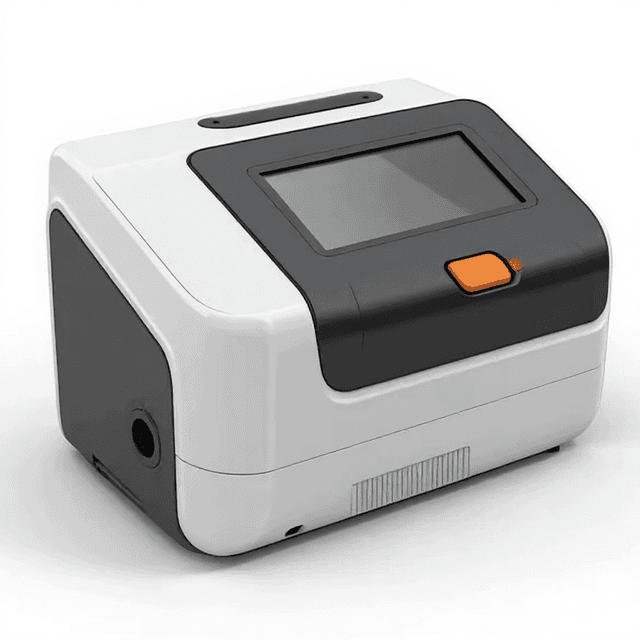
Operation is managed through a 7-inch color touchscreen interface with both manual and automatic control modes that switch seamlessly. All connections — thermometer, air line, and power supply — use an ergonomic quick-release plug design for rapid setup, teardown, and maintenance. The system includes an air compressor as standard equipment and is available in AC110V (50/60 Hz) or AC220V (50/60 Hz) configurations.
Optional accessories include a magnetic stirrer, gravimetric weight device, high-efficiency filter bag (captures particles larger than 1 µm with over 99% air purification efficiency), wireless network control module, and alternative nozzle sizes (0.4 mm small-bore and 1.2 mm large-bore) for optimizing particle size distribution across different sample types.
Applications
- Pharmaceutical research — encapsulation, controlled-release formulations, amorphous solid dispersions
- Food science — flavor encapsulation, powdered extracts, dairy processing
- Materials science — ceramic precursors, polymer microspheres, nanoparticle drying
- Analytical chemistry — sample preparation, standard reference materials
- Microbiology — culture preservation, probiotic encapsulation
How It Works
Spray drying operates on the principle of atomizing liquid feedstock into fine droplets within a heated air stream, causing rapid moisture evaporation and particle formation. The dual-fluid nozzle system uses compressed air to atomize the feed solution, creating droplets with diameters typically ranging from 10-200 micrometers. As these droplets encounter the heated inlet air (30-250°C), water evaporation occurs rapidly within 1.0-1.5 seconds, leaving behind solid particles that retain the original solute composition.
The temperature differential between inlet and outlet air (30-120°C outlet) controls the drying kinetics and final moisture content of the product. Lower outlet temperatures preserve heat-sensitive compounds, while higher temperatures ensure complete moisture removal for hygroscopic materials. The cyclone separation system collects the dried particles while allowing the carrier air to exit, providing efficient powder recovery.
The automatic blocking device addresses nozzle fouling by periodically clearing the spray orifice, maintaining consistent atomization throughout extended operations. This feature is particularly important when processing solutions containing suspended solids or materials prone to crystallization at the nozzle tip.
Features & Benefits
Automation Level
- Semi-Automated
Maximum Water Evaporation
- 2000 ml/h
Inlet Air Temperature
- 30–250°C (±1°C)
Outlet Air Temperature
- 30–120°C (±1°C)
Spray System
- 0.7 mm diameter dual-fluid nozzle
Average Drying Time
- 1.0–1.5 seconds
Automatic Blocking Device
- Adjustable needle penetration frequency, 0–60 seconds/cycle
Quick Release Design
- Thermometer, air line, power supply — all quick-plug
Operation Mode
- Manual and Automatic (switchable)
Standard Accessories
- Air compressor
Optional Accessories
- Magnetic stirrer, weight device, filter bag (>99% efficiency), wireless network control module, 0.4 mm small-bore nozzle, 1.2 mm large-bore nozzle
Brand
- ConductScience
Research Domain
- Analytical Chemistry
- Environmental Monitoring
- Food Science
- Materials Science
- Microbiology
- Pharmaceutical QC
Display
- 7-inch color touchscreen
Power Consumption
- 5 kW
Power Supply
- AC110V or AC220V, 50/60 Hz
External Dimensions (L×W×H)
- 620×570×900 mm (main unit), 510×420×680 mm (collection)
Net Weight
- 65 kg (main unit), 34 kg (collection system)
Weight
- 65.0 kg
Dimensions
- L: 90.0 mm
- W: 62.0 mm
- H: 57.0 mm
Comparison Guide
| Feature | This Product | Typical Alternative | Advantage |
|---|---|---|---|
| Water Evaporation Capacity | 2000ml/h maximum | Entry-level models often offer 500-1000ml/h capacity | Higher throughput enables larger batch sizes for comprehensive studies while maintaining laboratory-scale operation |
| Temperature Range | 30-250°C inlet, 30-120°C outlet with ±1°C precision | Basic units may offer narrower temperature ranges or lower precision | Wide temperature range accommodates diverse material types from heat-sensitive biologics to thermally stable polymers |
| Nozzle Technology | 0.7mm dual-fluid nozzle with automatic blocking device | Simple nozzles without anti-clogging features | Automatic cleaning prevents downtime during extended operations with challenging feed materials |
| User Interface | 7-inch color touch screen | Basic digital displays or analog controls | Intuitive interface simplifies parameter adjustment and monitoring during complex experimental protocols |
| Operation Modes | Manual and automatic modes with switching capability | Single operation mode in basic models | Flexibility supports both research development work and routine production applications |
| Maintenance Design | Quick-release connections for thermometer, air line, and power | Fixed connections requiring tools for maintenance | Rapid component access reduces downtime between different sample types or cleaning procedures |
This Mini Spray Dryer combines high throughput (2000ml/h) with precise temperature control and anti-clogging technology. The dual-mode operation and quick-release design provide flexibility for both research development and routine applications in laboratory environments.
Practical Tips
Verify temperature readings at multiple setpoints using external thermocouples before processing heat-sensitive materials.
Why: Temperature accuracy directly affects product quality and thermal stability of processed compounds.
Clean the 0.7mm nozzle immediately after each use with appropriate solvents to prevent residue buildup.
Why: Dried residues can alter spray patterns and require more aggressive cleaning procedures if allowed to accumulate.
Start with dilute solutions and gradually increase concentration to optimize atomization quality for new materials.
Why: High concentrations can cause premature nozzle blocking before automatic cleaning intervals activate.
If powder recovery appears low, check cyclone performance and collection container positioning.
Why: Improper air flow patterns can reduce separation efficiency and product collection rates.
Record both inlet and outlet temperatures throughout the run to ensure consistent drying conditions.
Why: Temperature variations can affect particle properties and batch-to-batch reproducibility.
Ensure adequate ventilation and avoid processing flammable solvents near the heated air stream.
Why: High temperatures and air flow can create ignition risks with volatile organic solvents.
Use the manual mode for initial parameter development, then switch to automatic for reproducible production runs.
Why: Manual control allows real-time adjustment during optimization while automatic mode ensures consistent results.
Replace air compressor filters regularly to maintain clean compressed air for consistent atomization.
Why: Contaminated air can introduce particles and affect spray quality and final product purity.
Setup Guide
What’s in the Box
- Mini Spray Dryer main unit
- Air compressor
- 0.7mm dual-fluid nozzle
- Quick-release thermometer connections
- Power supply with quick-plug design
- Air line with quick-release fitting
- User manual and operation guide
- Basic collection containers (typical)
- Cleaning tools and accessories (typical)
Warranty
ConductScience provides a standard one-year manufacturer warranty covering defects in materials and workmanship, with technical support available for troubleshooting and operational guidance.
Compliance
References
Background reading relevant to this product:
What particle size range can be achieved with the 0.7mm dual-fluid nozzle?
Particle size depends on feed solution properties, atomization pressure, and drying conditions. Consult product datasheet for specific size distribution data with your material type.
How does the automatic blocking device prevent nozzle fouling?
The system automatically penetrates the nozzle at adjustable intervals (0-60 seconds) to clear potential blockages from crystallization or particle accumulation at the spray orifice.
What is the powder recovery efficiency of this system?
Recovery efficiency varies with material properties, operating conditions, and cyclone performance. Consult product datasheet for specific recovery rates with standard test materials.
Can the system handle suspensions or only solutions?
The 0.7mm nozzle can process suspensions, though particle size and concentration may affect atomization quality. The automatic blocking device helps manage potential clogging from suspended solids.
What maintenance is required for the dual-fluid nozzle system?
Regular cleaning between samples using appropriate solvents, periodic inspection of the 0.7mm orifice for wear or damage, and replacement of nozzle components based on usage frequency.
How does temperature control affect product quality?
Inlet temperature (30-250°C) controls drying rate and final moisture content, while outlet temperature (30-120°C) indicates process efficiency and product thermal exposure.
What data output capabilities does the touch screen interface provide?
The 7-inch color display monitors operating parameters in real-time. Data logging capabilities depend on optional wireless network control module installation.
How does this compare to freeze drying for heat-sensitive materials?
Spray drying offers faster processing (1.0-1.5 seconds vs hours) but with thermal exposure. Freeze drying preserves more heat-labile compounds but requires longer processing times and higher energy costs.
Is an optional filter bag available for the Mini Spray Dryer?
Yes. An optional filter bag accessory is available. It captures fine dust with particle sizes larger than 1 µm and achieves air purification efficiency of over 99%. This is particularly useful in environments where airborne fine particles are a concern.
Have a question about this product?